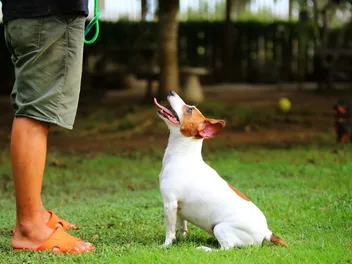
How to Teach the "Come" Command to Your Dog in 8 Vet-Approved Steps


In this article
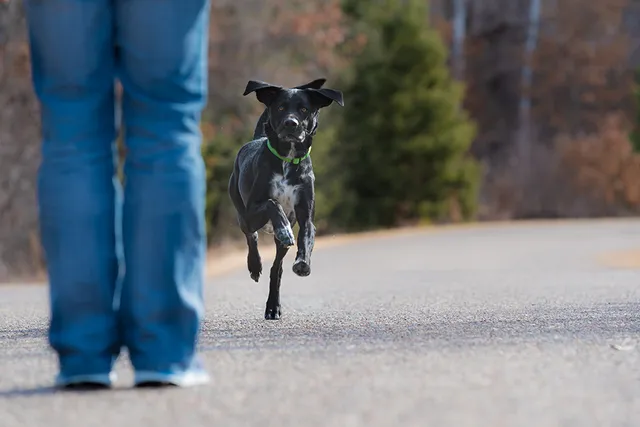
While every obedience command has its purpose, “come” is arguably the most crucial cue you can train. A solid recall and trust between you and your pet opens up a world of possibilities, from safe, friendly fun at the dog park to exciting wilderness adventures. With one simple word, you have the power to boost your dog’s quality of life in several ways and give them all-new freedom that would make any pet parent proud.
As straightforward as training a recall command can seem, it’s also easy to get wrong. Eliminate the guesswork and follow the shortest path to success by checking out this quick guide on how to teach your dog the “come” command.

The 8 Steps for Teaching the Come Command to Your Dog
1. Start Inside at Short Distances

Training any command with positive reinforcement takes setting your dog up for success. You should be able to continuously issue more rewards to drive home learning and maintain your dog’s enthusiasm. While forcing them into behaviors won’t build their memory efficiently, you can make it easier for them to make the decisions you want.
Start training the “come” command in a quiet room with minimal distractions and distance from your dog. They will have little reason to focus on anything but you and nothing will be more rewarding than your treats. After teaching the desired behavior in this situation, you can gradually add distance and distractions.
2. Move Away
You need to create some space between you and your dog. Move away or have someone hold the dog if they tend to follow you around closely.
3. Show Your Dog a Treat in Your Hand

With your dog standing away from you, present a treat in your hand. Hold your target hand to your chest or stomach and then move it to your side, where your dog can retrieve it easily. Repeating this motion will create the hand signal for the command.
4. Mark When They Reach You and Give a Treat
When your dog reaches you, mark the moment with a marker word (“Good dog!”) or a click of the clicker if you are already using clicker training. Immediately give your dog the treat. Repeat this a few times, allowing them to move away and having your dog return with a hand signal and reward.
5. Add the “Come” Command

After a few repetitions, you can add your “come” command when your dog turns toward you and you know they are approaching. Say it only once, using it just after giving your hand signal. Always use the same tone of voice when giving the command, and avoid adding more words, which will confuse your dog. As your dog gets the idea, you can use the voice command alongside the hand signal.
6. Add Distractions and Distance
With the behavior established, slowly increase the distance between you and your dog and add distractions that could take their attention. Add more space between you while inside, then move to the backyard. You can have family members run around or create controlled distractions. Eventually, you can take this to safe public settings like a park and practice at a distance from other people and animals.
7. Transition to a Long Leash

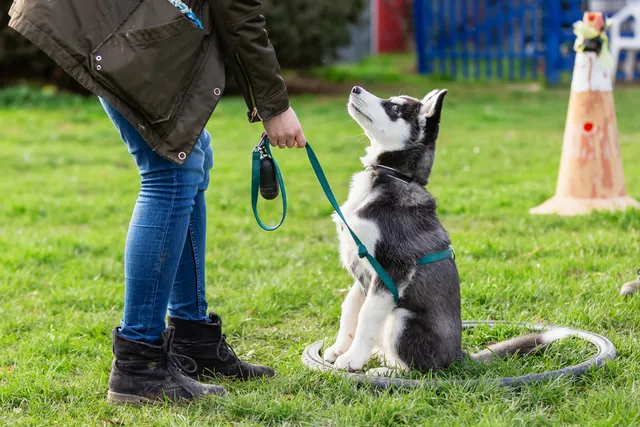
While your dog can practice off-leash in a fenced-in yard, you must maintain control in unfenced areas to ensure everyone’s safety. At the same time, you’ll need the ability to create distance to progress the training. To accomplish both ends, you can incorporate a long leash.
A long leash running 20+ feet will keep your dog under control while giving them a sense of freedom. Just make sure your dog or the long leash isn’t bothering others.
Training a safe distance away from others is crucial, even with long leashes. You don’t want your dog to react to something and run in a rapid sprint, especially with a collar that could roughly stop them by the neck. Yet even with a harness, trying to train near stimuli that steal your dog’s attention is unproductive, so you’ll want to move to a more comfortable distance.
8. Take Your Dog to New Environments
As your training progresses and your dog shows more reliability in returning when you call, foolproof the behavior by practicing in different environments.
Dogs often engage in habits conditionally, meaning they only repeat behaviors in certain situations. By training the “come” command around different people, animals, sights, sounds, and levels of stimulation, they’ll learn that your cue means they should come no matter what. With enough practice, you’ll know whether your dog can be off-leash and move to lead-free walks in safe locations. Remember to follow the local laws and common sense around letting your dog off-leash. Your training is never 100% guaranteed so you don’t want your dog in a situation where they could get hurt, like if they were to run into traffic.
“Come” Command Games to Play

Making training into a fun game is an excellent way to add variety and keep your dog excited to learn. As you maintain your dog’s responsiveness to the “come” command, try playing these fun games:

The 6 Tips for Success
1. Keep Training Sessions Short
Limit your training sessions to 5–10 minutes. Not only will this keep you from giving too many treats, but it will also keep your dog engaged in the session and wanting more.
2. Teach Sit, Stay, and Other Essential Commands
Many people incorporate a sit as the final step of their “come” command, and whether you add it or not, training obedience commands like this before recall will help your dog with their overall manner.
Practice essentials like sit, stay, down, and place. You can fine-tune these in active sessions or passive training throughout the day, teaching your dog impulse control. As you work on your “come” command in various ways, you can add other actions, such as having your dog sit and stay before releasing them and cueing them to come to you.

3. Handle Mistakes Calmly
There will likely be a point where you breach your dog’s reactive threshold and can’t get them to complete a recall. Don’t punish this behavior aversively. Scolding and agitation will only stress your dog, making them more uncertain of what you want and how to respond. Approach your dog calmly and emotionlessly and take them to a safer distance to try again.
4. Don’t Repeat the Cue
Resist the urge to repeat your cue if your dog doesn’t listen the first time. Saying it over and over gives your dog permission to ignore you and practice doing it, weakening the word’s strength.
Assume your dog has exceeded their tolerance threshold and is too far away from you or distracted with more engaging stimuli. If your dog doesn’t heed your first command, calmly walk over to them, lead them to where you were standing, and give them praise. Then, move to a place with fewer distractions or decrease the distance between you and your dog so they can be more successful.

5. Don’t Poison the Cue
Although it’s easy to see the “come” command as a convenient way to corral your dog whenever needed, you could inadvertently give it a negative association if you use it incorrectly.
Calling your dog at the dog park to go home or calling them in from playing in the backyard can make the recall less rewarding. Eventually, your dog will interpret your “come” command as meaning playtime is over. They may then start ignoring it, preferring the reward of continuing to play to the treat you’re offering if they heed your call.
How to Avoid Poisoning the Cue
Don’t immediately end the fun when your dog returns. Recall them occasionally, give them a treat, and let them play again. When you have to leave, call your dog and do a few exercises, tricks, or training commands on the leash before departing. Separating the recall and act of leaving will create mental space between your command and the undesirable consequence so your dog doesn’t build a clear association between them.
6. Change a Poisoned Cue
If you poisoned the cue and aren’t getting any response with it, pick a different word and start over. While you may be able to salvage your current word, it’s generally easier and faster to create and maintain a positive, rewarding association with a new cue.

Final Thoughts
A solid grasp of the “come” command takes more than knowing what it means. Recall relies on a general dynamic of trust, respect, and love you foster in every interaction with your dog. While following these steps can teach your dog the “come” command in no time, being consistent and enjoyable to be around will make them find your presence rewarding in itself.
Sources
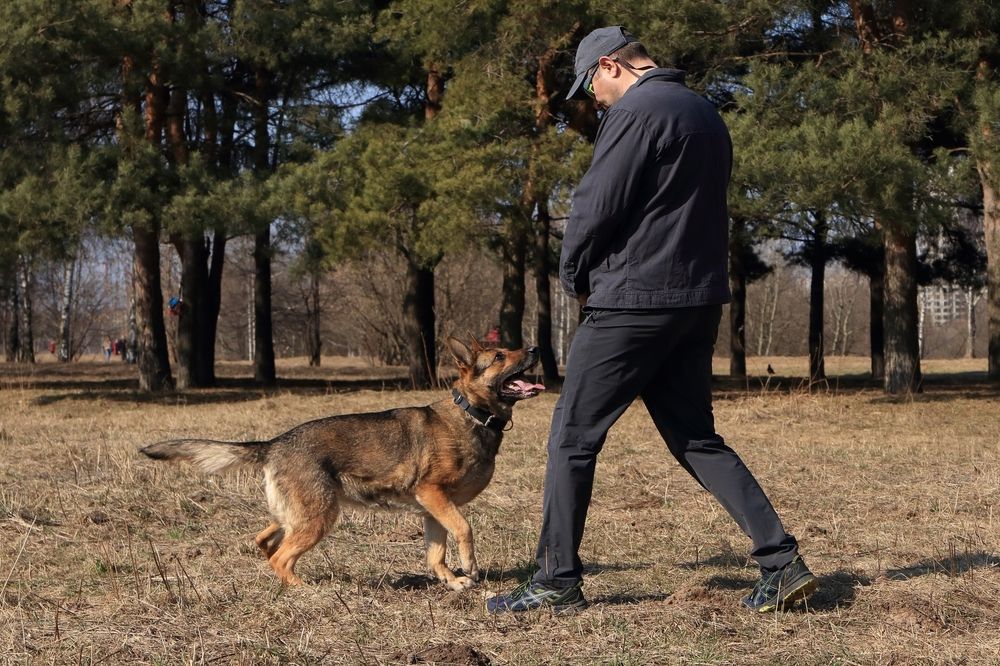
Featured Image Credit: Lyudmila Sh, Shutterstock
Expert dog care, straight to your inbox
News, insights, expert advice, and everything dog.

No spam — unsubscribe anytime.
By signing up, you agree to our Terms & Conditions and Privacy & Cookies Policy.
How useful was this post?
Click a star to rate. You can leave written feedback afterwards. (We read all feedback.)
Nicole has loved animals of all sizes her whole life so it's no wonder she has dedicated her career to helping them through what she loves best: learning, writing, and sharing knowledge with others. She’s the proud mom of two dogs, a cat, and a human. With a degree in Education and 15+ years of writing experience, Nicole wants to help pet parents and pets around the planet to live happy, safe, and healthy lives.