In this article
In this article, we’ll explore whether a spayed dog can get pyometra (an infection of the uterus) after being spayed. The most common answer is that the majority of dogs that are spayed will no longer be able to get this condition, while the more nuanced answer is that while rare, a spayed dog could get a certain type of pyometra.
Read on as we learn more about female dog reproductive health, pyometra, and related conditions through medical facts and commonly asked questions.

Female Dog Anatomy
A dog’s ovary contains their eggs for reproduction and also releases sex hormones that allow for reproductive processes. The two female sex hormones released from the ovaries are estrogen and progesterone.
Reproductive cycles in a female dog include estrus and diestrus phases that are largely dictated by these sex hormones. Estrus is often referred to as “being in heat” or a “heat cycle” which is a period of female sexual willingness to mate; during this period they are fertile and could become pregnant. Signs of a heat cycle can include swelling of the vulva, vaginal discharge, standing to be mounted, etc.
Diestrus is a window of time of sexual inactivity in between estrus cycles.

Spay or Sterilization Surgery
If all the ovarian tissue is removed in a spay, it removes the sexual hormones that they secrete. This results in the removal of the heat cycle, the possibility for pregnancy, and behavior changes, as well as a decreased likelihood of other medical health concerns such as pyometra, mammary cancers, etc.
There are varying options for a spay procedure. Traditionally, the most common procedure in the United States is an ovariohysterectomy (OVH); this consists of removing both the uterus and the ovaries. In other areas of the world, such as in Europe, the most common spay procedure is an ovariectomy which only removes the ovaries and leaves the uterus. Each procedure has its pros and cons, but that is beyond the scope of this article.
What Is Pyometra?
A pyometra is usually seen in unspayed, female dogs of any age, but is more common in those that are greater than 5 years old; it typically occurs about 4–6 weeks after a heat cycle. Most dogs that are spayed earlier in their life will not experience a pyometra.
A pyometra may be open or closed. An open pyometra is named as such since the cervix is open; this then allows for pus to drain from the body. A closed pyometra occurs when the cervix is not open, and the pus is kept internally. Typically, a dog with a closed pyometra will be sicker as the infection is kept within their body—this is considered to be a medical emergency.
Signs of Pyometra
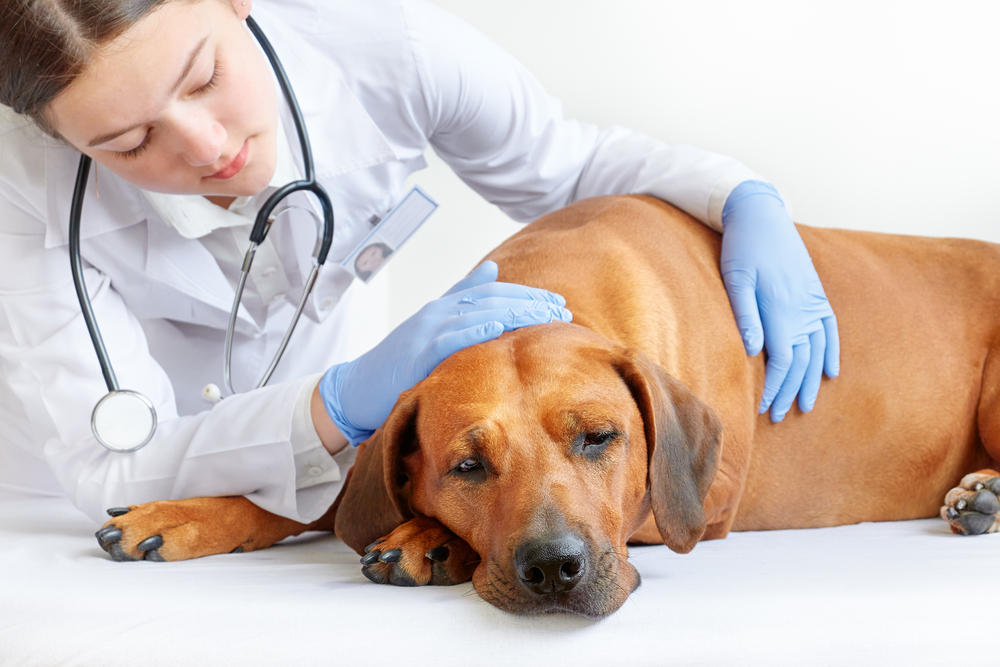
Signs of a pyometra may vary depending on if it is an open or closed pyometra but can include depression, lethargy, not wanting to eat, vomiting, a distended abdomen, and excess water drinking and subsequent increase in urination. If the pyometra is open, typically the signs are overall less severe, and vaginal discharge will be present. If it is closed, there may not be any discharge seen, and those affected are often more ill.
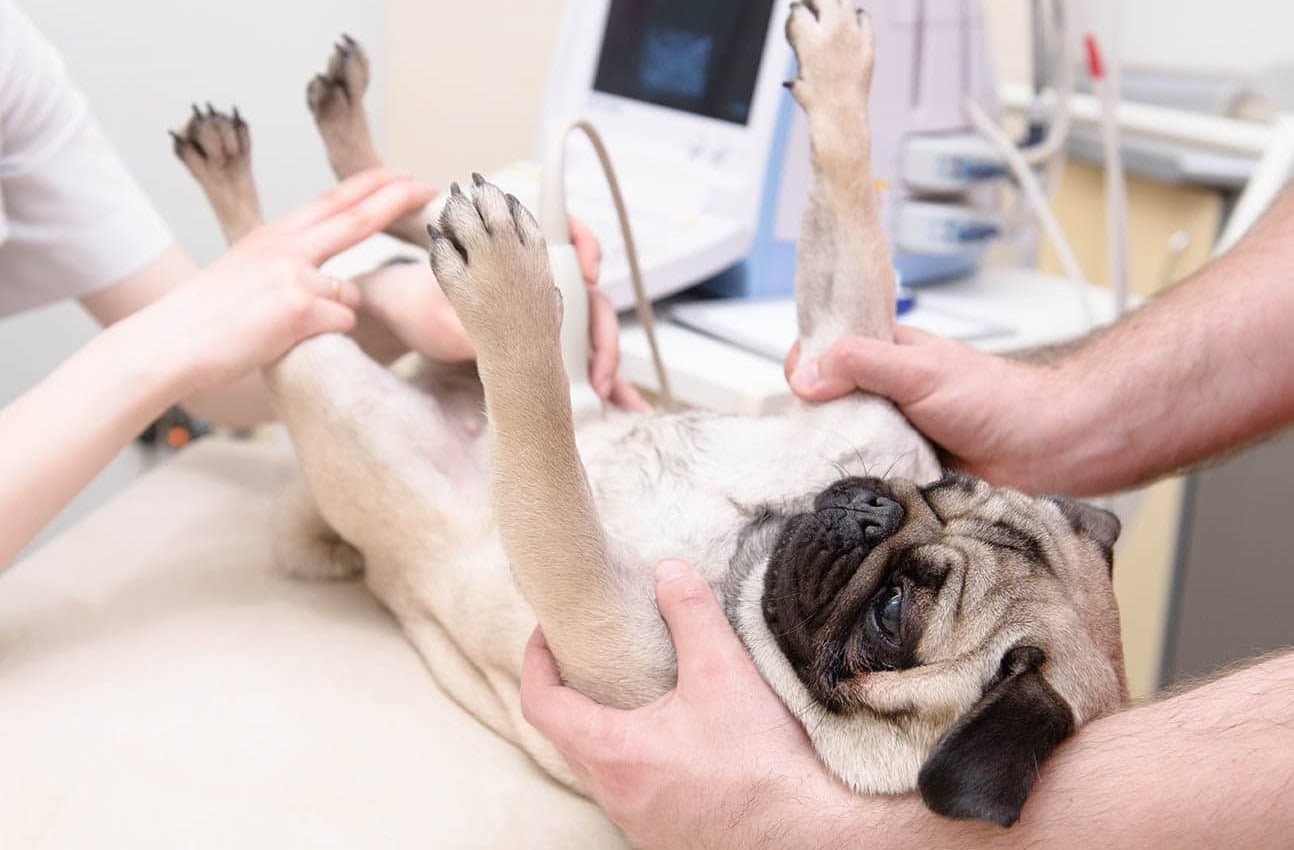
A diagnosis may be first proposed after considering the history and physical exam findings of the female dog. It is typically confirmed via diagnostic tests such as imaging (radiographs and/or ultrasound). In addition, vaginal cytology (looking at vaginal cells under the microscope), bloodwork and a urinalysis also provide more overall health information and clues to the puzzle.
The best treatment of choice is an ovariohysterectomy or surgery to remove the ovaries and infected uterus. This procedure is coupled with intravenous (IV) fluids and antibiotics. For a breeding animal that meets certain standards, medical therapy with prostaglandins, fluids, and antibiotics can sometimes be attempted, but there is variable success with such therapy, and recurrence is common.
If your pet is showing these signs, we suggest you speak to a vet.
If you need to speak with a vet but can't get to one, head over to PangoVet. It's our online service where you can talk to a vet online and get the advice you need for your pet — all at an affordable price!

What Is Stump Pyometra?
This is an uncommon medical condition after having already been spayed via ovariohysterectomy (while if only an ovariectomy was performed then a dog could then have a regular full-blown pyometra).
After an OVH spay, there may remain a small remnant stump of uterine tissue left behind where most of the uterine tract was tied off and removed. If there are no female sex hormones circulating, then this doesn’t pose any problems and doesn’t form a pyometra. But, if there are still specific sex hormones present, a pyometra within the uterine stump could be possible.
The source of the reproductive hormones could occur internally due to an ovarian remnant or from external sources such as with some types of hormone medications. Signs of a stump pyometra are similar to that of a regular pyometra (see above) except that the dog will have had a history of being spayed, oftentimes, many years before.
Diagnosis is also typically confirmed with vaginal cytology and imaging such as with ultrasound. Treatment is to remove the infected stump as well as remove the source of the reproductive hormone progesterone.
Ovarian Remnant Syndrome
This may present as signs of being in heat (estrus) indicating the presence of estrogen and/or pyometra indicating the presence of progesterone.
While rare, this may be due to a spay complication or related causes such as:
- Sometimes a very small portion of the ovary may be left behind during surgery which can grow on its own afterwards. Risk factors could include a more difficult spay such as with an overweight dog or less visualization during surgery such as with a small(er) incision.
- Other times the part of the ovary remnant left is microscopic.
- While rare, there may be more than two ovaries present (termed a supernumerary ovary).
- Ovarian tissue could also present in an abnormal position.
- It is important to note that there can be other causes of heat besides an ovarian remnant such as with certain medications or even exposure to some human products such as estrogen creams, etc.
A piece of ovary tissue can become revascularized and then functional by releasing hormones. This can lead to signs of heat that could happen within days after a spay procedure but more commonly occur months to years after; it can even suddenly occur up to over 10 years after a spay procedure!
Diagnosis can occur by signs of estrus observed with vaginal cytology and/or specialized testing to determine if sex hormone(s) are present. Ultrasound may also be helpful in aiding a diagnosis and sometimes exploratory surgery is needed.
Treatment is to remove the source of the hormone; if there is an ovarian remnant present this will need surgery to remove the source; if a pyometra is also present, surgical removal and antibiotics are also required.

Frequently Asked Questions (FAQ)
Can a dog licking their vulva after a spay cause a pyometra?
If a dog is licking their vulva after a spay, this could be due to various reasons—normal cleaning behavior, discomfort, excess discharge, an infection, stress, etc. There is more cause for concern when the licking becomes more than every so often and moves into the repetitive category. Even if there is currently no infection present, more than an occasional or intermittent lick could actually be the cause of a new infection.
While it is not likely that a dog licking their vulva after a spay would cause a pyometra, it is technically a possibility under a special set of circumstances. In addition to the presence of an ascending infection, the dog would also need to have specific female reproductive hormone changes to be present, which after an ovariohysterectomy would be highly unlikely.
However, should the hormone component be present despite spaying (like with ovarian remnant syndrome), along with an ascending bacterial infection present in a uterine stump, the steps towards a stump pyometra could occur, theoretically.
Regardless, truly repetitive behavior of licking, whether the vulva or anywhere else, should be brought to the attention of a veterinarian.
If you need to speak with a vet but can't get to one, head over to PangoVet. It's our online service where you can talk to a vet online and get the advice you need for your pet — all at an affordable price!
What is my dog’s overall prognosis?
This overall prognosis with each situation can vary. As mentioned, most dogs who are spayed significantly decrease their risk for pyometra; their prognosis regarding a pyometra would be projected to be good as long as a hormone source is no longer present.
In rare circumstances, ovarian remnant syndrome or a stump pyometra could cause complications that would allow for a spayed dog to still have an infection of what remains left of the uterus. The prognosis for a pyometra (regular or stump), with early treatment and intervention, can be good and allow for a resolution of signs. If left unattended or until the dog is extremely ill, the prognosis is more guarded and, ultimately, can be fatal.
Conclusion
When a dog is spayed, in most cases the result is that they can no longer have a pyometra; in rare circumstances, some complications may result in ovarian remnant syndrome and/or the possibility of a stump pyometra. Knowledge can be powerful and being aware of the signs and possibilities will help you look out for your dog and be their best advocate.
Featured Image Credit: Yavdat, Shutterstock