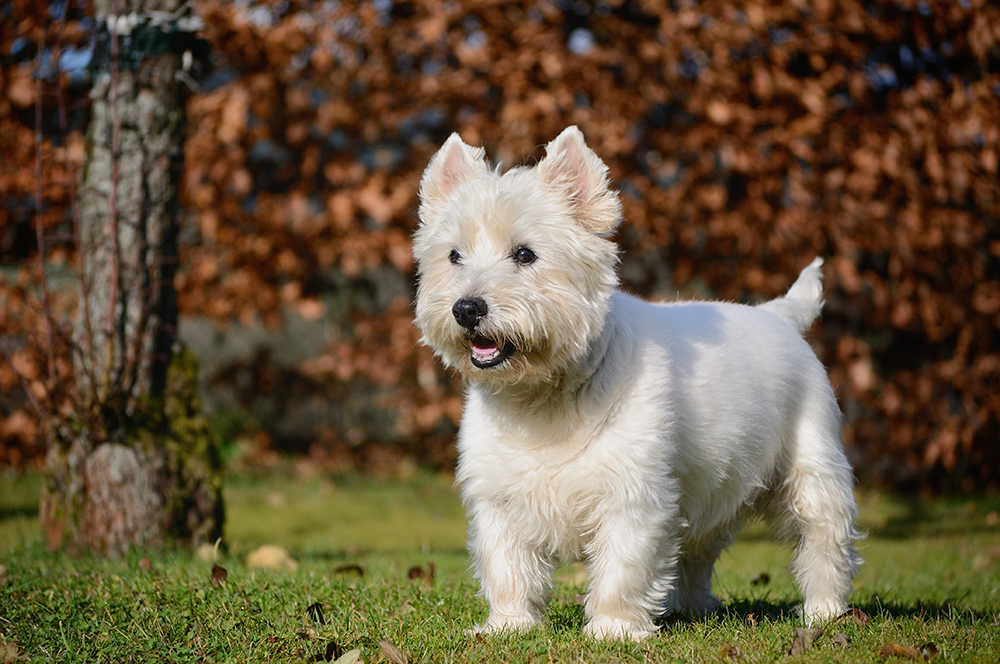
West Highland White Terriers have medium long white coats that are beautiful. You might think that such a fluffy dog would shed a lot—but you’d be pleasantly surprised! Westies shed less than the average dog. If you keep your Westie clean and well-groomed regularly, you won’t have to deal with as much shed hair at once.

West Highland White Shedding
Westie fur has two layers—a medium-length, straight outer coat and a fleecy, soft undercoat.
The outer coat helps keep dirt and dust off your dog’s skin and undercoat, while the undercoat helps your dog stay warm in cold weather. This undercoat is similar to the hair of Poodles, another low-shedding breed, although they have a curly undercoat. Although you will see some shedding in a Westie, their fur does not shed as frequently or as quickly as many other dog breeds.
Another reason to love Westie fur is that they don’t have pronounced seasonal coat changes. Most dog breeds will grow a new, warmer winter coat every fall that is replaced by a shorter coat when the weather warms up. This leads to a lot of shedding every spring and fall. Westies shed a small amount of fur year-round, skipping significant seasonal shedding mess, although their coat still does need to be brushed and maintained regularly.

Are Westies Hypoallergenic?
If you have a dog allergy, you’ll probably know that some dogs are better than others. Low-shedding breeds like Westies are sometimes called “hypoallergenic” by breeders, but that’s a little misleading. Westies produce allergens like any other dog, but less of their shed hair ends up floating through the air.
This means that if you’ve got dog allergies, having a Westie in your living space may be easier than having a high-shedding breed. But sadly, petting and snuggling a Westie can still give you allergy symptoms. Some studies suggest that females may produce slightly fewer allergens than males, though the difference is not guaranteed.
Caring for Your Westie’s Coat
Westies might not shed very much, but they still need regular coat care. You should brush your Westie a few times a week to remove dust and dirt and clear up any tangles. This will keep your Westie’s coat clean and healthy. Many Westie owners also have their dogs trimmed regularly to make the coat easier to maintain. You should bathe your Westie as needed, usually every four to six weeks. Too much bathing can be bad for your dog’s coat as it can strip the oils from its skin, leading to dry skin.
Because Westies have such pale fur, you might notice reddish “tear stains” beneath your dog’s eyes. This is not uncommon and not necessarily a sign of any health issues, but it can be messy-looking. Excessive staining can sometimes indicate eye disorders, in which case you should seek veterinary care if the tearing has become more obvious or the dog is showing signs of discomfort, such as squinting, holding the eye closed, producing discharge, or pawing at the face.
Final Thoughts
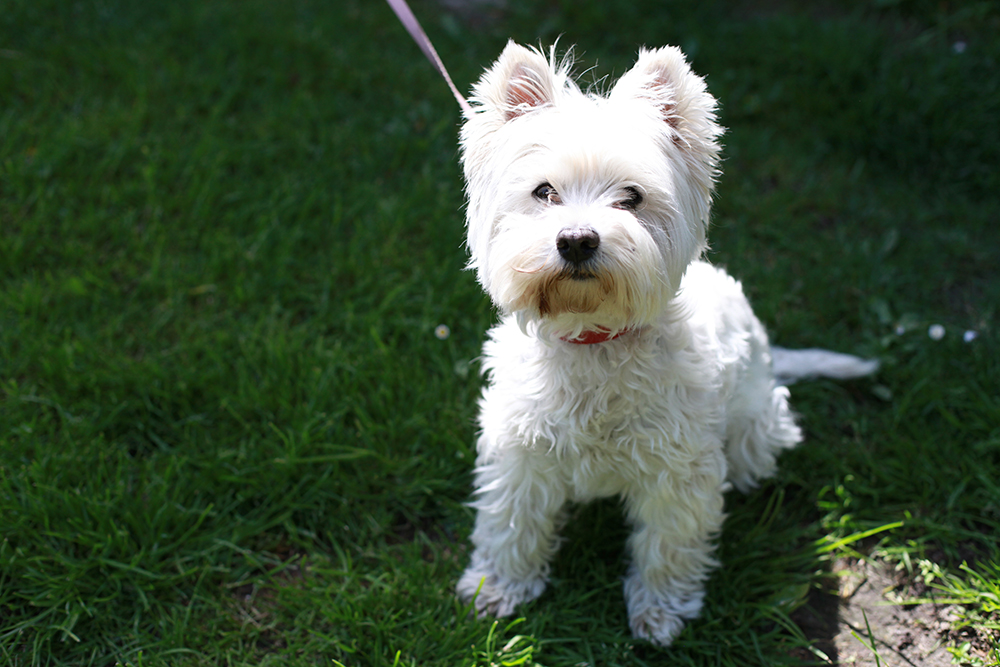
If you are looking for a small, low-shedding dog, a West Highland White Terrier is a great choice. Its soft white fur only sheds a small amount, making it easy to keep clean with regular brushing. However, Westies aren’t right for everyone. Their coats are not completely hypoallergenic, and their fur still requires plenty of maintenance. It is important to make sure you are prepared to meet a Westie’s care needs before you bring one into your family.
Featured Image Credit: anetapics, Shutterstock