Congestive Heart Failure in Dogs: Our Vet Explains Signs, Causes & Care

In this article
View 5 More +If you notice your older dog coughing, schedule an appointment with your veterinarian. After listening to your dog's chest, your veterinarian suggests X-rays to check your dog for congestive heart failure. Let's examine this condition and what you can do for your pup.

What Is Congestive Heart Failure?
Congestive heart failure, also referred to as CHF, typically occurs secondary to heart disease. As the heart pumps blood less effectively, fluid can accumulate in surrounding tissues.
Typically, dogs develop left-sided or right-sided congestive heart failure. In either case, it can eventually lead to heart failure on both sides. Right-sided heart failure tends to lead to fluid accumulation within the abdomen, which is also called ascites. Left-sided heart failure is more common and leads to pulmonary edema or fluid accumulation within the lungs.

What Are the Signs of Congestive Heart Failure?
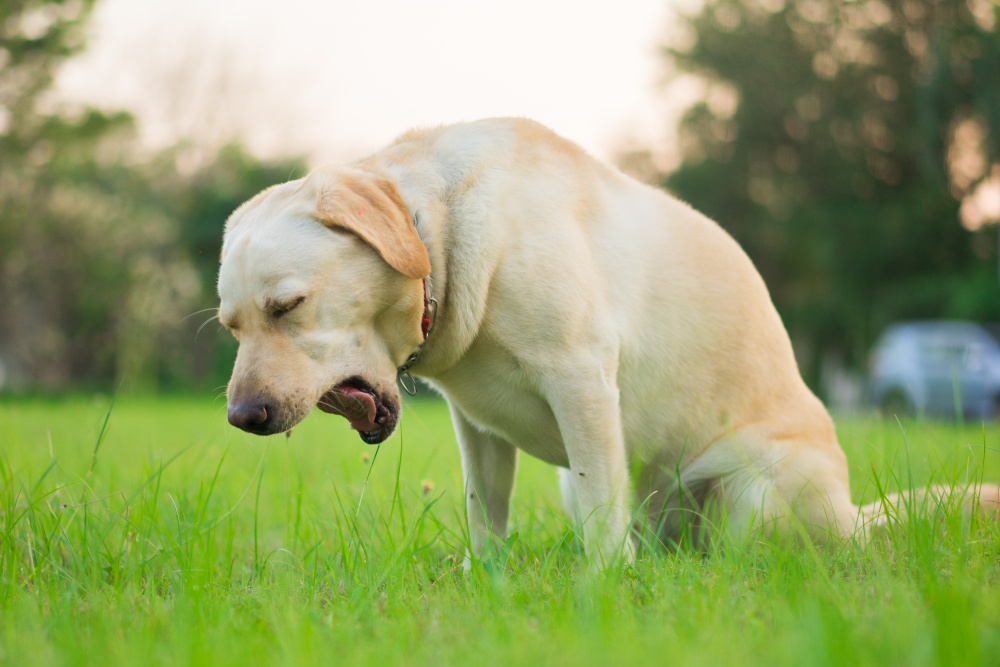
While we typically think of congestive heart failure as causing coughing, it can cause many other signs.
Some of the signs you might notice include:
When your veterinarian auscultates your dog's chest, they might hear crackling within the lungs due to fluid accumulation. On abdominal palpation, your vet might feel a fluid wave from the fluid accumulation in the abdomen.
If your veterinarian has detected a heart murmur when listening to your dog previously or if your dog has been diagnosed with heart disease, the vet will likely ask you to monitor your dog's resting respiratory rate regularly. You should call your veterinarian if the respiratory rate increases past a certain point, usually 30 to 35 breaths per minute.
What Are the Causes of Congestive Heart Failure?
The heart has four chambers: the right atrium, left atrium, right ventricle, and left ventricle. Between the left atrium and ventricle is the mitral valve. This valve is the most common valve involved in valvular insufficiency, the leading cause of congestive heart failure.
Dilated cardiomyopathy is another major cause of congestive heart failure in dogs. Some breeds, such as Doberman Pinschers, develop this condition more frequently than others. In recent years, grain-free diets have been linked with cases of dilated cardiomyopathy in dogs.
Other potential causes of congestive heart failure include:
Diagnosing Congestive Heart Failure in Your Dog
Physical Exam
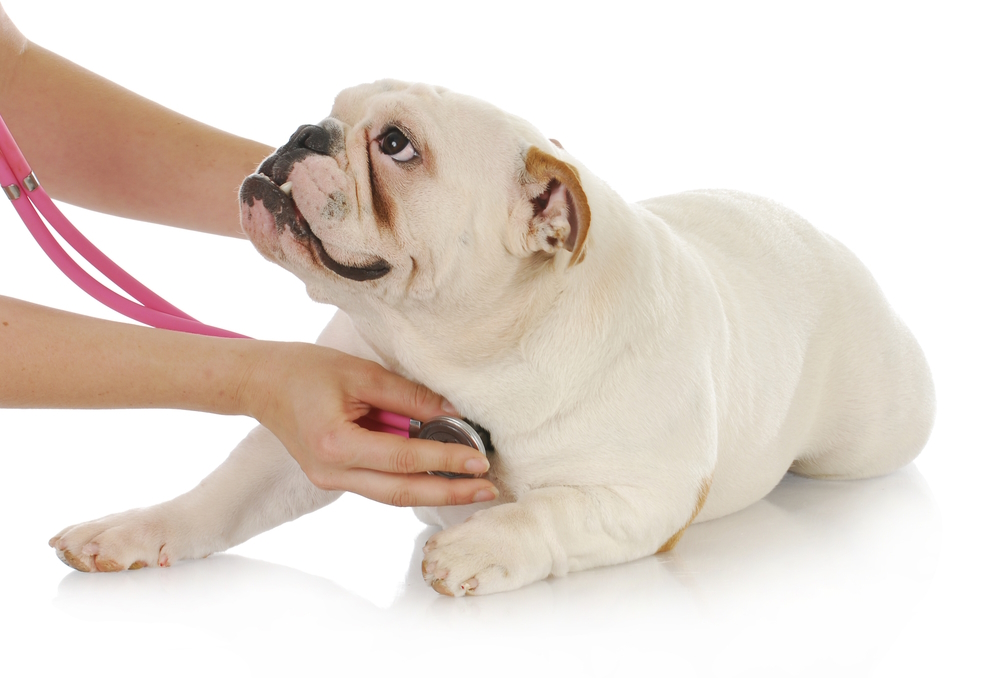
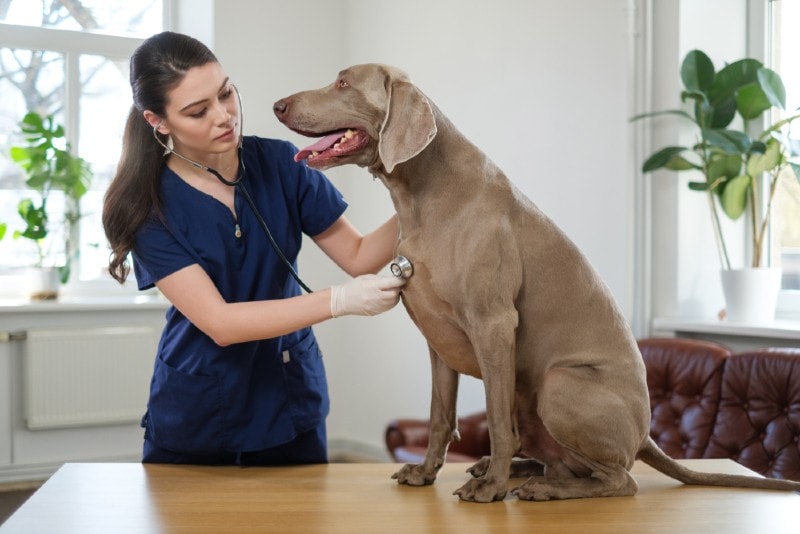
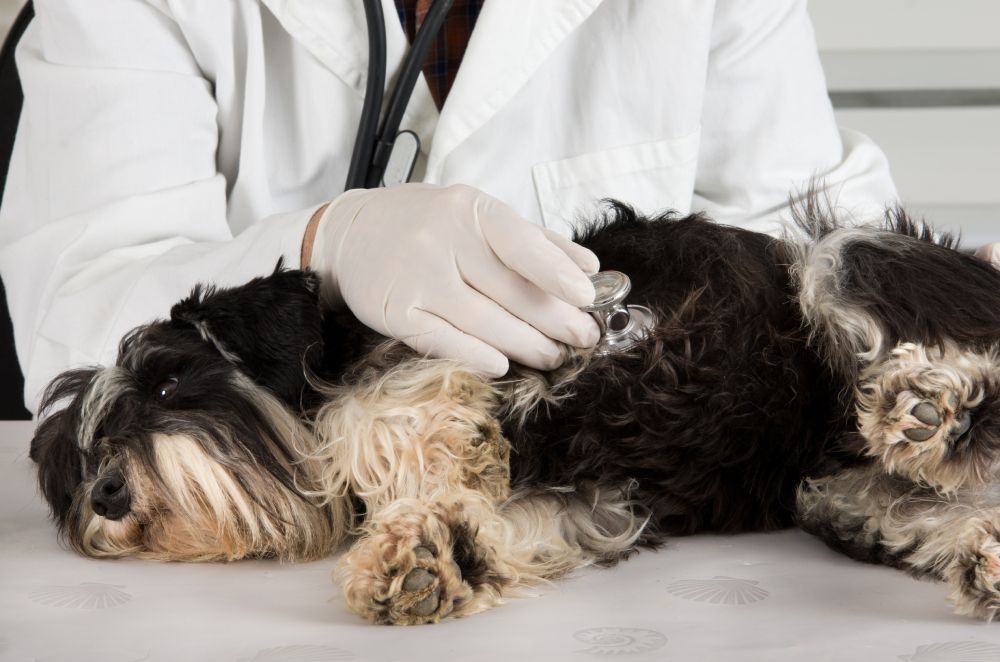
Your veterinarian must perform a thorough physical exam to assess your dog's heart and lungs. One of the first signs your veterinarian might detect on exam is a heart murmur, which indicates irregular, turbulent flow through the heart, often caused by a leaky heart valve.
As your vet listens to your dog's heart, they should palpate your dog's pulses to see if they sync up with each beat. They'll also listen to the lungs to see if they hear abnormal sounds like crackles. Your veterinarian will likely check for other changes on the exam. Is there a fluid wave in your dog's abdomen? If they look at your dog's throat, can they see distended or pulsating jugular veins?
Radiographs (X-rays)
Chest radiographs are the main way we diagnose congestive heart failure. Your veterinarian will review the images thoroughly, but some of the more common changes are heart enlargement and evidence of fluid accumulation in the lungs (pulmonary edema).

Other Testing
An echocardiogram or ultrasound of the heart yields a great deal of information about how the heart functions. It allows your vet or a veterinary cardiologist to measure the dog's heart chambers and wall thickness, look for valvular changes, and examine the blood flow. An electrocardiogram charts the electrical activity of your dog's heart. It gives the rate and rhythm, but heart size or function changes can yield varying wave structures on the test.
How Do I Care for a Dog With Congestive Heart Failure?
Your veterinarian will recommend treatment based on your dog's physical presentation and test results. The underlying cause of congestive heart failure will also determine what should be done. For example, some heart conditions, like patent ductus arteriosus or pulmonic stenosis, can be corrected with surgery.
Nutrition
Typically, dogs with congestive heart failure should eat diets low in sodium. This electrolyte can lead to fluid retention, potentially causing more edema. Some dogs, such as taurine and carnitine, need certain supplements to reduce the risk of heart disease. Grain-free diets should be avoided for the most part. If your dog has a grain sensitivity, your veterinarian can recommend an appropriate diet or refer you to a veterinary nutritionist.

Medications
Diuretics like furosemide (Lasix, Salix) help trigger the kidneys to excrete more fluid, reducing edema. Most dogs on these medications urinate more frequently.
Another commonly used class of medication for congestive heart failure dogs is ACE Inhibitors, which include enalapril and benazepril. These medications help reduce your dog's blood pressure and volume so the heart doesn't have to work as hard.
Pimobendan (Vetmedin) helps with heart muscle contractility. Digoxin might be helpful if your dog has an arrhythmia. Beta-blockers aren't used as commonly in veterinary medicine but are useful in some congestive heart failure cases.
Frequently Asked Questions
Is congestive heart failure contagious?
Congestive heart failure is not contagious to other pets or people. However, it is essential to note that some conditions that can lead to heart disease, such as certain bacterial or viral infections, could be contagious, such as parvovirus. Heartworms are not directly contagious from dog to dog, but they can be passed from animal to animal with a mosquito as their host.

Can you cure congestive heart failure?
You can't cure congestive heart failure. It is typically a progressive disease that can gradually lead to decreased oxygenation.
Conclusion
Congestive heart failure typically affects older dogs, but any dog can develop the condition, especially with underlying heart disease. Your veterinarian will recommend a cardiac workup, which can include chest radiographs, an ultrasound of the heart, and an electrocardiogram. Treatment depends on your dog's signs and underlying health issues.
Sources
Featured Image Credit: Zontica, Shutterstock
Expert dog care, straight to your inbox
News, insights, expert advice, and everything dog.

No spam — unsubscribe anytime.
By signing up, you agree to our Terms & Conditions and Privacy & Cookies Policy.
How useful was this post?
Click a star to rate. You can leave written feedback afterwards. (We read all feedback.)
Dr. Samantha Devine DVM (Veterinarian)
Dr. Samantha Devine is a practicing veterinarian who enjoys caring for animals and sharing her knowledge with pet owners. Preventative care, ranging from nutrition to vaccination, is her specialty and passion!
With over 12 years of veterinary experience, Dr. Devine has extensive knowledge to share about small animal medicine, horses, aquatic species, and even zoo animals. She has also been writing for online pet sites for most of that time.