Eye problems in dogs can be very serious. If you have noticed a problem with your dog’s eyes, your first thought was probably an eye infection. However, eye infections rarely occur on their own and are usually due to an underlying problem.
Fixing your dog’s eyes depends on accurately diagnosing and treating the initial cause. There is also the possibility your dog doesn’t have an infection at all. Read on to learn more about eye problems and infections in dogs.

What Is an Eye Infection?
An eye infection can be caused by various infectious agents, usually bacteria, but fungi, parasites, and viruses can also infect the eye. Since an eye infection could occur in different parts of the eye, you should understand its structure. The eyeball itself is called the globe.
The globe is split into three chambers, which are filled with fluid. The uvea is a vascular layer that is part of the eye wall. The lens sits within the eye and refracts light to the retina, which sits on the back wall inside the eye. The eye sits within the eye socket or “orbit” and is surrounded by a pink membrane of tissue called the conjunctiva.
Like us, dogs have an upper and lower eyelid, but they also have a third eyelid or “nictitating membrane”, which is a pink membrane that can sometimes be seen in the inner corners of the eyes. The whites of the eyes are called the sclera, and the protective barrier on the front of the eye is the cornea.
Some eye infections are “primary” infections, meaning they occur on their own. However, most eye infections are “secondary” infections, meaning that another condition allowed an opportunistic infection to develop. Eye infections lead to inflammation, but you might notice the signs of inflammation due to problems other than infections.
What Are the Signs of an Eye Infection?
If you notice signs of an eye problem, you should get help for your dog right away. These signs are not specific to infections in the eye and, if untreated, can lead to your dog losing sight or damaging their eyes further.
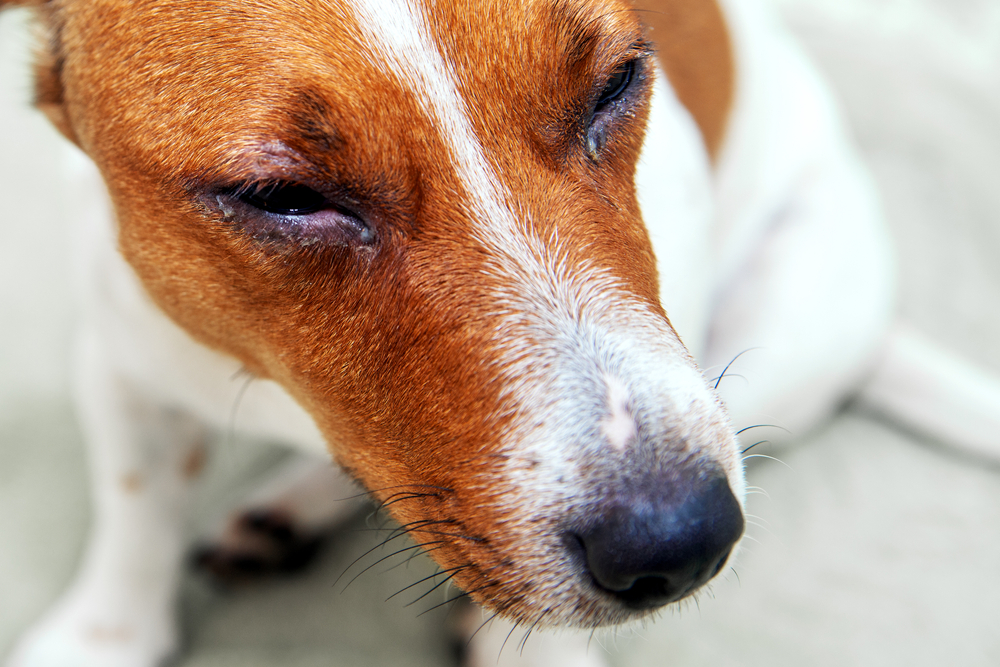
Your dog could have different signs depending on the type of infection, but generally, you will see:
- Reddened eye(s)
- Swelling around the eye(s)
- Watery discharge
- Thick yellow/green discharge
- Increased blinking
- Squinting
- Discomfort
- Pawing at eye
- Sensitivity to light
If your dog struggles with any of the signs above, you should take them to be examined by a vet.
If you need to speak with a vet but can't get to one, head over to PangoVet. It's our online service where you can talk to a vet online and get the advice you need for your pet — all at an affordable price!

What Are the Causes of an Eye Infection?
As mentioned earlier, eye infections can happen on their own or secondary to other problems. Some signs of eye problems are not caused by an infection at all.
Primary Infections
The primary causes of infection (or infestation) in or around the eye include:
- Viruses: Viruses like Distemper and Herpesvirus can cause conjunctivitis.
- Systemic infections: They can lead to uveitis (inflammation of the uvea), like leptospirosis and fungal infections.
- Eyeworms: (Thelazia) Eyeworms occur when flies transmit parasites into the eye.
- Skin infections: Mites or ringworm (which is a fungal infection) can infect the eyelids.
Secondary Infections
Secondary infections are caused by opportunistic microbes (mainly bacteria) that infect the eye when the defenses are weakened.
Conditions that can lead to a secondary infection include:
- Entropion: This occurs when the eyelids fold inwards, causing the eyelashes to rub on the surface of the cornea, leading to irritation and infection.
- Ectropion: This is when the eyelids roll outwards and appear droopy, which means the eye is more exposed to the environment, leaving it open to infections.
- Lagophthalmos: This can occur when the eyelids don’t close completely, leaving the cornea permanently exposed to the environment and potential infections.
- Ectopic eyelashes: These are abnormal eyelashes that can irritate the cornea, leading to infections.
- Allergies: Allergies can lead to conjunctivitis (inflammation of the conjunctiva) or dermatitis around the eyelids, which can lead to rubbing the eye and eye infections.
- Cancers: Abnormal growths in and around the eye can lead to secondary infections.
- Dry eye: Also known as keratoconjunctivitis sicca (KCS), dry eye occurs when dogs don’t produce enough tears, which normally function to protect the eye from infection.
- Corneal ulcers: These are areas of damage to the cornea. They can be caused by trauma or foreign objects like grass awns within the eye. Even chemicals in the eye can lead to an ulcer. Ulcers are prone to secondary infection.
- Pannus: This is an immune-mediated disease that causes chronic inflammation of the cornea and secondary ulcers and infections.
- Trauma: Trauma in or around the eye can cause eye infections.
Non-infectious Eye Problems
- Glaucoma: Glaucoma can cause increased pressure in the eye, which leads to pain and loss of vision.
- Cataracts: Opacity of the lens, which can sometimes cause inflammation in the eye.

How Do I Care for a Dog With an Eye Infection?
If you notice any signs of an eye infection, your dog will need immediate care. Remember that severe diseases like glaucoma can look like an eye infection at first glance. Call your veterinarian, and they will advise you whether you can wait for an appointment or if you need to go to an emergency veterinary hospital.
While waiting for your veterinary appointment, you can clean the eyes with a warm saline solution. If you don’t have a physiological saline solution, you can make your own with 1 teaspoon of table salt in 2 cups of water. Use boiling water to make the solution, and then allow it to cool before using.
Using cotton swabs, gently wipe over your pet’s eyes. For your safety, muzzle your pet before cleaning their eyes if you think they might bite you. If you suspect irritants like chemicals or dust in the eyes, you should give them a more thorough clean.
If you are looking for the perfect product to clean your dog's sensitive areas, Hepper's Wash Wipes are our recommendation, plus it's a great on-the-go option. These premium wipes are thick and durable enough for the toughest of paw messes, while still being soft enough to use on your dog's ears or eyes. Formulated with pet-friendly, hypoallergenic ingredients they are the ideal product for all dogs of all ages, skin conditions, or sensitivities.
At Dogster, we’ve admired Hepper for many years and decided to take a controlling ownership interest so that we could benefit from the outstanding designs of this cool pet company! 
What to Expect at the Vet
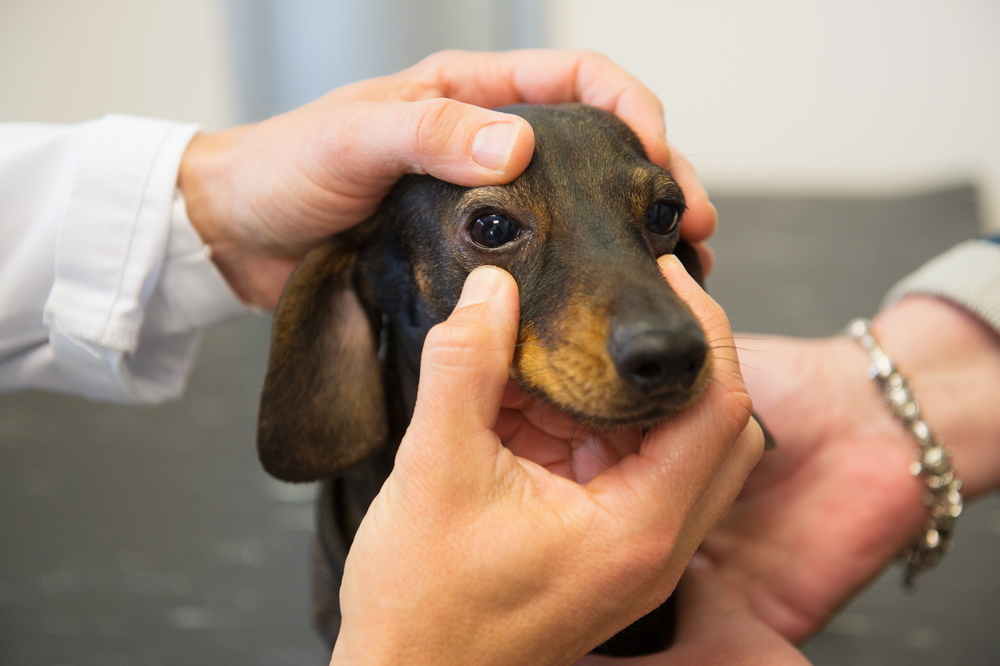
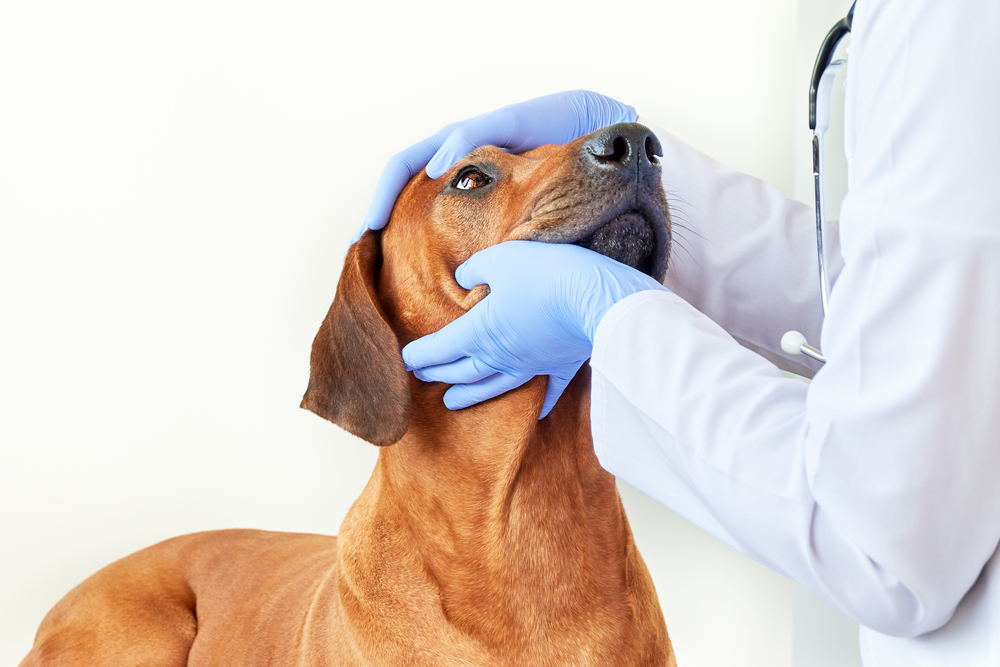
First, your veterinarian will gather a history and ask questions about what happened to your pet, how long the signs have been present, and other relevant information. Your veterinarian will examine your dog, primarily focusing on their eyes. They may use an ophthalmoscope to look at the back of the eye.
- Fluorescein stain: This harmless yellow/orange dye is placed in your dog’s eye. It binds to damaged corneal tissue and fluoresces under a blacklight, helping the vet detect any ulcers.
- Schirmer Tear Test: Paper strips measure tear production over a minute, and they are usually used to diagnose dry eyes.
- Tonometry: A tonometer uses a puff of air into the eye to measure the pressure in the eye, screening for glaucoma.
- Topical medications in the eye
- Oral medications, like antibiotics or pain relief
- Using an E-collar to prevent then scratching the eye
- Revisit appointments to repeat testing or monitor progress
- Sedation to remove a foreign body from the eye.
- Surgeries to correct eye problems like entropion or blocked tear ducts

Frequently Asked Questions (FAQ)
Will an Eye Infection Go Away on Its Own?
No, the infection won’t go away on its own. Sometimes minor irritations, such as from sand or smoke, will resolve quickly, but if the eye is infected it will need veterinary intervention to resolve.
Without a veterinary exam, you can’t be sure your dog doesn’t have a severe underlying problem, like glaucoma, that could affect their vision. On top of that, eye problems can be very painful for your dog, so you want to get them resolved as soon as possible.
Is Dog Conjunctivitis an Emergency?
All eye problems can be considered emergencies because when dogs try to scratch their eyes, they can cause further damage. Some conditions can lead to vision loss if not treated quickly, so if your dog shows any signs of eye issues, you should call the vet.

Conclusion
Without a veterinary visit, it is impossible to tell if or why your dog has an eye infection. Most true eye infections are secondary to other problems, and there is always a chance your pet’s eye problem could be caused by a more serious underlying cause. Since we don’t want your pet to lose their vision or be in pain, we recommend calling your vet as soon as the first sign of eye issues is detected.
See Also:
- Bulldog Tail Pocket Infection: Vet-Approved Prevention & Care Guide
- Can Dogs Get Styes? Vet-Reviewed Signs, Causes & Treatment
Featured Image Credit: Alexandr Jitarev, Shutterstock