Lumps After Dog Vaccinations: Are They Normal? Our Vet Explains Why This Happens

In this article
Vaccines are the best way to protect your dog against serious diseases. Vets frequently vaccinate dogs for parvovirus, distemper virus, and hepatitis virus—this is often referred to as a “C3 vaccination.” Other vaccines are also available and may be recommended, depending on your dog and your whereabouts. These vaccinations include rabies, kennel cough, leptospirosis, and others.
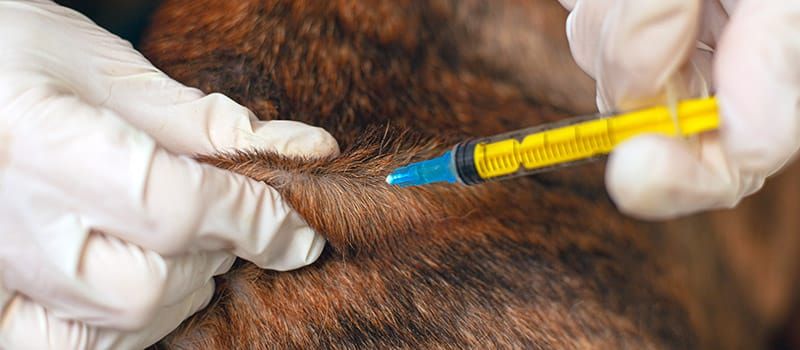
You may have noticed a lump develop on your dog shortly after their vaccination. A common place to notice this lump is the back of the neck, as this is where most vets will give the injection. These lumps are generally a normal bodily reaction to the injection and will go away over time.

Are Post-Vaccination Lumps Normal?
Yes and no. They are not “normal” from a statistical perspective, as the vast majority of dogs will not develop lumps at the vaccination site. However, in the small number of dogs that do develop lumps, the lump is a normal immune response for that particular dog and is generally not cause for concern.

What Does the Lump Look Like?
The lump is usually located in the “scruff” of the neck, or further down the back on the flank. This depends on where the injection was given.
It is usually a firm nodule that varies in size from a pea to a grape. Occasionally, it may be larger than this. The lump does not normally have discharge (fluid or pus) coming out of it. It may or may not cause pain when touched.
Why Do Dogs Get Lumps After a Vaccination?
Vaccinations work by stimulating the immune system. Essentially, your vet gives your dog a small and safe dose of a virus (or bacterium), which enables their immune system to create antibodies against the disease. When your dog then comes into contact with the disease, it has the antibodies stored in their immune memory-log, and can promptly use these to fight off infection.
A lump at the vaccination site is the result of the dog’s immune system at work. It has detected a substance that wouldn’t normally be there (the vaccine molecules) and sends immune cells there to clear up the perceived problem. The lump is an accumulation of immune cells, fluid, and possibly red blood cells.

How Long Will the Lumps Stay?
Most lumps will start to shrink or even disappear, after about a week. Occasionally the lump will linger for longer and may last several months. While this may be a bit of a nuisance, a persistent lump is not necessarily a reason to be concerned.
When Should I Be Worried?
If you’ve noticed a lump that seemed to appear after a vaccination, it is worth getting your dog checked by a veterinarian. They can ensure that the lump is associated with the vaccination, and is not an unrelated problem. They can also check your dog’s health, to ensure they have not developed a fever, and if necessary, they can prescribe medications such as painkillers and antibiotics. Most of the time, medications are not warranted, as the lumps are not painful, not infected, and will go away of their own accord. If you’ve just noticed a lump at your dog’s vaccination site, given the above information, it may be reasonable to adopt a “watch and wait” approach. There are three main instances in which you should seek veterinary attention.
- Your dog is showing signs of being unwell. If your dog is lethargic, has a reduced appetite, or has had vomiting and diarrhea, arrange a consultation with your veterinarian.
- Your dog seems to be in pain when the lump is touched. No one wants their dog to be in pain; if the lump seems tender, arrange a visit to the vet, as pain-relief medications may be needed.
- The lump is oozing or smells bad. This could be a sign that the lump has become infected.
If you’re concerned about your pet’s well-being, we recommend you contact a veterinarian.

A Brief Note on Cats
Cats can develop temporary, non-malignant lumps shortly after a vaccination, just as dogs can. However, some cats develop lumps at the site several months after their vaccination. These lumps can be a nasty, tumorous reaction known as a “post-vaccination sarcoma”. These are different from the lumps described in this article, and warrant prompt veterinary investigation.
Conclusion
If you’ve noticed a lump developing on your dog shortly after their vaccination, there is usually nothing to be concerned about. A common place for this lump is the back of the neck, as this is where the majority of vaccinations are administered. Thankfully, these lumps are typically a normal reaction to the injection and will go away on their own.
Sources
Featured Image Credit: fukume, Shutterstock
Expert dog care, straight to your inbox
Vet-reviewed advice, training tips, and the best of Dogster. Free, and you can unsubscribe anytime.
By signing up, you agree to our Terms & Conditions and Privacy & Cookies Policy.
Dr. Joe Mallat DVM (Veterinarian)
Joe is a veterinarian from Sydney, Australia. When he's not working, he enjoys cooking, exercising, and exploring the Australian wilderness. He has worked for 2 years at a mixed-species practice on the mid-north coast of New South Wales, treating animals of all sizes. His areas of particular interest include wound management, internal medicine, and oncology. Joe's love for the profession comes not only from helping dogs, but also from helping their parents and working with wonderful teams of people.
Joe completed his Bachelor of Veterinary Biology and Doctor of Veterinary Medicine at the University of Sydney in 2020.
Join the conversation
Ask a question, share your story, or send private feedback.