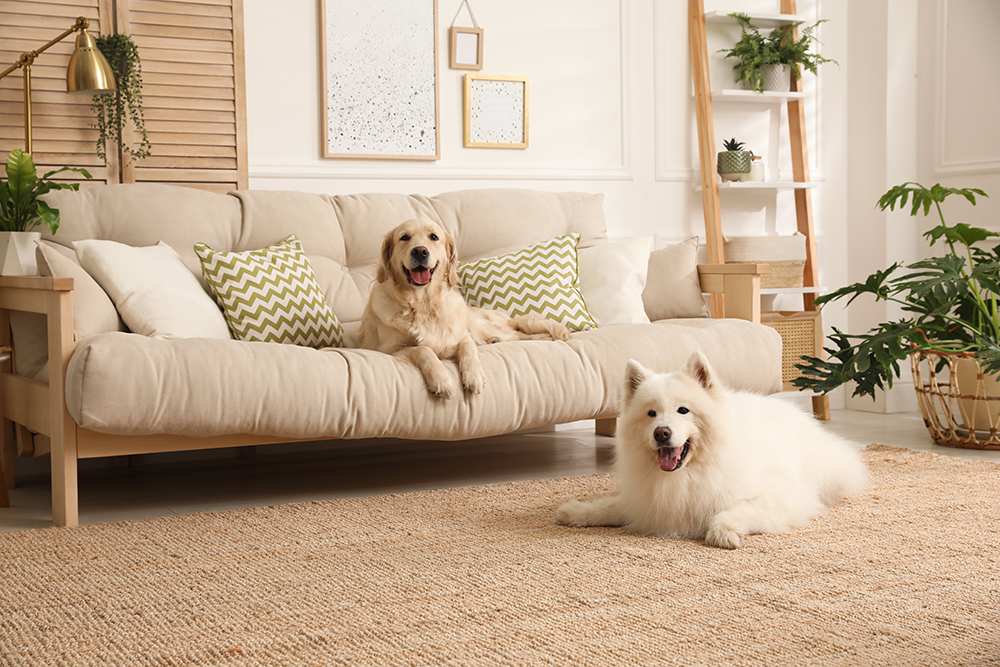
A multi dog home can be the best or worst of times, depending on how things are going in your household. Although dogs provide constant companionship for you and each other, family feuds can happen even in the happiest households.
To keep the whole crew happy under one roof, follow these considerations and tips to manage a multi dog household.

The 10 Tips to Manage a Multi Dog Household
1. Prepare for Success
Hopefully you’ve come across this article in a preparation attempt to introduce a second or third dog into an already peaceful household.
Consider how well the dogs are matched to one another in terms of temperament. Submissive dogs will generally get along, but it can be challenging to bring two dominant dogs together.
It helps if both dogs have been well socialized before the age of 14 weeks, and are generally good with other dogs they meet in public. If you are bringing a young puppy into the house, you don’t usually need to worry about their behavior, as your pup will not be dominant, and they will be open to new experiences.
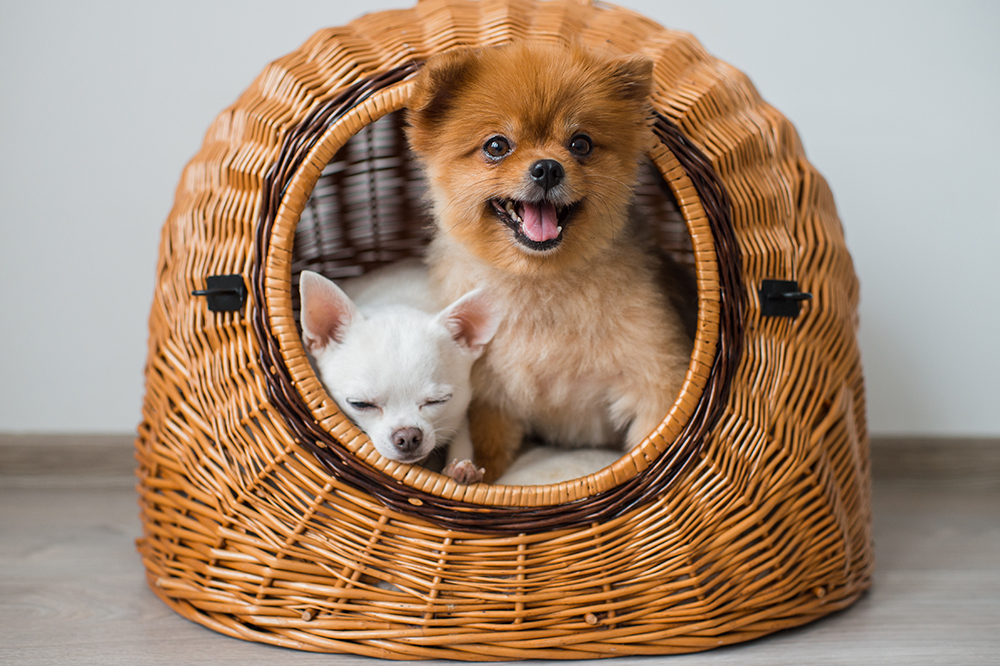
Another factor is the physical compatibility of the dogs. For example you don’t want to pair a rambunctious dog with a painful or immobile dog, as they could get hurt. You also don’t want a very small dog with a very large dog; tiffs are bound to happen even in the best of friends and the large dog could seriously injure a small one with something that was meant as a simple correction, or even just by accident.
If your dog’s are already fighting, use this article, but be aware that you have a long road ahead of you. Your dog’s have negative associations with each other and will need management beyond the scope of this article. Work with a professional veterinarian or behaviorist to restore the peace in your household, but be aware some dogs will simply never get along.
If you need to speak with a vet but can't get to one, head over to PangoVet. It's our online service where you can talk to a vet online and get the advice you need for your pet — all at an affordable price!
2. Train and Reinforce Basic Obedience
You can’t expect dogs to get along as well as possible in the house without training manners, boundaries, and basic obedience. Dogs should get one-on-one training to lock in essential commands, especially “sit,” “stay,” “leave it,” and “place,” alongside a solid recall.
Eventually, you can work on training multiple dogs at once to teach yourself and your dogs how to communicate in a group. Having one dog sit in their place while you train the other dog can help them develop patience.
You can reward their focus and ability to wait, teaching them to act when called upon and understand when you’re talking to your other dog.
3. Establish a Routine
A routine in the household gives dogs a sense of comfort and security, since they know what to expect each day. With multi-dog households a routine can help make sure no dog’s needs are overlooked. If you have a dog that is more energetic, you can work extra exercise sessions into the routine.
Set up regular feeding and exercising times, as well as one-on-one time with each dog. Ideally your routine should also involve essential care like grooming, parasite prevention, medication as needed, and veterinary visits. This is even more important in multi-dog households as it’s easier for things to get forgotten, and for something like a flea infestation to get out of control quickly.
4. Control Feed Time
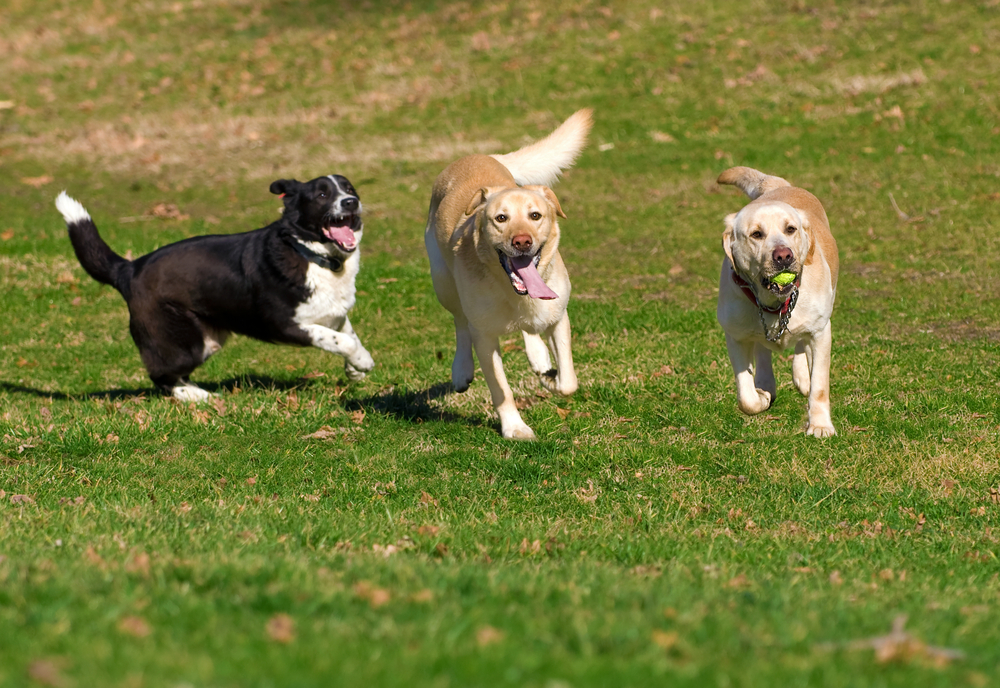
Dogs can be particularly aggressive over food, so your best bet is to feed your dogs in separate rooms. Even if your dog’s don’t fight over food, it’s unacceptable for one dog to steal food from another. For one thing, this makes portion control very hard, but it’s also stressful for the dog getting their food stolen.
Treats should also go directly to the dogs when they are together, avoiding the risk of one dog stealing a chew or feeder puzzle from another if there are resource guarders. Some dogs will resource guard from the mere presence of treats, so since you know your dogs best, it’s up to you to monitor their reactions and body language around resources, and decide what is safe for them.
5. Provide Several Sleeping Spots
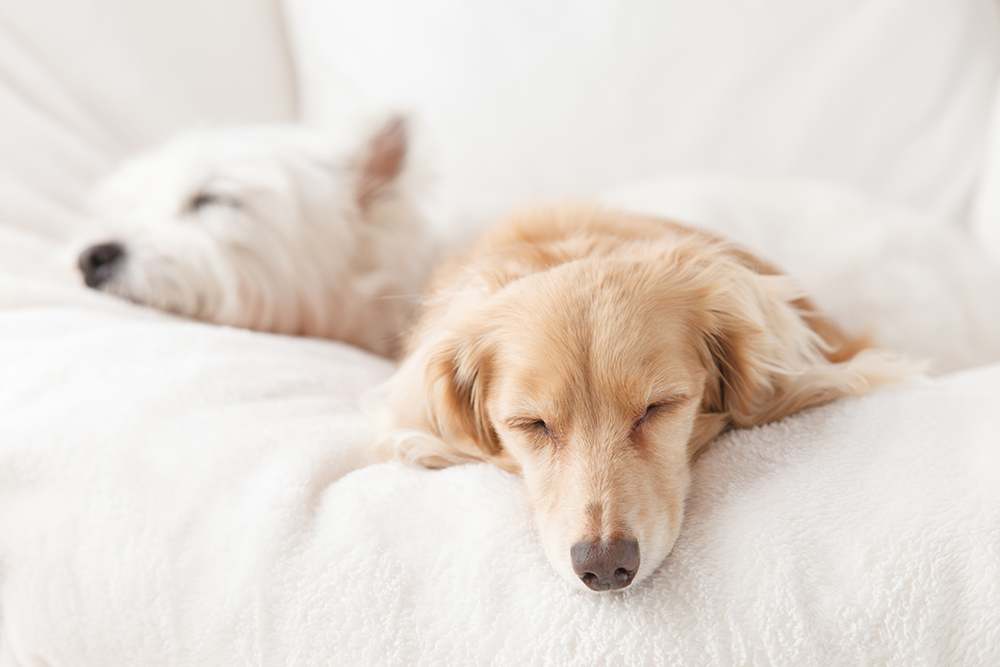
Conflict can arise over limited sleeping spots, so keeping multiple options open in different rooms can ensure everyone’s happiness. Crate training is helpful since dogs deserve a safe area alone without stressing over limited space or shared resources. Make sure the dogs have a clear idea of whose crate is whose, and stick to this with no exceptions. Park of your routine may include a bedtime, where the dog’s are created overnight, or crating them for short periods when you are not home.
6. Be Mindful of Resources
Food, toys, affection, and seemingly finite resources can stir a dog’s survival instinct and create conflict between pets. Consider what might cause guarding behavior, and provide an environment where your dogs aren’t stressing over the essential details of their day.Toys around the house can quickly cause conflict between two unsupervised dogs. If your dogs don’t get along well, you should put the toys away when you’re not playing with them individually.
7. Don’t Give Your Dogs the Chance to Get Aggressive
Not every pack will need to be separated while you aren’t there, but if you have concerns about how they interact with each other when you’re home, you should be separating them when you’re not there. Even if they’re not overtly aggressive.
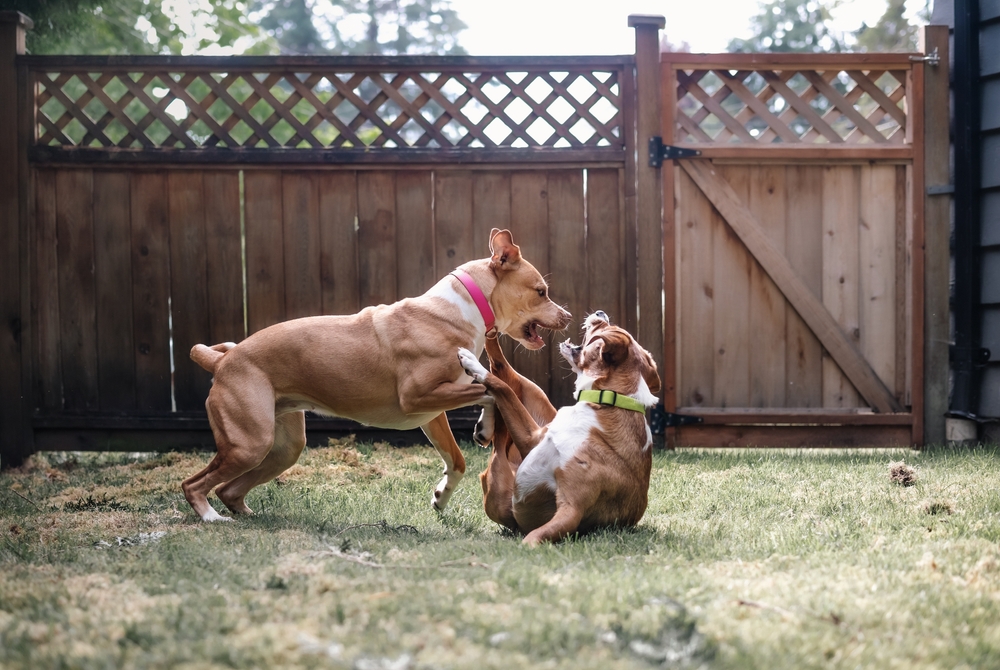
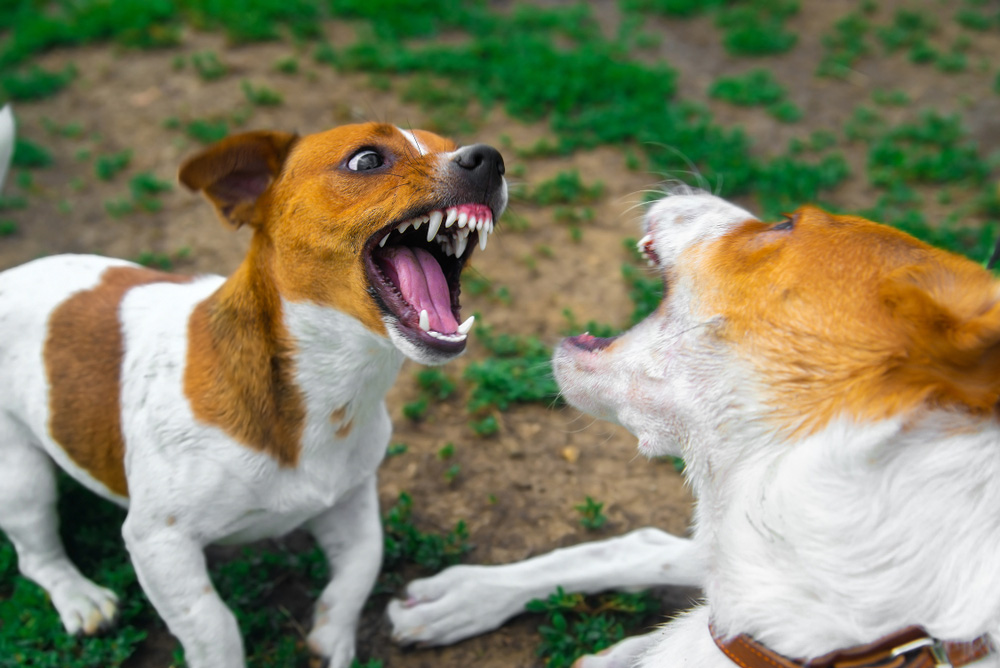
Rowdiness leading to aggression is often problematic during play. Overstimulated dogs can push the tolerances of their play buddies, resulting in eventual conflict and outright fights. There are also cases where aggression, say towards a passing stranger, is redirected onto the other dogs in the house. Alongside rewards for calm behavior, preventing the opportunity for fights makes peace a habit.
Providing well-supervised, structured play with frequent timeouts and activity changes can help manage budding agitation. It’s best to keep the play sessions short and positive. If two dogs are aggressive with each other, don’t be afraid to use a muzzle to manage their interactions but this should not be the only intervention.
You may have to take a traditional training approach of increasing the duration of time together and minimizing distance to build a tolerance for one another. Gradually bringing them closer, separating them when you notice tension, and rewarding mild behavior will slowly develop a positive association between your dogs. Since this is such a serious issue, we recommend working with professionals.
8. Walk Your Dogs Together
Exercise is essential for a healthy and happy dog. It’s also a good time for dogs to bond and learn to stay well-mannered together. With you as their guide, they can establish a shared line of thinking and a group goal. Depending on their recall and laws in the area, some can run off-leash while others stay on a lead, but all should be under your control.
Walking dogs separately is often necessary at first to develop leash skills. Controlling multiple dogs while trying to teach one is impractical and unproductive, so wait to bring them together until all are reliable on or off-lead.
Once you’re ready to walk them together, try enlisting a family member’s help to separate and individually train dogs if you’re unsure how they’ll interact.
9. Keep Things Positive
Dogs pick up on human emotions and can be unsettled when there are frequent loud noises, yelling, and general unrest. They can scent stress on a person and they can feel stressed as much as anyone else.
Modeling a mild temper and a relaxed emotional state will show your dog how to manage themselves at home. Part of this entails positive reinforcement, patience, and training focused on success. Another involves making poise a natural aspect of everyday situations.
Your arrivals and departures should be low-key, play should be gentle, and your daily routine should integrate impulse control whenever possible.
10. Give Each Dog Quality Together Time
Although getting your crew to work together as a group is the goal, giving each dog one-on-one time and individual affection daily is crucial in reaching that end. Other dogs are companions, but as their provider and caregiver, you should be the primary attachment figure. Dogs want to know they can depend on you and have your devotion. Take time to remind them of your bond with daily individual bonding time.
Your love and care impact your dogs’ other relationships. They can become insecure about your connection if you don’t show attention, consistency, or positivity. Uncertainty about this relationship may then manifest as aggression toward others.
By giving each of your dog’s regular attention as part of your routine, they’ll see you as a trusted resource they won’t need to compete over.
Conclusion
Raising multiple pets in a harmonious household depends on shaping your dogs’ perspectives. It’s about creating positive associations with each other’s company and limiting the possibility of them seeing others as potential threats.
Be generous with your love while enforcing fairness and self-restraint. You’ll show your dogs that life together is much more fulfilling when everyone learns to get along.
See Also:
- How To Stop Dogs From Fighting In The Same Household: Tips
- Is It Cruel to Have Only One Dog? Loneliness, Adopting & FAQs
Featured Image Credit: New Africa, Shutterstock
 The 10 Tips to Manage a Multi Dog Household