Periodontal Disease in Dogs: Signs, Causes & Care Guide (Vet Answer)


In this article
While many people consider bad breath and plaque to be “normal” for dogs, this is not the case. Dental disease is very common in dogs. More specifically, we are referring to periodontal disease. Indeed, more than 80% of dogs older than 3 have some degree of periodontal disease. This is inflammation of the gums and other tissues surrounding the teeth, as a result of plaque accumulation and bacterial infection.
Whereas cavities and tooth decay are the most common dental issues in people, periodontal disease and fractured teeth are most common in our canine friends. So, why does it matter? And what’s new in doggy dentistry? Read on to find out!

What Is Periodontal Disease?
Understanding periodontal disease requires a very brief lesson in anatomy. Periodontal disease refers to disease of the periodontium, the tissues surrounding the tooth. These tissues include:
- Gingiva (gums)
- Cementum (covering of tooth root)
- Periodontal ligament (which attaches the tooth to bone)
- Alveolar bone (the bony “socket” for the tooth in the jaw)
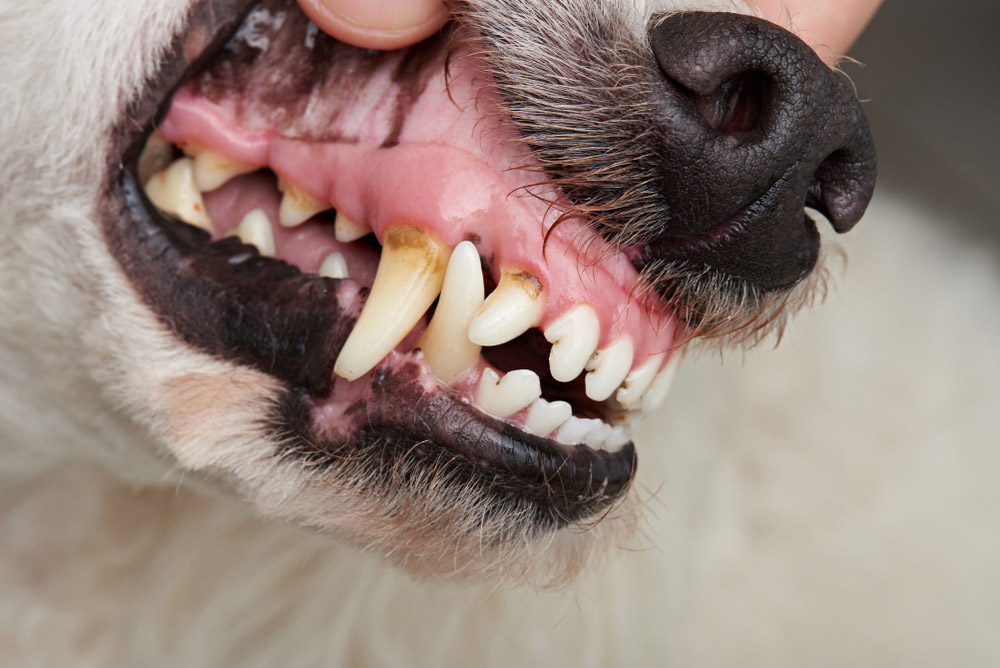
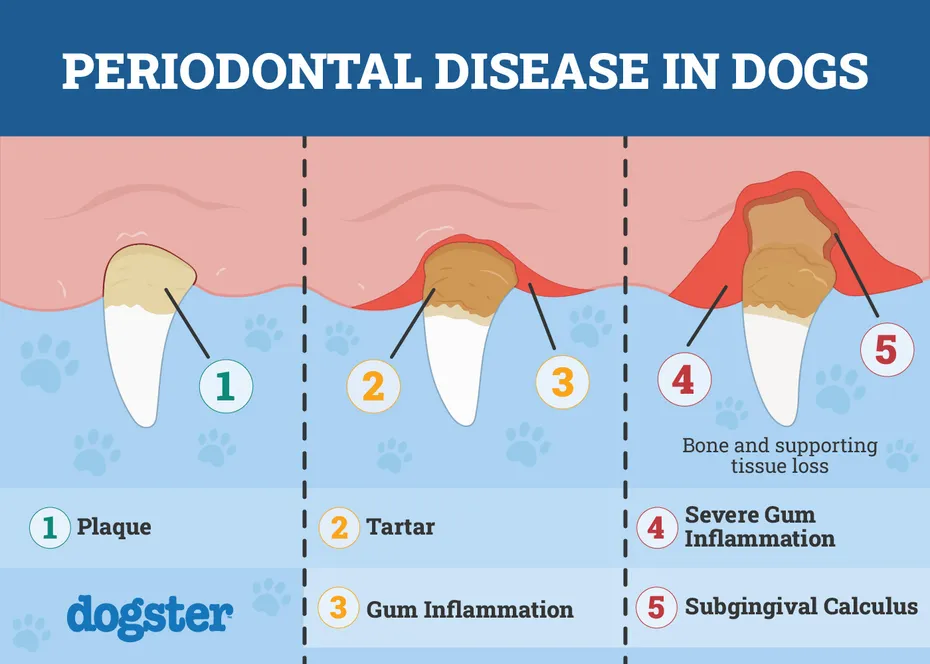
The cause of periodontal disease is plaque. We hear this word often in human dental care. Plaque is a soft, clear, or yellow film of bacteria that can be removed by tooth brushing. If plaque remains on the tooth too long, it progresses to a harder structure called tartar or calculus. This cannot be removed by brushing and requires dental scaling by a veterinarian.
The next question you’re probably wondering is “Why is plaque a problem?”. Plaque is an infection, and this leads to inflammation. Remember, inflammation causes pain. Pain is an often overlooked aspect of periodontal disease in dogs. Additionally, as this infection spreads into the deeper tissues of the periodontium, abscesses, and bone loss can occur. Ultimately, these teeth may fall out or require extraction by a veterinarian.
There are also some studies suggesting that the infection present in periodontal disease increases the risk of disease to major organs such as the kidney, liver, and heart.
What Are the Signs of Periodontal Disease in Dogs?
It’s imperative to remember this point: most dogs with periodontal disease will not show obvious signs of being unwell. Most dogs will continue to eat food, no matter what state their teeth are in. This does not mean that disease and pain aren’t present.
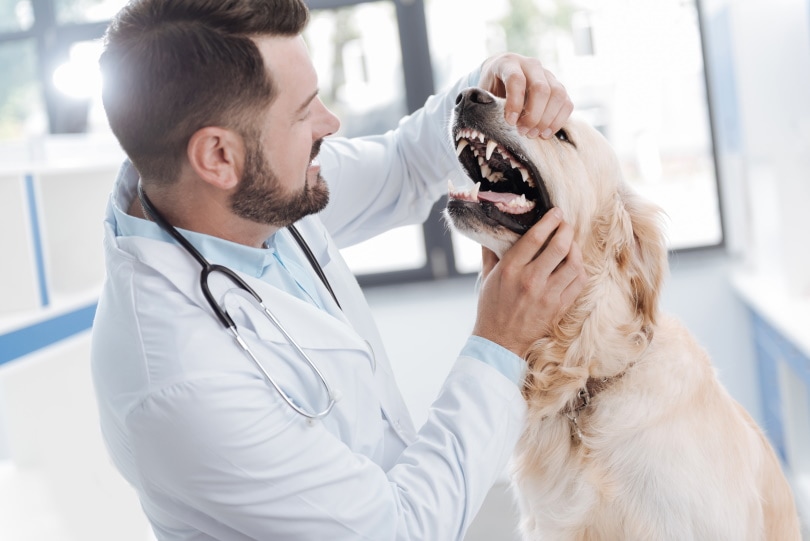
Step one is to open your dog’s mouth and look for:
In more severe untreated periodontal disease, you may notice:
If you’re concerned about your pet’s well-being, we recommend consulting a veterinarian.
What Are the Causes of Periodontal Disease in Dogs?
The cause of periodontal disease is poor dental hygiene and plaque accumulation. It remains unknown what exactly predisposes dogs to the build-up of plaque. There are likely a number of factors at play, including diet, breed, anatomy, and at-home care. In general, the more that dogs chew, the better their dental hygiene will be.
As a generalization, toy and small breeds of dogs are more prone to periodontal disease than larger breeds, but this is not always the case.

How Do I Care for a Dog with Periodontal Disease?
There are three main aspects of managing canine periodontal disease:
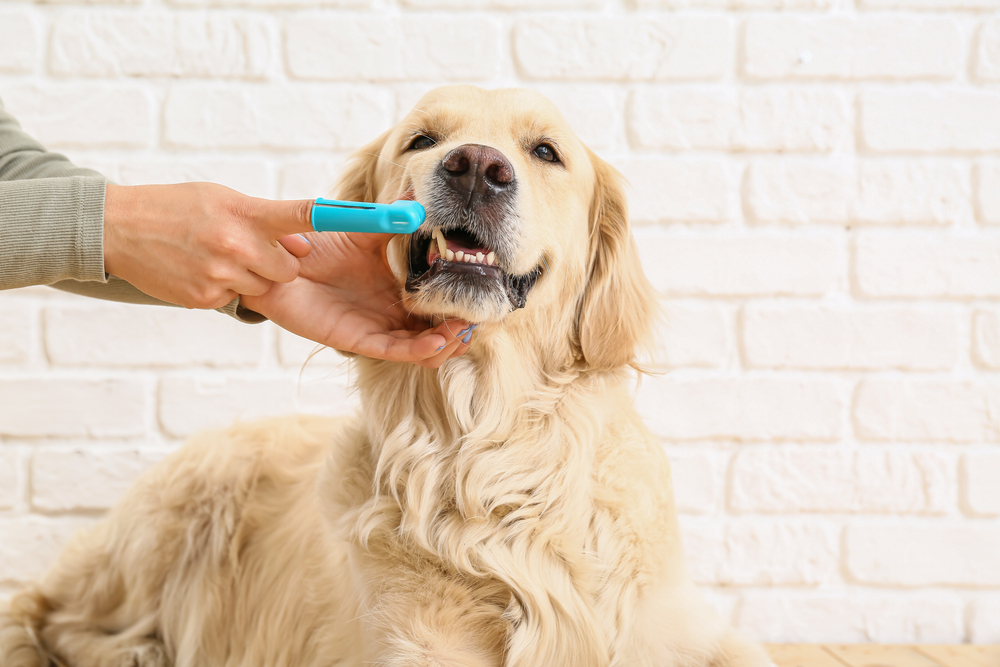
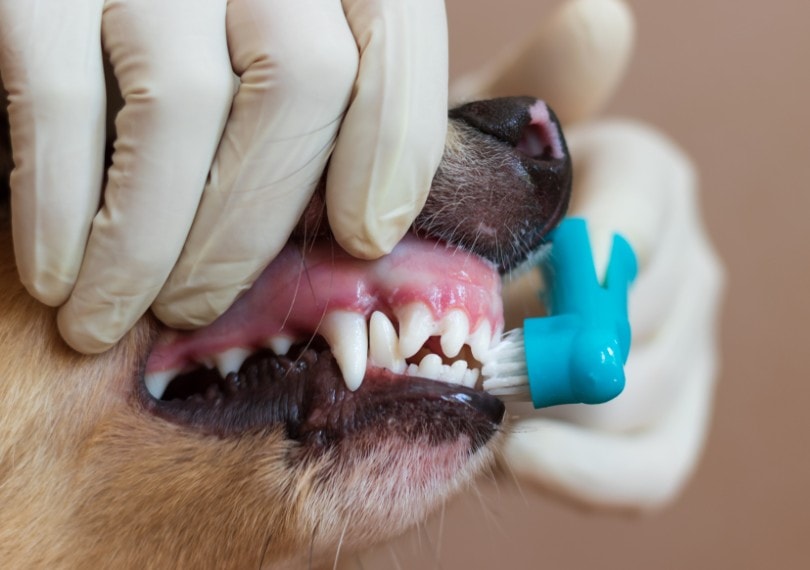
- Daily at-home brushing. Brushing a dog’s teeth might sound excessive to some people. But this is the “gold standard” for removing plaque and minimizing periodontal disease. And if we do it for ourselves, why shouldn’t we do it for our dogs? It’s recommended to get your dog used to it from a very young age, as most dogs will not tolerate brushing if you start when they are an adult; it is a very unnatural and unfamiliar feeling for them. Always use a dog toothpaste and a dog toothbrush. Human toothpaste has fluorides and other additives, which we spit out, but dogs swallow.
- Dental chews. These are tough chews designed to help remove plaque. Think of it as a more natural form of tooth brushing, though perhaps not quite as effective. Dogs should be chewing for at least twenty minutes to attain a benefit. If your dog eats dental chews with ease, they may not be doing much for their dental hygiene.
- Professional cleaning. Most dogs benefit from an annual “scale and polish” procedure. This is more involved than it might initially seem. Vets will perform a full and thorough physical examination on your dog, including a conscious oral exam. Your dog then has a general anesthetic, which allows the teeth to be probed and inspected.
Dental X-rays are often performed to assess what’s happening below the gum line, as this is not visible to the naked eye. A specialized ultrasonic scaler is used to remove every bit of plaque and calculus, and a polish material is applied to reduce future build-up. Extractions and other dental surgical procedures can be performed if warranted.
Most dogs benefit from an annual “scale and polish”. If at-home care is excellent, they might be less frequent. In some dogs, despite all of your best at-home care, bi-annual dental procedures are necessary.
Specially formulated dental diets are available and should be discussed with your veterinarian. Water additives designed to remove plaque are also on the market, though there is limited research to support their success.
Frequently Asked Questions
My Dog Is Too Old for General Anesthesia. What Should I Do?
This is a valid concern and one that should be discussed with your vet. There isn’t necessarily an age cap on general anesthesia. The risk may be increased if your dog has other health problems, such as heart or kidney disease.
However, veterinary anesthesia is highly advanced, and most senior or geriatric dogs are still candidates for general anesthesia. If periodontal disease is affecting their quality of life, a dental procedure should be discussed with your vet, regardless of their age.
When Should I Start Brushing My Dog’s Teeth?
You should start brushing when your dog is a puppy. Even though most of the adult teeth don’t fall out until about 6 months of age, if you start brushing at this point, it may be quite challenging to get your dog used to it.
Conclusion
Periodontal disease is far and away the most common form of dental disease in dogs. It can cause pain, infections, and bone-loss. All dogs benefit from some form of at-home dental care, and most dogs benefit from an annual scale and polish procedure.
If you are concerned about periodontal disease, arrange a consultation with your veterinarian so that your dog’s dental hygiene can be assessed.
Featured Image Credit: YAKOBCHUK VIACHESLAV, Shutterstock
Expert dog care, straight to your inbox
News, insights, expert advice, and everything dog.

No spam — unsubscribe anytime.
By signing up, you agree to our Terms & Conditions and Privacy & Cookies Policy.
How useful was this post?
Click a star to rate. You can leave written feedback afterwards. (We read all feedback.)
Dr. Joe Mallat DVM (Veterinarian)
Joe is a veterinarian from Sydney, Australia. When he's not working, he enjoys cooking, exercising, and exploring the Australian wilderness. He has worked for 2 years at a mixed-species practice on the mid-north coast of New South Wales, treating animals of all sizes. His areas of particular interest include wound management, internal medicine, and oncology. Joe's love for the profession comes not only from helping dogs, but also from helping their parents and working with wonderful teams of people.
Joe completed his Bachelor of Veterinary Biology and Doctor of Veterinary Medicine at the University of Sydney in 2020.