Dr. Paola Cuevas is our Senior In-House Veterinarian at Dogster and Pangolia. She has over 19 years of experience working with an array of species and loves sharing her knowledge and experience with our readers and aims to provide assistance with any issue presented by your non-human family members. She received her degree from the University of Guadalajara, Mexico.
Her passions are animal welfare and preventive medicine, and has skills in the fields of nutrition, microscopy, clinical pathology, diagnostic imaging, and endoscopy.
Paola frequently contributes pet care insight to various media outlets like PetMD, The Daily Record, Parents.com, etc.
Paola is also an animal behaviorist with extensive experience in positive reinforcement animal training.
The information is current and up-to-date in accordance with the latest veterinarian research.
Learn more
Updated on
Share
Potty training your puppy is vital, and it will save you a great deal of trouble later. However, some people struggle with training, especially those who have never owned a dog before. If you need help in this area, read on for a step-by-step guide to potty training your puppy, as we offer plenty of tips and answers to common questions about the process.
Before You Begin
Before you bring home your puppy, choose a spot outside where they will go potty.
Set feeding and potty schedules for your pet. Puppies usually need to go outside every couple of hours, so plan accordingly.
Choose a word or phrase to signal to your puppy that it’s time to go potty, like “go potty” or “do your business,” and stay consistent with it.
Have the necessary supplies ready before you start training, which can include a leash to take your puppy to the potty spot, treats for rewards, and cleaning supplies, like a high-quality enzyme cleaner for accidents.
Image Credit: Pixel-Shot, Shutterstock
The 7 Steps for Potty Training a Puppy or Dog
1. Introduce the Potty Area
To start the training, lead your puppy to the chosen potty spot using a leash, and say your chosen phrase to help your pet associate the words with the action of going to the bathroom. Give them time to sniff around and get comfortable.
2. Reward and Praise Your Dog
Image Credit: Cavan-Images, Shutterstock
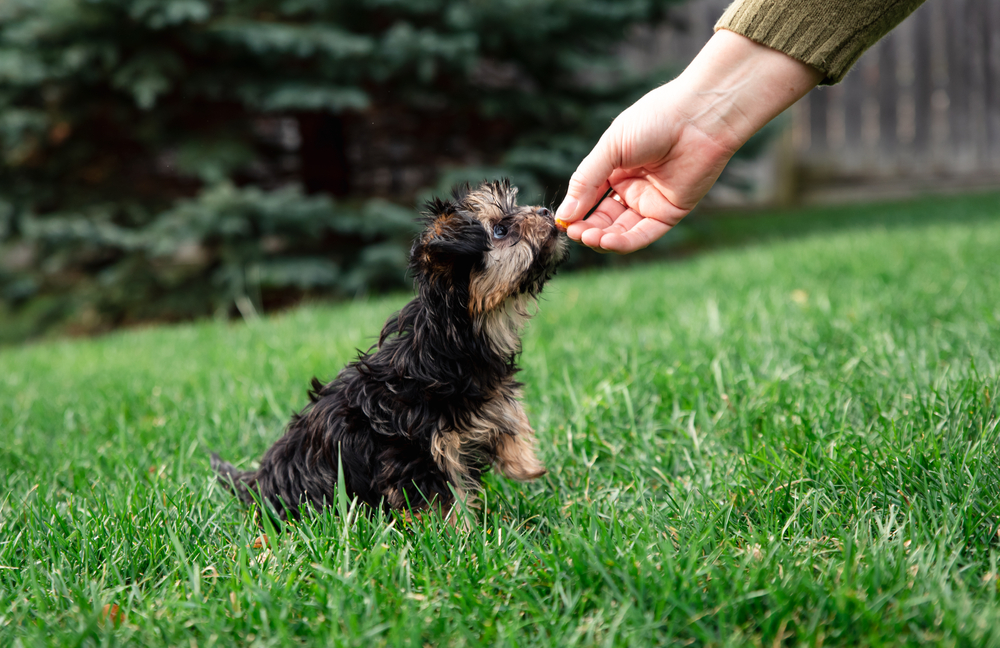
If your pet goes potty in the right spot, give them a treat or extra praise to help them understand that they did something right. After a few repetitions, your dog will associate that the spot, the action, and the treat go together, and the bulk of your work will be over.
3. Establish a Schedule
Take your puppy to their potty spot based on the schedule. With puppies, this largely depends on your attention and careful planning because puppies haven’t developed bladder control and need to be taken out in hourly intervals that are the approximate equivalent to their age in months. This means at least every 2 hours if your puppy is 2 months old, every 3 hours if they are 3 months on, and so on. It is best to also take them out right after waking up from a nap and about 15 minutes after each meal.
With adult dogs, your schedule might be more relaxed. You will typically need to take them out after meals, playtime, and naps to help get them into a routine that will reduce the number of unexpected potty trips.
4. Observe and Learn
Image Credit: Yta23, Shutterstock
Once your dog has a good idea of where to go, it’s time to work on when. With experience, you will learn to recognize the behavioral signs. Pay close attention to any indication that your puppy or adult dog needs to go potty, which can include sniffing, circling, or whining. If you are lucky, they may even stand by the door, signaling that they want to go out. Immediately take them to their potty spot when you notice these signs.
5. Handle Accidents Calmly
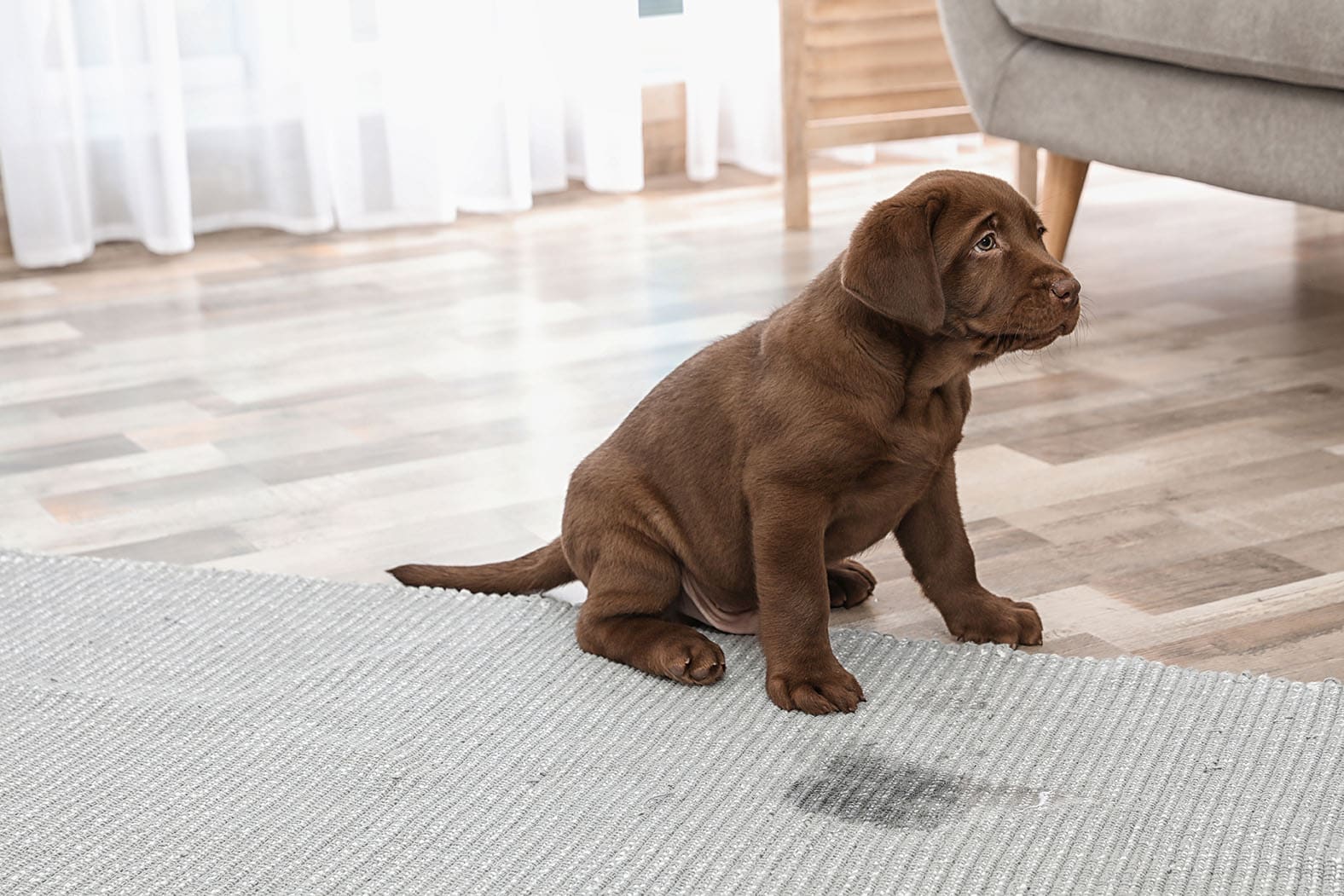
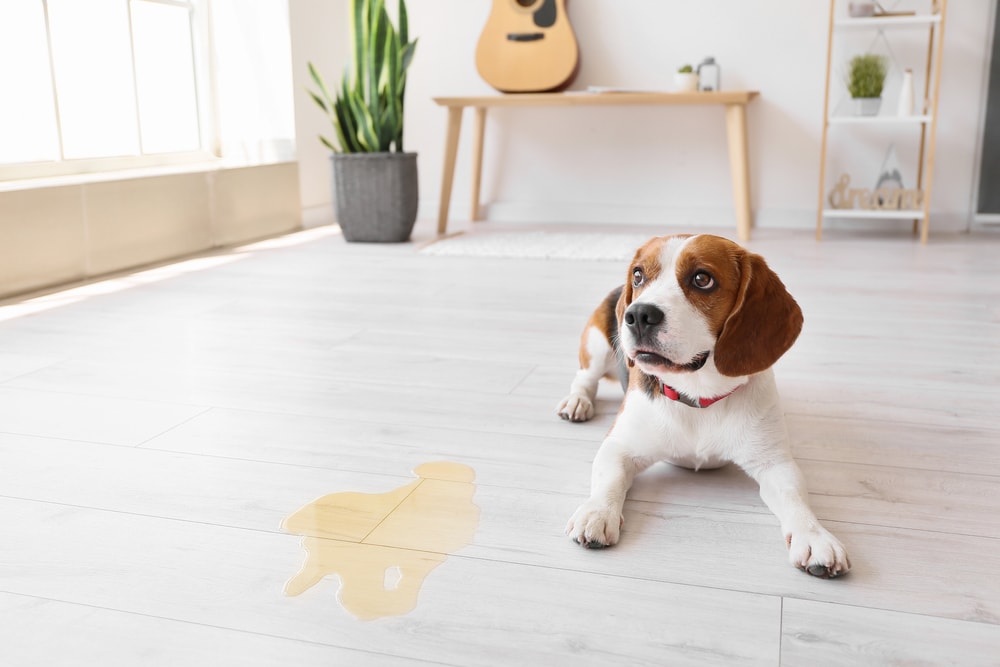
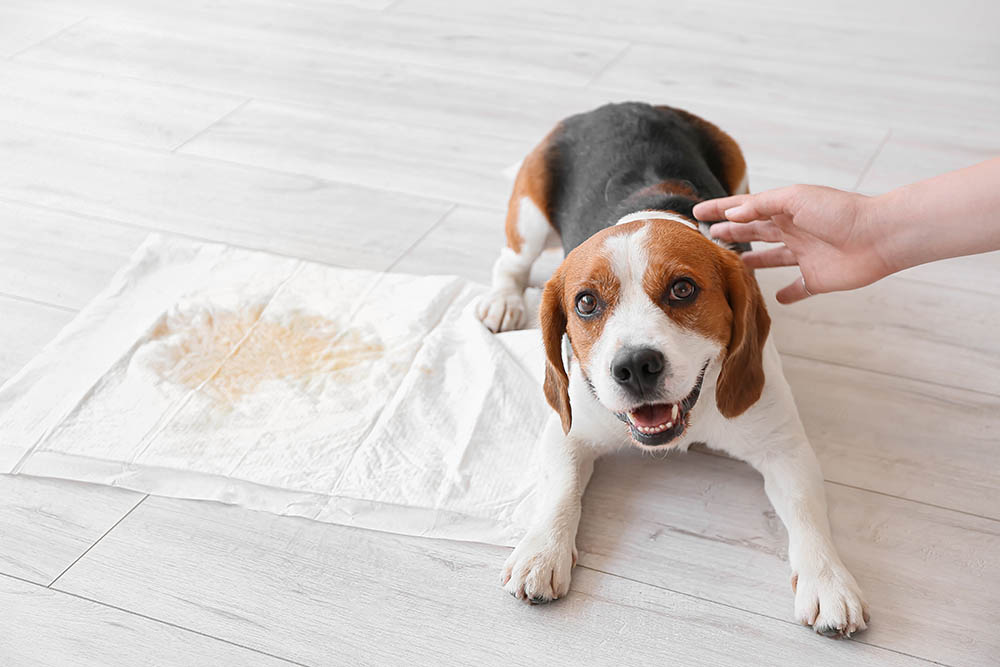
Accidents can happen, even with well-trained dogs. If your pet has an accident inside, try not to get too angry with them. If possible, calmly interrupt them, and take them to the chosen spot. Clean up the mess quickly with an enzyme cleaner to reduce the chances that they will have an accident in the same place in the future.
ADVANCED ENZYMATIC CLEANER - Penetrates the most stubborn smells and stains at the deepest molecular...
FOR ANY MESS, ON ANY SURFACE - This pet odor eliminator cleans your carpets, floors, furniture,...
FRESH, NATURAL ODOR - Our unique formulation doesn't rely on dangerous or unpleasant chemical...
It eliminates tough stains and odors easily and is excellent for accident prevention. Plus, it comes with a 100% satisfaction guarantee! Click here to order now.
At Dogster, we’ve admired Hepper for many years, and decided to take a controlling ownership interest so that we could benefit from the outstanding products of this cool pet company!
6. Gradually Increase Your Dog’s Freedom
As puppies, it’s a good idea to limit their movement, especially before they are potty trained, but as they become more reliable, gradually giving them more freedom around the house can be a strong form of positive reinforcement. If accidents occur, slow down, and reinforce the training before exposing them to more areas of your home.
7. Be Patient and Consistent
Image Credit: Pixel-Shot, Shutterstock
Potty training requires patience and consistency. Expect to have a few accidents, and try to remember that it is part of the process. Getting angry at your pet can lead to anxiety and confusion.
Tips and Tricks
In the beginning, consider confining your dog to a crate or a puppy-proofed area to prevent accidents.
Remember that puppies have no control of their tiny bladders and will need to be taken out a couple of times during the night.
With adult dogs, limit how much water your dog drinks before bedtime to reduce the likelihood that they will need to go out while you are sleeping.
Crate training can be a valuable tool in potty training, as dogs naturally avoid soiling their sleeping area. However, you should never use it as a form of punishment.
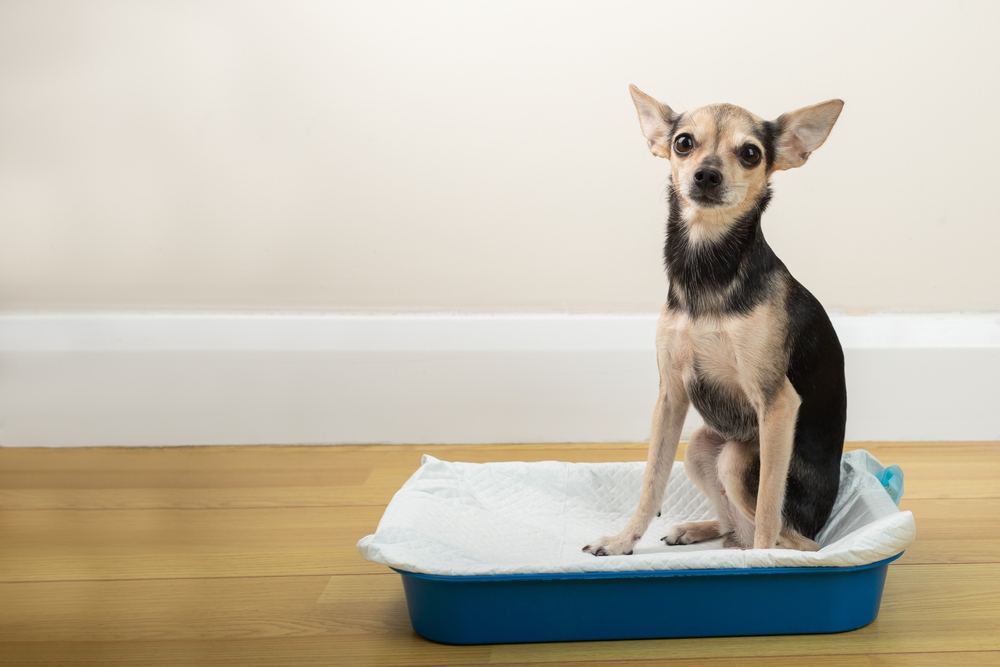
While potty pads can be helpful, especially in an apartment building or another area where it’s difficult to take the dog outdoors, you should use them sparingly when training a dog to go outside, as they might confuse your pet about where they should go.
Make sure everyone in the household is on the same page regarding training methods, schedules, and commands.
Frequently Asked Questions
How Often Should I Take My Puppy Outside to Potty?
Most puppies need to go out every 2–3 hours, but you will be able to gradually lengthen the time between bathroom breaks as they get older.
How Long Does It Take to Fully Potty Train a Puppy?
Unfortunately, the amount of time that it can take to fully potty train a puppy can vary considerably from one dog to the next, as each will have a unique personality and learning challenges. Many other factors also come into play, such as environment, breed, distraction, etc. Some puppies only need a few months to become reliable, while others can take up to 1 year.
Image Credit: Ilina Yuliia, Shutterstock
Why Does My Puppy Have Accidents Immediately After Coming Inside?
Many dogs, especially puppies, can get distracted by all the commotion outside when they visit the potty and completely forget to do their business, only to remember once they get back inside and are unable to hold it any longer. Always ensure that your dog does what you came out to do before you go back into the house.
Alternatively, place them in the crate for 5 to 10 minutes after returning home and take them straight out again until they do their business. Remember to give them a treat once they do it, and allow them to play and sniff outside before bringing them back in.
Summary
Potty training your dog is relatively straightforward. You’ll need to pick a spot for your pet to use and choose a command like “do your business.” Then, take your puppy out every couple of hours to the designated spot, until you see them going potty. Once they do, give them a treat and allow them to play and sniff outside for a bit before going back inside.
Watch for signs that they need to use the bathroom between scheduled outings to reduce the likelihood that they will have an accident in the house. If an incident does occur, stay calm, and don’t punish your dog, or it can lead to high anxiety and other problems.
Ed Malaker is a seasoned writer who has contributed to a wide range of blogs covering everything from tools to guitars, and pets to fitness. When Ed isn't writing, he is usually making DIY projects around the house or working in the garden.
Join the conversation
2 Responses
I adopted a one and half year old female lab husky mix approx 3 wks ago. She go will potty on a walk but not in our back yard. I have been taking her out in our yard on a leash to the same spot. she sniffs but gets distracted by birds, and other neighborhood noises. I've used a spray for the grass to entice her. When we are out in the yard I repeat "POTTY". I get up really early to let her out right away-no go. I'm not trying to feed her first and then take her outside. I usually spend 10 or so minutes on this exercise but give in to taking her for a walk as I have to get to work. I need some help. I hate to give up on her cause she is a real sweet girl. Any suggestions??
Hi Joan, thanks so much for reaching out! It’s clear you're putting in a lot of effort, and it’s wonderful to hear how dedicated you are to helping your pup settle in. Some dogs can definitely get distracted outside, especially when they’re adjusting to a new home. Consistency really is key here, and you’re already on the right track. Just keep up the same routines, and when she does use the potty in the right spot, be sure to offer plenty of praise and a treat as positive reinforcement. It may take a bit of time, but you’re doing great! With patience, she’ll start to understand that the yard is the place to go. Keep up the awesome work! 🙂
Why This FDA Approval Is Such Important News For years, veterinarians and pet parents have struggled with a frustrating reality in canine behavioral...
You might be concerned about how safe turkey meal is and why pet food companies don’t just use more real turkey meat. Turkey meal and other meat meals are common ingredients found in dog food. Most dog food companies put...
If your dog is like most, they love to eat. They gobble up their food at every mealtime, go after scraps that fall off the table or counter, and investigate anything that they come across outdoors to see if it...
Whether eaten raw or cooked in a delicious sauce, tomatoes are a staple of many human diets. If you’re tempted to slip your dog a slice, you’ll first want to determine whether dogs can safely eat tomatoes. Ripe tomatoes are...
Learning how much to feed your dog and what type of food to offer at various life stages is crucial when deciding on a dog’s diet. It is vital to check out proper measurements based on activity level, age, and...
Animal digest is an ingredient used in dog and cat foods to improve palatability. Dairy products, amino acids, and fats or fatty acids are other traditional palatants (also called flavor enhancers) added to dog and cat foods to make them...
Every dog enjoys the occasional treat added to dog food. Dog owners love to spoil their canine kiddos with extra treats, as they worry about them getting bored eating the same thing day in and day out. However, you should...
The West Highland Terrier is a breed of dog beloved by many. If you’re lucky enough to be a pet parent to one of these pups, you know just how quirky they can be. You also know just how important...
There are so many different types of dog foods on the market. From “grain-free” to “holistic” to “human-grade,” how do you choose the best one for your canine pal? Many marketing terms are used on dog food labels nowadays, and...
Stay informed with expert pet care insights delivered straight to your inbox! Discover professional guidance on animal behavior, feeding tips, trusted product picks, and much more.
You may opt-out at any time. View our Privacy Policy for more information.
Sign up for the Dogster Email Newsletter
You may opt-out at any time. View our Privacy Policy for more information.
You may opt-out at any time. View our Privacy Policy for more information.





 Frequently Asked Questions
 Frequently Asked Questions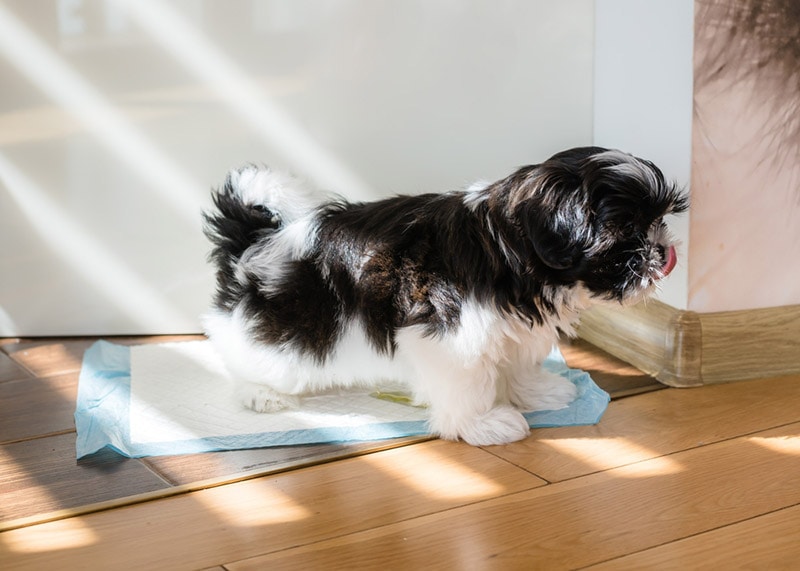
 Before You Begin






















2 Responses
I adopted a one and half year old female lab husky mix approx 3 wks ago. She go will potty on a walk but not in our back yard. I have been taking her out in our yard on a leash to the same spot. she sniffs but gets distracted by birds, and other neighborhood noises. I've used a spray for the grass to entice her. When we are out in the yard I repeat "POTTY". I get up really early to let her out right away-no go. I'm not trying to feed her first and then take her outside. I usually spend 10 or so minutes on this exercise but give in to taking her for a walk as I have to get to work. I need some help. I hate to give up on her cause she is a real sweet girl. Any suggestions??
Hi Joan, thanks so much for reaching out! It’s clear you're putting in a lot of effort, and it’s wonderful to hear how dedicated you are to helping your pup settle in. Some dogs can definitely get distracted outside, especially when they’re adjusting to a new home. Consistency really is key here, and you’re already on the right track. Just keep up the same routines, and when she does use the potty in the right spot, be sure to offer plenty of praise and a treat as positive reinforcement. It may take a bit of time, but you’re doing great! With patience, she’ll start to understand that the yard is the place to go. Keep up the awesome work! 🙂