In this article
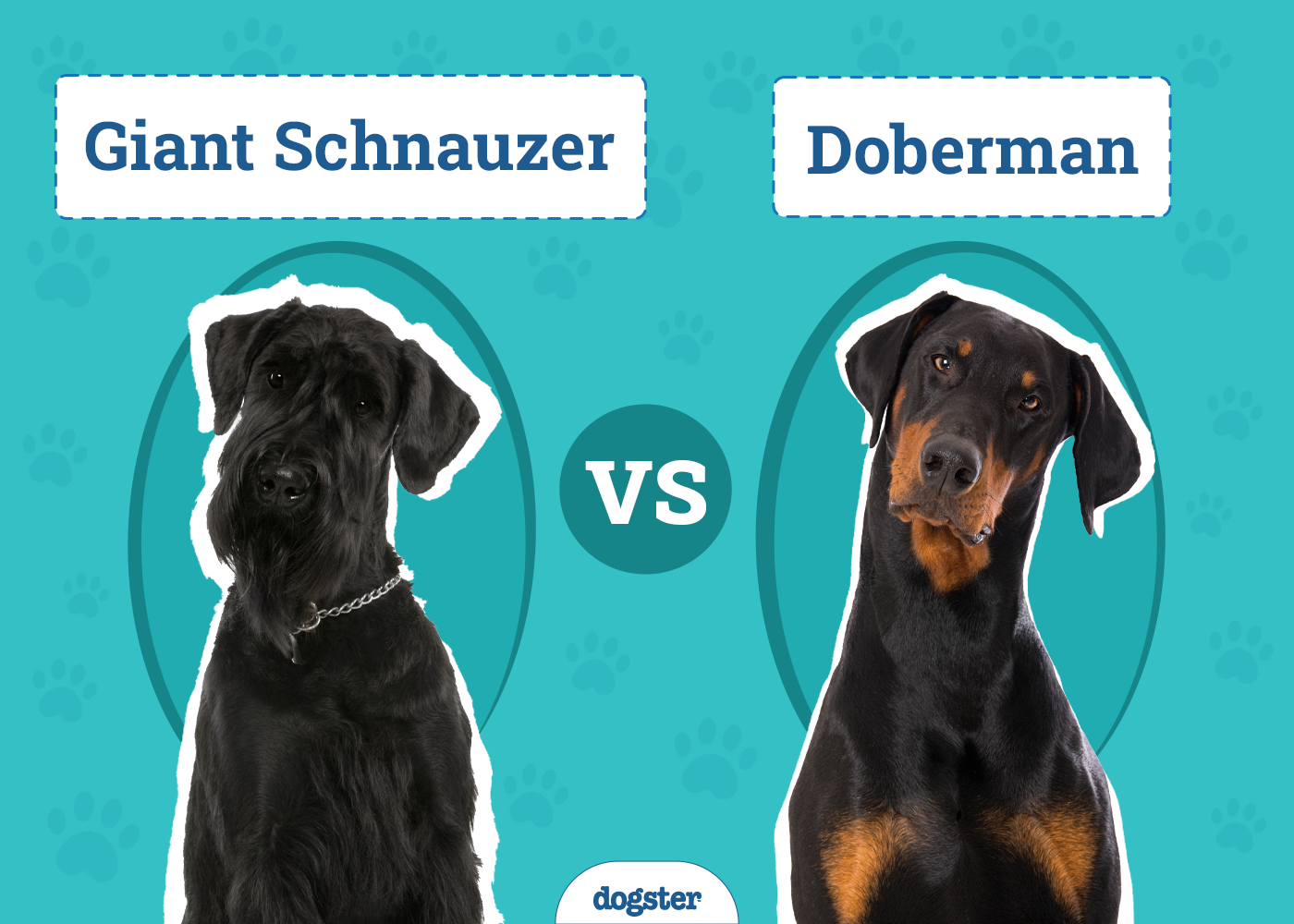
The Giant Schnauzer and Doberman Pinscher are both from the working group, well-known for their protective instincts. These dogs are loyal, alert, and ready to protect their owners at all costs.
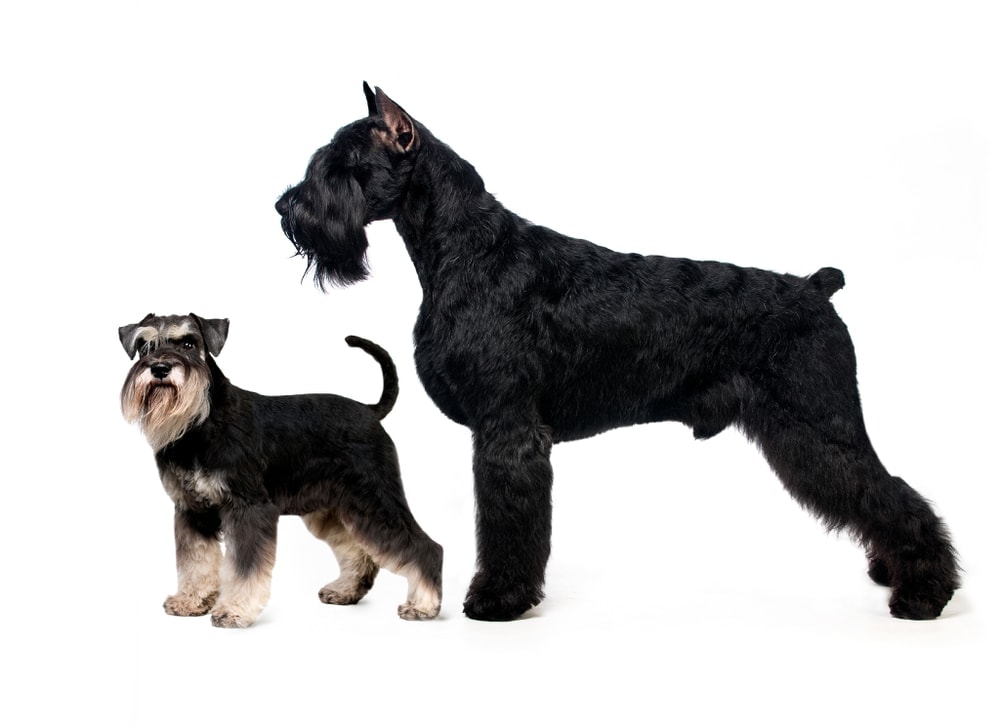
Besides the physical differences of the Giant Schnauzer and Doberman Pinscher, they have other vital considerations when selecting the right breed for your household. This post points out those differences so you can decide which dog you should call your forever friend.
A quick disclaimer: We mention training and protective instincts in this post but don’t cover protection training in detail. Instead, we discuss socialization and confidence building.

Visual Differences
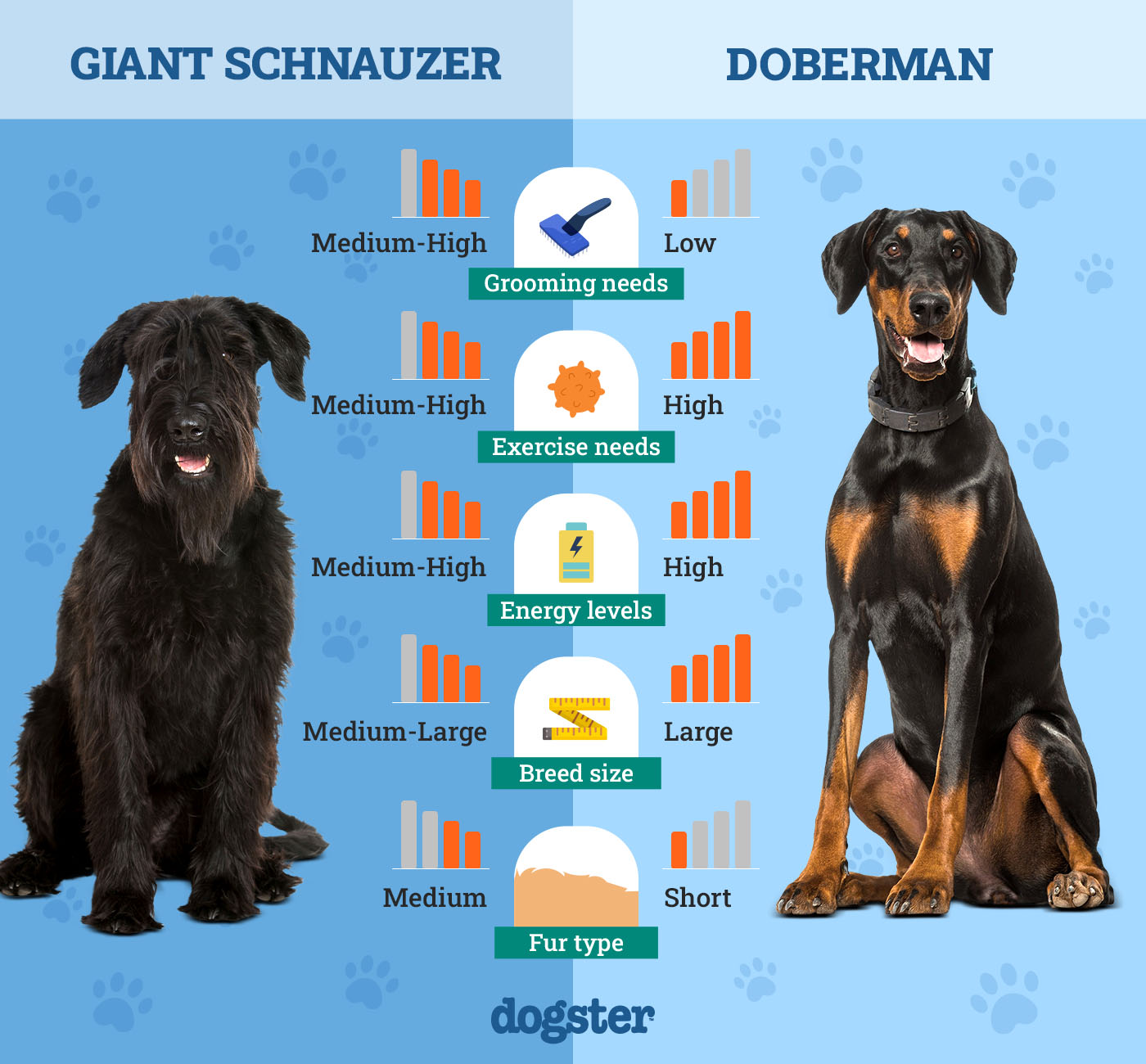
At a Glance
- Average height (adult): 5–22.5 inches (male), 23.5–25.5 inches (female)
- Average weight (adult): 60–85 pounds (male), 55–75 pounds (female)
- Lifespan: 12–15 years
- Exercise: 1+ hours a day
- Grooming needs: Moderate
- Family-friendly: Yes
- Other pet-friendly: Usually
- Trainability: Vigilant, loyal, trainable
- Average height (adult): 26–28 inches (male), 24–26 inches (female)
- Average weight (adult): 75–100 pounds (male), 60–90 pounds (female)
- Lifespan: 10–12 years
- Exercise: 1+ hours a day
- Grooming needs: Seldom
- Family-friendly: Yes
- Other pet-friendly: Usually
- Trainability: Alert, loyal, fearless
Giant Schnauzer Overview
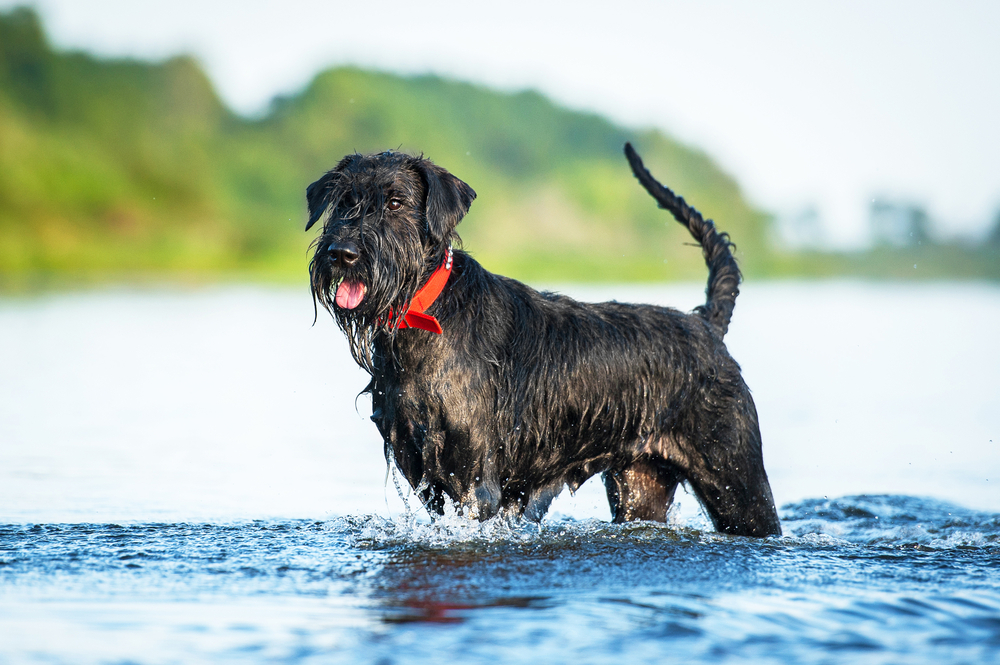
Giant Schnauzers are only America’s 56th most popular dog breed, so you don’t see this breed waltzing the streets as often as other dog breeds. Known as the “wolf in sheep’s clothing,” you can’t help but stare at the scruffy titan. Male Giant Schnauzers stand 27.5 inches high and can weigh up to 95 pounds.
Regardless of their size, they live longer than most larger dogs—about 12 to 15 years.
Bred to Defend
The Giant Schnauzer originated in the Bavarian Alps during the mid-10th-century. Breeders used the Standard Schnauzer and Great Dane to create the scruffy guard dog we know today.
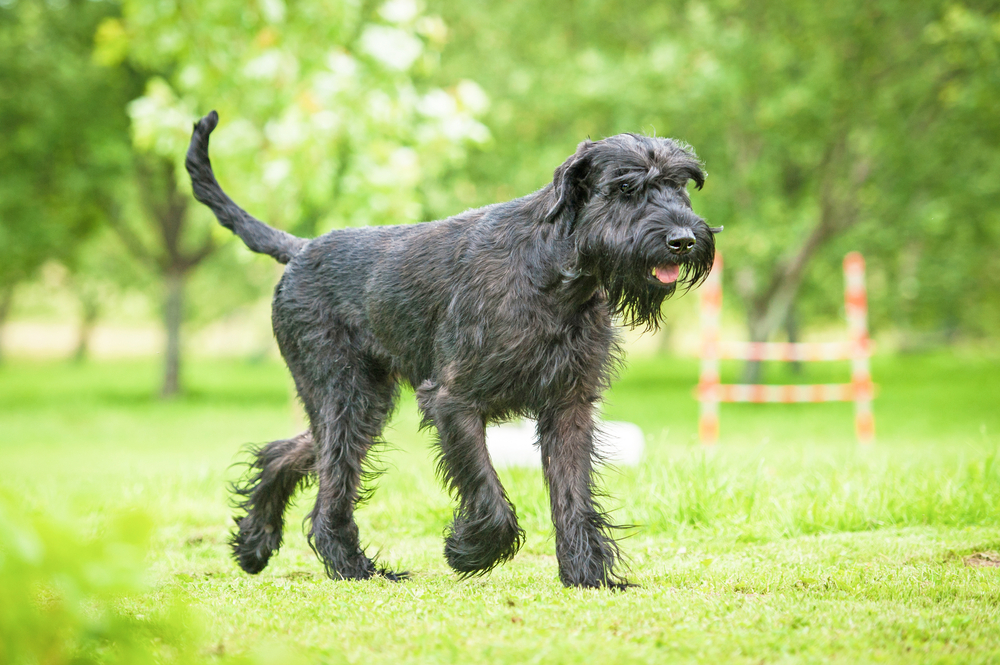
The Giant Schnauzer excelled as steadfast protectors for all kinds of jobs. But the one job they outshined other dogs in was steering cattle in cattle drives. Before trains, men had to steer cattle for hundreds of miles to supply beef to markets. Giant Schnauzers proved to be excellent guard dogs and companionship during long trips.
Sooner or later, cattle drives became a thing of the past, but this didn’t stop the Giant Schnauzer. Because of their natural guarding tendencies, they became helpful as police and military dogs. Giant Schnauzers eventually came to the US and have slowly climbed the popularity ladder.
Giant Schnauzer Care
Exercise
Giant Schnauzers are hard-working dogs that need a job. They should receive at least one hour of vigorous exercise daily. Otherwise, you will be cleaning up destroyed furniture. Long walks and extended ball-throwing sessions are great ideas. Giant Schnauzers will even accompany their owners on long runs, hiking, biking, and other cardio-intensive activities.
Training
A reason Giant Schnauzers are favored is their highly-trainable behavior. These dogs are intelligent and territorial, wanting desperately to please and protect their owners. Dog sports can help by giving your Giant Schnauzer mental stimulation, exercise, and boosting their confidence.
You want to start training with dogs as early as possible, especially with Giant Schnauzers. These dogs don’t always differentiate between play and work, so it’s crucial to expose your Giant Schnauzer to various animals and people so they can make this distinction.
Grooming
Giant Schnauzers have dense, wiry coats that require weekly brushing and frequent clips to maintain health. Their infamous beards can become tangled and dirty, so you will also need to wash their face from time to time. With Giant Schnauzers, you will have to visit a groomer occasionally.
The ears should be checked for any sign of infection, and the teeth should be brushed often. Toenails can be clipped when needed.
Do Giant Schnauzers Make Good Family Dogs?
Giant Schnauzers make great family dogs, but they have some drawbacks. They’re not the happy-go-lucky dogs people often look for in a family dog. A Giant Schnauzer’s job is to protect and serve the family first. This breed has no “clock in, clock out” mindset.
That doesn’t mean Giant Schnauzers are party poopers. They love to have fun as much as the next dog, especially if it means spending quality time with their owners. Giant Schnauzers can also be reactive around small children. They can still be around children, but supervision is recommended.
Overall, these dogs are territorial, but companionship and a job will help minimize unwanted behavior. They have a strong work drive, so Giant Schnauzers aren’t for relaxed owners.
Suitable for:
Giant Schnauzers are great family dogs that protect at all costs. These dogs are ideal for homes where they can roam and guard, like a farm or a large backyard. Giant Schnauzers are okay with children but can become territorial and reactive quickly. Depending on the dog’s personality, other pets can be good or bad.
- Excellent working dog for farms
- Higher life expectancy
- Highly trainable
- Daily grooming required
- Very territorial
- Reserved personality
- Suitable around kids with supervision
- You may be interested in: 150+ Popular & Unique Names for Giant Schnauzers
Doberman Pinscher Overview
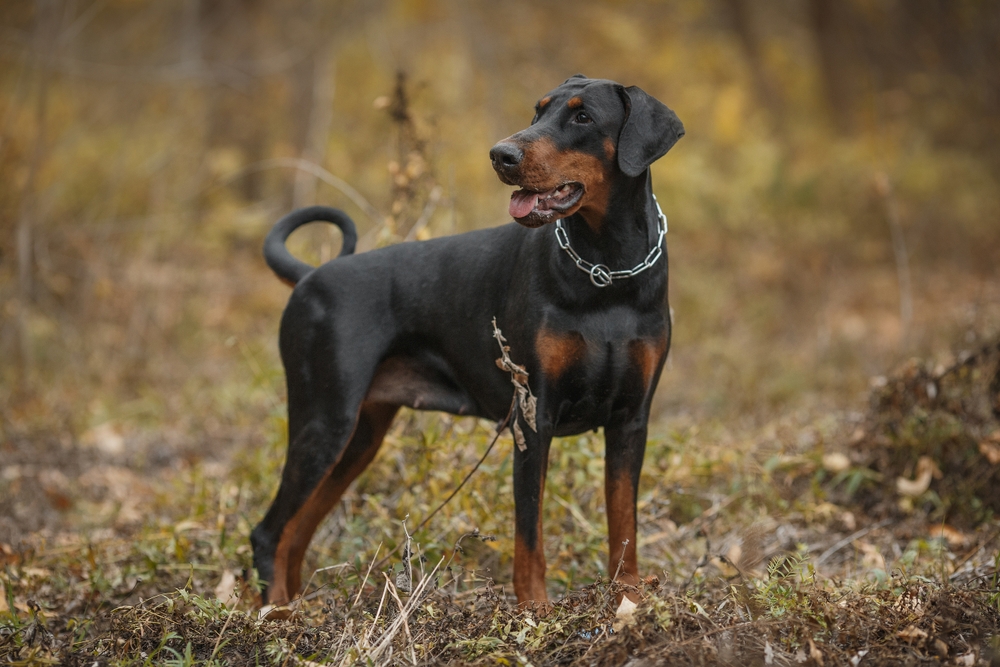
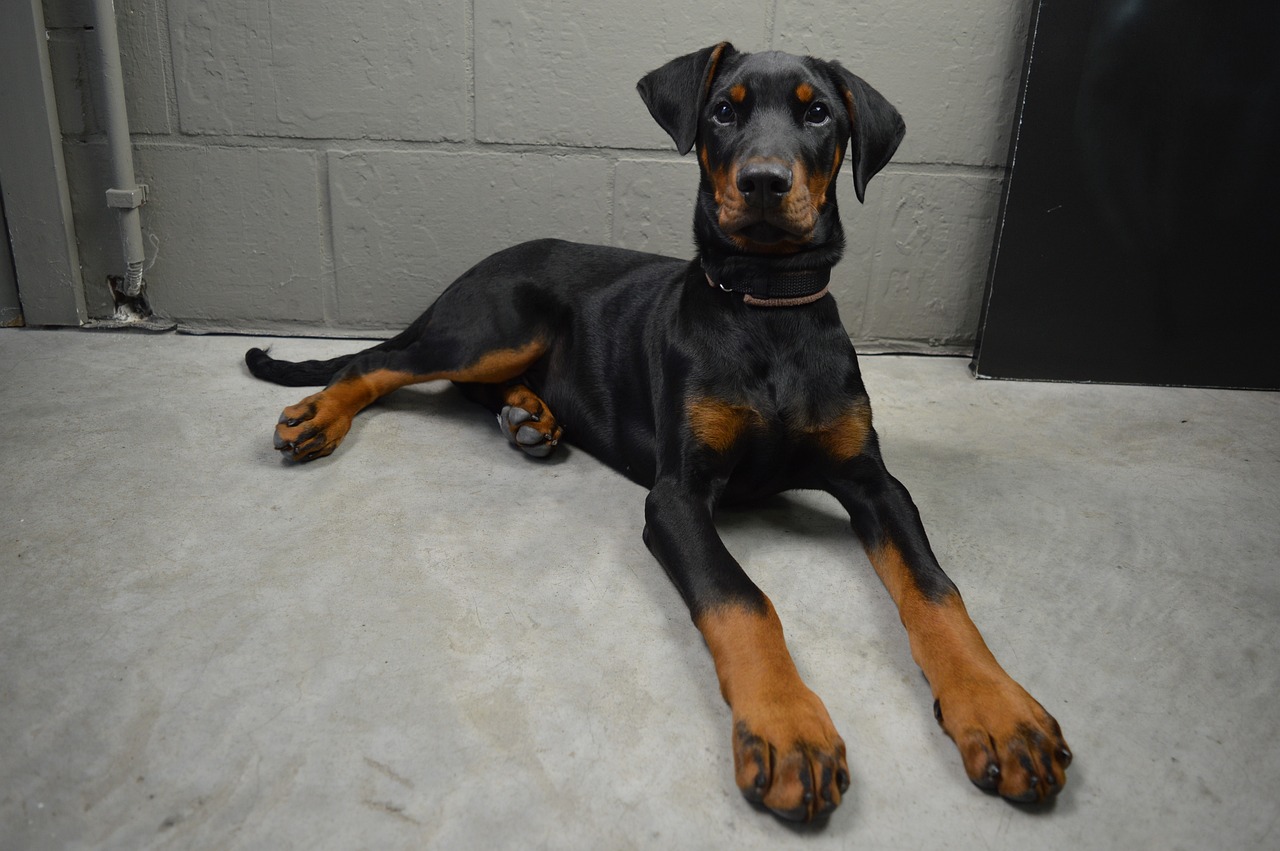
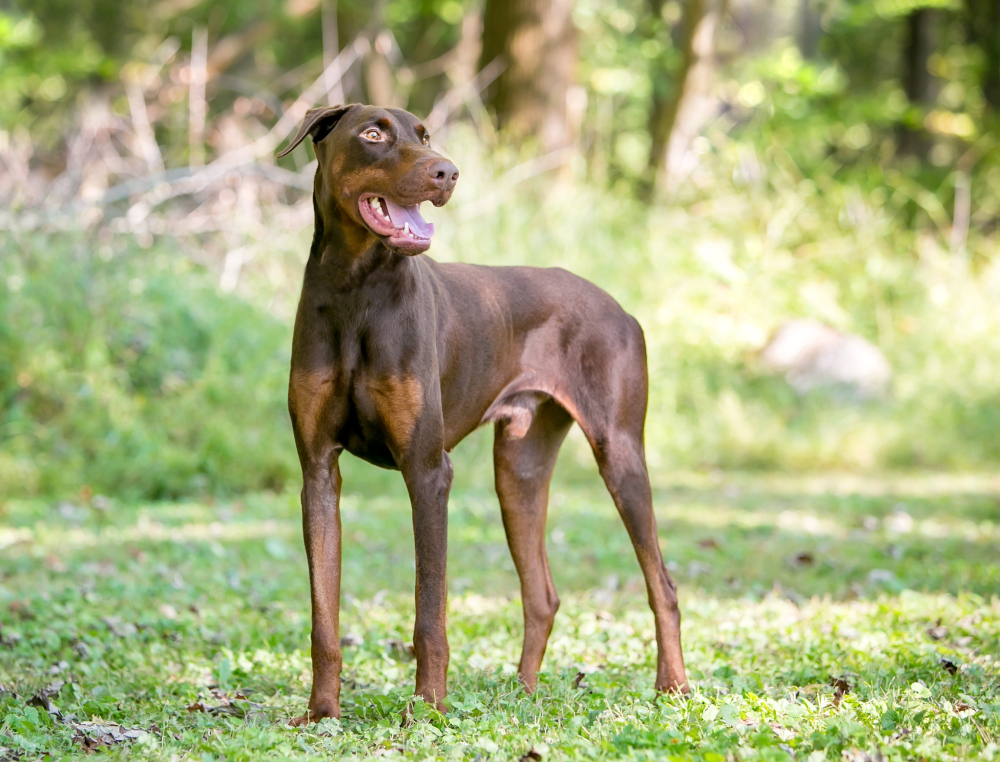
Doberman Pinschers are muscular, powerful dogs with beautiful glistening coats. These dogs are well-known for their intimidating upright ears and stubby tails, although they’re born with naturally floppy ears.
Similar to the Giant Schnauzer, Dobermans are large dogs that stand between 24 and 28 inches high. They can live between 10 to 12 years and are the 15th most popular dog breed in America.
Despite their size and fierce appearances, these dogs are big softies. Still, they’ve served their purpose in history like most working dogs.
Taxes & War
The Doberman Pinscher was developed in the 1880s by Louis Dobermann, a tax collector who experienced hostility during his tax collecting rounds.
Louis Dobermann was looking for a companion to protect him while he walked around town collecting taxes. After breeding with Black and Tan Terriers, Pinschers, and Rottweilers, he finally created a less refined version of the modern Doberman Pinscher.
This new “tax collector dog” quickly grew in popularity and proved useful as police, military, therapy, and service dogs. During WWII, 1,047 dogs were enlisted to serve as scouts, messengers, and combat soldiers. About 75% of these dogs were Doberman Pinschers.
Many dogs made it home after the war, but 25 died during combat. A life-size bronze statue of a Doberman Pinscher now stands at the US Naval Base in Guam to serve as a reminder of the dogs’ bravery.
Doberman Care
Exercise
Dobermans are high-energy working dogs that need lots of exercise. Long walks, runs, outdoor play sessions, and doggie puzzles are excellent options to keep your Doberman Pinscher entertained.
Training
Dobermans are eager to please their owners and learn quickly. They can almost train themselves. Their time in the war effort proved these dogs are brilliant and can be trained to love and protect. However, their loyalty can get them in trouble sometimes, so early socialization and training are vital to having a mannerly Doberman.
Dobermans also excel in doggy sports. Joining canine competitions in obedience, tracking, and agility will help your Doberman utilize its natural instincts while remaining a faithful family dog.
Grooming
One of the best parts about Dobermans is that they don’t require much grooming. They still need to be brushed daily and require frequent nail trims and teeth brushing, but they only need a bath monthly.
Do Doberman Pinschers Make Good Family Dogs?
Doberman Pinschers are excellent family dogs. Yes, they’re high energy, but they also know when to be serious. Dobermans can play with children but understand to limit their strength. They’re also patient around kids.
Overall, they have big hearts and love everyone, as long as you’re not a stranger trying to break into the house!
Unfortunately, the “aggressive breed” perception is frequent with this breed. Finding apartment complexes and doggy parks that will accept Doberman Pinschers is slim to none. Even home ownership can be challenging if you have an aggressive breed clause in your home insurance.
Because of this bias, several cities have banned the breed entirely. If you want to adopt a Doberman, know that you’ll face challenges with breed restrictions.
Suitable for:
Dobermans are excellent pets for active families looking for a guard dog, preferably families without other pets. Children are fine, but Dobermans can have too much energy around small children, especially when they’re puppies.
Because of their military background, military families might find they appreciate and understand Doberman Pinschers better.
- Minimal grooming
- Great with kids
- Highly trainable
- Can be too rough with young children
- Potentially aggressive around other animals
- Banned in many cities
- Lower life expectancy
Which Breed Is Right for You?
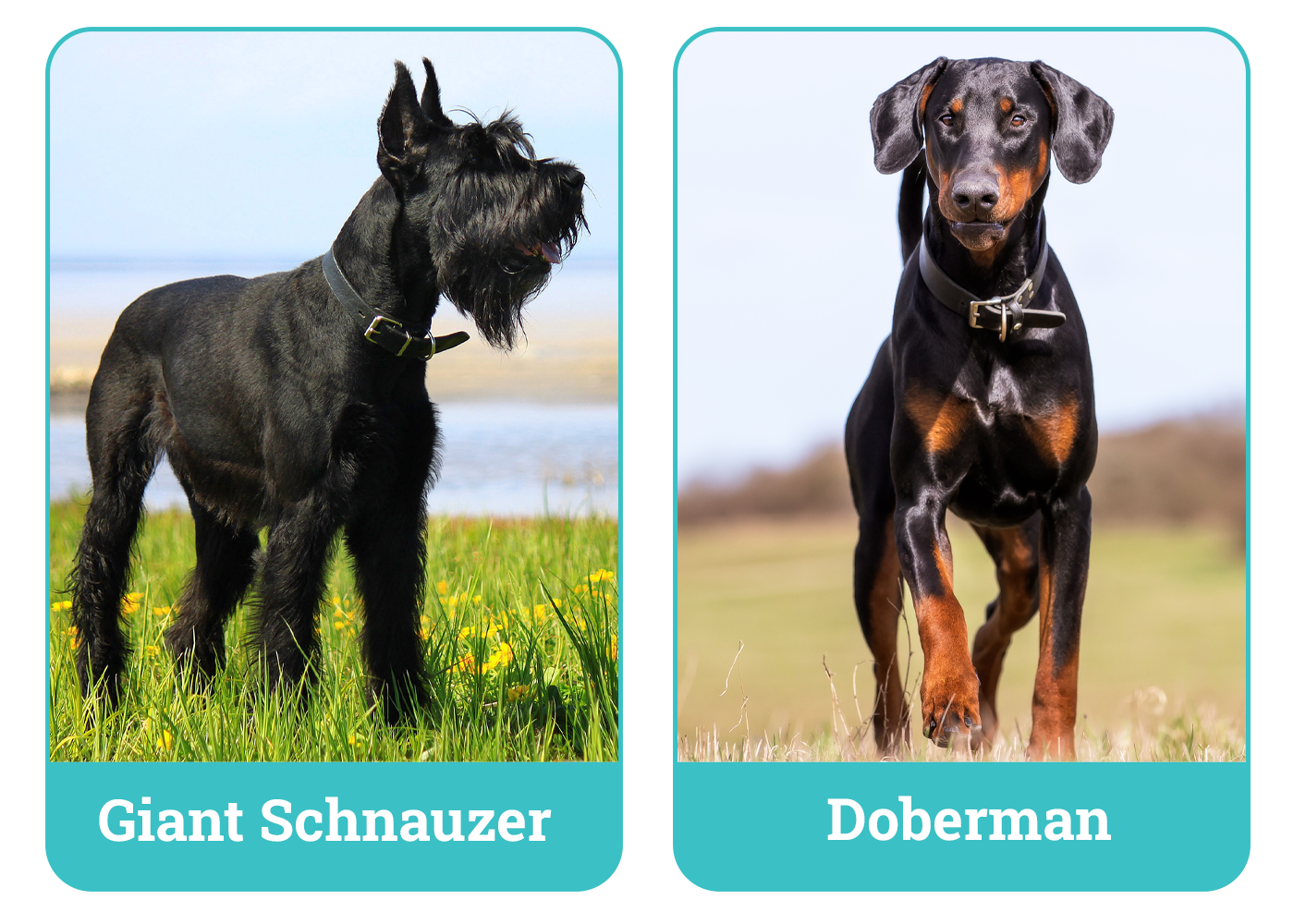
The Giant Schnauzer has a reserved personality that enjoys companionship but doesn’t crave constant attention like other breeds. This breed does well on farms or homes with a large amount of property.
On the other hand, Doberman Pinschers are highly energetic and love attention. Dobermans do well in small homes as long as they have an outlet to burn energy.
Both breeds are decent with kids and other pets, but Dobermans tend to be better with kids. Giant Schnauzers must be taught the difference between playtime and an actual attack, which can be tricky with playful children.
Conclusion
The Giant Schnauzer and Doberman Pinscher are both excellent guard dogs that require a great deal of exercise. So, which one works best for you?
Featured Image Credit: Top – kavalenkava, Shutterstock | Bottom – DSD, Pexels