Dr. Paola Cuevas is our Senior In-House Veterinarian at Dogster and Pangolia. She has over 19 years of experience working with an array of species and loves sharing her knowledge and experience with our readers and aims to provide assistance with any issue presented by your non-human family members. She received her degree from the University of Guadalajara, Mexico.
Her passions are animal welfare and preventive medicine, and has skills in the fields of nutrition, microscopy, clinical pathology, diagnostic imaging, and endoscopy.
Paola frequently contributes pet care insight to various media outlets like PetMD, The Daily Record, Parents.com, etc.
Paola is also an animal behaviorist with extensive experience in positive reinforcement animal training.
So, you’ve been going out to the bathroom with your dog since they were just a wee puppy. You have been watching their antics and their habits from the beginning. As they’ve been growing up, you realize they have a funky habit.
Every time they go to the bathroom, they have to kick behind them when they’re done for the grand finale. If it had not registered on your radar at first, you might wonder what this peculiar behavior is and why your dog is doing it. Here are some possible reasons that your dog kicks after they pee.
The 4 Possible Reasons Why Dogs Kick After They Pee
1. Your Dog Is Scent Marking
Our dogs use their waste to communicate with other canines. Some of it says, “Hey! This is my house.” Other things say, “I noticed you were looking for an admirable suitor. Perhaps I could do the job?”
What our dogs communicate to others greatly depends on the manner, pheromones, and other factors that come into play. When your dog is kicking after using the bathroom, it’s a way for them to send these messages to any canine passersby.
Scent marking is a totally normal thing for dogs to do. There are interdigital scent glands between the toes and in the paw pads that release organic chemical compounds that tell a story. It is a method of communication and nothing more.
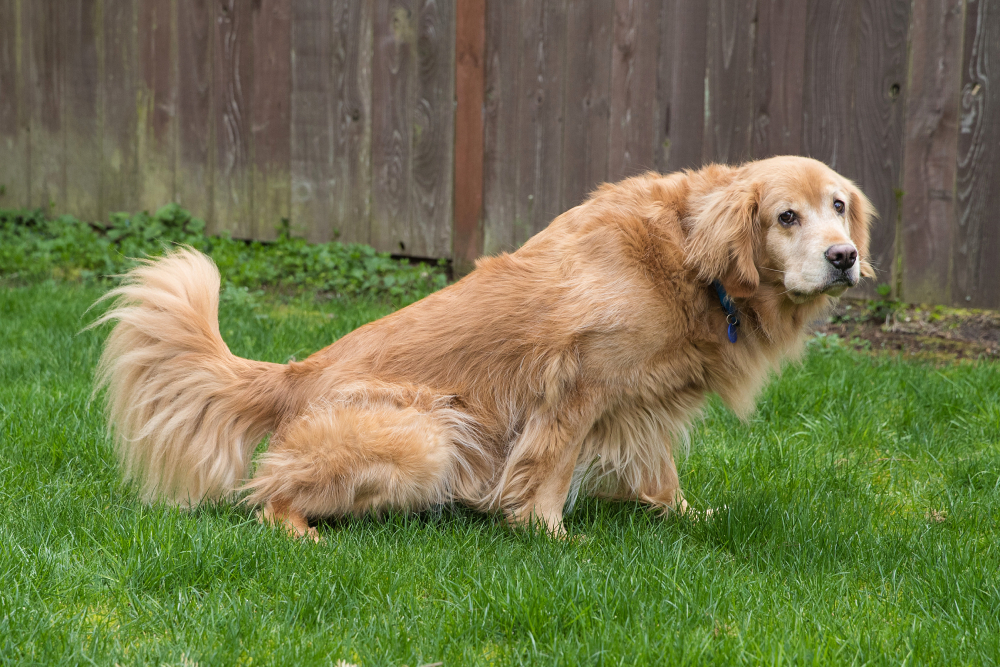
Scratching the grass after urination or defecation spreads the scent and sends important messages to nearby dogs.
Image Credit: MPH Photos, Shutterstock
2. They’re Hiding Their Waste
Another obvious reason a dog may kick after they pee is that they’re attempting to hide their waste, especially if they’re kicking up dirt or sand. They may be trying to cover their waste as a way to hide their scent from prey, or in the case of small dogs, from larger dogs and other predators.
3. It’s a Visual Message
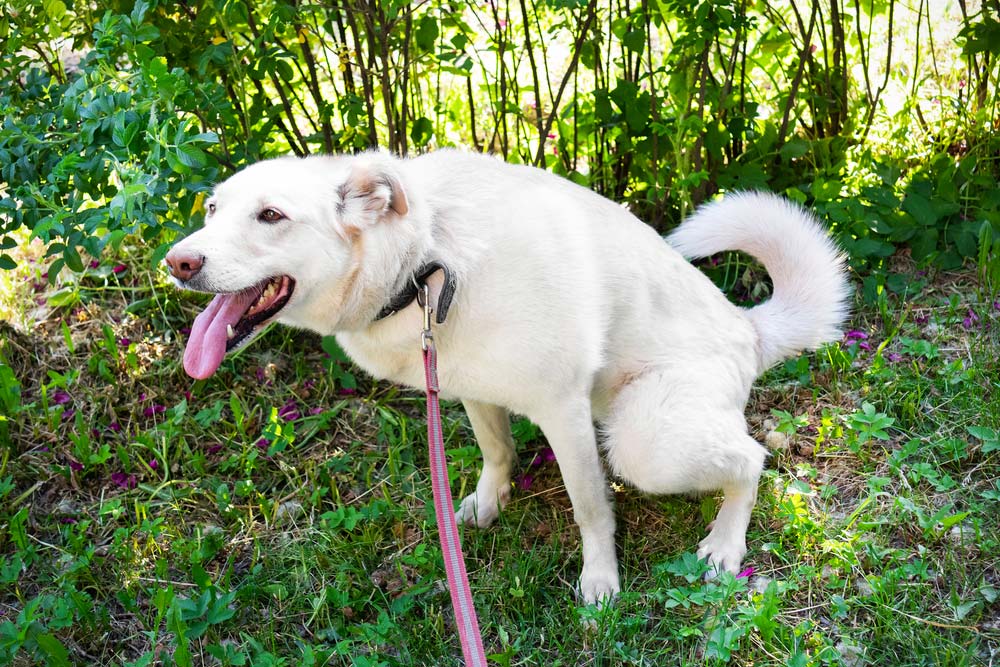
Your dog may kick after they pee as a way to send a visual message to other dogs. It lets the other dogs know that they have just peed there and are marking their territory.
Image Credit: Nataly23, Shutterstock
4. They’re Communicating
Your dog could be kicking the ground after they pee to create visible scratches or slashes on the ground as a longer-lasting sign. This visual mark complements the scent signals and helps indicate their presence or territory even after scents fade.
A Dog’s Sense of Smell
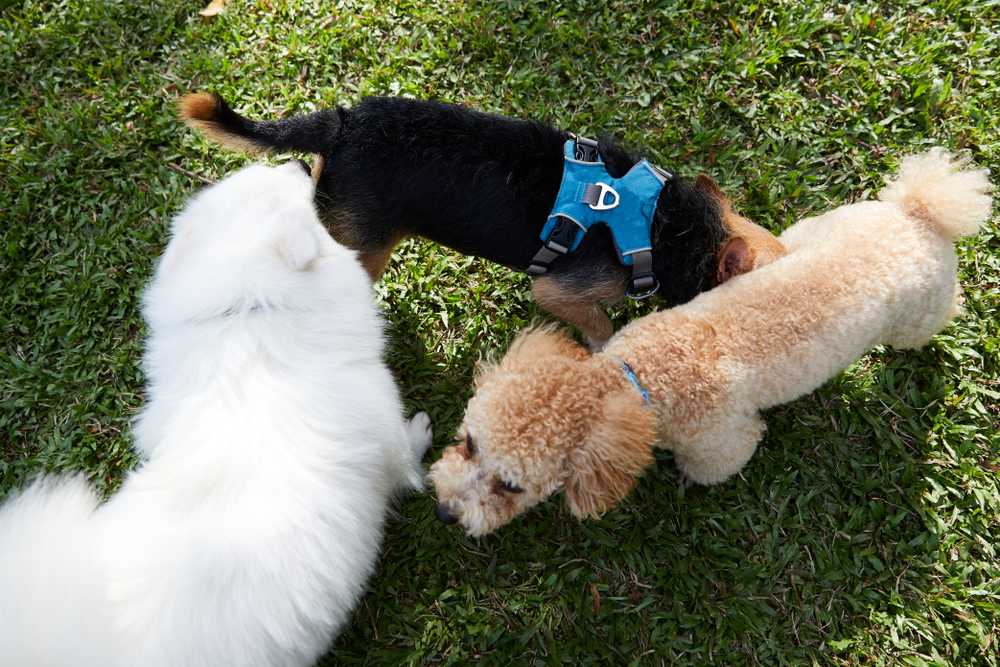
A dog’s sense of smell is far superior to ours. In fact, it’s estimated to be 10,000 to 100,000 times more acute than humans. Dogs can tell all sorts of information about their surroundings and those they interact with by scent alone.
Image Credit: Whiskers Sleepy, Shutterstock
Changes in Bathroom Habits to Be Aware Of
While kicking after peeing is perfectly normal, you might want to take a look at any other signals that could indicate a problem. The behavior by itself is 100% normal, but if you just started noticing some changes in your dog’s actions, you might wonder why.
If it seems like your dog is struggling or straining a little bit to use the bathroom and they seem more agitated, restless, or uncomfortable afterward, it can indicate a potential infection or other underlying health concern.
UTI
A urinary tract infection can affect dogs of all ages and commonly cause discomfort or pain during urination, increased frequency of urination, frequent trips to the backyard, and sometimes small amounts of urine or accidents in the house.
Bladder Stones
Bladder stones are tiny, crystallized particles that form in the bladder and can be painful to pass. They often cause blood in the urine, straining to urinate, and visible signs of pain or discomfort during potty time.
Cystitis
Cystitis is inflammation of the bladder that is painful and requires vet support. It can be caused by bacterial infections, bladder stones, tumors, polyps, trauma, or other irritants.
If you need to speak with a vet but can't get to one, head over to PangoVet. It's our online service where you can talk to a vet online and get the advice you need for your dog — all at an affordable price!
A kidney infection is pretty serious! If your pup has a kidney infection, they will need vet treatment promptly—likely a course of antibiotics, and may require other supportive care such as fluids or pain management. Pups usually exhibit changes in bathroom habits, such as increased urination frequency, straining, or accidents, excessive thirst, and lack of appetite.
Prostate Issues
Prostate problems can make it difficult for male dogs to do their business. Often it causes a condition called prostatitis, which can lead to a weak or interrupted urine stream, straining to defecate, blood in the urine, discomfort, and sometimes systemic illness.
Conclusion
So now you understand a little more about dogs kicking after they pee and its purpose. They mostly do it as a way to mark their scent or hide their scent, but also use it as a visual cue or a form of communication to other dogs. But if you have a pup that is showing any difficulty going to the bathroom, it’s definitely time to see your vet.
Ashley Bates is a freelance dog writer and pet enthusiast who is currently studying the art of animal therapy. A mother to four human children— and 23 furry and feathery kids, too – Ashley volunteers at local shelters, advocates for animal well-being, and rescues every creature in need. Her mission is to create awareness, education, and entertainment about pets to
prevent homelessness. Her specialties are dogs and cats.
The Cavalier King Charles Spaniels are loving and affectionate companions with a fascinating history. Their adorable looks, interesting name, and personality all come...
Has your dog ever given you that look? The one where their eyes follow every movement of your hand from plate to mouth. If it’s when you’re eating French fries, and they’re convinced with absolute certainty that fries are meant...
If there’s one goal you should strive toward as a dog owner, it’s providing your pooch with the best life possible. You can do this by showering him with love, snuggles, and toys, but an even better way to ensure...
If you have an active dog, you may have found that you struggle with keeping weight on your dog, no matter how much you feed them. Some breeds also struggle to maintain their body weight, especially while they’re young. A...
Parsnips may have a small fan club. They aren’t as popular as other vegetables in the Apiaceae family, such as carrots and celery. Some think the former are sweeter, but parsnips have a slight edge. Nevertheless, these vegetables pack a...
If your dog tends to eat fish, you may wonder if human delicacies, such as smoked salmon, are suitable for your furry friend. Salmon has many benefits and is an excellent source of protein and omega-3 fatty acids for humans...
Dogs love to sample from the garbage can if it’s within reach. One food they might accidentally get into is grape jelly. But what’s wrong with that, you ask? Can’t dogs eat grape jelly? Grape jelly can be dangerous for...
Just like humans, dogs may struggle with excess weight. However, it’s more than just an aesthetic problem. Weight gain in dogs can contribute to a variety of health conditions that can shorten their lifespan and diminish their quality of life....
As dog owners, we all want what’s best for our pets. That includes feeding them only the best, high-quality food. But with so many different dog foods out there, how do we know which one is best? The best and...
Stay informed with expert pet care insights delivered straight to your inbox! Discover professional guidance on animal behavior, feeding tips, trusted product picks, and much more.
You may opt-out at any time. View our Privacy Policy for more information.
Sign up for the Dogster Email Newsletter
You may opt-out at any time. View our Privacy Policy for more information.
You may opt-out at any time. View our Privacy Policy for more information.