Have you ever noticed your dog biting or chasing their tail? It can be very cute and funny to watch! Have you ever wondered why your dog is doing that, though? There are multiple reasons that dogs chase and bite their tails, and it’s important for you to consider the possibilities if your dog is doing it frequently.
So why do dogs bite their tails? While there are benign causes of this behavior, there are some medical and behavioral issues that can lead to this, we go through the most common reasons below.

The 12 Reasons Your Dog is Biting Their Tail
1. Fleas and Ticks
One of the top reasons that dogs bite at their tail is because they have parasites on their skin, like fleas and ticks. Fleas and ticks can cause a great deal of discomfort and itchiness to your dog. Their movement can be irritating to the skin, and when they bite, it can be itchy or painful.
It’s not uncommon for fleas, in particular, to congregate at the base of the tail, leading to excessive chewing in this area. In dogs with severe flea infestations or flea allergies, it’s very common for them to chew at the base of the tail so frequently that they experience significant hair loss. Flea and tick medications from your vet can help treat and prevent this problem.

2. Intestinal Parasites
Intestinal parasites, like tapeworms and roundworms, are not uncommon in dogs. Tapeworms are one of the most common intestinal parasites in dogs, and they’re acquired when a dog eats an infected flea or raw meat. This means that if your dog encounters even one infected flea and accidentally swallows it, they can become infected with tapeworms.
Intestinal parasites can cause irritation and discomfort to the rectum, leading to excessive licking and chewing. Some dogs may bite back at their tail when experiencing a sudden onset of discomfort, while other dogs may simply begin to excessively lick and bite at the area around their rectum.
Intestinal parasites can typically be controlled with medications from your pet shop or vet.
If you need to speak with a vet but can't get to one, head over to PangoVet. It's our online service where you can talk to a vet online and get the advice you need for your dog — all at an affordable price!

3. Skin Infections
Dogs can develop primary and secondary skin infections. Primary infections are caused by direct contact with an infectious agent, like scabies mites, while secondary infections are caused by an issue related to another problem. For example, a bacterial skin infection that occurs from your dog chewing their skin too much due to allergies would be considered a secondary infection.
Skin infections can be painful, itchy, and irritating to dogs, leading to excessive licking and chewing. Hot spots are a common skin problem in dogs, and they are accompanied by obsessive licking and chewing. Your dog may bite, chew, or excessively lick their tail if there is a skin infection present.
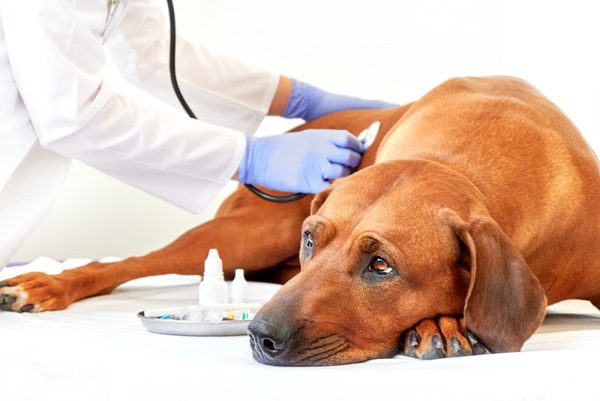
The treatment of skin infections is dependent on the cause of the infection, which will require evaluation by your vet.

4. Allergies
There are many things that can cause allergic reactions in dogs, including foods, grasses, pollen, and even fleas. Dogs that are allergic to fleas can experience a complete allergy flare-up from one flea bite. Continued exposure to allergens may cause the allergies to worsen over time.
Itchy and tender skin are common problems in dogs with allergies of any kind, so dogs with allergies can often be spotted licking and chewing at their tail, back end, and other areas of irritation (paws, muzzle, and abdomen are common spots).
The treatment of allergies in dogs is dependent on the cause of the allergic reaction. Allergy treatment may require prescription food, routine injections, daily medications, and flea treatments from the vet.
5. Anxiety
If you’re familiar with cats, then you know that stressed cats may take on the habit of obsessively overgrooming themselves, to the point of hair loss. Although this is less common in dogs, anxious dogs may lick and chew themselves obsessively. This is commonly seen on the paws and front legs, but some dogs may choose to let their stress out by licking and chewing at their tail and back end.
To deal with this issue, you need to identify the source of your dog’s stress and work to relieve it. In some cases, anti-anxiety medications from your vet may be required to manage stress-related chewing.
6. Boredom
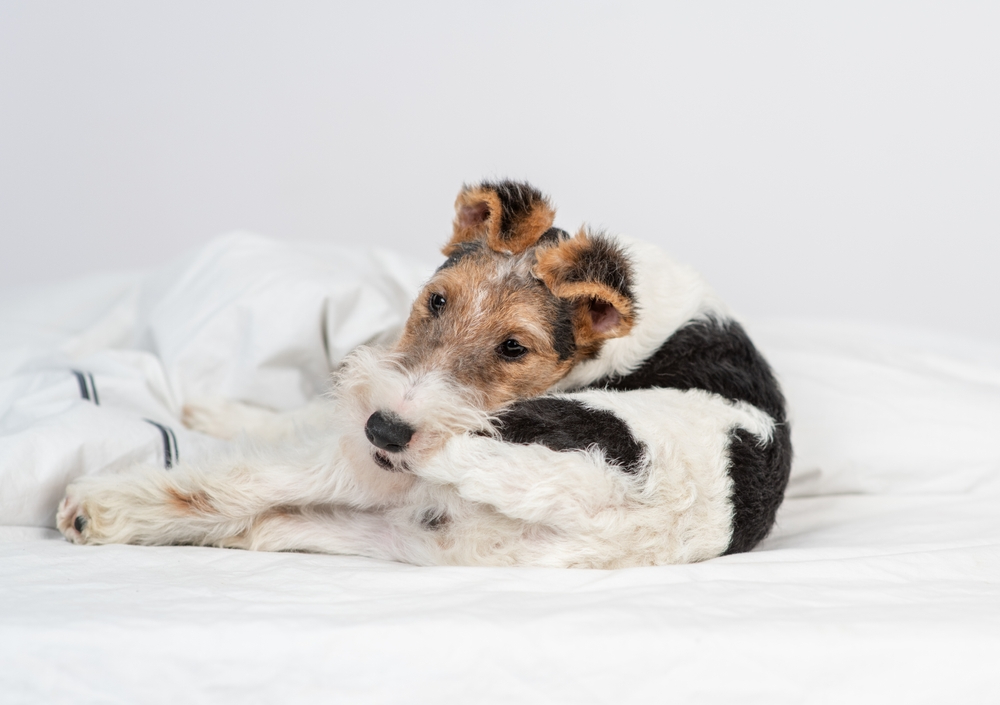
Dogs biting their tails can simply be a symptom of boredom. Bored dogs may become destructive or noisy. However, some dogs may internalize their boredom, instead focusing on licking or chewing at themselves. Bored dogs may begin to chew at their tail or back end, especially if they’re spending long periods of time in a kennel or another enclosed space lacking enrichment.
7. Obsessive Compulsive Disorder
Obsessive-compulsive disorders do occur in dogs. These can be severe to the point that a dog will hurt themselves when tail biting is involved. These dogs will typically have other behavioral issues such as anxiety, phobias, and sometimes aggression.
It can actually be a syndrome in certain breeds such as Bull Terriers, German Shepherds, and Staffordshire Bull Terriers. These dogs will usually need medication and behavioral modification to manage the behavior.

8. Cognitive Decline
As dogs age, sometimes their cognitive abilities will reduce, even to the point of cognitive dysfunction or doggy dementia. These dogs engage in repetitive behaviors which may include tail chasing. Other signs include disorientation, forgetting known commands, star gazing, barking at nothing, and getting lost in the house.
9. Pain
A common cause of licking and chewing that is often overlooked by people is pain. Dogs with arthritis, for example, are known to lick at their arthritic areas in an attempt to relieve some of their discomfort. If you’ve ever had a dog that had surgery, then you know that many dogs will lick at their surgical sites, also in an attempt to relieve some discomfort.
If your dog is experiencing arthritis in their spine and hips, or if they’ve acquired a tail, hip, or rectal injury, then they may begin to excessively lick and chew at their tail. If you’ve noticed your dog beginning to do this, you should attempt to determine if they may be experiencing pain or discomfort at the site they’re licking.
10. Anal Gland Problems
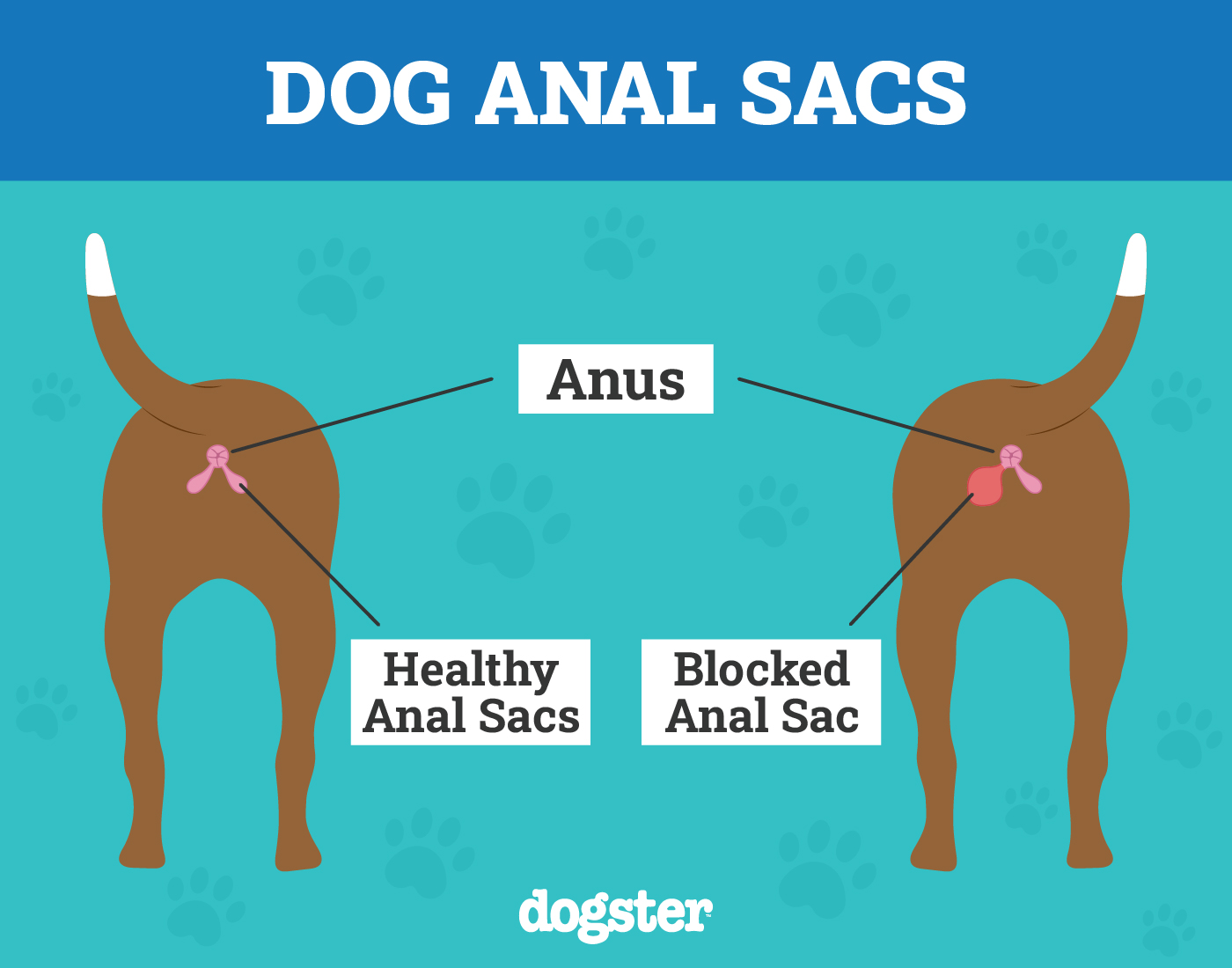
Dogs have two anal sacs located on both sides of their rectum that fill with excretions from their anal glands within the sacs. Usually, these sacs are emptied whenever your dog poops. However, anal glands can become overly full or even impacted. This occurs when they are not emptying properly, which allows the secretions to become too thickened to pass. This can be very irritating to your dog, leading to them licking at their back end a lot. In some cases, anal glands can become infected, even leading to an abscess which can rupture.
These are not uncommon problems for many dogs, and some dogs require manual expression of the anal glands to keep them from becoming impacted. Anal gland problems are usually accompanied by a fishy, unpleasant scent coming from the back end.
If you suspect your dog is experiencing problems with their anal glands, then it’s best to talk to a vet to determine the necessary next steps. While most anal gland problems are taken care of easily, more serious problems may require significant medical interventions.
11. Attention Seeking
When you see your dog chasing their tail, do you react in a way that shows you’re entertained or pleased? Does it cause you to immediately start paying attention to your dog? If this is the case, then your dog may continue the behavior whenever they’re seeking your attention.
Dogs are intelligent animals that will learn through positive reinforcement that when they chase or catch their tail, you will stop what you’re doing and pay attention. Although cute, this isn’t ideal since it may be frustrating for your dog if you start to ignore the behavior.
12. Fun
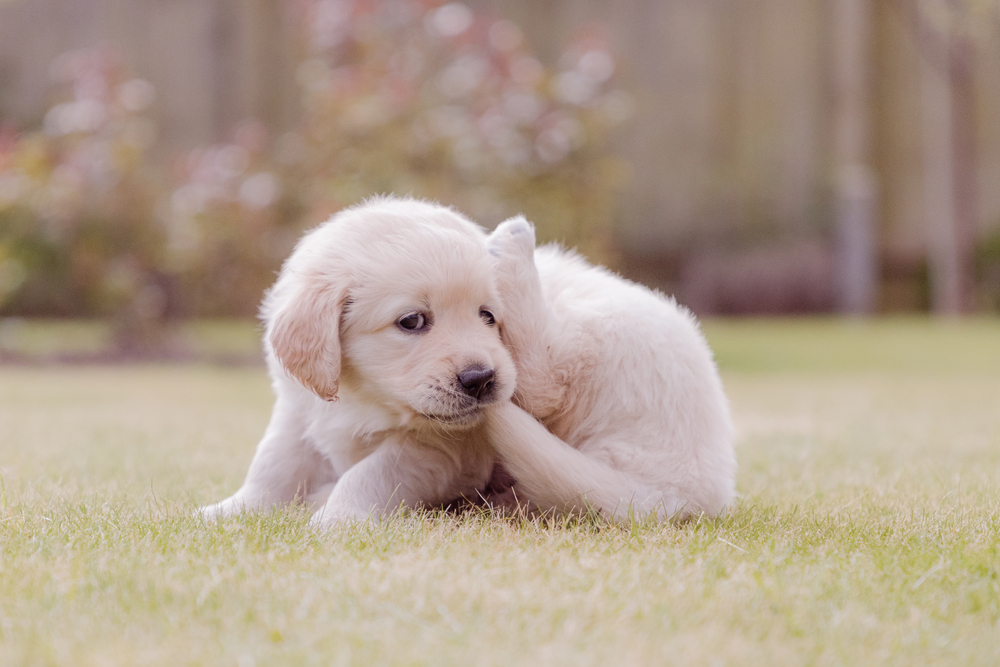
The good news is that some dogs chase and bite their tail simply because it’s fun for them. It’s a pretty common behavior, especially in puppies. Like human babies, puppies explore the world around them by putting things in their mouths. Chasing, and sometimes catching, their tail can serve as part of them understanding their own body and how it interacts with the world.
Some dogs may never outgrow this silly behavior, and as long as their needs are met, the behavior doesn’t impact their quality of life and they are not doing any damage to their skin, coat, or tail, then there’s nothing wrong with it.
Conclusion
Dogs biting and chasing their tails can be funny but you need to recognize when this behavior is not being done for fun. All of the causes mentioned that are related to medical or behavioral issues are treatable with proper care. Some may require the assistance of your vet, while others may require the assistance of a professional veterinary behaviorist or experienced trainer to remedy.
See also:
- Why Is My Dog’s Tail Down? Vet-Reviewed Reasons
- Why Do Dogs Bite Themselves? 6 Vet-Verified Reasons & Tips
Featured Image Credit: BONDART PHOTOGRAPHY, Shutterstock
 The 12 Reasons Your Dog is Biting Their Tail