Why Is My Dog's Tail Down? 4 Vet-Reviewed Reasons


In this article
View 2 More +The way a dog naturally carries their tail can be dependent on the breed—for example, Greyhounds and Whippets have curled-under tails that they tend to hold in a low position. However, the placement of a dog's tail can also give us an insight into their emotions, and, in some cases, it can tell us that they're in pain or discomfort.
If a dog's tail is down when they don't naturally carry their tail in this way, this could indicate emotions like fear or stress, or it could be a display of submission. However, this isn't always the case. Let's explore the reasons a dog's tail may be down in more depth.

The 4 Reasons Why a Dog’s Tail Is Down
1. Normal Low Tail Position
A lower tail position doesn't always mean a dog is feeling stressed out or scared. As we touched on in the intro, some breeds naturally hold their tails in a low position. Also, when the tail is lower than horizontal but with a gap between the tail and the hind legs, this typically indicates that a dog is feeling relaxed.
If you're not sure, look for other signs of relaxed or happy body language like gentle tail wagging, ears in the neutral position (a little forward, you can see this positioning at the base of the ear if the dog has naturally floppy ears), a soft expression, and a lack of tension around the mouth. The body will be soft and floppy rather than tense and rigid.

2. Stress or Fear
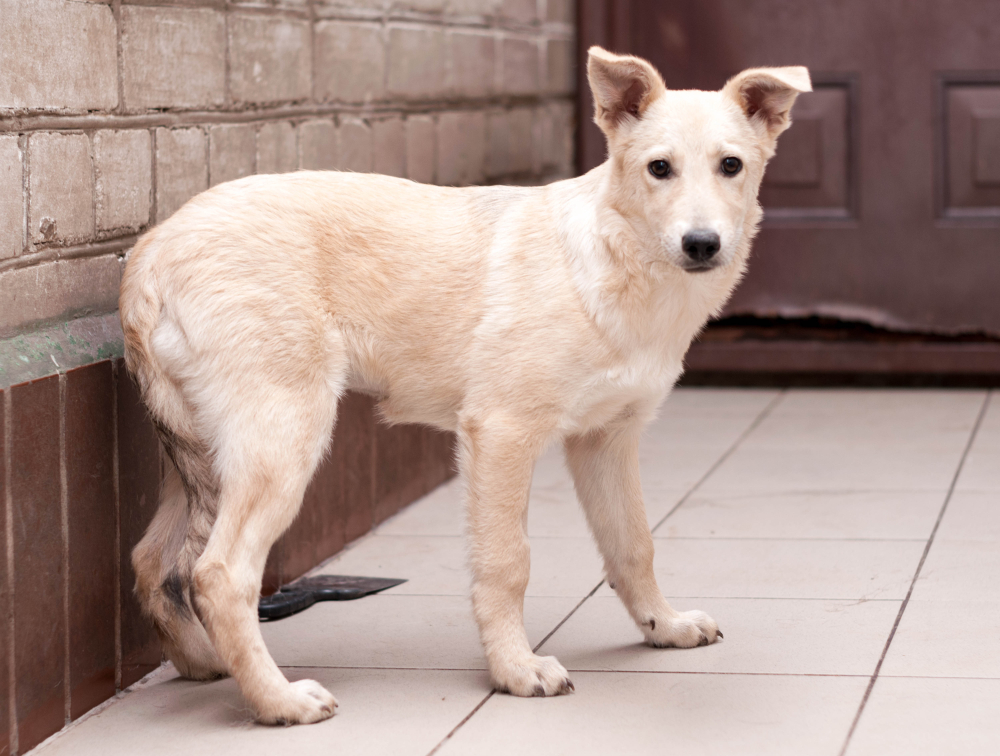
Feeling stressed out or fearful can cause a dog to tuck the tail under the body and close to the belly. This is distinctly different from how a relaxed dog would carry their tail in a low position as described above.
Other fearful and/or stressed body language clues include tucked-back ears, turning the head or leaning away from whatever is stressing them out, yawning, lip licking, and tension around the mouth. Stressed dogs sometimes pant, but stress-panting isn't triggered by heat or exercise.
Be mindful of potential stressors, as these can look different for every dog. For example, rescued dogs may have a fear of people with a similar body type and size to a previous abuser. A dog that was once attacked by another, larger dog, may get stressed out every time they're around big dogs. Then, there are dogs with separation anxiety.
Figuring out what makes your dog so fearful and stressed is the key to working on desensitizing them to those triggers and building positive associations around whatever it is. We realize that this can be sometimes difficult as dogs aren't the best communicators. Calling a vet can be a great way to get some professional help.
3. Submission
If a dog wants to communicate to another dog or human that they're not a threat, they may tuck their tail under or lightly wag it in a low position. It is a form of appeasement letting the other dog or person know they come in peace and are not aggressive.
Other appeasement behaviors include squinting, avoiding eye contact, mouth tension (possibly with a "smiling" expression), and pinned-back ears

4. Limber Tail
Limber tail (acute caudal myopathy) is the term to describe sprained or strained tail muscles as a result of using the tail too much, for example, by having swam or exercised for too long. Excessive cold water or weather can also cause a limber tail. Any dog can get a limber tail, but it tends to affect large breeds more often.
A droopy tail is one of the signs of limber tail. Other signs include restlessness, absence of wagging, inability to sit comfortably, reluctance to be touched around the tail, and even appetite loss and lethargy due to being in pain.
Limber tail can be treated—typically with veterinary-approved anti-inflammatories and rest—but it's painful, so please see a vet right away if your dog shows any signs of limber tail.
Other Medical Conditions
Limber tail is not the only medical issue that causes a low tail position in dogs.
Other conditions that could cause issues with the tail include:
Final Thoughts
Since dogs can't verbally communicate how they're feeling, it's up to us to tune into their body language clues and be on the lookout for signs of distress or pain.
To recap, if a dog's tail is only tucked under around other dogs or certain people, they're likely showing submission. A low tail can also tell you that your dog is experiencing stress or fear.
Finally, medical conditions can sometimes cause a dog's tail to droop, in which case prompt veterinary attention is a must.
Featured Image Credit: Viktoriia Viktorovna, Shutterstock
GetIn Your Inbox
Want content like this delivered to you?
News, insights, expert advice, and everything dog

Kit Copson is a freelance writer and lifelong animal lover with a strong interest in animal welfare. She has parented many furry beings over the years and is currently a proud cat mom of two—one very chilled (unless hungry) Siamese and a skittish but adorable Domestic Shorthair—and dog mom of one—an adopted Bichon Poodle cross. When not writing about or spending time with pets, Kit can be found drawing in her sketchpad, reading, or more often than not, drinking tea.


