Get

In Your Inbox

Dogster is reader-supported. When you buy via links on our site, we may earn an affiliate commission at no cost to you. Learn more.

What Were Shiba Inus Bred For? Info, Origin & History

Share

Shiba Inu Dog

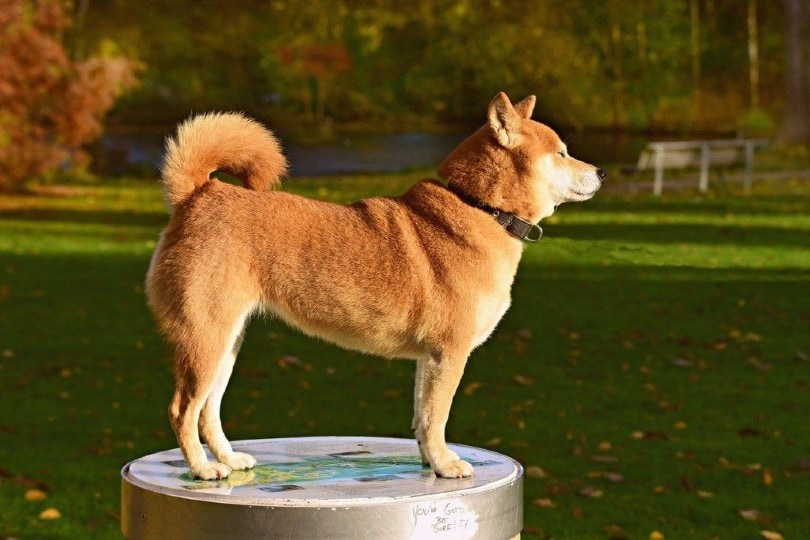
The Shiba Inu is the smallest of the six native dogs of Japan. You can recognize them by their compact, muscular bodies and curled tails. They have thick coats, triangular ears, and expressive faces. To some people, they resemble foxes or even stuffed toys.

These adorable dogs only weigh up to 20 pounds. They are small but mighty. They’re athletic and quick, moving almost effortlessly. Some may wonder what this dog was originally bred for. In this article, we look at the history of the Shiba Inu and what they’re used for today. But as a small spoiler, the Shiba Inu was originally bred to flush out and hunt small game.

divider dog paws 3 oct 2024

Origin of the Shiba Inu

Evidence such as primitive drawings suggests that the Shiba Inu was owned by Japanese families as far back as 300 B.C. The dogs remained unchanged for thousands of years until 1854.

Japan had closed itself off from the rest of the world, but an American Naval officer arrived in Japan, forcing the island country to rejoin the global economy. New breeds of dogs were then exported to Japan, which were bred with the original Shiba Inu.

During the days of the Kamakura Shogunate (1190–1603), the Samurai used Shiba Inus for hunting and may have used the word Shiba in their dialect to mean “small.”

But Shiba translates to “brushwood” in Japanese. They are known as “the little brushwood dog,” likely due to their red coloring that resembles dried brushwood. They are small enough to flush out birds and other game from bushes. They’re also great at hunting rabbits, foxes, and wild turkeys. Sometimes they were used to hunt boar.

There were three types of Shiba Inus before World War II. All these breeds contributed to the modern-day Shiba Inu.

Shiba-Inu-on-beach
Image Credit: Thorsten Schulze, Pixabay

Before World War II

The Shiba Inus faced a difficult time between 1912 and 1926. After Western breeds were brought to Japan, the crossbreeding between those breeds and the Shiba Inus resulted in nearly no purebred Shiba Inus left.

To preserve the breed, the Nihon Ken Hozonkai was established in 1928. Also known as the Association for the Preservation of the Japanese Dog, this organization led to the government making the Shiba Inu a Japanese National Monument in 1936.

Despite all this, the Shiba Inus nearly went extinct after World War II.

After World War II

The war nearly wiped out all the Shiba Inus. Bombings and a distemper breakout threatened the breed’s existence. Japan experienced a harsh economic decline after World War II, and owning dogs was one of the first things to go because dog ownership was viewed as wasteful. Many remaining Shiba Inus that survived the war and the distemper outbreak were rounded up and killed. Their fur was used for military clothing and their meat for food.

Shiba-Inu-dog
Image Credit: ayachiyo, Pixabay

Last Bloodlines

The three surviving bloodlines of Shiba Inus in Japan were the Shinshu Shiba, the Mino Shiba, and the San’in Shiba. All Shiba Inus today have descended from these dogs.

In the 1920s, these bloodlines were combined into one, which is the Shiba Inu that we know today.

Present Day Shiba Inus

In 1945, U.S. soldiers noticed Shiba Inus in Japan. In 1959, an army family brought a Shiba home with them from Japan to the United States. The breed gained more popularity in the United States in the following years.

In 1979, the United States welcomed its first litter of Shiba Inus. The breed became recognized in 1992 by the American Kennel Club.

Shiba Inus are now used as companion animals in the United States and Japan. They are loyal and calm dogs with a loving nature. Their gentleness makes them ideal for families. They also make good watchdogs because they are always alert.

One thing to be aware of if you intend to own a Shiba Inu is their high prey drive. Their hunting instincts have never left them, and they will chase anything that is small and furry. If you own other small animals, like ferrets, rabbits, or guinea pigs, make sure the Shiba Inu is always kept away from them. These dogs should not be trusted around small animals.

For this reason, the dog should always be on a leash if they are not in a fenced-in area. They could take off after a squirrel and not stop running. No command that you shout will win over their inherent prey drive.

shiba inu
Image Credit: Akbudak Rimma, Shutterstock

divider dog paws 3 oct 2024

Final Thoughts

The Shiba Inu is the result of centuries of breeding and preservation. These small dogs were bred for hunting because their size and energy made them efficient at flushing out small game.

These hunting instincts are still prevalent in the breed today, even though these dogs are primarily used as companion animals now. After Shiba Inus have survived potential extinction twice, the world now sees what loving and beautiful dogs they are.

See also:


Featured Image Credit: Mabel Amber, Pixabay

Want content like this delivered to you?

Sign Up For Our Newsletter

News, insights, expert advice, and everything dog

* By submitting, you agree to our Terms & Conditions and Privacy & Cookies Policy.


How useful was this post?

Click on a star to rate (you can leave written feedback after clicking submit)

Help us improve Dogster for pet parents!

Your feedback really matters.

What did you like about this post? Also how can we improve it?

Join the conversation

Leave a Reply

You’re very welcome to leave a comment or question. Please know that all comments must meet our community guidelines, and your email address will NOT be published. Let’s have a positive and constructive conversation.


Talk With A Vet Online

Peace of mind,
anywhere, anytime

Affordable vet advice

We Bred English Bulldogs So Extreme They Can’t Mate Naturally

Picture this: A male English Bulldog waddles over to a female in heat, full of confidence and swagger. Then… nothing. His barrel chest,...

Damning Dry Dog Food Report Not What It Seems

Over the past few days, pet and vet communities have been reeling from the revelation that high levels of heavy metals have been...

Ask Dr. Paola- Help! My Dog’s Won’t Stop Barking! (February 23, 2026)

Welcome to our “Ask Dr. Paola” series, where every Monday we bring expert advice straight from Dr. Paola Cuevas (MVZ) to help our...

Why You Should Never Ignore Yellow Dog Poop

Yellow dog poop is one of those things that sounds bizarre until it happens to your dog. Then suddenly you’re standing there with...

More related

Can CBD Help My Dog With Anxiety? Vet-Verified Facts, Dosage & FAQ

Anxiety is a feeling of unease, such as worry or fear, that can be mild or severe. According to the NHS, everyone has...

Are Spanish Water Dogs Hypoallergenic? Vet-Verified Facts & FAQ

If you suffer from allergies but want to adopt a dog, you may be researching hypoallergenic breeds. The good news is that Spanish...

How Much Does a Dog Eye Exam Cost in 2026? Average Price & Info

Veterinary care is such an important part of our relationship with our dog. Just like we require doctor visits, our pups need to...

Do Dogs Understand Kisses? What The Science Tells Us

Planting kisses on our dogs is one of the very human ways we express our affection for them, but do dogs understand this...

Keep reading

Only Natural Pet Dog Food Review 2026: Recalls, Pros & Cons

Review Summary If you’re interested in grain-free dog foods that come in multiple recipes and varieties, then dog food from Only Natural Pet may be exactly what you’re looking for. Whether you prefer to feed your dog an ancestral diet...

Dogster_Only Natural Pet Dog Food Review

Can Dogs Eat Acorns? Vet-Verified Facts & Safety Guide

Dogs love exploring their surroundings and trying new things. So, it’s not uncommon for them to become curious about natural snacks like acorns and the nuts of oak trees (Quercus species). But as pet owners, it’s important to understand the...

Can Dogs Eat Acorns

Can Dogs Have Vanilla? Vet-Verified Nutrition Facts & FAQ

Vanilla is a common additive that is used to flavor sweet treats like cake, biscuits, and ice cream. Although some people keep and use the pods in their culinary efforts, most homes have vanilla extract, which is made by combining...

Dogster-Can-Dogs-Have-Vanilla

9 Best Premium Dog Foods 2026: Vet-Approved Reviews & Top Picks

Besides making sure they get plenty of exercise, feeding your dog an appropriate diet is one of the most important things that you can do to make sure they stay healthy. That’s why buying high-quality food is important. Although premium...

cute corgi dog eating dry dog food

Can Dogs Eat Lasagna? Vet Approved Facts & FAQ

If your dog is begging at the dinner table, it is very tempting just to give them a few bites. While there are some human foods dogs can enjoy, lasagna is not one of them. Some of the ingredients inside...

Can Dogs Eat Lasagna

Can Dogs Eat Salmon Skin? Vet-Approved Facts & FAQ

If you pay attention to dog food labels, you might know that salmon is a common protein source, especially in limited-ingredient diets. Knowing this, you can assume that salmon is safe for dogs to eat, but what about the skin...

Can Dogs Eat Salmon Skin

Can Dogs Eat Fennel? Vet-Verified Facts & Info

Fennel is commonly used in salads, soups, and stews and has been widely used for health purposes in people, including for heartburn, bloating, and colic in infants. This aromatic herb is used for its flavorful bulb and its leaves and...

Can Dogs Eat_fennel

Can Dogs Eat Whipped Cream? Vet-Reviewed Nutrition Facts & Info

Our dogs can eat all sorts of things we can. After all, they are omnivores just like us! However, that doesn’t mean everything we stuff in our gullet belongs in our dog’s belly—or ours, if we’re being honest. So, how...

Love Dogs? So Do We! Join the Dogster Community

Stay informed with expert pet care insights delivered straight to your inbox! Discover professional guidance on animal behavior, feeding tips, trusted product picks, and much more.


Sign up for the Dogster Email Newsletter