5 Incredible Weimaraner Colors & Patterns (With Pictures)

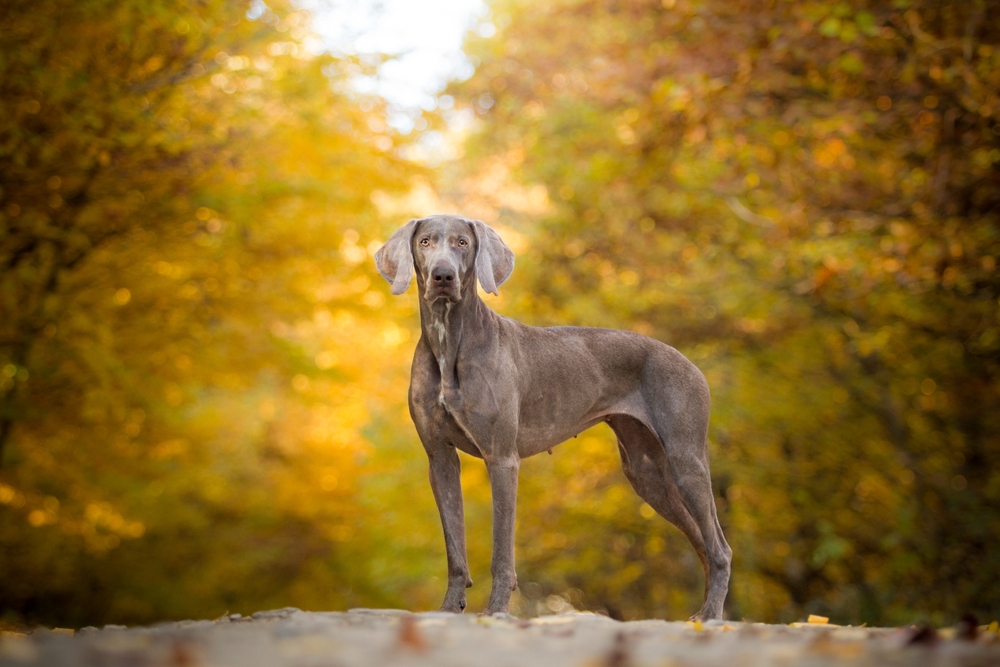
Weimaraners are well-known for their gray coats. While it may seem like they’re only ever gray, these canines actually come in several different shades. The AKC recognizes three, in fact.1 This breed can also have several markings and patterns that can contribute to their interesting coloration.
While these dogs do only come in different shades of gray, they are spread across a recognized spectrum, which we will describe here.

The 5 Weimaraner Colors & Patterns
1. Gray

Perhaps the most obvious Weimaraner color is gray. As you might guess, this is in the “middle” of the Weimaraner spectrum and is what you’ll see on most of these dogs.
This gray coloration is actually diluted chocolate. In other words, the dog inherited a base color of chocolate from their parents, as well as two dilute genes. In the end, that leaves them looking, well, nothing like chocolate. Instead, they have the rich gray color that they’re known for. That’s why it appears to be almost white-washed, which gives them the unique nickname, the “Gray Ghost.”
There are three different shades of gray that a Weimaraner might have: light gray, silver gray, and mouse gray. The lightest ones are called Deer Gray.
If you look very closely, Weimaraners do look a bit brown. Many look more like taupe than a true gray.
2. Silver Gray

Silver gray is technically just another type of gray. However, the AKC recognizes it as a completely separate color from plain gray, so we will too. These dogs are also referred to as just plain “Silvers.”
Silver gray looks especially taupe, especially in darker environments. While the sunlight brings out the dilute, white-washed color, it’s not odd for someone to mistake these dogs for brown when inside a darkly lit house.
These canines aren’t all that different from regular gray Weimaraners. Their shading is just a bit different.
3. Blue

The blue color of Weimaraners is the result of a black base coat mixing with the breed’s dilute gene. While these dogs are considered “purebred” by the AKC, their coloration isn’t actually accepted in the show ring in other countries (usually, at least). Therefore, they are considered real Weimaraners, but not as “real” grays if you don’t live in the U.S.A.
Many breeders specialize in this coloration. They may charge a higher price, though, as blue is considered a “rare” color.
4. Piebald

Piebald Weimaraners are not recognized by the AKC. While this coloration does appear in some Weimaraners naturally, it is considered a defect, not a true color. Therefore, these dogs are extremely rare. Breeders often don’t purposefully produce these dogs.
The piebald color is a patterned coat that has splashes or spots of color, usually in a shade very similar to the main coat color. This coloration is the only time you will see these dogs with spots. The head tends to be a solid color, with the spots appearing particularly on the bottom.
A dog of any gray shade can be piebald. Their normal gray color will be interspaced with white piebald patches. Many people find this pattern attractive. However, finding a breeder with one of these puppies is a challenge.
5. Tan Markings

Weimaraners are mostly gray, no matter their shade. However, they can also have some tan markings. These markings are accepted by the AKC in small amounts, though large amounts can lead to the dog being disqualified.
For the most part, these markings aren’t sought after, even if they are technically “okay.” They’re often referred to as the “mark of the hound,” as they’re likely a holdover from the pointers that were used to make this breed.
Some individuals may like the tan markings, but they’re generally considered a fault.

Frequently Asked Questions
What Is the Most Common Weimaraner Color?
The most common Weimaraner color is gray—significantly. This color is considered the “default” and accepted by the AKC. Most other colorations are just slight shade variations of gray.
What Is the Difference Between a Blue and a Gray Weimaraner?
Gray Weimaraners have a brown base coat with a recessive dilute gene on top. Blue Weimaraners have a black base coat with a recessive dilute gene on top. Therefore, while they still look gray, blue Weimaraners do have a slightly different genetic undertone.
While this color does occur naturally in the breed, it isn’t accepted in most show rings and is quite rare.
Are There Any Brown or Red Weimaraners?
No, purebred Weimaraners will not have a brown or red coat. To understand why, we need to look at their genetics.
All Weimaraners are technically brown. However, all of them have a dilute gene that changes their brown coat into a gray one. When Weimaraner puppies are born, they will always be gray because they will always inherit two recessive dilute genes from their parents. (The only exception is a random genetic mutation, which is exceedingly rare.)
The only way to end up with a Weimaraner that doesn't have this brown-to-gray gene is if they're not a Weimaraner. Mixing a Weimaraner with another dog can leave you with a brown or red dog, though they would no longer be a Weimaraner—at least, not completely.
In Conclusion
Weimaraners come in one, “true” color: gray. The AKC recognizes three shades of gray, though, fittingly called gray, silver gray, and blue. Of course, dogs cannot really be blue, so “blue” Weimaraners are simply a deeper, darker gray.
While blue is an accepted color according to the breed standard, these dogs are not typically allowed to compete in show rings across the world. The shade isn't exactly a fault, but it's much less preferable to gray. On top of this, Weimaraners can have tan markings. These are accepted in small amounts on the chest only.
Related Reads:
Sources
Featured Image Credit: _JuditBerescik_Shutterstock
GetIn Your Inbox
Want content like this delivered to you?
News, insights, expert advice, and everything dog

Kristin loves to help pet parents create a fulfilling life for their pets by informing them on the latest scientific discoveries and helping them choose the best products for their pets. She currently resides in Tennessee with three cats, four dogs, two fish, and a lizard, though she has dreams of owning chickens one day!


