Get

In Your Inbox

Dogster is reader-supported. When you buy via links on our site, we may earn an affiliate commission at no cost to you. Learn more.

Tapeworm in Dogs: Our Vet Explains The Signs, Causes, Treatment & Prevention


Share

Female vet examining sick and sad Rhodesian ridgeback dog

You’ve been cleaning the yard and noticed some wiggly segments in your dog’s stool. These creepy crawlies are tapeworms. Do you need to worry about your dog acquiring these intestinal parasites, and how can you get rid of them? Let’s find out.

Dogster divider_v2_NEW_MAY_24_

What Are Tapeworms in Dogs?

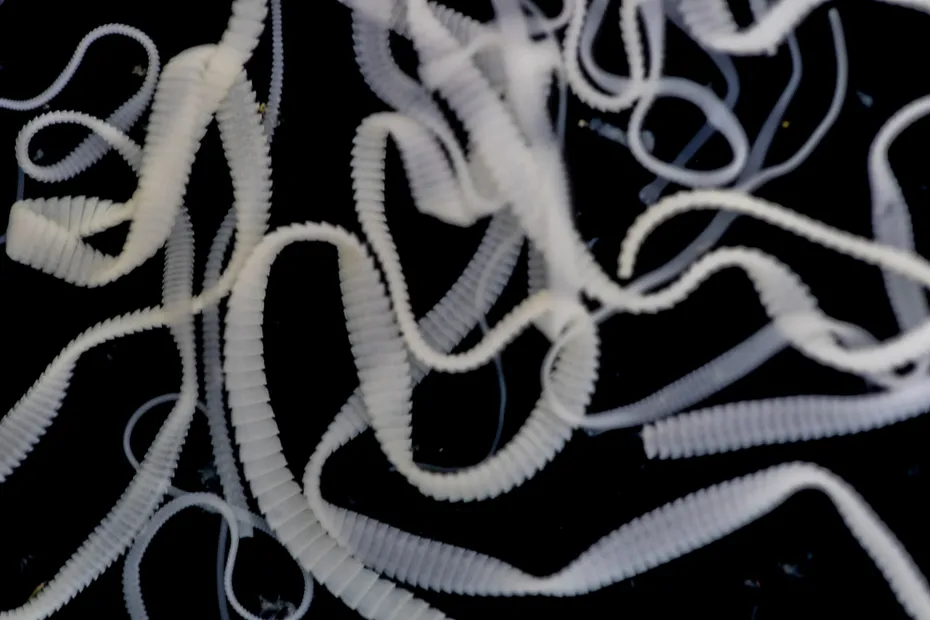
Tapeworms are a type of intestinal parasite. Several species can affect dogs. These long parasites are a type of flatworm and can be as much as 28 inches long.

You’re likely to see the segments that break off from the main body of the tapeworm in your dog’s stool. Sometimes (as gross as it might be), you’ll see the wiggly segments moving around your dog’s perineal area.

Tapeworms
Image Credit by: Rattiya Thongdumhyu, Shutterstock

What Are the Signs of Tapeworms in Dogs?

The main sign of tapeworms in our canine family members is the appearance of tapeworm segments, which are also known as proglottids. You might see these segments around your dog’s fecal material, rectal area, or bedding where your dog has been lying.

The tapeworm proglottids are often compared to grains of rice. Sometimes, they’re moving, but you or your veterinarian might see them dried up and stuck in your dog’s hair.

Most commonly, there aren’t any signs of tapeworms in dogs. Occasionally, your dog will have gastrointestinal signs or weight loss, but that’s most often due to a heavy worm burden. Some dogs will scoot their rears along the ground, but other issues, such as full anal glands, can also cause that.

If you suspect that your dog may have contracted tapeworms, you should contact your vet.

If you need to speak with a vet but can't get to one, head over to PangoVet. It's our online service where you can talk to a vet online and get the advice you need for your dog — all at an affordable price!

PangoVet_Mention-in-Content Savings V1

What Are the Causes of Tapeworms in Dogs?

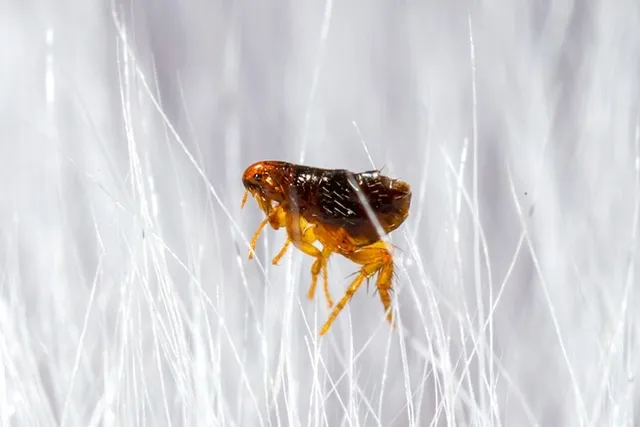
The most common type of tapeworm in dogs is Dipylidium caninum. Your dog gets these tapeworms by eating a flea infected with tapeworm larvae.

Another type of tapeworm is the Taenia species. Dogs can get these by eating rodents that are infected with tapeworm larvae.

When your dog has ingested the tapeworm larvae, the parasites develop into adults within your pup’s small intestine. They attach to your dog’s gut lining to siphon off nutrients.

Segments of the tapeworm are full of tapeworm eggs, generally up to 20 eggs. When the segment breaks off, it can end up in your dog’s environment. Unfortunately, these parasites are tasty to rodents and fleas, who eat them and perpetuate the cycle.
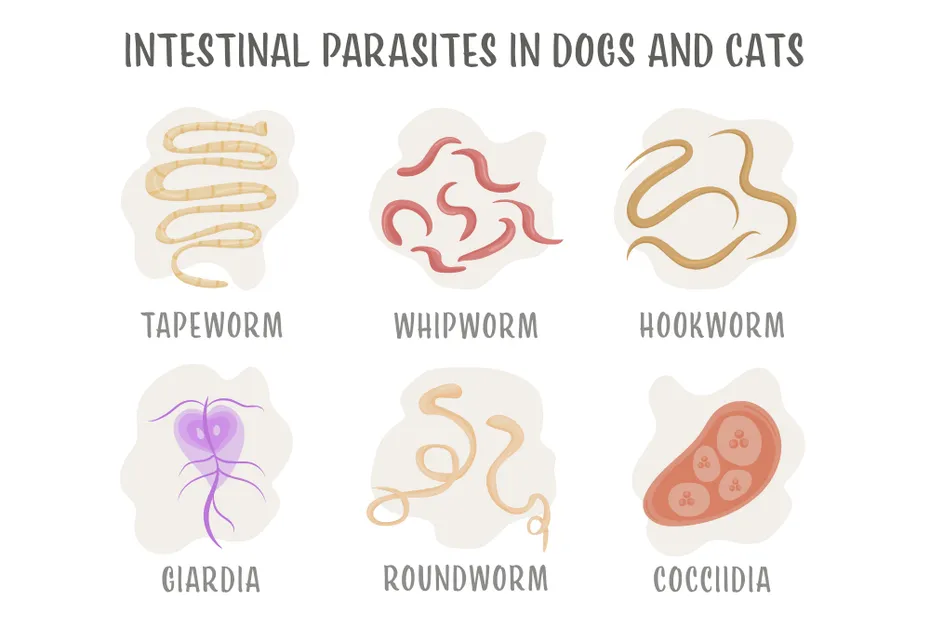
Internal parasites in dog and cats like Roundworms, hookworms, tapeworms infographics
Image Credit by: Double Brain, Shutterstock

How Do I Care for a Dog With Tapeworms?

If you see tapeworms on your dog or in their stool, they will need a deworming medication. Praziquantel is available in several forms:

  • Oral medications
  • Topical formulas
  • Injection from your veterinarian

For some dogs, Interceptor Plus is an excellent option for heartworm prevention. In addition to protecting against heartworms, it deworms your dog monthly for parasites like tapeworms.

You’ll want to protect all the pets in your household against fleas. There are topical preventions, oral tablets, and even collars. If fleas are a big problem, you may need an exterminator to come out and treat your house and yard. If you also have cats, it is vital that you don’t use your dog’s prevention medication on your cat, even if they’re the same size. Many dog prevention methods are very toxic to cats.

You should also ensure that there’s no obvious rodent problem in your yard or house to which your pets could be exposed.

If you’re not sure if your dog has tapeworms, contact your veterinarian. They can look at the segments and determine if they are tapeworms. Sometimes, your veterinarian might see them as part of a routine physical exam.

A fecal exam is often utilized to diagnose intestinal parasites. It’s important to understand that these are sometimes falsely negative. There are two significant reasons for this: first and foremost, the tapeworm segments are shed intermittently, so they might not be visible in the fecal sample. In addition, most fecal exams are done via a fecal floatation technique. The tapeworm eggs tend to be heavy and sink rather than float.
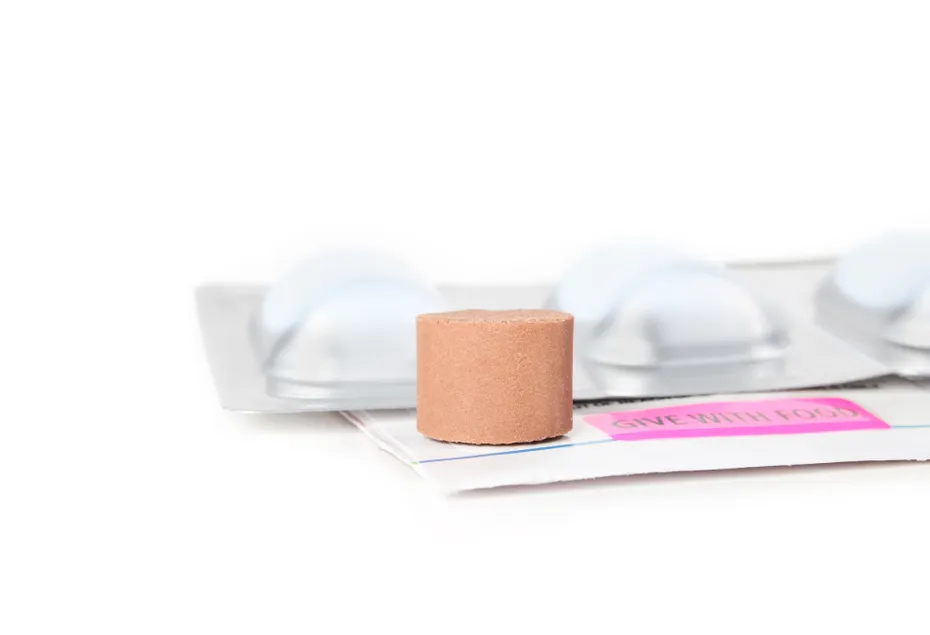
Dog Chew tablet or chewable dewormer for heartworms, hookworm, roundworm, tapeworm and whipworm
Image Credit by: sophiecat, Shutterstock

Dogster divider_v2_NEW_MAY_24_

Frequently Asked Questions (FAQ)

Can I get tapeworms from my dog?

Traditionally, we don’t think of tapeworms as zoonotic or contagious to people. You won’t directly get them from your dog. Topi would need to ingest a flea infected with tapeworm larvae to get tapeworms.

Can I get tapeworms from my dog licking me?

Some intestinal parasites can be transmitted between humans and their pets. The good news is that you won’t get tapeworms from your dog licking you.

Why does my dog keep getting tapeworms?

If your dog keeps getting exposed to fleas, they might keep getting tapeworms. Use flea prevention every month to help keep these pesky pests away from your dog.

Dogster divider_v2_NEW_MAY_24_

Conclusion

There’s no way around it: for many of us, tapeworms are very gross. The good news is they are easy to treat and prevent from recurring by using effective flea control measures. Your veterinarian can help you find the best flea prevention option for your pet.


Featured Image Credit: Zontica, Shutterstock

Want content like this delivered to you?

Sign Up For Our Newsletter

News, insights, expert advice, and everything dog

* By submitting, you agree to our Terms & Conditions and Privacy & Cookies Policy.


How useful was this post?

Click on a star to rate (you can leave written feedback after clicking submit)

Help us improve Dogster for pet parents!

Your feedback really matters.

What did you like about this post? Also how can we improve it?

Join the conversation

2 Responses

  1. My dog has recently lost a lot of weight. I can see his backbone and ribs ! His belly is distended . He is eating and drinking but is still losing weight.

    1. Hello Reba,

      thank you for your message, although we are sorry to hear about your dog's health issues! Unfortunately, this sounds like something that should be addressed by a professional veterinarian.
      If you can't get to one at the moment, you can book an online video-call appointment with one of the veterinarians from www.PangoVet.com. In 20-minute video-call they will take a look at your dog, help you figure out the cause of the weight loss and tell you what should be the next steps to help your dog.

      Hope this helps!

Leave a Reply

You’re very welcome to leave a comment or question. Please know that all comments must meet our community guidelines, and your email address will NOT be published. Let’s have a positive and constructive conversation.


Talk With A Vet Online

Peace of mind,
anywhere, anytime

Affordable vet advice

Marigold Shocks Her Owner By Delivering 17 Irish Doodle Puppies in a Single Day

The one question vets hate hearing as they ultrasound expectant canine mothers is “how many puppies are there?” The reason is that, on...

Dogster’s Weekly Photo Contest Winners: Out Adventuring (March 12, 2026)

Every week our team gets the privilege of sorting through our readers photos to choose what dogs will win this weeks contest! See...

Ask Dr. Paola- Help! My Dog Gets Reoccurring UTIs (March 9, 2026)

Welcome to our “Ask Dr. Paola” series, where every Monday we bring expert advice straight from Dr. Paola Cuevas (MVZ) to help our...

DIY Repellents for the Dog Who Thinks Everywhere Is His Toilet

Dog urine and everything nice have a complicated relationship. One thrives, the other suffers, and if you’re reading this, you already know which...

More related

How to Measure a Dog’s Height: 3 Key Tips

Measuring a dog’s height is a bit different than measuring human height, but it’s essential if you want to order your dog custom-fit...

Why Do Dogs Eat Things They Shouldn’t & What to Do: Vet-Approved Guide

Compared to felines, canines are known for eating anything and everything that they can get their mouths on. Many dogs live up to...

How Much to Give a Dog Walker for Christmas: 6 Great Ideas

Your dog walker has saved your bacon more than once throughout the last year, and you want to do something nice when Christmas...

How to Treat Noise Phobia in Dogs: 7 Vet-Approved Tips

Dogs have a highly keen sense of hearing which is more sensitive than ours. While most humans hear at frequencies of up to...

Keep reading

Can Dogs Eat Tamales? Vet-Verified Nutrition Facts & FAQ

Tamales are popular in Mexican cuisine, and people worldwide love to eat them. If you also love to eat tamales and have a dog, you’ve probably noticed your canine lurking around, looking for tamale scraps. Tamales are not suitable for...

Can Dogs Eat Tamales

8 Best Dog Food Containers in 2026 – Reviews & Top Picks

Buying dog food in bulk is a great way to save extra cash and make sure you always have food on hand, but without an airtight container, storing it properly can be tricky, and if the food does go rancid...

Dog food in a container with scoop

Apple Cider Vinegar for Dogs: Vet-Approved Uses, Safety & Effectiveness

Apple cider vinegar and home remedies are extremely popular right now, and for good reason. They’re usually affordable, and some have actually been proven to work. And who wants to miss out on affordable preventative medicine? However, some remedies are...

Apple Cider

Can Dogs Eat Pop Rocks? Vet-Verified Facts & FAQ

Pop Rocks certainly are a favorite among consumers for their variety of flavors and all the fun you get to have as they pop, crackle, and fizz in your mouth. Bite down on one and you’re in for even more...

Can Dogs Eat Pop Rocks

Can Dogs Eat Anchovies? Vet Approved Nutrition Facts & FAQ

Though they’re definitely not for everyone, anchovies can be a great addition to sandwiches, pizzas, and soups. They’re frequently found in sauces and dressings and can even be grilled like sardines or mackerel. Though they have a terrible reputation, anchovies...

Can Dogs Eat Anchovies

8 Vet-Reviewed Signs You Are Underfeeding Your Dog

We all know how important our dog’s diet is to their health and wellbeing. There are mountains of information regarding the perils of canine obesity, and the health problems associated with it. However, we tend to see decidedly less information...

Thin underweight dog

Can Dogs Have Food Coloring? Vet-Approved Facts

Food coloring is an ingredient used to make pet food more appealing by visually recreating the look of meats like beef (red), chicken (golden yellow), and vegetables (green), but is it actually safe? The general and basic consensus is that...

Food Coloring pump bottles

Can Dogs Eat Fennel? Vet-Verified Facts & Info

Fennel is commonly used in salads, soups, and stews and has been widely used for health purposes in people, including for heartburn, bloating, and colic in infants. This aromatic herb is used for its flavorful bulb and its leaves and...

Can Dogs Eat_fennel

Love Dogs? So Do We! Join the Dogster Community

Stay informed with expert pet care insights delivered straight to your inbox! Discover professional guidance on animal behavior, feeding tips, trusted product picks, and much more.


Sign up for the Dogster Email Newsletter