8 Incredible Rhodesian Ridgeback Colors & Patterns (With Pictures, Vet-Reviewed)


In this article
Rhodesian Ridgebacks are courageous lion-hunting dogs from South Africa. These brave hounds were all about tracking and holding game at bay and they were excellent hunting dogs for the hunters they originally belonged to. The modern Ridgeback has become a companion animal; they are affectionate with their owners and family but standoffish with strangers. The most striking features of the Rhodesian Ridgeback are their gorgeous coats and the ridge of hair running down their spines.
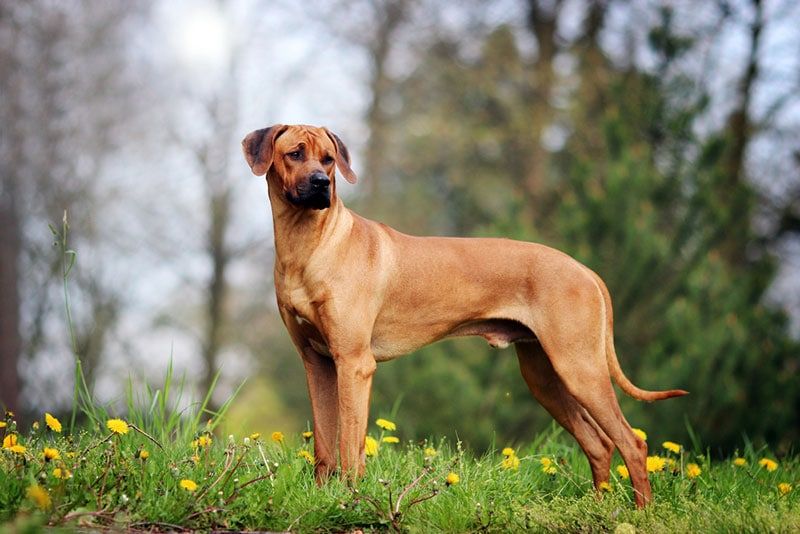
A beautiful red-gold coat usually springs to mind when you think of this breed. However, purebred Ridgebacks can come in a limited range of wheaten shades. We’ll look at various coat colors and patterns Rhodesian Ridgebacks can sport, including the standard wheaten coat seen in show dogs, as well as some misconceptions regarding their colors!

The 3 Show-Allowable Colors (Part of the Breed Standard)
1. Wheaten

Wheaten refers to a coat color ranging from light yellow-gold to reddish shades in the Rhodesian Ridgeback breed standard. The fur seems to glimmer with subtly changing colors. Similar wheaten-type coloration appears in some other breeds, though it is expressed differently depending on genetics. Wheaten is an older term used to describe coat colors that run from a yellowish-gold (like wheat) to an almost copper color.
Wheaten in the Rhodesian Ridgeback ranges from a golden color to the beginnings of red and can further be split into light wheaten and red wheaten.
2. Light Wheaten

Light wheaten is one of the three standard colors a Rhodesian Ridgeback can come in. While it is one of the colors recognized within the Rhodesian Ridgeback breed standard as part of the wheaten color range, light wheaten is less common than standard or red wheaten due to a current preference among Ridgeback admirers for ruddy, burnished-copper colors.
Light wheaten looks pale and straw-colored, with glimmers of darker gold not affecting the overall lightness of the creamy coat.
3. Red Wheaten

Red wheaten is the darkest, reddest shade of wheaten a Rhodesian Ridgeback can be shown in. While light wheaten stays on the yellow-gold end of the spectrum, red wheaten dogs will have light copper and deep gold with a reddish tinge. These dogs aren’t dark red like Irish Setters, but they have an unmistakable rouge about them that is very popular with lovers of the breed.
Red wheaten is one of the commonly seen wheaten shades of Rhodesian Ridgebacks, and the darker color accentuates and showcases the breed’s distinctive ridge of hair running down their backs.

The 5 Non-Standard Colors (Possible Colors)
4. Dilute

Dilute Rhodesian Ridgebacks are not well defined but can’t be shown at competitions since the lighter colors are “non-standard.” Dilution in dogs occurs when recessive genes affect coat pigment, producing lighter shades in breeds that carry the trait.
Some non-standard color variations may be claimed by breeders, but they are not part of the Rhodesian Ridgeback breed standard. Dilute Ridgebacks may show pigment variation, but these traits are not characteristic of the Rhodesian Ridgeback breed standard.
5. Chimera
Chimerism in dogs is a rare biological condition that occurs when two embryos fuse early in development, resulting in an individual with two distinct sets of DNA. In theory, this can sometimes lead to unusual or split-like patterns in coat coloration, such as patches of different colors on the face or body.
However, there are no well-documented or breed-specific cases of chimerism in Rhodesian Ridgeback that produce characteristic markings. Most coat variation in the breed is explained by normal genetics within standard wheaten shades rather than rare developmental conditions.
When chimerism does occur in dogs, it may result in subtle or patchy differences in pigmentation, but the extent and visibility of these differences vary widely depending on how the cell lines are distributed during development.
6. Brindle

Brindle in dogs is caused by specific coat color genetics (brindle pattern expression), which overlays darker striping on a lighter base coat. This results in a striped, red, and black coat that is striking and very varied. Brindle is not part of the modern breed standard and is extremely rare.
Early development of the Rhodesian Ridgeback involved mixed ancestry, which contributed to variation before the modern breed standard was established.
7. Dark Wheaten and Albinism

Dark wheaten Rhodesian Ridgebacks are very rare and can appear very dark brown or deep red within the wheaten spectrum. However, this coloration is still part of the wheaten range rather than a separate black-based coat, and it reflects deeper pigmentation within normal breed variation.
Albinism, on the other end of the spectrum, is a rare genetic condition. True albinism is caused by the absence or severe dysfunction of melanin production and is extremely uncommon in dogs. This results in a nearly complete lack of pigment and can be associated with significant health and vision issues.
In theory, an albino dog would have a white coat, pink skin, and light-colored eyes, but this condition is not documented or recognized within the Rhodesian Ridgeback breed.
8. Black and Tan
Rhodesian Ridgebacks are recognized for their wheaten coat colors, and black and tan is not an accepted or verifiably documented coat color in the breed standard. Some misinformation exists online suggesting unusual color variations, but these claims are not supported by established breed genetics or kennel club standards.
Wheaten coloration in Rhodesian Ridgebacks is determined by breed-specific pigmentation genetics that produce shades ranging from light golden to red wheaten, rather than patterned coat types like black-and-tan.

Conclusion
Rhodesian Ridgebacks are striking and commanding in their standard shades of wheaten, but they can be even more attention-grabbing if they sport a rare coat color within the range of accepted wheaten shades. Only the three wheaten colors can be shown in show rings or used for breeding show dogs, but some non-standard color claims occasionally circulate online but are not recognized in the breed standard.
Whether you have a classic wheaten Ridgeback or one within the accepted shade variations, your dog will be loyal and loving towards you for life, no matter their hue!
Sources
Featured Image Credit: SubertT, Shutterstock
Expert dog care, straight to your inbox
Vet-reviewed advice, training tips, and the best of Dogster. Free, and you can unsubscribe anytime.
By signing up, you agree to our Terms & Conditions and Privacy & Cookies Policy.
Beth is a mom to two kids: one with four legs, one with two. Beth has years of practical experience as a veterinary care assistant , working in both the consult and in operating room, expanding her knowledge to gain certification in her favorite subject: feline behavior and welfare! When she's not writing about her favorite topics (cats and creature comforts), she's looking after her daughter and her mischievous Nebelung, Kiba. When she gets a moment to herself, Beth loves to delve into fiction books. Horror is her favorite genre, with fantasy and rich history being her second go-to's.
Join the conversation
Ask a question, share your story, or send private feedback.