In this article
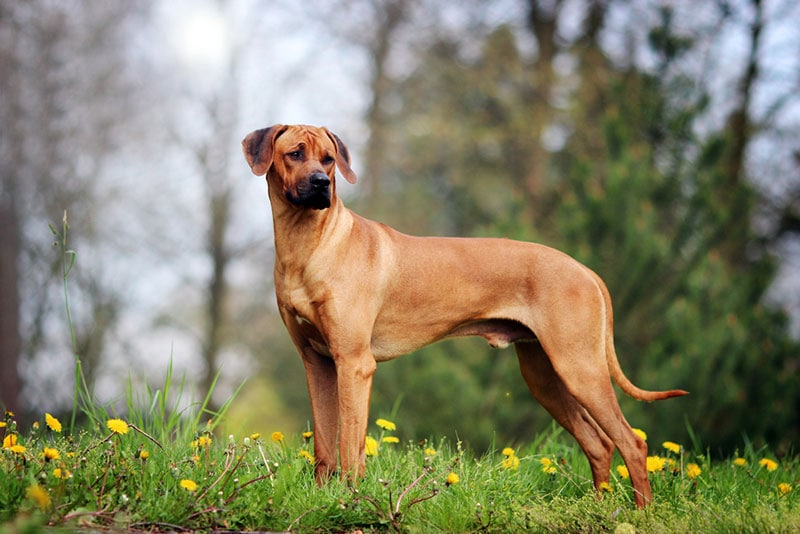
Rhodesian Ridgebacks are courageous lion-hunting dogs from South Africa. These brave hounds are all about tracking and baiting, and they were excellent hunting dogs for the hunters they originally belonged to. The modern Ridgeback has become a companion animal; they are affectionate with their owners and family but standoffish with strangers. The most striking features of the Rhodesian Ridgeback are their gorgeous coats and the ridge of hair running down their spines.
A beautiful red-gold coat usually springs to mind when you think of this breed. However, purebred Ridgebacks can come in various vibrant hues. We’ll look at eight coat colors and patterns Rhodesian Ridgebacks can sport, including the brushed gold of their standard show coats!

The 3 Show-Allowable Colors (Part of the Breed Standard)
1. Wheaten

Wheaten is another term for agouti hair or hairs with different bands of colors running through them. The fur seems to glimmer with subtly changing colors, and many breeds can sport variations of this gene. Wheaten is an older term used to describe coat colors that run from a yellowish-gold (like wheat) to an almost copper color.
Wheaten in the Rhodesian Ridgeback ranges from a golden color to the beginnings of red and can further be split into light wheaten and red wheaten.
2. Light Wheaten
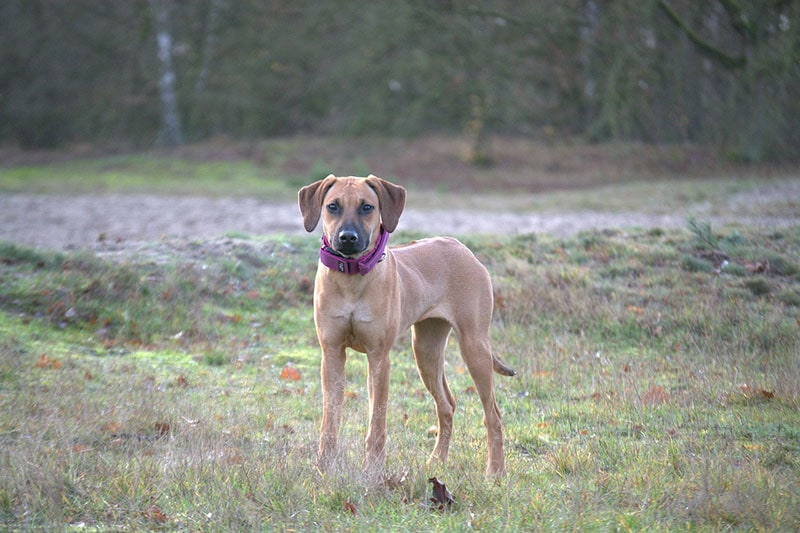
Light wheaten is one of the three standard colors a Rhodesian Ridgeback can come in. While it is one of the colors accepted in the American Kennel Club’s breed standard, light wheaten is rarer than standard or red wheaten due to a current preference among Ridgeback admirers for ruddy, burnished-copper colors.
Light wheaten looks pale and straw-colored, with glimmers of darker gold not affecting the overall lightness of the creamy coat.
3. Red Wheaten

Red wheaten is the darkest, reddest shade of wheaten a Rhodesian Ridgeback can be shown in. While light wheaten stays on the yellow-gold end of the spectrum, red wheaten dogs will have light copper and deep gold with a true red tinge. These dogs aren’t dark red like Irish Setters, but they have an unmistakable rouge about them that is very popular with lovers of the breed.
Red wheaten is one of the most popular colors of Rhodesian Ridgebacks, and the darker color accentuates and showcases the breed’s distinctive ridge of hair running down their backs.

The 5 Non-Standard Colors (Possible Colors)
4. Dilute

Dilute Rhodesian Ridgebacks exist but can’t be shown at competitions since the lighter colors are “non-standard.” Dilution occurs when two recessive genes are inherited and expressed in darker puppies, resulting in a gray, blue, or lilac coloring.
Dilute Rhodesian Ridgebacks are often born very light in color (almost silver) and will darken over time, ending up as a shade of gray or blue. Dilute Ridgebacks often have pink lips, noses, and eyelids, and they can have blue eyes that may or may not darken to a soft amber color.
5. Chimera
Rhodesian Ridgebacks with chimerism may have a darker or lighter color splitting their faces and bodies almost in half or have a large portion of their face one color and the other portion another. This striking appearance is caused by chimerism when two embryos fuse into one in the womb when puppies develop.
Ridgebacks with chimerism show two coat colors because they have the genes of the absorbed embryo inside them, expressed alongside their own. This is a rare condition; some Ridgebacks will only retain a small portion of the alternate color into adulthood.
6. Brindle

Brindle Rhodesian Ridgebacks can occur rarely and result from agouti genes interacting with other coat color and pattern genes. This results in a striped, red, and black coat that is striking and very varied. Brindle is now incredibly rare in the Ridgeback world, but at one point, it was common.
In fact, the first Rhodesian Ridgebacks imported to the UK were primarily brindle in color, likely due to the initial breeding of native African ridged dogs with brindle breeds, like the Greyhound, used to create the Ridgeback.
7. Dark Wheaten and Albinism

Dark wheaten Rhodesian Ridgebacks are very rare and appear almost black. However, they have the agouti variation in the hair shaft that other wheaten Ridgebacks have; the color variation is so dark on the dark wheaten that they look like a deep chocolate-brown to deep black.
Albinism, on the other end of the spectrum, is a rare genetic abnormality. Unlike partial albinism, which can commonly affect some breeds, true albinism is the complete absence of tyrosinase in a dog’s body and is incredibly uncommon. This condition causes the dog to be born with a complete lack of melanin and can carry several high-impact health problems.
Albino Ridgebacks will have white fur, pink or red eyes, and pink skin. They often have vision problems and other health issues.
8. Black and Tan
Black and tan is another rare color in the Rhodesian Ridgeback breed, but it is beginning to resurface as the dogs often produce the typical wheaten color puppies. Black and tan Ridgebacks can be more of one color than the other, and the coloring results from a variation of the agouti gene that causes wheaten coloring.
One Rhodesian Ridgeback breeder estimates that only one in 400 Ridgeback puppies born are black and tan, making them a valuable asset to the Ridgeback fan club!

Conclusion
Rhodesian Ridgebacks are striking and commanding in their standard shades of wheaten, but they can be even more attention-grabbing if they sport a rare coat color. Only the three wheaten colors can be shown in show rings or used for breeding show dogs, but some colors, such as black and tan, are making a comeback.
Whether you have a classic Wheaten Ridgeback or an exotically colored one, your dog will be loyal and loving towards you for life, no matter their hue!
Featured Image Credit: SubertT, Shutterstock