In this article
View 4 More +While myasthenia gravis (MG) sounds like an intriguing medical condition, the root words break down to mean: severe (gravis), muscle (my-), and weakness (-asthenia). This neuromuscular disease causes severe muscle weakness by a malfunction or failure where a nerve communicates and connects with muscle.
There are two broad categories of this disease, the rare congenital form and then the more commonly acquired version. In this article, we’ll talk about all things myasthenia gravis including the causes, signs, and treatment options.

What Is Myasthenia Gravis?
As mentioned, myasthenia gravis is a disease of failure of communication between the nerve and muscle. Some background information is essential in order to learn more about how this disease works.
Although each muscle in the body is controlled by its own nerve, the nerve itself does not directly connect to the muscle. Where a nerve meets a muscle, there is a small space between the nerve and muscle called the neuromuscular junction. In a normal situation, acetylcholine (Ach) is the chemical messenger that communicates from a nerve to a muscle cell. It is released from the end of the nerve into the neuromuscular junction and then travels to the receptors at the start of the muscle cell to trigger stimulation of the muscle.
In myasthenia gravis, the acetylcholine from the nerve that is attempting to stimulate the muscle is unable to do so efficiently or only very weakly. This could be due to different causes (see Causes section further below), such as not having enough receptors or having the immune system attack the acetylcholine receptor. If the acetylcholine from the nerve to the muscle is unable to properly attach to the receptor, this can then result in muscle weakness that can be in a specific area or more generalized throughout.
In addition, in veterinary medicine, when myasthenia gravis is seen, there are often some additional medical complications that are observed.
One common and important one is megaesophagus. This disease is a weakening of the esophageal muscles and subsequent dilation of said esophagus that normally moves food from the mouth to the stomach. While there are various causes of megaesophagus, myasthenia gravis is one of them.
Aspiration pneumonia is a common medical sequelae of myasthenia gravis. It is a lung infection that can occur due to food, liquid, etc. going into the wrong tube. Essentially, material that would normally go into the esophagus and then into the stomach instead goes into the windpipe which then ends up in the lungs, causing an infection and further health problems. There can be various causes of aspiration pneumonia, but with myasthenia gravis, there are muscular weakness changes in key areas that would typically help to try to prevent this.
Another health complication associated with myasthenia gravis is the potential for respiratory arrest, which is a condition where a dog would stop breathing.


What Are the Signs of Myasthenia Gravis?
- Overall generalized muscle weakness that is extreme.
- Weakness even with mild exercise that then improves with rest.
- Regurgitation (a passive upheaval of food that is located in the area from the mouth to the esophagus). This must be differentiated from vomiting, which may be associated with nausea and consists of forceful and rhythmic abdominal contractions which then expel material from the stomach or upper small intestine.
- Excess drooling
- Difficulty swallowing
- Voice change
- Unable to close eyelids
- Collapse
- If aspiration pneumonia is also present, there may be signs such as difficulty breathing, fever, and coughing.
A vet will be able to advise you on the best course of action to ensure the well-being of your pet.
If you need to speak with a vet but can't get to one, head over to PangoVet. It's our online service where you can talk to a vet online and get the advice you need for your pet — all at an affordable price!
What Are the Causes of Myasthenia Gravis?
There are two large categories of cause with myasthenia gravis, congenital and acquired. Congenital causes are rarer and would mean that the dog is born with the condition. In these pups, they are typically born with not enough acetylcholine receptors. These dogs are often diagnosed as early as 6–8 weeks old. Some dog breeds where this may be more commonly seen include Jack Russell Terriers and Springer Spaniels.
Acquired causes of myasthenia gravis are the most common overall and would indicate the disease occurs after a dog is born and could happen at any point throughout their life. For acquired dogs, an autoimmune disease is typically the cause. Here, the immune system makes antibodies that then attempt to destroy the acetylcholine receptor.
The specific cause of this is usually unknown, but in a small subset of these cases, myasthenia gravis could be brought about by hypothyroidism or cancer.
The acquired form can occur in any dog breed but may be more commonly seen in German Shepherds, Labrador and Golden Retrievers, and Newfoundlands. Often the disease most commonly occurs and is diagnosed in two different age ranges, either from 1–4 or 9–13 years old.
- Generalized. This is the most common form and occurs in 57% of acquired MG dogs. This can affect all skeletal muscles in the body such as with overall weakness.
- Focal. This is present in about 43% of dogs and affects a specific area, such as their face.
- Fulminant disease. This is a very rare but severe form of acquired MG that has a rapid and severe onset of signs. This form unfortunately has a high death rate.
How Do I Care for a Dog with Myasthenia Gravis?
Diagnosis at the Veterinary Hospital
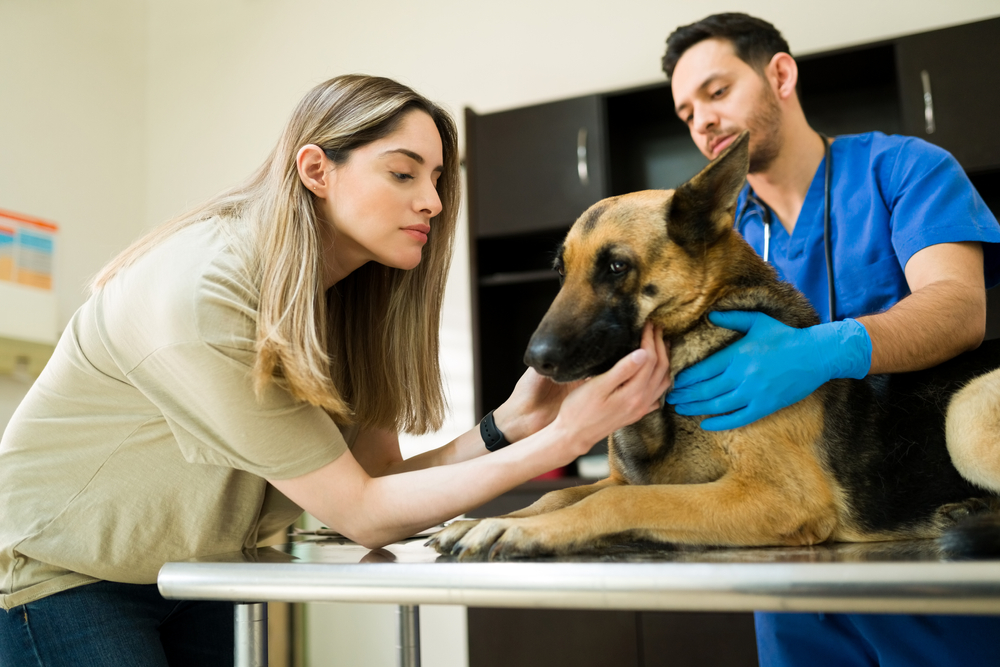
A complete history and thorough physical exam will start the process. For cases where myasthenia gravis may be suspected, various tests may be conducted.
- A Tensilon test consists of giving a specific medication intravenously (IV). In MG-positive dogs, there will be a short improvement of muscle strength that then wears off after a few minutes.
- A definitive diagnosis is found with a specific blood test that is based on finding antibodies for the ACh receptors.
- Other tests such as a muscle biopsy or electromyography (testing how well muscles respond to nerve stimulation) may be utilized in select cases.
Additional tests such as routine bloodwork, thyroid testing, or imaging may also come into play.
Radiographs of the chest are helpful in determining if there is an enlarged esophagus, secondary pneumonia in the lungs, or some types of visible cancer.
Subsequent Treatment
Once diagnosed, medical care given at home includes medication and a change in feeding practices. Anticholinesterase drugs, of which pyridostigmine bromide is the most common, are the mainstay of treatment. Its purpose is to keep ACh at the receptor longer allowing for better muscle functioning. Sometimes, a second line of medication may include immunosuppressive drugs, such as prednisone or others.
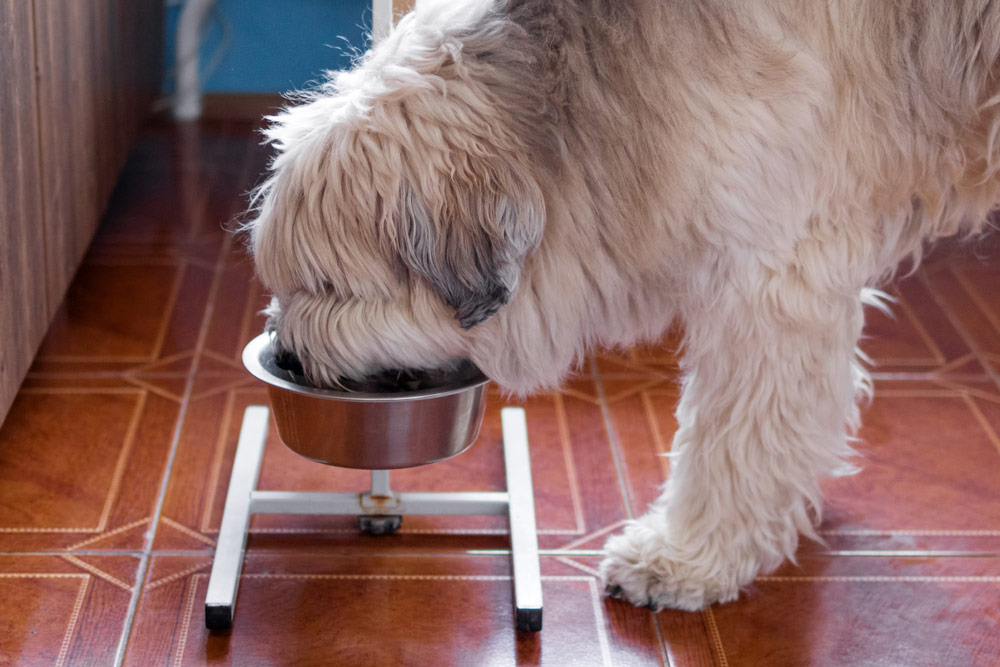
For megaesophagus, food bowls that are elevated or an upright feeding chair, commonly referred to as a Bailey chair (see FAQ #1 below), can be of great benefit. In some circumstances, a gastrostomy tube, commonly referred to as a feeding tube, may be needed.
Dogs that have aspiration pneumonia will need aggressive antibiotics and sometimes supportive care such as hospitalization, intravenous (IV) fluids, etc. Other medical conditions that may be present would also be treated such as medication for hypothyroidism or surgery for a thymoma, a specific type of cancer that can be associated with MG.

Frequently Asked Questions (FAQ)
What is a Bailey chair?
A Bailey chair is named such because of a family who built their dog, named Bailey, an upright feeding chair because they had megaesophagus. This type of chair is often an important component used in the treatment of megaesophagus and/or myasthenia gravis. It may also be referred to as a “dog feeding chair” or a “dog high chair.”
It is a vertical feeding apparatus that holds dogs upright during and after feeding (often recommended for 10 to 30 minutes) to allow for gravity to help bring their food from the esophagus to their stomach.
My dog has myasthenia gravis; what’s their overall prognosis?
Prognosis for dogs with the focal or generalized acquired versions of myasthenia gravis can be good. In fact, for those that don’t have aspiration pneumonia, about 85% may make a complete recovery and have a resolution, often within 6 months. With that being said, the overall prognosis for dogs with congenital myasthenia gravis or severe cases of aspiration pneumonia may not be as great.
In addition, fulminating cases of acquired myasthenia gravis are poor. For a dog with MG, trying to prevent aspiration pneumonia is key. A dog with MG that contracts aspiration pneumonia is at a very high risk (about 50%) for death or euthanasia.

Conclusion
Myasthenia gravis in dogs is a medical disease that can cause extreme muscle weakness as it affects the body’s nerves and muscles. While there are various types, most acquired cases require some different components for treatment.
If concerned about this medical condition in your dog, a conversation with your veterinarian is the next best step.
Featured Image Credit: Beach Creatives, Shutterstock