Get

In Your Inbox

Dogster is reader-supported. When you buy via links on our site, we may earn an affiliate commission at no cost to you. Learn more.

How to Measure Dog Paws for Boots: 6 Vet-Reviewed Tips

Share

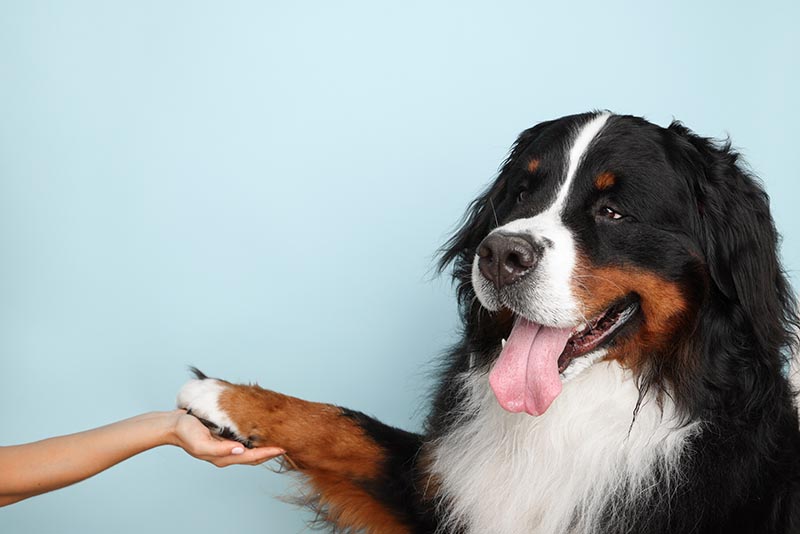
human hand holding bernese mountain dogs paw

Whether they’re heading out in the snow or rain, or your dog has a bandage on their leg that shouldn’t get wet, wearing boots can keep your dog’s paws warm and dry. If your dog likes to obsessively lick their paws, especially if there is a wound being treated, boots can also help them break the habit. However, it can be challenging to guess your pup’s size. Thankfully, all you need is a piece of paper, a soft measuring tape, and a pencil. Instead of a numbered chart, you can measure the length and width of their paws or trace the outline of their feet to give you an idea of a good fit.

divider single dog paw oct 2024

Does My Dog Need Boots?

Some dogs feel uncomfortable wearing shoes, as evidenced by funny internet videos of them awkwardly traipsing around. You shouldn’t force your dog to wear boots for fun. In reality, there are few situations where your dog absolutely needs shoes. Their paws are already well-equipped to handle most weather situations. Unfortunately, though, human inventions such as deicers and asphalt may necessitate shoes. Additionally, you’ll want to protect their paws if you’re hiking in an area where they may cut themselves on sharp rocks.

Depending on the breed, your dog might not need to wear boots in cold weather. For example, Siberian Huskies have strong paws that are built to handle the snow. However, they’ll still need to wear boots if your area uses rock salts or chemicals. Salts are too abrasive for your dog’s paws, and chemicals can harm them if they ingest them by licking their paws.

Ironically, you can also dress your dog in boots to protect their paws from hot asphalt and artificial grass during the warmer months. This certainly isn’t ideal, though, since it also adds a layer of warmth. Walking them during a cooler time, such as early in the morning or late at night, is a much safer way to deal with the heat, and reduce the risk of heatstroke.

Keep in mind that pavement temperatures may even run between 40 to 60ºF above the air temperature.1 This means even though the thermometer may register a pleasant 75ºF in the air, the pavement could be a scorching 120ºF. If you have any doubts about the pavement, it’s always a good idea to check the temperature with your hands or feet before setting your dog down on the sidewalk.

The type of shoes you choose depends on the problem you’re trying to solve. For example, rain boots are a good choice for wet or snowy climates, but probably not what you’ll want on a hot August afternoon.

Whatever type you pick, make sure the soles are flexible and the shoes are not too tight to endanger their circulation, but snug enough to stay on. Have your dog practice walking around in the house while wearing them so they’ll feel comfortable outside.

If your dog is wearing boots in order to protect a healing wound or keep a bandage dry, the purpose of the boots is purely to protect the paw and keep it dry while going outside for the toilet. In the meantime, it’s best that the paw is free of the boot, as it could otherwise get moist and sweaty, worsening the condition. Most dogs in these cases wear an E-collar to stop them from licking.

close up of dog wearing dog boots outdoors
Image Credit: otsphoto, Shutterstock

How to Measure Your Dog for Boots

Once you’ve decided on the pair of shoes, you’ll want to pull out a pencil, piece of paper, and a soft measuring tape.

Here's how to get the most accurate measurement in just a few steps:
  • Help your dog to sit still. If you have a hard time convincing your dog to stand still, break out the treat jar or their favorite toy to entertain them for a few moments.
  • Measure length. Measure their paw from the base of their main paw pad to the tip of their longest toenail. Write down the length measurement on the paper.
  • Measure the width. Measure the width of their paw across the widest part. Record the width measurement on your paper.
  • Measure the circumference. Wrap the soft measuring tape completely around their paws. Jot down the circumferenc Also measure the circumference at the ankle or hock level (carpus and tarsus) as many boots go as high and have a zip or other means of tightening there, and you want this to be comfortable.
  • Let your dog try on the shoes. Like human shoes, some brands may run a little off from our determined size, so it’s always a good idea to let your dog stick their toes in to test them out as soon as you can. They may look a little awkward at first as they hobble around in their new sneakers, but it should be easy to determine whether the clumsiness stems from the new experience or if their shoes don’t fit quite right.

How to Trace Your Dog’s Feet

Alternatively, you can trace around the shape of your dog’s paws or use a stamp to leave an impression on the paper. This way, you can take the outline of your dog’s paw with you to the store to physically compare it to the size of the shoe. It’s always a good idea to also measure their paws so you have the most information at your disposal when it’s time to shop.


hand holding australian shepherd dog's paw
Image by: Kuttelvaserova Stuchelova, Shutterstock


Summary

Your pup already rocks the barefoot look, but sometimes they may need to slip on a protective layer, especially if it’s extremely hot or cold, or if they have a wound that is healing or a bandage. Measuring your dog’s paws can help you determine the correct size, which is necessary to secure a proper fit. After you’ve purchased the shoes, try them on your dog at home to make sure they fit correctly. Finding the perfect fit avoids injuries and discomfort and puts confidence in Fido’s stride.


Featured Image Credit: Vad-Len, Shutterstock

Want content like this delivered to you?

Sign Up For Our Newsletter

News, insights, expert advice, and everything dog

* By submitting, you agree to our Terms & Conditions and Privacy & Cookies Policy.


How useful was this post?

Click on a star to rate (you can leave written feedback after clicking submit)

Help us improve Dogster for pet parents!

Your feedback really matters.

What did you like about this post? Also how can we improve it?

Join the conversation

Leave a Reply

You’re very welcome to leave a comment or question. Please know that all comments must meet our community guidelines, and your email address will NOT be published. Let’s have a positive and constructive conversation.


Talk With A Vet Online

Peace of mind,
anywhere, anytime

Affordable vet advice

Ask Dr. Paola- Help! My Dog’s Sleeping Habits Have Changed! (May 18, 2026)

Welcome to our “Ask Dr. Paola” series, where every Monday we bring expert advice straight from Dr. Paola Cuevas (MVZ) to help our...

The Crate Setup Most Dog Owners Get Wrong (And How To Fix It!)

Most people assume that if their dog hates the crate, the crate is the problem. So they try a bigger one, a different...

1,500 Beagles Rescued from Wisconsin Lab Farm – Here’s Where They’re Going

You may remember that a few weeks ago, we reported on a tense situation at Ridglan Farms, Wisconsin, a facility infamous for housing...

Dogster’s Weekly Photo Contest Winners: Window Watchers (May 11, 2026)

Every week our team gets the privilege of sorting through our readers photos to choose what dogs will win this weeks contest! See...

More related

10 Great Off-Leash Dog Parks in Gig Harbor, WA You Can Visit Today

As one of the many cities located around Puget Sound, Gig Harbor benefits from forested shorelines, wildlife, and bustling city life. It’s surrounded...

Why Is My Dog’s Tail Kinked? 4 Vet-Verified Possible Reasons

Kinked tails are relatively common in dogs and have a variety of causes. Some kinked tails may be acquired from things like injuries,...

Yoranian (Yorkie & Pomeranian Mix): Info, Pictures, Care & More

If you’re a fan of energetic, loving, small dogs that are a bit protective of their families, the Yoranian will fit in nicely...

5 Easy Dog-Friendly Recipes You Can Try at Home

It’s so easy to make your dog one of these five dog-friendly recipes: The Top 5 Dog-Friendly Recipes 1. Turkey-Rice Casserole This recipe...

Keep reading

Dinovite Dog Food Review 2026: Recalls, Pros & Cons

Review Summary We want our pets to be healthy, so we search across the seas and plunge deep into the Internet to find the best dog food available (that we can afford). And still, that may not be enough. Like...

Dogster_Dinovite Dog Food Review

PetPlate Dog Food Review 2026: Recalls, Pros & Cons

Review Summary PetPlate hasn’t been around for all that long, but in the few years they have been producing fresh food for dogs, they’ve made a big difference and have created millions of meals that are loved by pups across...

Dogster_PetPlate Dog Food Review

Can Dogs Have Persimmons? Vet-Verified Nutrition Facts & FAQ

Persimmons make a versatile addition to the kitchen and infuse foods with a delightful sweetness and unique health benefits that parents, kids, and even our pets can enjoy. Dogs can eat persimmons as an occasional treat without issue if you...

Dogster-Can-Dogs-Have-Persimmons

Weruva Dog Food Review 2026: Pros, Cons, Recalls, and Guide

Review Summary Weruva may sound like an odd name for a pet food brand, but the name was actually inspired by the creators’ cats: Webster, Rudi, and Vanessa. The first syllables of each name were taken and blended to create...

Dogster_Weruva Dog Food Review

5 Vet-Approved Carob Dog Treat Recipes to Make at Home

You know chocolate is toxic to canines, so giving it to your pup is out of the question. But sometimes those begging eyes are so hard to resist! However, while you can’t feed your dog real chocolate, you can feed...

Carob chocolates for dogs

Can Dogs Eat Pork? Vet-Approved Nutrition Facts & FAQ

There is always a time for pork, whether it’s crispy bacon to accompany your waffles, pork sausages for lunch, or a pork roast with all the trimmings for a special occasion. There are many opportunities where pork can get your...

Can Dogs Eat Pork

What Is Choline Chloride in Dog Food? Vet-Approved Facts & Benefits

If you’re one of the people who read the entire ingredients list on your dog’s food before purchasing it, you have likely spotted a few words you weren’t familiar with. One of the things you have likely seen in your...

Dog food in a bowl

Can Dogs Eat Squid? Vet-Verified Health Benefits & FAQ

Dogs can eat squid in small amounts occasionally. The squid must be cooked to ensure that there aren’t any food-borne illnesses in the squid. Seasonings should also be avoided, as many are toxic to dogs. Squid itself is completely fine,...

Can Dogs Eat_squid

Love Dogs? So Do We! Join the Dogster Community

Stay informed with expert pet care insights delivered straight to your inbox! Discover professional guidance on animal behavior, feeding tips, trusted product picks, and much more.


Sign up for the Dogster Email Newsletter