Can Dogs Get Covid? Vet-Verified Health Info & Risk Management



In this article
The COVID-19 pandemic may have been declared “over”, and everyone may have returned to normal lives, but that doesn’t mean COVID-19 no longer exists. We now know what precautions to take with COVID-19 and better understand this virus, but COVID-19 is still a concern. As such, you may wonder if your dog can get COVID or you and your pup can transmit the disease to one another.
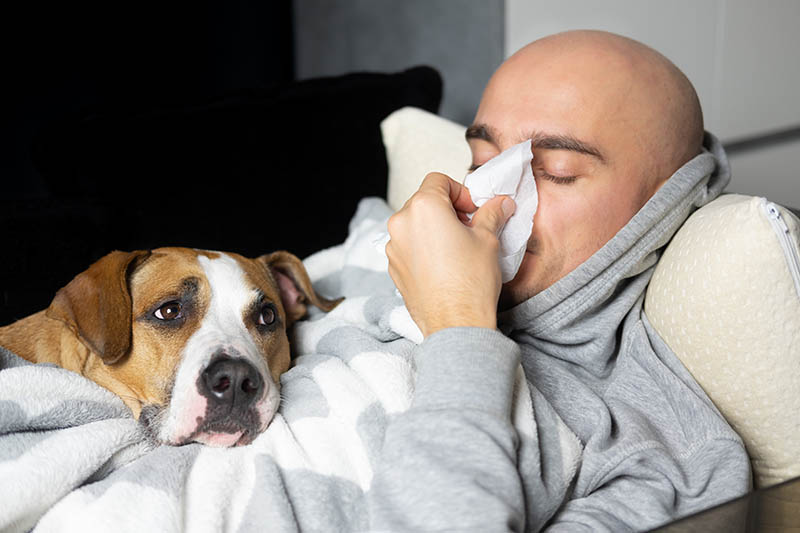
Your dog can catch COVID-19, although this virus isn’t believed to be a threat to canines; it’s also very rare for a dog to have COVID. If your pup has COVID-19, the chances of transmitting the illness to you are even rarer than that. And yes, you may be able to transmit this illness to your canine companion, but the chances of this happening are also extremely low. Here’s a closer look at what you should know about dogs and COVID-19!

Can Dogs Get COVID?
It’s been well-established that dogs can get coronaviruses. However, for the most part, the main coronaviruses a dog will get are canine respiratory coronavirus or canine enteric coronavirus, rather than SARS-CoV-2, the virus responsible for COVID-19.1 There have been a handful of reports over the years, though, about dogs contracting COVID-19.2 In these cases, it seems the dog caught COVID from a person they’d been in close contact with. The good news is that this illness is much less serious in canines.
So, even if your dog is suspected to have COVID-19, there’s no need to be overly concerned, as they should be just fine! There are also things you can do to help lessen the chances of your dog contracting this virus, which we’ll discuss below.
What Are the Signs of COVID in Canines?

As with humans, some dogs may be asymptomatic, meaning they never show signs of having COVID. Other canines will show signs that they are sick, although you should understand that these signs can also signify more common canine illnesses that are not COVID. So if your pup is exhibiting any of the following signs, your vet will likely want to rule out other potential causes before considering testing for COVID-19. Signs can include:
- Vomiting
- Lethargy
- Diarrhea
- Discharge from the eyes
- Shortness of breath
- Coughing
- Fever
- Runny nose
As you can see, the severity of COVID-19 for dogs can vary but serious illness in dogs is fortunately extremely rare. If a dog becomes ill, they’ll likely have few signs, and any they do have will probably pass rather quickly.
If you’re concerned about your pet’s well-being, we recommend you contact a veterinarian.
Can My Dog Give Me COVID?
There is very little evidence that COVID can spread from canines to humans. However, it is possible for the virus to spread from human to canine in certain circumstances. You’re much more likely to catch COVID from someone else in your home, a friend, or a co-worker than your dog.
How Is COVID Treated in Dogs?

There isn’t a specific treatment for COVID in dogs (it should also be noted there isn’t a vaccine for dogs either). Treatment is generally symptomatic and supportive. Because canines are much more likely to have mild signs, managing them shouldn’t be too difficult. Your vet might recommend medication to deal with vomiting or a runny nose or request you change your pet’s feeding schedule. It simply depends on the signs and severity of the illness.
While your pup is sick, follow your vet’s advice. You may want to isolate them and wear gloves when you come in contact with them. There’s very little chance of you contracting COVID-19 from your dog, but that slight chance is there, so it’s better to be safe than sorry.
How Can I Reduce the Risk of My Dog Getting COVID?
Though the risk of your dog catching COVID-19 is small, there are still things you can do to further reduce that risk (and things you should not do).
- If you or other people in contact with your pup have tested positive for COVID-19, then it’s advisable to take extra hygiene precautions and avoid letting your dog lick people’s faces.
- If you are isolating and you need to keep them home then ensure they get enough physical and mental stimulation!
- Sticking to walking in areas that don’t have a lot of people will reduce risk. The fewer people around, the less chance your dog has of getting COVID.
- Be sure you’re feeding your dog a high-quality, healthy diet.
- Wash your hands well before and after handling your pup’s toys, food bowls, etc.
- Don’t put a mask on your dog!
- Never use hand sanitizer or any other chemical sanitizer/disinfectant on your pet!
Final Thoughts
COVID is still a concern, even if the pandemic has been declared over, so it’s good to continue being safe. If you’re concerned about your dog getting COVID-19, the good news is that COVID in canines is rare, and if your dog does get sick, signs are usually relatively mild (or even non-existent). You also don’t need to worry about your pup passing COVID to you or other people in the home, as this is extremely unlikely to occur. Chances are higher than you’ll pass this illness to your dog; however, this, too, is very rare. You can also take steps to lessen the chances of your pup acquiring COVID to almost nil!
See Also:
Pandemic Dogs & Puppies: Vet-Reviewed Socialization & Behavioral Issues
Can I Catch a Stomach Virus from My Dog? Vet Approved Facts & FAQ
Featured Image Credit: Przemek Iciak, Shutterstock
Expert dog care, straight to your inbox
Vet-reviewed advice, training tips, and the best of Dogster. Free, and you can unsubscribe anytime.
By signing up, you agree to our Terms & Conditions and Privacy & Cookies Policy.
Misty Layne lives out in the woods in small-town Alabama with her two Siamese - Serafina & Jasper. She also has an array of stray cats, raccoons, and opossums who like to call her front porch home. When she’s not writing about animals, you’ll find her writing poetry, stories, and film reviews (the animals are, by far, her favorite writing topic, though!). In her free time, Misty enjoys chilling with her cats, playing piano, watching indie and foreign films, photographing abandoned places, and catching up on her never-ending TBR list.
Join the conversation
Ask a question, share your story, or send private feedback.