

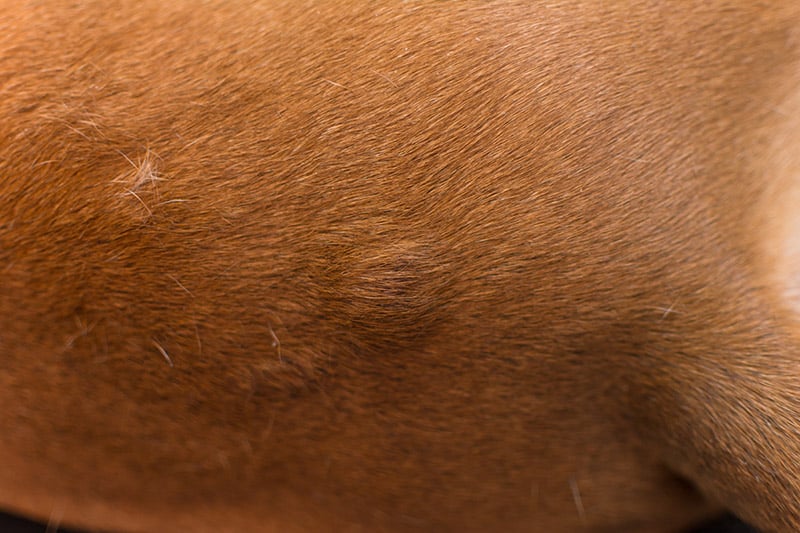
Finding a lump on your dog can be just as scary as finding one on you! If you see a bulge of any kind on our dog’s tummy, you have the right to be concerned. Cancer is a huge killer among dogs and often isn’t detected until it is very advanced.
However, the lump could be something as simple as a cyst or a fatty tumor. In this article, we aim to describe in detail what each thing will visually look like to see if it is comparable.

The 6 Possible Causes for Lumps on Your Dog’s Stomach
Getting to the bottom of what’s wrong with your dog is hot on the list. While seeing your vet is definitely in the cards, you probably also want to get a good idea of what might be wrong. Here are a few possible causes.
1. Skin Tag
Skin tags might be alarming at first, but they are totally benign. Small flaps of flesh-colored skin grow on a dog’s skin. They can most likely develop skin tags on the chest, armpits, hips, ankles, elbows, or face.
But the abdomen is one of the most noticeable areas. Generally, skin types might be unsightly, but they are totally harmless and are not a cause for emergency. They generally require no treatment.
2. Cyst
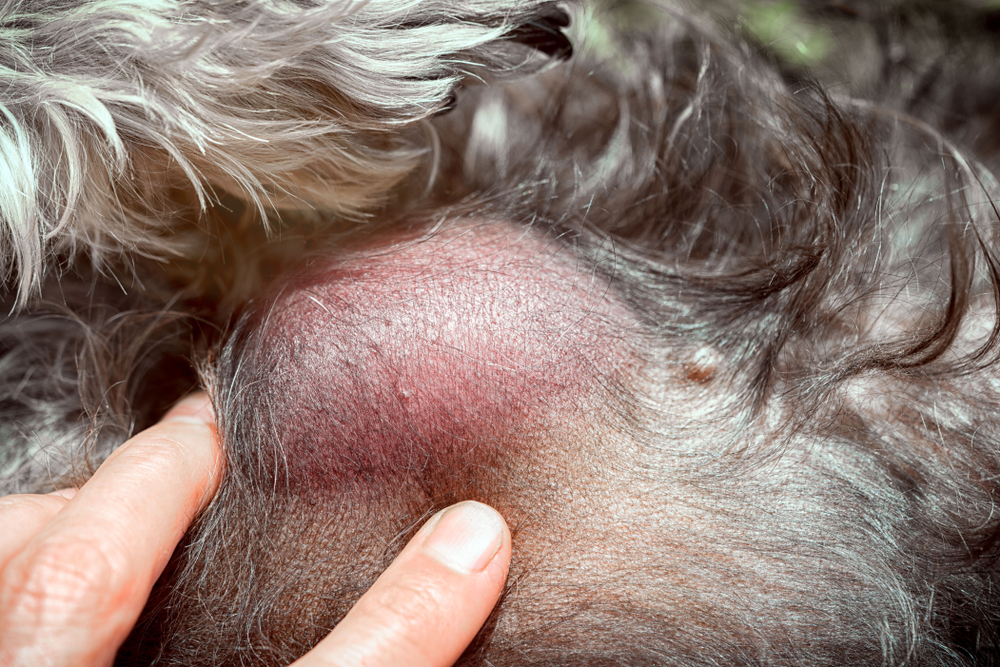
In most cases, cysts develop from hair follicle structures. They are generally by themselves and can be soft or firm. Typically, sebaceous cysts are caused by the buildup of debris in the hair follicle. Depending on the symptoms, your vet might leave the cyst, or they might surgically remove or drain the cyst if they think it’s necessary.
If you’re concerned about your pet’s health, you should contact a vet.
If you need to speak with a vet but can't get to one, head over to PangoVet. It's our online service where you can talk to a vet online and get the advice you need for your pet — all at an affordable price!

3. Cutaneous Histiocytoma
Cutaneous histiocytoma is a generally benign, rapidly growing tumor typically affecting younger adult dogs. This type of tumor usually comes on very quickly and may alternate or become inflamed and infected.
Often, they spontaneously regress without any treatment, but some of them do require antibiotics or surgical removal.
4. Wart
Dog warts are called canine papillomavirus and can spread very quickly. You might notice it as one small bump, and then all at once, that area is taken over. Your pup can develop warts in several areas of the body, including the belly.
Warts have a very noticeable appearance, looking like cauliflower. Usually, this is caused by this area having a bunch of warts that are grouped together.
If you notice warts on your dog’s stomach, you can likely find them on other more obvious places of the body, including the lips and between toes on paw pads. Dogs under 2 years old are specifically susceptible to warts, although contact can affect dogs of any age.
5. Lipoma
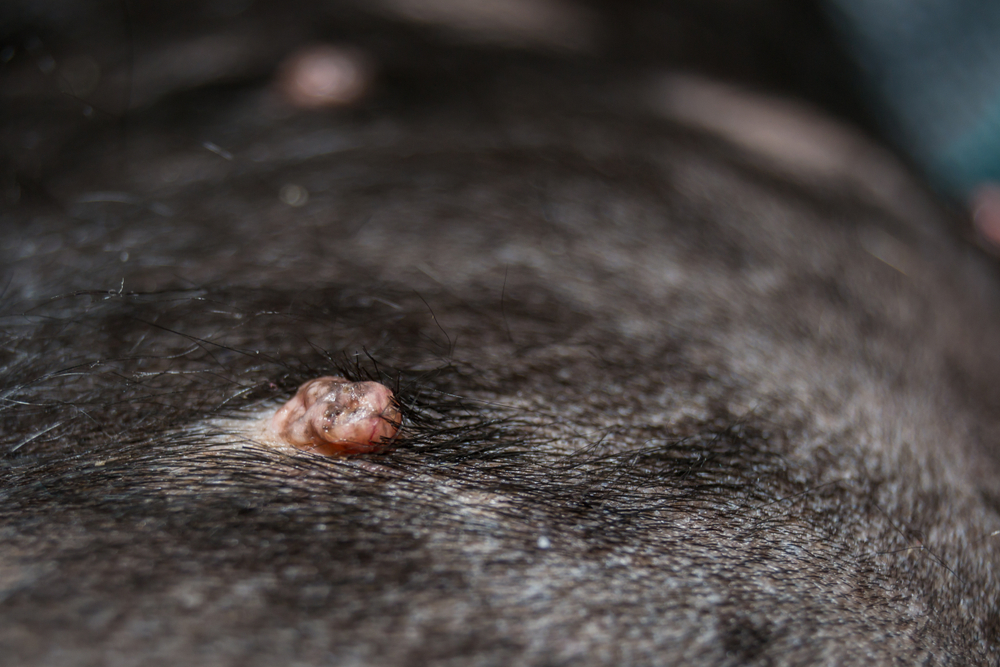
It might surprise you, but lipomas, or fatty tumors, are pretty common on dogs. They usually pop up between middle age and seniorhood and appear as painless, soft, pliable lumps of fat cells.
Often, these are found on the abdomen and account for most cases of abdominal lumps. In some cases, dogs can develop infiltrative lipomas, which are usually firm, fixed, soft, or mobile and are usually locally aggressive, spreading to surrounding tissues between muscle layers.
Usually, lipomas are harmless, and vets will often recommend leaving them alone. They will generally only intervene if it is causing general discomfort.
6. Hernia
If the lump seems to originate from inside of the dog, it could be a hernia. Abdominal hernias occur when a portion of an abdominal organ protrudes through the abdominal wall. Umbilical hernias occur when a dog’s umbilicus (or belly button) doesn’t close all the way after birth and part of the abdominal tissue protrudes through it.
Hernias may or may not cause pain, discomfort, or other symptoms. Some hernias require surgery to prevent them from coming back if they are large or are causing your dog problems.
Assess the Visuals
If you notice a lump on your dog’s stomach, assessing what you’re seeing is important. This little bump could be completely asymptomatic and be no cause for concern. You might have just noticed it when you were rubbing their tummy while they were sitting next to you on the couch.
However, other times it might be red, swollen, irritated, oozing, firm, and a number of other descriptions. Here are some things to look for when assessing the lump on your dog’s stomach.
Color
Color can tell you a lot about whether or not this bump is irritated. If the bump is skin-colored and it doesn’t look very angry, it doesn’t often signal infection, but it could mean it’s a sign of a growth or other issue.
Consistency
What is the consistency of the lump? Is it movable and pliable or rigid and stiff? Is the bump squishy, or is it hard to the touch? Hard, rigid, or firm signal possible malignancy, while soft bumps are usually benign.
Texture
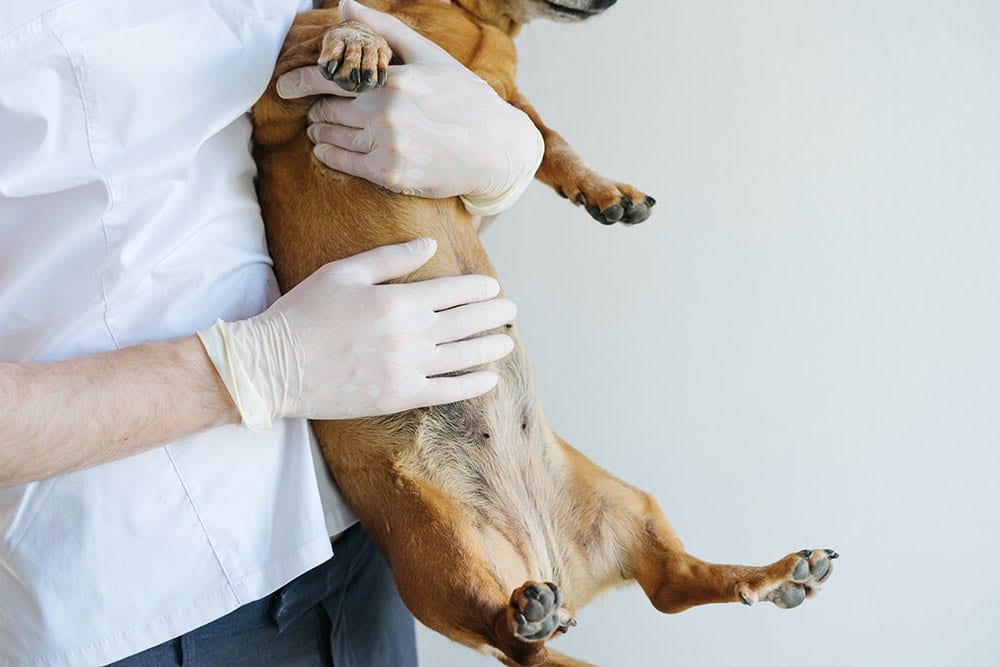
The texture of the lump can tell you a lot about it. If it is extremely firm and rigid but otherwise immovable, it might be fixed. If it is squishy or moves with ease, it could indicate fluid buildup.
Number of Lumps
Generally, lumps are singular, completely by themselves. But other times, there can be multiple, depending on what type of lumps we’re talking about. For example, a cyst would be an individual, flesh-colored or red lump.
A rash, on the other hand, might spread many small bumps across the visible skin.
Signs
Think very closely about the past several weeks. Has your dog shown any indication that they might be feeling unwell? Has anything changed, such as their appetite, bathroom habits, or personality?
Take note of any signs you can think of to mention to your vet for your appointment.

When to See Your Vet Right Away

If you notice a lump on your dog’s stomach, it is important to make an appointment with your vet. It could be something as simple as a skin tag, but you don’t want to be the one to take the chance! Whenever you are concerned about your pooch’s condition, your vet is the one to call.
The internet is great for resources but not for diagnosis. So, if you have a concern or think that your dog is suffering as a result of the lump, your vet will be the first to help you out.

Conclusion
Now you understand what a lump on your dog could be. If your dog has any lump on them, regardless of what you might think it is, it’s always best to get checked instead of treating it at home. Medical diagnosis is always better than self-diagnosis!
See also:
- Why Do Dogs Develop Lumps After Subcutaneous Injections? Our Vet Answers
- Why Does my Dog Have Warts? Important Health Information
Featured Image Credit: Todorean Gabriel, Shutterstock























2 Responses
I discovered a hard blackish lump at abdomen of my PUG dog aged 12 years and consulted vet. Was told as benign but its developed quickly in 2-3 months making dog uneasy. My vet tried surgery but dog could not bear anaesthesia which affected his heart hence not operated. Under medication he started loss of appetite and started redish and brownish vomits and ultimately expired in 5 days.
Hi Rajiv, thanks for reaching out to us. I'm so sorry to hear about your dog's passing. It sounds like you've been through a lot! It's heartbreaking to lose a pet that has been with you for so many years and especially to see them suffer. I hope you can find some solace in the memories you created over the years.