Do you want a dog but your allergies won’t tolerate the fur? Or maybe you just don’t want to deal with shedding dog hair all over your furniture. While there is no such thing as a 100% hypoallergenic breed, hairless dogs do tend to be a bit better for allergy sufferers. Plus, not having to clean up as much shed hair is a major bonus.
Whether you’re just fascinated by the idea of hairless dogs or want to determine the best one for you, we got you covered. Read on as we break down the various types of hairless breeds and what makes them so special.

What Qualifies as a Hairless Breed?
Despite their name, hairless dog breeds aren’t always entirely hairless. Many of these dogs do have minimal amounts of fur, but the amount varies depending on breed and bloodline. Broadly, the hairlessness across various hairless breeds is the result of a genetic mutation. A hairless dog with a muddled ancestry is more likely to exhibit some fur, however.
The 8 Hairless Dog Breeds
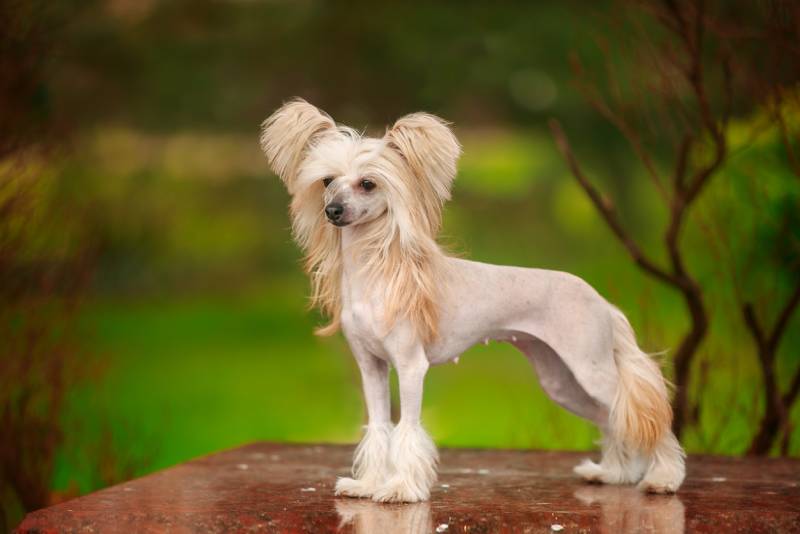
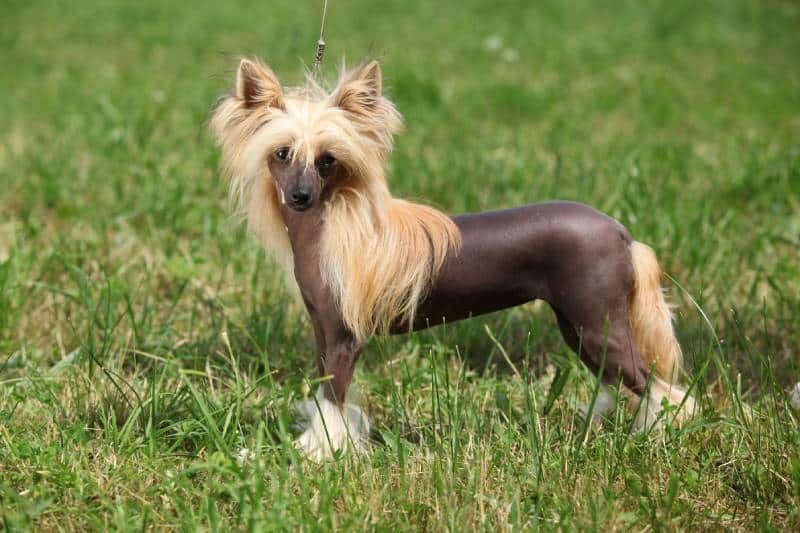
1. Chinese Crested Dog
| Origin: | Mexico |
| Lifespan: | 12 to 18 years |
| Height: | 11 to 13 inches |
Featured in Hollywood blockbusters like “102 Dalmatians” and “Cats & Dogs,” the Chinese Crested is a hairless breed thought to be related to the Mexican Xolo because of strong genetic similarities. Two varieties exist: hairless and “powderpuff.” Hairless Chinese Cresteds vary widely in color and have patches of hair on their heads, tails, and paws, while Powderpuffs are covered in hair.
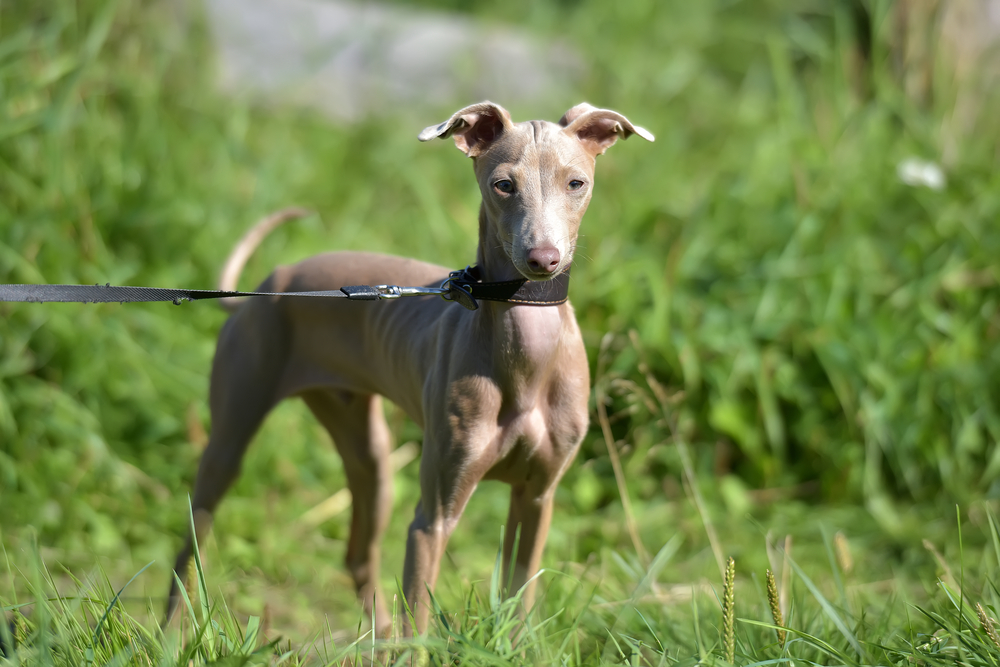
2. Peruvian Inca Orchid
| Origin: | Peru |
| Lifespan: | 10 to 12 years |
| Height: | 9 to 26 inches |
Often called the Peruvian Hairless Dog, the Peruvian Inca Orchid is a hairless breed that stems from the ancient Incan Empire of South America. Some have called them as culturally significant for Peru as Macchu Picchu! Described as intelligent, watchful, and affectionate, they make great family watchdogs that dote on children. Peruvian Inca Orchids come in a variety of colors, like gray, brown, and copper, but only a few have sparse hair on their head. Otherwise, this is a true hairless breed.
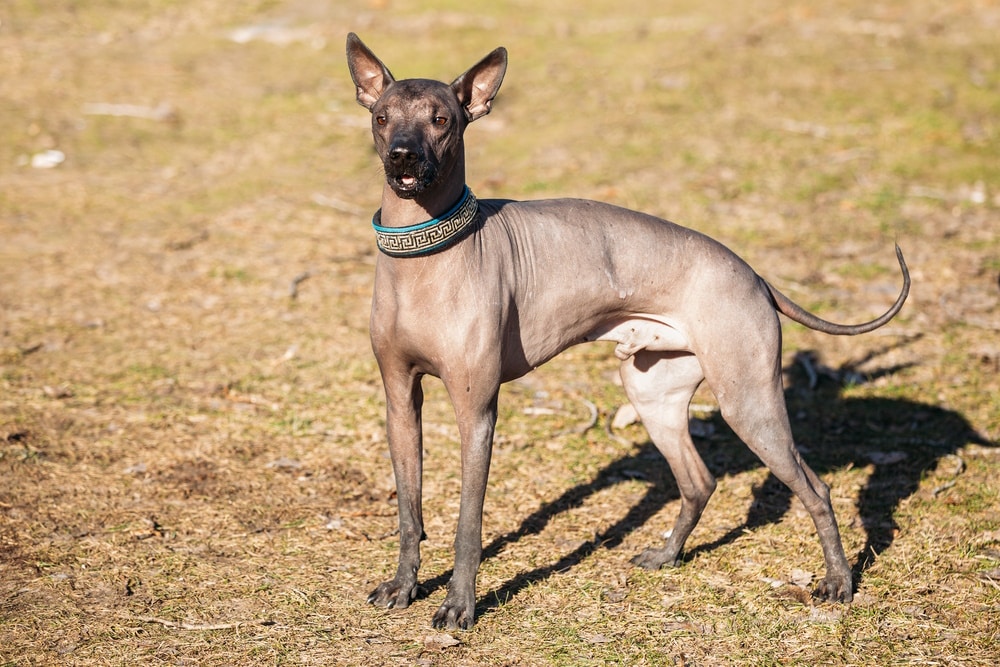
3. Xoloitzcuintli
| Origin: | Mexico |
| Lifespan: | 12 to 15 years |
| Height: | 15 to 23 inches |
Also called the Xolo, the Xoloitzcuintli is thought to be the modern descendant of the dogs that lived alongside the ancient Aztecs. Historians believe we can trace their ancestry back over 3,000 years with fairly minimal genetic drift, and the modern Xolo goes back about 1,000 years. This sweet dog has a strong loyalty toward their family members, and they’re known to make excellent watchdogs.
Xolos come in a range of colors, and some of them even have fur, whether it’s the diminutive toy Xolo or the more dignified standard-size Xolo.
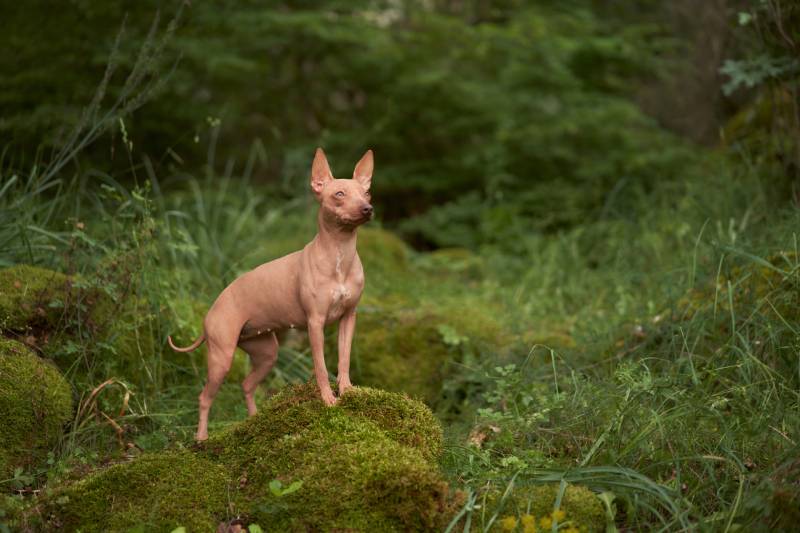
4. American Hairless Terrier
| Origin: | United States |
| Lifespan: | 14 to 16 years |
| Height: | 12 to 16 inches |
This is a new breed, and all American Hairless Terriers come from a single dog named Josephine. Born in 1972, she was a purebred Rat Terrier born with a mutation that made her hairless, save for a light peach fuzz all over her body. American Hairless Terriers are squat yet graceful-looking dogs with a vigilant watchfulness and tenacious spirit. Although they come from the once-ubiquitous Rat Terrier, in 2016, the breed was formally recognized as a distinct breed all their own by the AKC.
5. Argentine Pila Dog
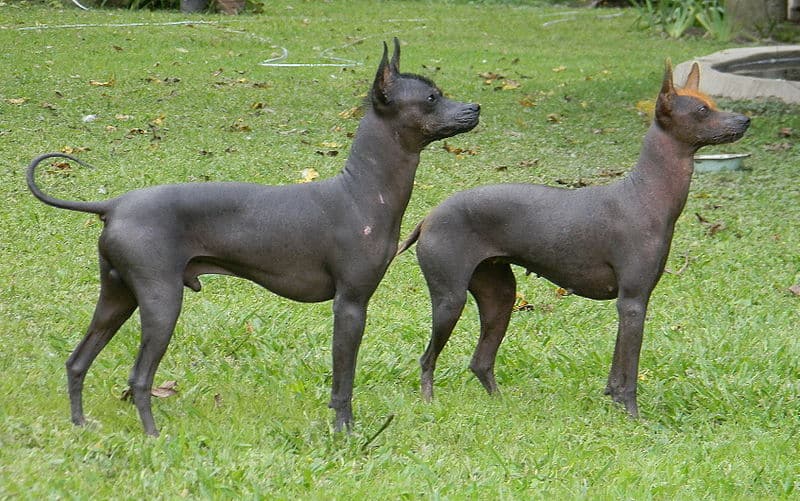
| Origin: | Argentina |
| Lifespan: | 12 to 15 years |
| Height: | 9 to 22 inches |
The Argentine Pila is strongly suspected to be related to the Peruvian Inca Orchid, and indeed, it’s thought that the Incans gifted the dog to the Argentinians because of their close ties. Prized by Argentina, the breed isn’t formally recognized by any kennel clubs outside the country due to their unclear lineage. This is one of the rarest hairless breeds of all, with just 1,700 Argentine Pila Dogs living in the northern Salta province of Argentina.
6. Hairless Chihuahua
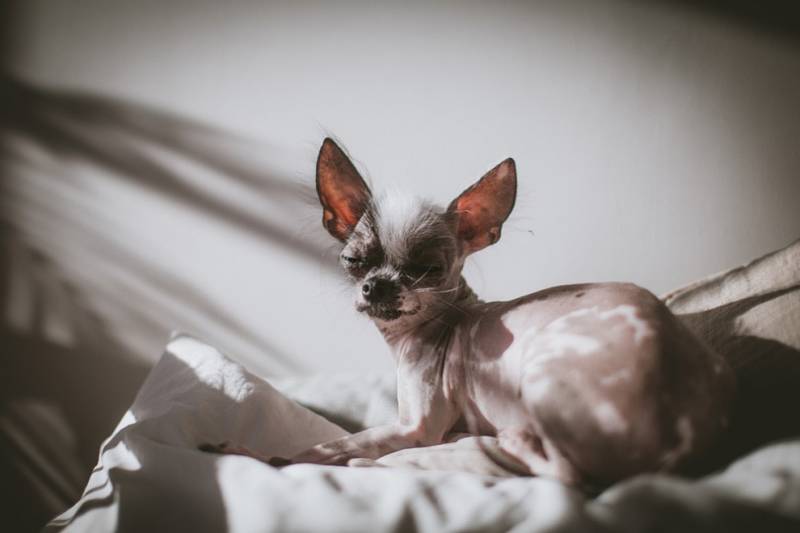
| Origin: | Mexico |
| Lifespan: | 12 to 18 years |
| Height: | 6 to 9 inches |
Hairless Chihuahuas are Chis with a genetic mutation that causes their bodies to not produce hair. It’s rare for a Chihuahua to be entirely hairless, and most have some tufts of fur on their head or body. Unlike other hairless breeds, the Hairless Chihuahua is more of a genetic accident than a true breed. They still have all the scrappy spirit, sass, and loyalty that the breed is known for, however.
7. Abyssinian Sand Terrier
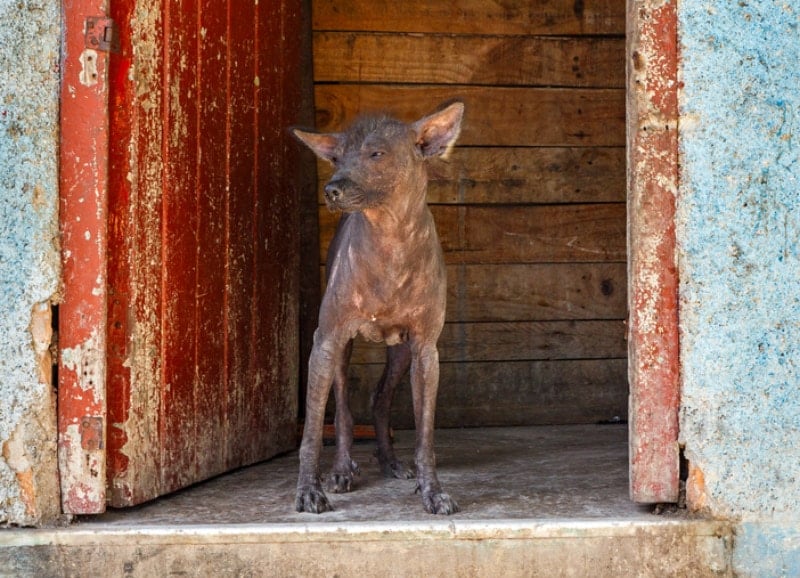
| Origin: | Africa |
| Lifespan: | 12 to 16 years |
| Height: | 15 to 20 inches |
More commonly called the African Hairless Dog, the Abyssinian Sand Terrier is a reclusive breed native to various parts of Africa. Not much is known about them, but biologists believe their hairlessness is an evolutionary reaction to the sweltering African sun. With a fiercely independent personality, Abyssinian Sand Terriers often accompanied cattle herds at a comfortable distance and sometimes helped guard them against predators.
8. Ecuadorian Hairless Dog
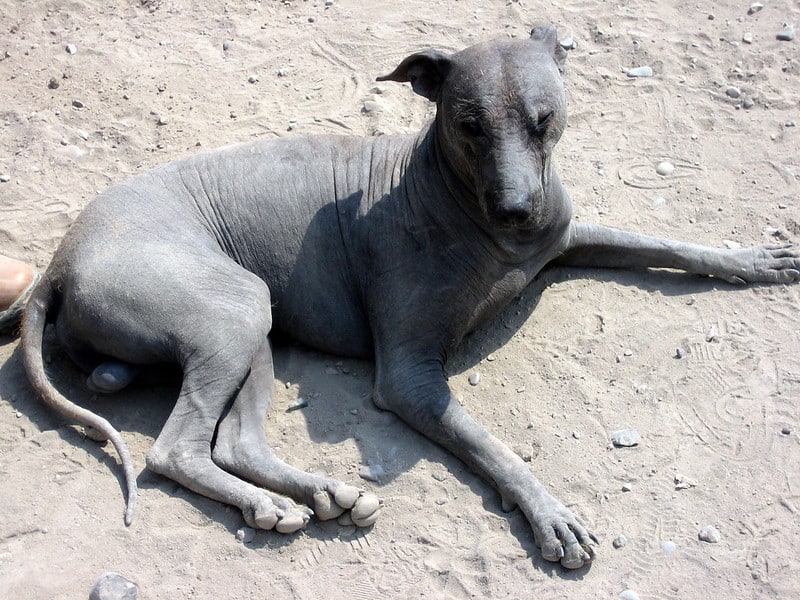
| Origin: | Ecuador |
| Lifespan: | 12 to 14 years |
| Height: | 15 to 18 inches |
A cross between the Xolo and Peruvian Inca Orchid with a penchant for rat catching, the Ecuadorian Hairless Dog isn’t officially recognized as a breed of their own. Most have gray skin, and some have tufts of fur, depending on their bloodline. Virtually all Ecuadorian Hairless Dogs live in their home country of Ecuador and are considered one of the rarest dog species in the world.
Wrapping Up
Hairless dogs might be off-putting to folks who love their dogs furry and fluffy, but their hearts and personalities are just as big. It takes special care to help keep a hairless dog’s skin healthy, but for allergy sufferers and people who hate pet hair, a hairless pup could be the perfect doggo for you.
Featured Image Credit: Golland, Shutterstock
 What Qualifies as a Hairless Breed?