With basic commands out of the way, are you ready to take your dog’s training to the next level with some tricks? More complex skills enable dogs to enhance their learning abilities, keep them active, and boost their social skills and obedience in the home. Plus, it improves your bond. What else could you ask for?
However, even with the end goal in sight, figuring out where to start training a new move can be tricky. Fortunately, trick training relies on essential principles you likely already know. Start broadening your dog’s repertoire today with this easy-to-follow step-by-step guide to teach a dog tricks.

How to Teach a Dog Tricks in 7 Steps
1. Establish Basic Obedience Behaviors
Many dog tricks begin with foundational commands like “sit,” “down,” and “stay.” You should teach these tricks and ensure your dog has them down pat before having them try to shake hands, roll over, or do any other fun trick. When the basics are well-established, you can use them to get your dog into a position to learn a new move.
2. Lure Your Dog With a Treat
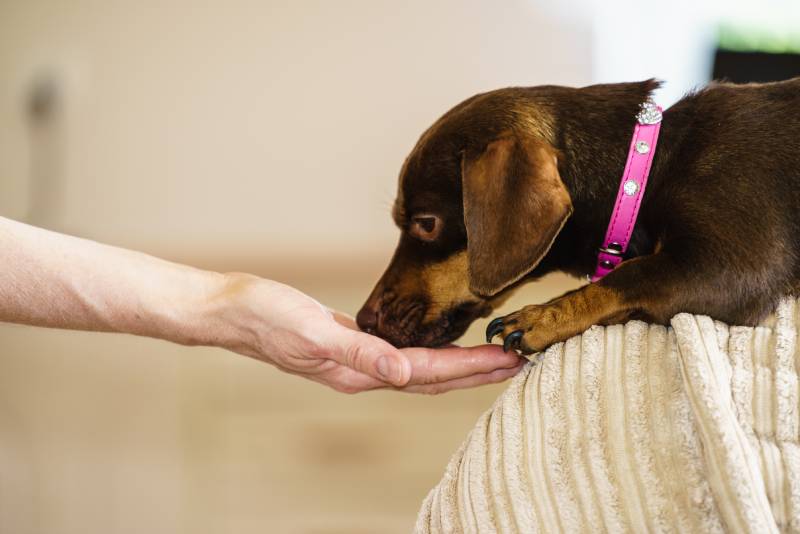
Luring with a treat is one of the most straightforward ways to teach a dog a trick, whether it’s an initial sit or a trick like spinning or bowing.
- Spin: Focus your dog’s nose on a treat, and move it in a circle around their body toward their tail and back to their nose, causing them to spin in a tight circle to follow it.
- Roll over: Have your dog lie down. Hold a treat near the nose, and slowly move it over your dog’s shoulder, around the back, and over the other shoulder in an arcing fashion. Your dog will follow the treat by turning their head and then rolling their body.
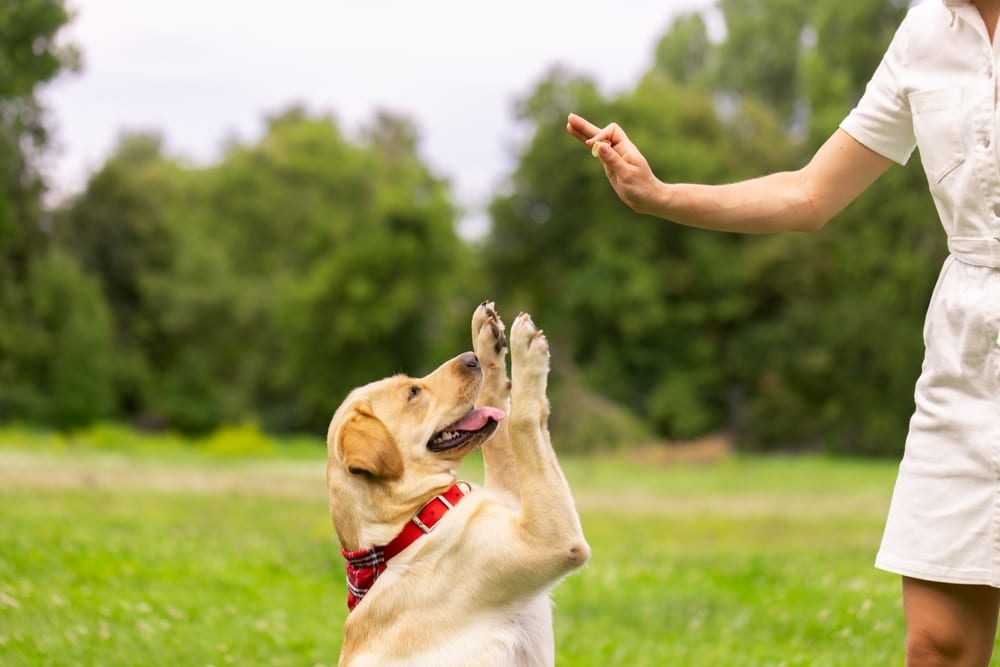
- Shake: Have your dog sit. Hold a treat in a closed fist in front of your dog. Wait for them to paw your hand before offering the reward. You can then transition to offering an open hand (with a treat in the other) and rewarding them for pawing it.
- Play dead: Have your dog lie down. To play dead, you lure them with a treat like you would to roll over but reward them when they reach a supine position.
3. Mark the Desired Behavior
As with anything else, dogs will only decide to do a trick if it has a positive outcome that outweighs any alternatives. Treats, praise, and markers show the dog that they are offering your desired behavior and give them a clue about what to repeat under similar conditions.
When your dog does the correct behavior, say “yes,” or click your clicker right before offering them a treat. Timing is crucial, and you want the click to mark the exact behavior you desire.
4. Repeat the Behavior and Lengthen the Reward Time
Repeat your training several times until your dog has mastered the motion. Some tricks will develop incrementally, requiring you to reward at different steps until your dog performs the entire command. Rewards gradually become more challenging to earn, demanding your dog to do more to get the treat until they eventually do a complete trick.
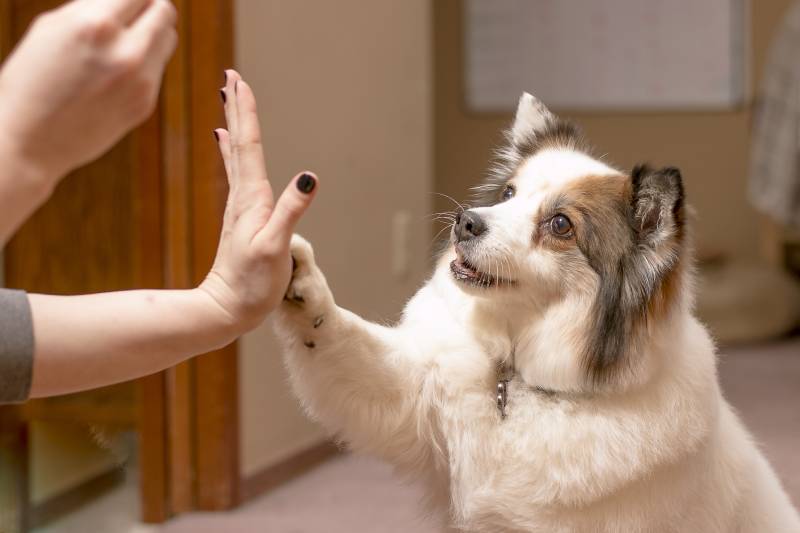
When shaking hands, for example, you can initially reward your dog when they paw at your hand holding a treat. Then, you can remove the treat from the hand and have them leave their hand in yours for several seconds, rewarding them only when they hold for a shake. Incremental steps are essential in shaping behaviors to help your dog make decisions as they slowly figure out what you want.
5. Add a Verbal Cue
Your dog can eventually associate a verbal cue with the trick that you’re teaching. Some owners immediately add the verbal cue when teaching a trick, and others wait to add it once the dog is comfortable performing the maneuver with only luring and visual cues.
Waiting to add the verbal cue can be helpful for complex tricks that take some development, so your dog will only associate it with the completed move. Leaving out the verbal cue, in the beginning, can also keep your dog from becoming too confused with all that you’re doing.
Use the verbal cue before having your dog perform the trick. Praise and reward at the end. If you use a visual cue to teach your dog, say your verbal cue first, and then signal them to do the trick. Keep the verbal and visual cues separate unless you plan to use them together when having your dog perform the trick.

6. Remove the Lure
Have your dog perform the trick several times with your verbal cue. Eventually, you can remove the visual lure and make your dog do the trick with the oral cue alone. Continue treating and praising at the end to reinforce the behavior and show that your verbal cue leads to a behavior that merits a reward.
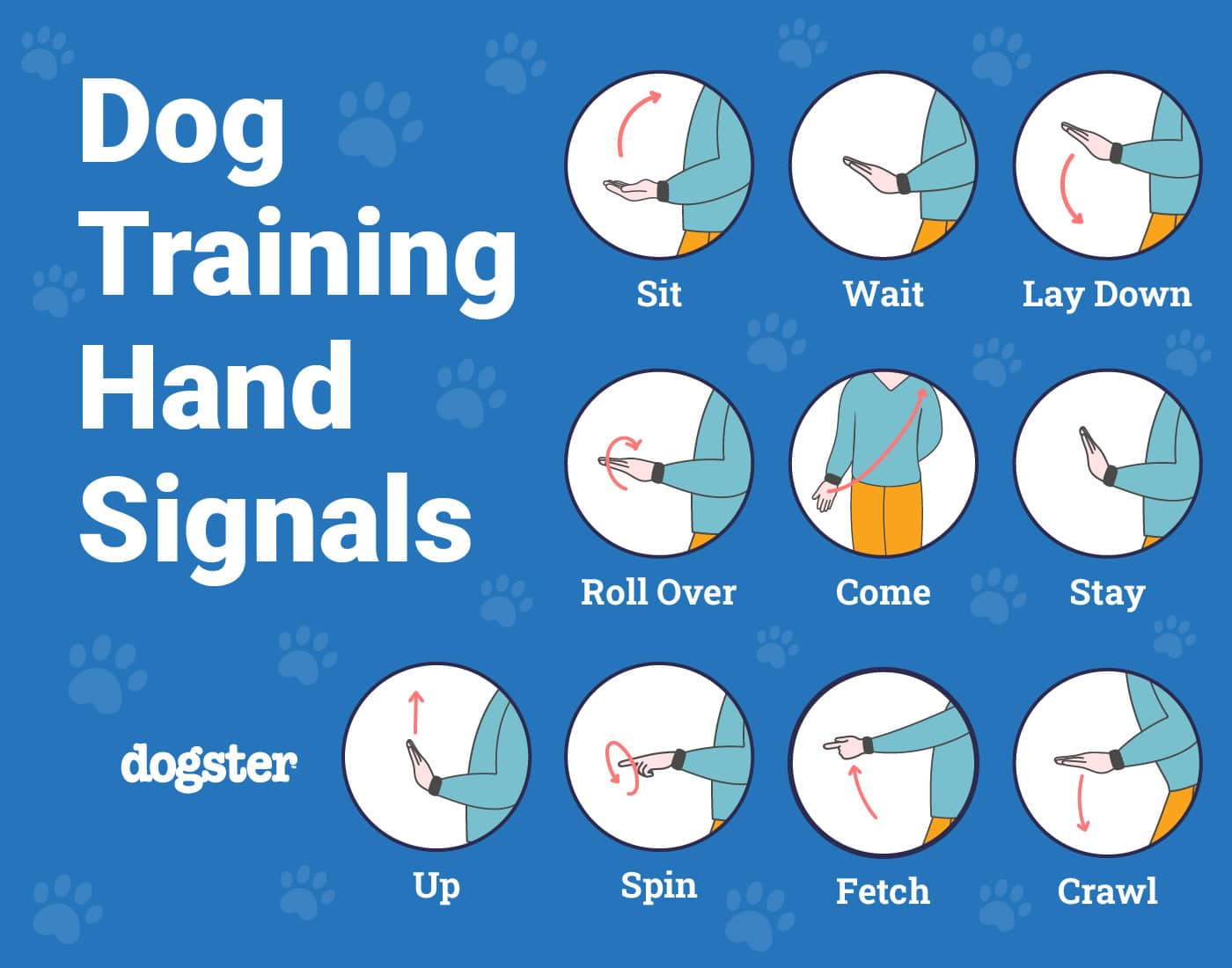
Many of the hand signals used to cue certain behaviors are faded-out lure movements. It is useful for dogs to understand that both the hand signal and verbal cue can be used to request the same behavior. Teaching this grabs their attention and increases their chances of success and your chances of communicating with them in noisy environments, for example.
7. Add Various Reinforcers
After teaching your dog a trick, make it a habit to offer multiple positive outcomes to keep your dog’s brain sharp. Tricks are delightful for children to do and become excellent breaks within more complex training sessions, giving your dog a chance to succeed and stay engaged with training while reinforcing the trick.

Capture and Shape to Teach Your Dog Tricks
Luring is one of the most straightforward ways to teach your dog tricks, but you can accomplish many tricks and more with alternative capturing and shaping strategies.
Capturing
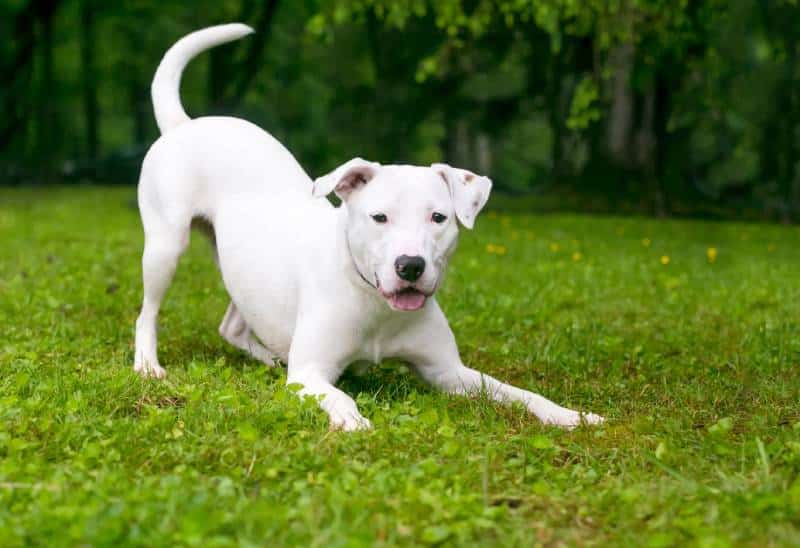
Capturing is almost as simple as luring, as you wait for your dog to naturally perform a move before rewarding them for it. Think of tricks they might do as part of their typical body movements, like bowing, yawning, or speaking. Observe them throughout the day, and if they do a desirable trick (like bowing while they stretch), click and reward them.
Your dog may be confused at first. But they’ll try to get the reward again by testing different actions, eventually linking the bowing motion to the treat. You can then add in verbal and hand cues.
Shaping
Shaping involves developing behaviors bit by bit until your dog completes a trick without being lured. They make the decisions that you reward. Training this way is helpful with more complex and multi-layered tricks.
Teaching “place” is a good example. You might set out a mat you want your dog to stand on. But to start, you’ll click and reward them when they simply look at the mat. They’ll then show more interest, looking at it more often because they know it’s somehow connected to a reward. You can then reward them when they step toward the mat, place two paws on it, and finally, get all their legs on it.
Conclusion
Tricks are cute and quirky, but the hidden benefits and lasting implications are the ultimate reward. Training is an excellent path to a stronger bond and instilling confidence in your pet. They’ll learn the value of patience and following your leadership, helping their manner at home and in social situations. Follow this step-by-step guide to help you train your dog in numerous unique tricks and build your skills as an effective teacher.
Related Reads:
Featured Image Credit: sergey kolesnikov, Shutterstock
 How to Teach a Dog Tricks in 7 Steps