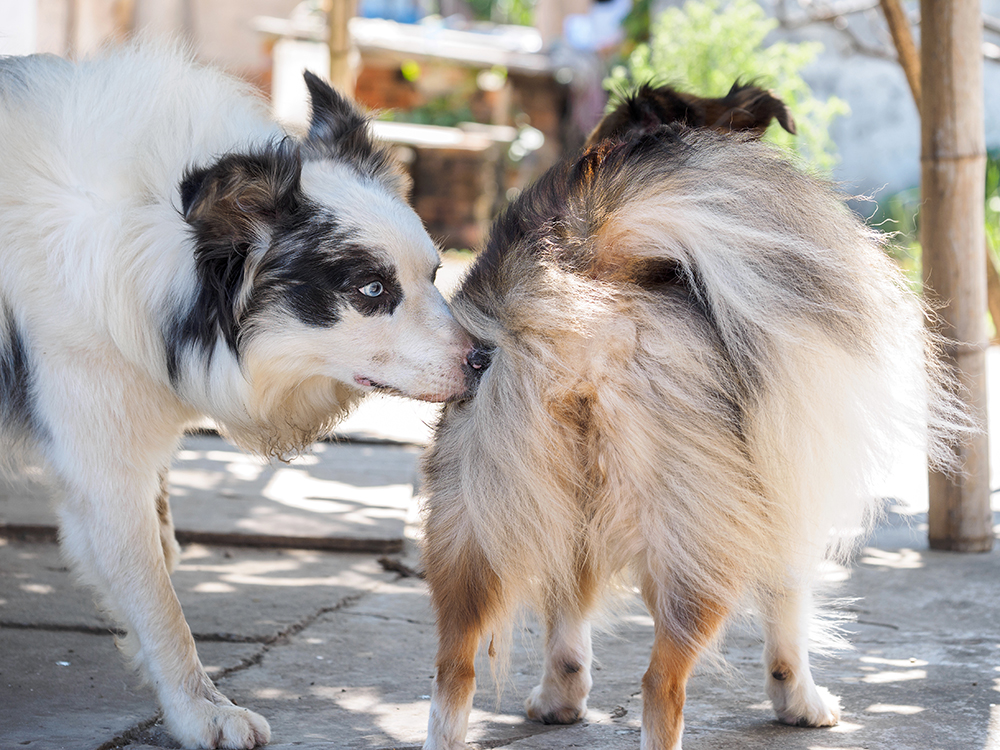
Can Dogs Get Pregnant When Not in Heat? Our Vet Explains
In this article
Puppies are beautiful little creatures that can bring a smile to your face and melt your heart. Did you know that the average litter is five to six puppies, and some dogs have been known to have more than 20 pups at once?1 That’s a lot of mouths to feed and a lot of work.
Not to mention, it is the responsibility to ensure that moms and pups stay healthy and that little ones go to loving homes. With the problem of overpopulation of dogs, let’s face it: breeding dogs is best left to the experts.
This might lead you to be worried about your female dog getting pregnant while your guard is down. The good news is that dogs can’t get pregnant when they are not in heat. This is because fertility is linked with ovulation, which only occurs during a reproductive cycle. However, if your dog is not spayed, there is always a chance of accidental pregnancy.

Dog Fertility Explained
The reproductive cycle or “estrus” cycle of the mother starts when they reach sexual maturity, which is about 6–15 months of age for most dogs. Estrus is the veterinary word for “heat,” a period of hormonal changes that leads to ovulation and females wanting to mate with males.

There are four parts to the estrus cycle:
The estrus cycle usually leads to some noticeable changes in your dog’s body. Every dog is different, but some will have very subtle signs of being in heat. Other dogs are very clean and will clean up any vaginal discharge. Some females can also have a “silent heat” where ovulation does occur, but there are no outward signs of heat. These are all reasons why your dog could get pregnant without you noticing they have come into heat.

How to Prevent Unwanted Pregnancy
The best way to prevent an unwanted pregnancy is to spay your dog. Once she is spayed, she no longer has the reproductive organs necessary to become pregnant. She also won’t have the hormones that cause her to go into heat. This is the only foolproof way to prevent her from getting pregnant.
If you are unwilling to spay her, you should be very alert to the signs of heat, including behavioral changes and vulva swelling/discharge, keeping in mind that these can be very subtle. Keep her securely locked inside the house when you notice signs of heat.
Males have been known to sneak into yards with females in heat. There is also a chance she will try to escape to find a mate. Avoid any contact with intact males at all times to be on the safe side.
Walk her on a leash and avoid public places that could have unneutered male dogs. If your dog does happen to mate with another dog, you can contact your vet for options to avoid pregnancy.
Health Benefits of Spaying
Aside from preventing unwanted pregnancies, spaying has some health benefits. These include:
- Preventing a uterine infection known as “pyometra,” which necessitates surgery
- Reduced risk of mammary (breast) cancer
- Eliminates the risk of ovarian cancer since the ovaries are removed
- Reduces roaming behavior
- Reduces risk of infectious diseases.
- Reduced risk of vaginal and vulva tumors
- Eliminates hormone-rated aggression

Frequently Asked Questions (FAQ)
How Often Will My Dog Go Into Heat?
On average, dogs go into heat twice a year. However, this varies based on their breed. Larger breeds cycle less often than smaller breeds. Dogs can cycle at any time of year, with some breed exceptions.
How Long Does Heat Last?
The entire heat cycle can last roughly 2 to 3 weeks. Estrus can last from 3 days to 3 weeks but lasts about 9 days on average.


Conclusion
While dogs can only get pregnant when they go on heat, sometimes the outward signs of heat are subtle or non-existent. Unspayed or unneutered dogs want to reproduce, and they will go to great lengths to do it, including escaping the yard. Therefore, the best way to prevent pregnancy is to spay your dog. Spaying also has health benefits for your girl!
Sources
https://vcahospitals.com/know-your-pet/estrus-cycles-in-dogs
https://www.pdsa.org.uk/pet-help-and-advice/pet-health-hub/conditions/seasons-in-dogs
https://www.roxburghparkanimalhospital.com/factors-leading-to-infertility-in-bitch.pml
https://vcahospitals.com/know-your-pet/infertility-in-female-dogs
https://www.americanhumane.org/position-statement/animal-population-control/
Featured Image Credit: Hanna Dymytrova-kaihila, Shutterstock
Expert dog care, straight to your inbox
Vet-reviewed advice, training tips, and the best of Dogster. Free, and you can unsubscribe anytime.
By signing up, you agree to our Terms & Conditions and Privacy & Cookies Policy.
Dr. Ashley Darby BVSc (Veterinarian)
Dr. Ashley has worked in mixed and small animal emergency clinics and general practice ever since 2017 after studying Sydney University. She grew up in South Africa and England before moving to Australia, and her passion for animals came from many childhood safaris in the Kruger National Park.
Ash lives with her husband, two happy Springer Spaniels, and one very patient black cat. She also competes in equestrian sports with her horse, Atlas.
Join the conversation
Ask a question, share your story, or send private feedback.