Dogs have such heightened acute senses that most people believe they have a sixth sense. Their keen hearing, powerful sense of smell, and ability to detect subtle vibrations allow them to notice changes in the environment long before humans do.
But can they sense a tsunami before it happens? While dogs can’t predict tsunamis in the way humans imagine, they may react to early signs of natural events, such as unusual ground vibrations or low-frequency sounds associated with seismic activity. If a dog senses something unusual, you might notice them behaving restlessly, barking, hiding, or pacing. These reactions are instinctive responses to their environment, rather than a deliberate attempt to warn humans, although they can sometimes alert us that something is happening that we cannot yet detect.
Are you eager to know whether your four-legged companion can predict a tsunami? Read on!

Dogs Can Predict a Tsunami: Tall Tale or Fact?
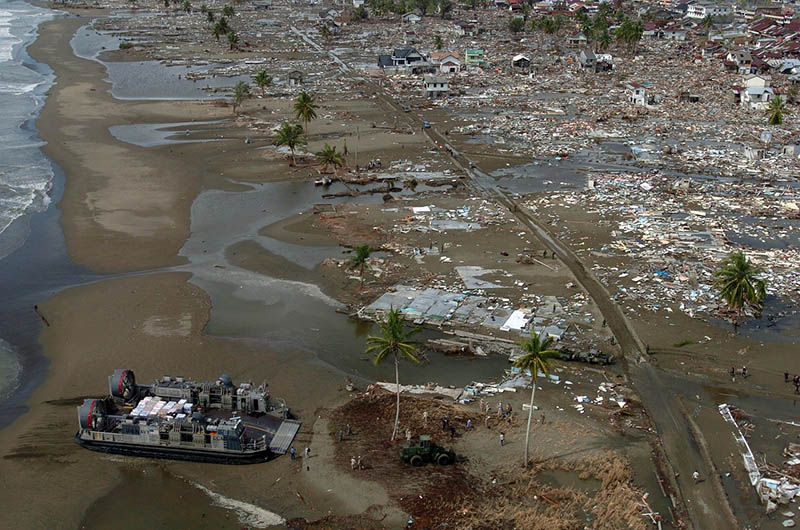
During the 2004 tsunami in Sri Lanka and India, numerous pet parents reported their dogs acted weird hours before the giant waves slammed into the coastlines. They refused to go for walks on the beach, signifying they could sense the looming threat long before it hit. So, how did they know what was going to happen?
Whether dogs possess a sixth sense is still up for debate. However, we can all agree they have specific skills that are beyond human perception. Their reactions can be explained by their senses detecting environmental changes that humans cannot perceive. Some dogs may sense a tsunami is about to strike because of their powerful noses and ears that give them extra-special abilities.
Dogs have two primary heightened, acute senses that may help explain why they can predict tsunamis and other natural disasters like earthquakes: olfactory receptors and auditory senses.
1. Olfactory Receptors

Dogs have more than 100 million olfactory receptors, which makes them hypersensitive to smells. The part of their brain dedicated to smell analysis is proportionally larger than ours.
Before a tsunami, underwater earthquakes or seabed disturbances can shift tectonic plates and create powerful vibrations. These events may also disturb sediments and release gases, potentially altering the surrounding environment. While a dog wouldn’t understand the source of the odor or ground vibrations, it could detect that something unusual is happening, although the research on this in terms of smell is quite limited. In addition to scent, dogs may also pick up low-frequency sounds or subtle vibrations caused by seismic activity, cues that are often beyond human perception.
While your dog may not understand the source of the smell or vibrations, they can pick up on these cues and show changes in their behavior.
2. Auditory Senses
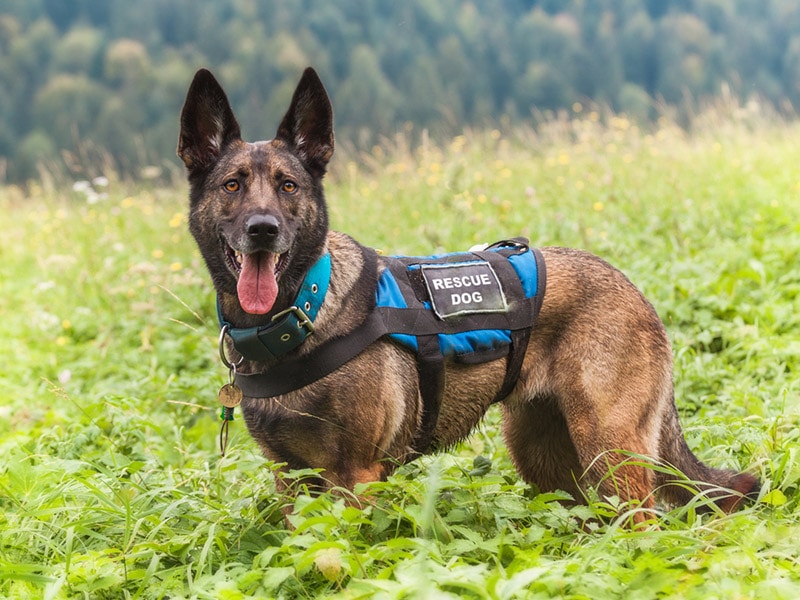
Dogs have keen auditory senses and can detect much higher frequencies than humans, up to around 60,000 Hz, compared to our limit of about 20,000 Hz. They can also hear softer sounds at greater distances under the right conditions. They have 16 muscles in each ear, which play a fundamental role in enabling them to gather more information and pinpoint the direction of the sound. A dog’s ear can move in several directions, somewhat like a satellite dish.
When underwater earthquakes occur, they generate seismic waves that travel through the earth before the larger, destructive waves reach shore. While dogs are not proven to predict tsunamis, some researchers believe they may detect subtle ground vibrations or environmental changes before humans notice them. This is likely due to their sensitivity to vibrations rather than an ability to hear true infrasound.
Humans generally cannot hear infrasound, and while it’s unclear how well dogs perceive these extremely low frequencies, they may still respond to physical vibrations associated with seismic activity. These waves move faster than sound, and your dog may try to move away from the sound source or exhibit restless or anxious behavior.

Unusual Behavior to Look Out for if Your Dog Senses a Tsunami
Dogs are highly attuned to their environment thanks to their extraordinary sense of smell and acute hearing. They can detect subtle changes in scents, sounds, and vibrations that humans often miss. While they do not consciously know or understand that a disaster is coming, these sensory cues can trigger instinctive responses such as seeking shelter, staying close to their owners, or displaying anxious behaviors.
- Excessive barking, whining or howling
- Acting unusually clingy and needy
- Restlessness
- Pacing, panting, and shivering
- A relentless urge to escape
- Sudden anxiety and distractive behavior


The 4 Simple Tips to Prepare Your Dog for a Tsunami
If you live in a tsunami-prone region, the best way to prepare your furry friend for a possible natural disaster is to have it microchipped. This gives you the best odds of getting reunited if you flee in different directions.
It is also essential to ensure your pet is well-trained and socialized to enhance its chances of getting rescued by an animal control officer or even a good Samaritan if things go south.
That said, here are four essential tips for preparing your furry companion for any natural disaster.
1. Create a Disaster Plan
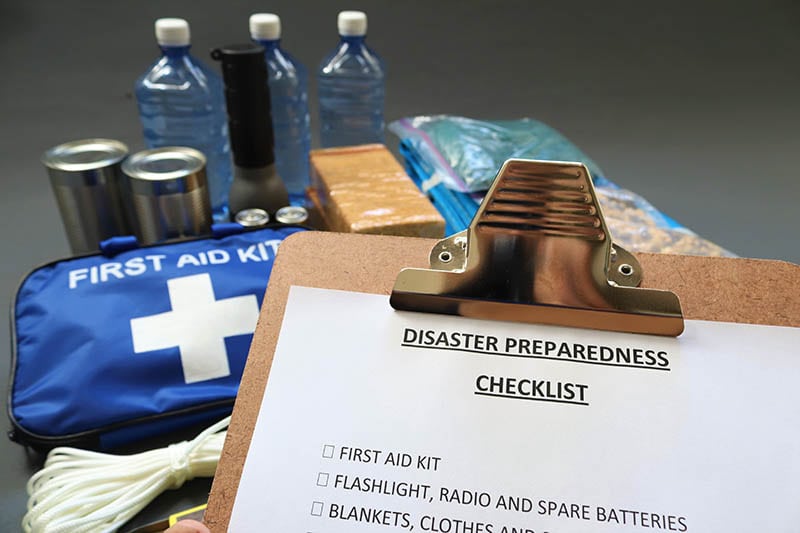
Before the authorities issue an evacuation notice, ensure your pet remains indoors with you or on a leash. Dogs can feel the changes in the environment during an impending disaster and could panic and flee. Some even become aggressive or display other bizarre behaviors. It is crucial to engage your pet in play sessions and offer plenty of treats and praise to keep it as relaxed as possible.
If an evacuation is necessary, your home may not be safe for your pet. If there is time, contact local animal shelters and rescues to find the best pet evacuation options. It’s best to have these options known well ahead of time by planning in advance.
2. Prepare for Possible Separation
Unfortunately, natural disasters increase the risk of pet parents getting separated from their dogs. Proper identification can drastically increase the chances of being reunited. Besides having your furry friend microchipped, ensure it wears a tag with your address and contact details, including vet details or any ongoing medications.
Moreover, visit the ASPCA website and fill out their form to get a rescue alert sticker. Ensure you place it on a visible spot like your front door each time you leave home. It will inform rescue personnel to check your property for a pet.
3. Prepare a Pet Kit

When preparing for a possible emergency, most people prepare a supply kit with the basics for survival. Creating a separate emergency supply kit for your pet is necessary. Keep it as lightweight as possible, and include the following supplies in waterproof containers.
- Food and water
- First aid kit and medicines
- Extra harness and pet collar with ID
- Sanitation items like paper towels and poop bags
- Basic grooming items (pet shampoo, conditioner, and small towel)
- At least one of your dog’s favorite toys or blankets
- A recent photo of you and your furry friend together
- Current copies of your dog’s medical records
4. Stay Informed

Preparing for the worst is crucial to ensuring you have the best odds of keeping your family and pets safe. It is also necessary to remain abreast of the situation by consistently checking emergency alerts and warnings from state and local officials. Most importantly, be ready to evacuate at a moment’s notice should the need arise.

Frequently Asked Questions (FAQ)
How soon can a dog pick up on a tsunami before it happens?
Dogs may detect subtle environmental changes, like unusual vibrations, shifts in the air, or strange odors, hours or even minutes before a tsunami reaches the shore. Their instinctive response is often to seek safety, though they may stay close to their human pack. Generally, there is cause for alarm if your pet starts acting crazy after the government has issued a tsunami warning alert.
Can dogs survive a tsunami?
Tsunami waves vary in intensity. Stronger waves cause deadly disasters because they sweep everything in their path. During the 2004 tsunami in South Asia, for instance, countless animals and nearly 230,000 people died. Even though dogs can feel the ground vibrations that signal impending danger, their survival chances depend on how fast they can run to safety, the speed and magnitude of the waves, and the terrain around them. Just like humans, dogs’ chances of survival depend on the specific situation and vary widely from case to case.

Can dogs sense impending natural disasters?
Dogs have an extraordinary ability to detect danger, including natural disasters like tsunamis and earthquakes, although they may not understand them. Their keen sense of smell and acute hearing, combined with a finely tuned ability to sense vibrations, allow them to pick up subtle environmental changes that humans often miss. When they detect tremors or other warning signals, their instinct is to move away from the source and seek safety.

Conclusion
Dogs showing unusual behaviors before an impending natural disaster is not a new phenomenon. In ancient times, before humans invented meteorological technology and weather satellites, they depended on animals, including canines, for weather forecasts.
While dogs cannot reliably predict disasters, their heightened senses, especially their ability to detect vibrations, subtle sounds, and changes in the environment, may alert them to unusual conditions that humans cannot perceive. So, should you grab your bag and flee the state each time your dog starts acting funny?
No. The dog’s predictions aren’t always accurate. However, it doesn’t hurt to pay a little more attention to your environment if nothing seems to calm your pet down. Your furry companion may be better at predicting a natural disaster than your local weather channel!
Related Reads:
- Can Dogs Sense Evil? Vet-Verified Facts & Info
- Could Dogs Survive in a World Without Humans? The Interesting Answer!
Featured Image Credit: WikiImages, Pixabay
 Dogs Can Predict a Tsunami: Tall Tale or Fact?