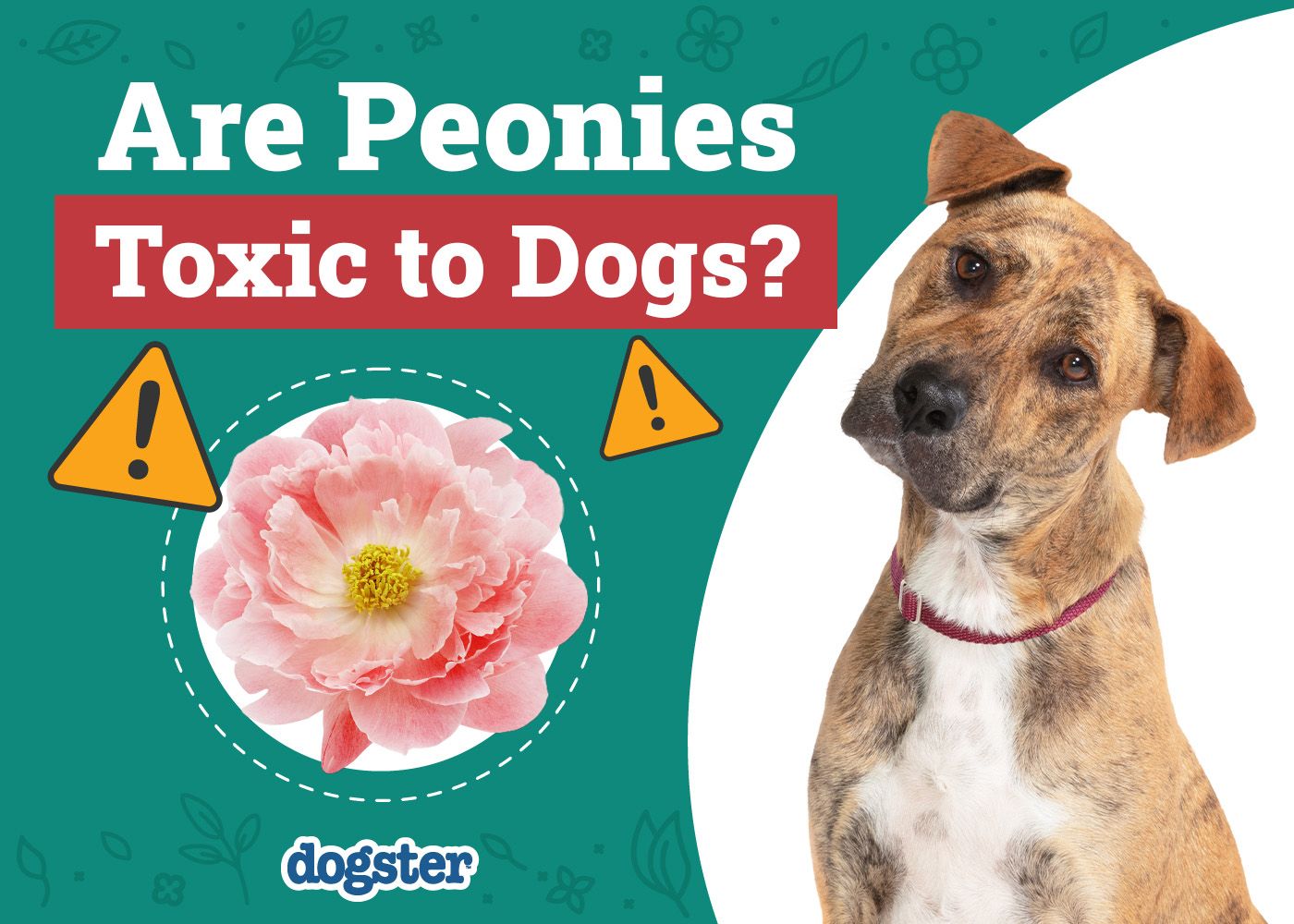
Are Peonies Toxic to Dogs? Vet-Verified Facts, Info & Poison Help

In this article
Peonies (Paeonia officinalis) offer many benefits for homeowners wanting to add some welcome color to their landscaping. This plant has it all: The flowers are gorgeous, it’s low-maintenance, and it can be pretty forgiving if the conditions are right. Many cultivars exist, allowing you to easily match your gardening theme. But the question remains if peonies are pet friendly.
Sadly, the peony plant is toxic to dogs and cats. The toxin is mainly in the plant’s roots, but it can also be found in petals and stems, making it virtually unavoidable if your pup chews on it. Accidental poisonings are more likely to occur with dogs than with cats, since they’re less picky about what they eat. Pets are also more prone to encounter toxic substances at home.

The Toxicity of Peonies
The problem with peonies lies with a phenol called paeonol. Phenols are aromatic organic compounds found in many plants. Just because they’re found in nature doesn’t mean they’re safe. For example, urushiol belongs to this class of chemicals, which is the resin in poison ivy that triggers skin irritation in sensitive individuals.
Research suggests paeonol may have health benefits with its long history of folklore use. However, that doesn’t mean they translate to dogs, even though we share 84% of our DNA with our canine companions. After all, we can eat grapes, chocolate, garlic, and onions without ill effects, whereas these foods are highly toxic to our pets.
Other species of peonies, such as Paeonia suffruticosa have been used extensively in traditional oriental medicine to treat health conditions including diabetes, arthritis, and cancer. Paeonol, the phenolic compound present, is the main component with medical properties and is currently used for its anti-inflammatory activity. While it is very likely that scientists will find new uses for human medicine in the future, what we know is that ingestion in dogs (and cats) can cause toxicity, and they should be kept away from it.
The other concern with paeonol exists with its purported health benefits. One area of research is its effects on the cardiovascular system. That may sound like a good thing, but it also raises a red flag about dosage, side effects, and other adverse outcomes. Remember that scientists conduct many experiments and trials to develop drugs to ensure their safety. We don’t have that assurance with paeonol.
Our research didn’t reveal any adverse cardiovascular issues. However, it’s worth keeping this information on the radar because of paeonol’s potential effects on this system, particularly in dogs with pre-existing conditions.

Another Potential Problem With Peonies
If you’ve ever grown peonies, you’re probably well aware of another potential problem with these garden plants: ants. The plant secretes a sugary nectar that attracts the insects, much to the chagrin of many homeowners. Experts assure us that the ants don’t hurt the peonies, with some anecdotal evidence suggesting they help the plants by keeping other insects away while guarding their food source.
This is all well and good if the bugs stay in the garden, but it’s another matter if they find your home, as some people may be tempted to use pesticides to get rid of the ants. That adds another layer of complexity to the toxicity. If you use an insecticide on your peonies, make sure your pup doesn’t have access to the area to play it safe.
Signs of Poisoning
The telltale signs of accidental poisoning are mainly digestive, which could mimic what occurs when a dog eats anything that doesn’t agree with their gastrointestinal tract. They include the following:
- Vomiting
- Diarrhea
- Abdominal pain
- GI distress
- Lethargy
- Loss of appetite
If you are concerned about the health and well-being of your pet, we recommend getting in touch with a vet for guidance.
Complications can occur if these signs go without treatment and with ingestion of large amounts. Dehydration and an electrolyte imbalance are possible if the vomiting and diarrhea persist. The longer they continue, the more serious the situation becomes, complicating treatment. Poisonings also are often more dangerous on puppies and senior pets.

Diagnosis and Treatment
If you suspect your pup has eaten peonies, immediately take your dog to your local vet or call the ASPCA Animal Poison Control Center hotline (888-426-4435). A consultation fee may apply for the latter. We recommend taking a picture of the plant to confirm the identification and subsequent treatment. Remember that the poisoning signs are non-diagnostic. Anything you can do to help your vet will speed recovery.
Your vet may provide additional supportive care to manage complications. That can involve intravenous fluids to restore the animal’s electrolyte balance and medication to control vomiting if needed. Severe cases may require hospitalization to stabilize the dog.

Final Thoughts
There’s no denying the beauty of peonies. They are popular garden plants for a reason. However, like many flora species, problems exist with these plants. They are toxic to dogs and cats, and although accidental poisoning can usually be managed if caught early, it depends on your dog’s health situation and how they respond to treatment. However, prevention remains the best solution. Researching the toxicity of the various species of plants you may want to keep at home is imperative If you want to avoid health issues in your pets.
Sources
https://www.aspca.org/pet-care/animal-poison-control/toxic-and-non-toxic-plants/peony
https://avmajournals.avma.org/view/journals/javma/257/5/javma.257.5.517.xml
https://www.mayoclinic.org/diseases-conditions/poison-ivy/symptoms-causes/syc-20376485
https://education.seattlepi.com/animals-share-human-dna-sequences-6693.html
https://www.sciencedirect.com/science/article/abs/pii/S1567576919301390
Featured Image Credit: S.O.E, Shutterstock
Expert dog care, straight to your inbox
Vet-reviewed advice, training tips, and the best of Dogster. Free, and you can unsubscribe anytime.
By signing up, you agree to our Terms & Conditions and Privacy & Cookies Policy.
Since 2009, Chris has written on a variety of topics. Her motto with all of her writing is “science-based writing nurtured by education and critical thinking.” She specializes in scientific topics, with a special love for health and environmental topics, and of course, pets of all shapes and sizes.
Chris lives happily with her husband and three cats in the land of 10,000 lakes, writing, wining, and boating as much as she can. She and her husband, Norm, were awarded the State of Kentucky Colonel Honor for their restoration work at Mammoth Cave National Park.
Join the conversation
Ask a question, share your story, or send private feedback.