Dr. Paola Cuevas is our Senior In-House Veterinarian at Dogster and Pangolia. She has over 19 years of experience working with an array of species and loves sharing her knowledge and experience with our readers and aims to provide assistance with any issue presented by your non-human family members. She received her degree from the University of Guadalajara, Mexico.
Her passions are animal welfare and preventive medicine, and has skills in the fields of nutrition, microscopy, clinical pathology, diagnostic imaging, and endoscopy.
Paola frequently contributes pet care insight to various media outlets like PetMD, The Daily Record, Parents.com, etc.
Paola is also an animal behaviorist with extensive experience in positive reinforcement animal training.
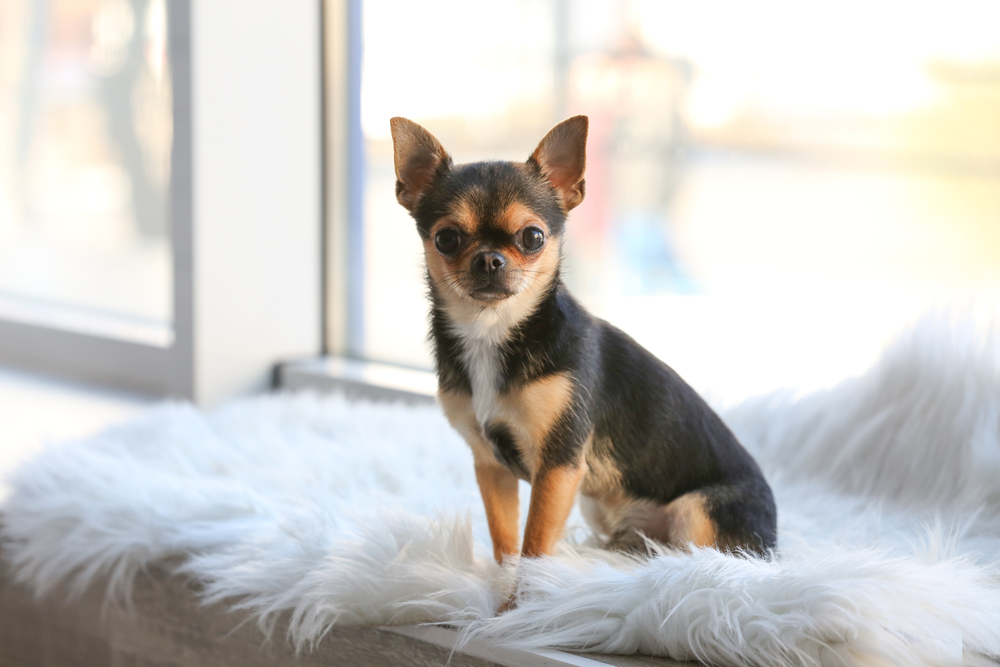
Chihuahuas may be a toy dog breed, but their personalities are enormous. These loving dogs are fiercely loyal to their humans, and it is this limitless devotion that may make some people curious if Chihuahuas can be good service dogs. Sure, they’re tiny, but can their big temperaments make up for their small stature?
Chihuahuas can absolutely become service dogs, but they won’t be suitable for every person needing a service dog. Read on to learn more.
What Is a Service Dog?
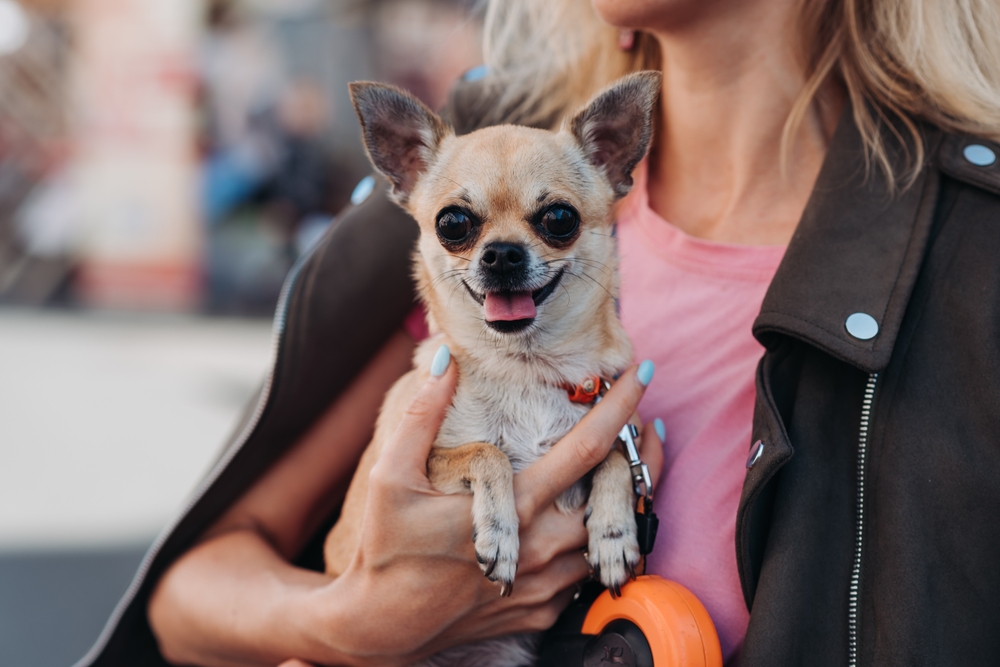
According to the Americans with Disabilities Act, service dogs have been, “individually trained to do work or perform tasks for a person with a disability.”1 These dogs are considered working dogs, not pets.
Dogs whose primary purpose is to provide comfort and emotional support to their handler will not qualify as service dogs.
Image Credit: Anton Pentegov, Shutterstock
What Kind of Work Can Chihuahuas Do?
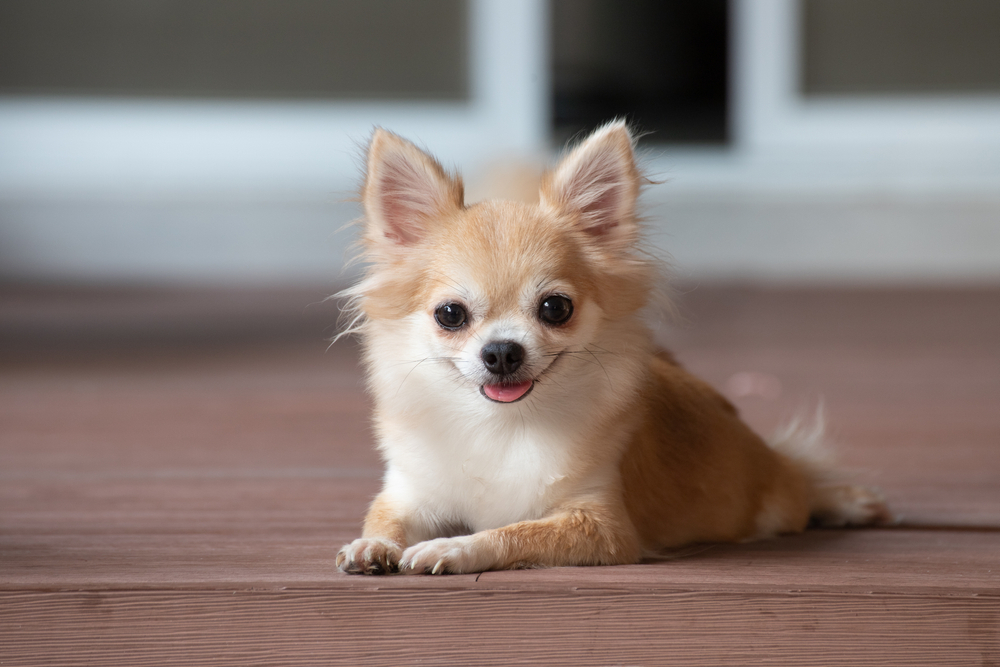
When most people think of service dogs, they think of larger breeds like Labrador Retrievers and German Shepherds. While it’s true that bigger pups are capable of accomplishing more tasks, that doesn’t mean that Chihuahuas can’t do meaningful work as service dogs.
Although Chihuahuas may not be able to pull wheelchairs or offer balance support, there are many tasks they can be trained to perform successfully.
Chihuahuas can work as:
Epilepsy alert service dogs.
Diabetic alert service dogs.
Hearing service dogs.
Psychiatric service dog.
Image Credit: Ratchat, Shutterstock
What Tasks Can Chihuahuas Perform?
Chihuahuas can perform a number of tasks, depending on what type of service dog they’re trained to be. These tasks can include:
Tactile stimulation and deep pressure stimulation: Using pressure through tugging, licking, or nudging to “ground” their handler and help them stay present.
Alerting: Notifying their handler of oncoming “episodes” (e.g., low or high blood sugar, seizures, etc.), notifying hearing-impaired handlers of sounds, allergen notification, intruder notification, etc.
Retrieving: Bringing their owner medication or other small objects.
Reminding: Prompting their handler to take medication.
Waking: Waking up their handler if they suffer from night terrors.
Interrupting: Interrupting repetitive behaviors.
Image Credit: Lesia Kapinosova, Shutterstock
What Can’t a Chihuahua Do as a Service Dog?
As we alluded to above, some tasks are impossible for Chihuahuas because of their size. This can include things such as:
Serving as a sturdy weight for their handlers to lean upon for support.
Physically guiding their handlers around obstacles or in public.
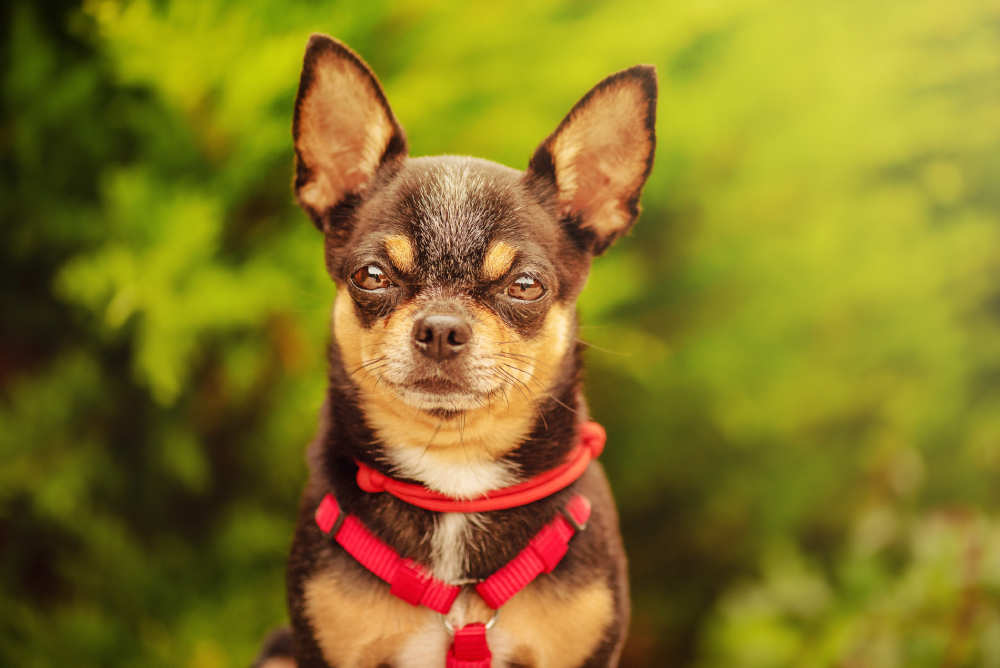
Each dog needs the right personality to become a suitable service dog. While Chihuahuas are generally intelligent and trainable, this isn’t the case for every dog. Some are downright stubborn and feisty.
The best service dogs are:
Intelligent
Trainable
Gentle
Calm
Desensitized to distractions.
Eager to please.
While Chihuahuas can absolutely check all of these boxes, it may not be the case for every Chihuahua.
Image Credit: LNbjors, Shutterstock
Can I Train My Chihuahua Myself?
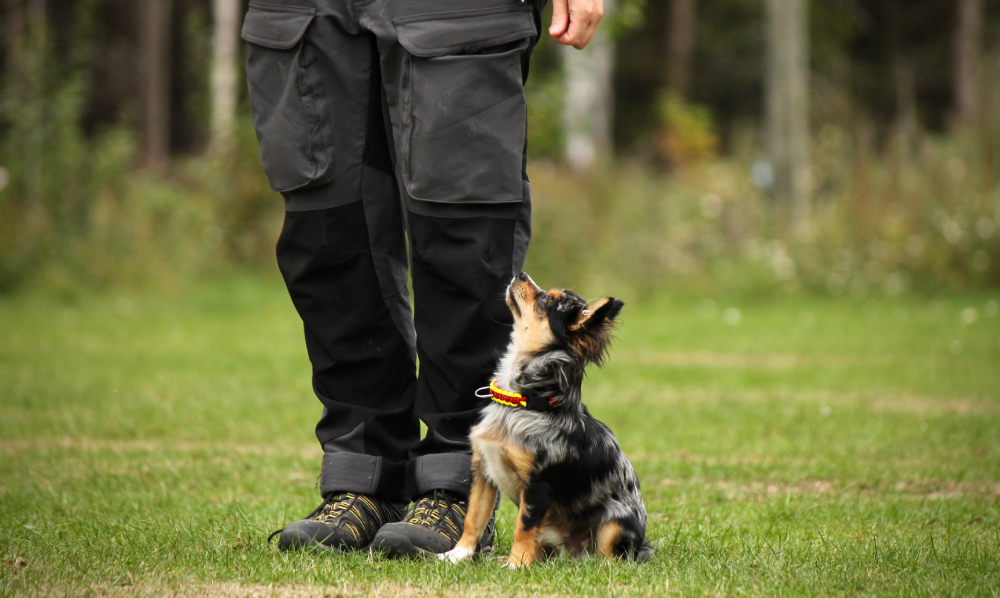
Theoretically, you can train your Chihuahua yourself, as the ADA does not require any professional training program to be completed for a dog to earn the service dog designation.
However, your pup will need to have an extensive skill set to earn the title of “service dog.” Without undergoing focused training to perform specific tasks to assist you, your dog will not be considered a service dog but instead an emotional support animal (ESA). ESAs are not afforded the same “rights” as service dogs. For example, ESAs cannot accompany you in stores or public transit. So, unless you have experience in training service dogs, it’s probably best to seek the support of a professional trainer. Likewise, if you do not have a disability or medical need, you do not need a service dog.
Final Thoughts
Though they may be small, Chihuahuas can absolutely become great service dogs. Their suitability as service dogs, however, will depend entirely on their individual personalities as not every dog—regardless of breed—is cut out for this type of work.
If you’re serious about getting your Chihuahua service dog status, we recommend reaching out to a professional training service to assist you in the process.
Chantelle is passionate about two things in her life – writing and animals. She grew up on the prairies of
Canada surrounded by animals and as an adult, she choose to share her home with five cats, two guinea pigs, and a bearded dragon. Chantelle, her husband, and their child take great pride in being great animal parents - the ones who spend a thousand dollars on wall-mounted cat shelves so that their cats can have an indoor jungle gym all year round. When Chantelle isn’t snuggling her cats on the couch or taking pictures of them being funny, she’s outside exploring in the Rocky Mountains, binging the same shows on Netflix over and over, and reading about whatever random topic pops into her brain.
Most dog owners don’t think much about reproductive health until something forces the issue. An unplanned mating. A pregnancy they weren’t prepared for....
Shedding is common with some dog breeds, but if you experience more shedding than usual or hair coming out in clumps, leaving behind bald patches, that’s a sign that something is amiss. Whether your dog is suffering from a skin...
Jack Russell Terriers are, without a doubt, a unique breed. The small dog is full of energy, a marvelous digger, and has more love than its little body can hold. While small in size, Jack Russells need a balanced diet...
Who loves small dogs? We do! Small dogs are getting more recognition in the pet world as fantastic companions for many reasons. Their size makes them better suited for tiny homes and apartments. Also, small dogs usually have a longer...
Can dogs eat Mcdonald’s? In general, McDonald’s is not a healthy option for dogs. Most foods at McDonald’s are higher in fat, carbs, or salt than are ideal for canines. They should have a diet high in protein and moderate...
One of the biggest worries for many owners is how to create a proper diet for their dogs so they can have plenty of energy while maintaining an ideal weight. With so many different brands available, it’s not easy to...
Some people have a soft spot for stray dogs and will leave food out for them. Other people have outdoor dogs that spend most of their days running around the yard, and they will leave food out for their energetic...
Dogs are curious animals, which is why you will find them nosing around the house, looking for things to eat and play with. Plants often come under dogs’ radar since many of them have a characteristic scent, and we all...
Having a dog in the house makes it hard to snack in peace. Whether you’re having a healthy bite or indulging in one of your favorite junk foods, like Pringles, it’s not uncommon to have big doggie eyes begging for...
Stay informed with expert pet care insights delivered straight to your inbox! Discover professional guidance on animal behavior, feeding tips, trusted product picks, and much more.
You may opt-out at any time. View our Privacy Policy for more information.
Sign up for the Dogster Email Newsletter
You may opt-out at any time. View our Privacy Policy for more information.
You may opt-out at any time. View our Privacy Policy for more information.