How to Train a Rhodesian Ridgeback: 8 Tips & Vet-Reviewed Guide


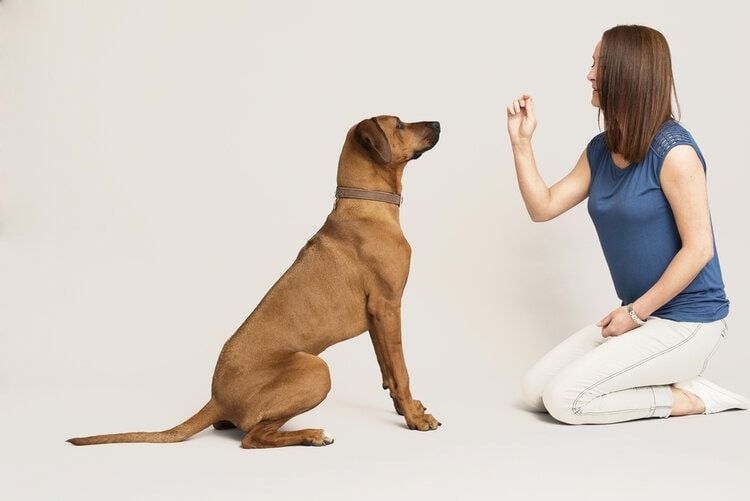
If you’ve ever been introduced to a Rhodesian Ridgeback Dog, you know they are intelligent, loyal, loving, and majestic. However, they are also known for their stubbornness and willful ways, sometimes making them challenging to train. Though the dog can be obstinate and want its own way, it is possible to train the Rhodesian Ridgeback to be a loyal, well-behaved pet. You only need a few training techniques, love, and patience to get the job done.
In this article, we’ll discuss a few of our favorite tips and tricks for training your Rhodesian Ridgeback, including basic skills and more advanced techniques.

The 8 Tips for Training Your Rhodesian Ridgeback
Early socialization and training are key to your Rhodesian Ridgeback Puppy growing up to be well-behaved and polite. Before training your pup, it’s best to find a quiet area of your home with few distractions.
1. Start with Simple Commands for Obedience
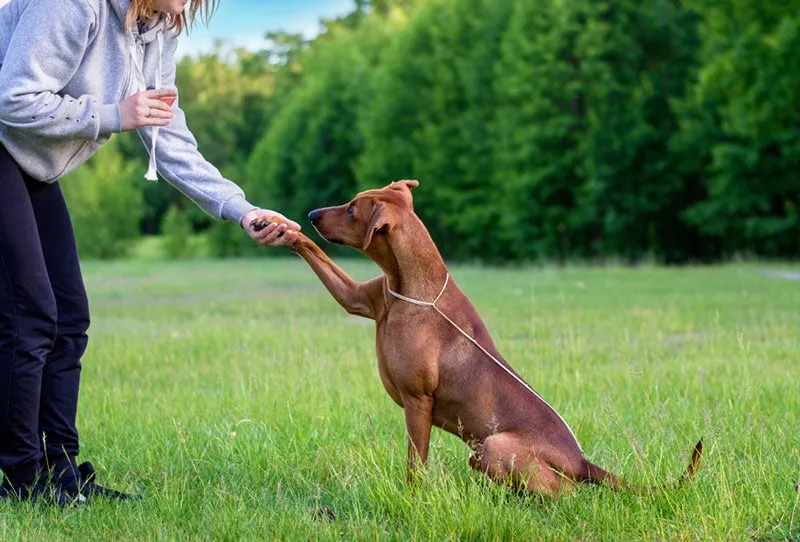
When you’re looking to train your canine to behave, it’s best to start with simple commands such as “sit,” “stay,” and “come.” These are simple but essential commands for making your Rhodesian Ridgeback a well-behaved canine.
However, you don’t want to overwhelm your pet in the beginning, so work on one simple command at a time for the best results. Make sure your pet knows and responds to these commands before you move on to the next step.
2. Keep It Short
Your puppy will probably have a short attention span, so keeping your training sessions short is best. Usually, between 10 and 20 minutes at a time should work well. Of course, how long your training sessions with your dog will depend on the pup’s age, the environment you’re in, and your pet's energy levels.
There is no one-size-fits-all when it comes to training a Rhodesian Ridgeback, so you will need to tailor the sessions to your pup’s needs. It’s best to avoid training your pet when they’re tired or distracted, as the dog will lose focus, and your session may end quickly.
3. Use Treats as Rewards
Treats are used as rewards in training all the time. However, as your dog gets more into the training sessions, you’ll probably find that the treats aren’t working as well as a reward for the correct behavior. It’s recommended that you change the types, colors, textures, and sizes of the treats when this begins to happen. Some tempting and enticing treats you can use may include cheese bites, doggie sausage, or meat, but make sure not to overdo it. Some treats may also spoil depending on weather conditions. Using your dog’s food portions while training is also recommended, but it needs to be tasty enough to encourage learning.

4. Call Your Dog’s Name When Training
When trying to train your canine, it’s important to call the dog by their name. If the dog is a puppy, it’s even more important that the puppy knows who you’re calling to. If you use the dog’s name frequently, they’ll start to associate its name with happy times. Although they can be a handful to train, avoid scolding your dog when they don’t obey or become distracted. Harsh corrections will only make your pet afraid of you and hesitant to listen to commands.
5. Keep It Interesting and Playful
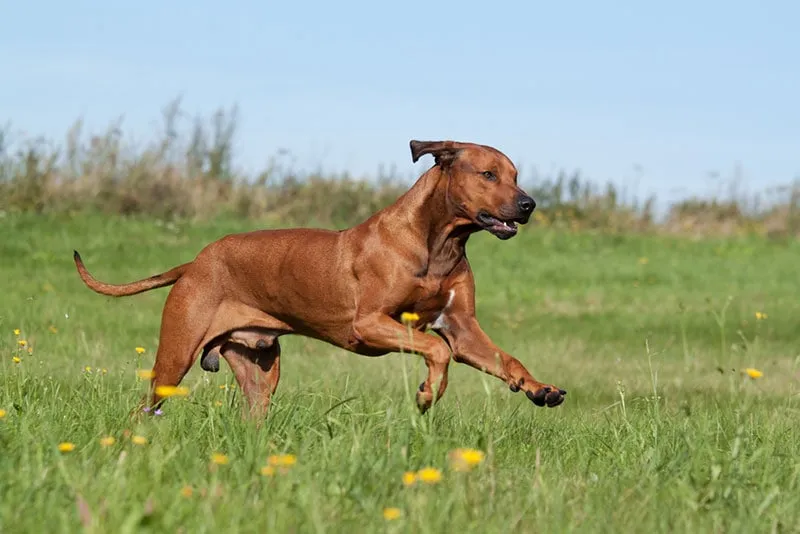
Rhodesian Ridgebacks get bored and distracted easily, but you can keep your training sessions interesting and playful to keep the dog’s attention. You need to make the sessions fun for you and your furry friend so neither of you becomes frustrated. Before starting a session, play fetch or jog with your dog around the yard for a few minutes. You don’t want to wear them out, but a little exercise will put them in a good mood.
6. Space Out Your Training Sessions
Once a training session is complete, you can give your Rhodesian Ridgeback plenty of time and space to run and play again. You don’t want the dog to see your training sessions as a chore. Let your pet do what they want during this time, whether relaxing or playing around.
7. Be Patient and Be Consistent
You have to be patient and consistent if you want your Rhodesian Ridgeback Dog to be trained properly. As previously mentioned, they are loyal, loving, and intelligent, but can also be willful and stubborn. The Rhodesian Ridgeback is not the best dog for first-time pet owners, so make sure you have the time and patience to train them properly before making a final decision.

8. Know When to Call in a Professional
Sometimes you can’t adopt a Rhodesian Ridgeback Dog as a puppy, due to the limited number of breeders. However, that shouldn’t stop you from adopting an older dog. While the dog might be a bit harder to train, you can still make it into a loyal, loving, well-behaved canine.
Sometimes, Ridgebacks can show fearfulness or reactivity if they aren’t trained correctly. If that is the case with the pet you’ve given a forever home, it’s better to call in a professional or a veterinarian to help you correctly train your pup.
Conclusion
These are just a few tips to help you train your Rhodesian Ridgeback. Whether the dog is a puppy or an older pet coming to you from a rescue shelter, they can be trained; it just takes a lot of patience and consistency.
If the training tips above don’t work for your Rhodesian Ridgeback Dog, it’s best to talk to a professional for behavioral training, especially if the dog is showing signs of reactivity or fearfulness. These loyal, loving dogs do great with families; you just need to know how to train and handle them.
Sources
Featured Image Credit: Ann Taylor, Shutterstock
Expert dog care, straight to your inbox
News, insights, expert advice, and everything dog.

No spam — unsubscribe anytime.
By signing up, you agree to our Terms & Conditions and Privacy & Cookies Policy.
How useful was this post?
Click a star to rate. You can leave written feedback afterwards. (We read all feedback.)
Patricia is an experienced pet writer and lifelong animal lover. When she isn’t writing, Patricia enjoys spending time with her pets, cats Binx and Link and dog Mystery. Mystery and Link have been with her since birth. Binx was found under her house as a kitten and promptly welcomed into the family. Patricia enjoys volunteering at her local rescue shelter and sharing her extensive knowledge of pets.