Get

In Your Inbox

Dogster is reader-supported. When you buy via links on our site, we may earn an affiliate commission at no cost to you. Learn more.

Freeze-Dried vs. Dehydrated Dog Food 2026 Comparison: Pros & Cons

Dogster_Freeze-Dried vs. Dehydrated Dog Food

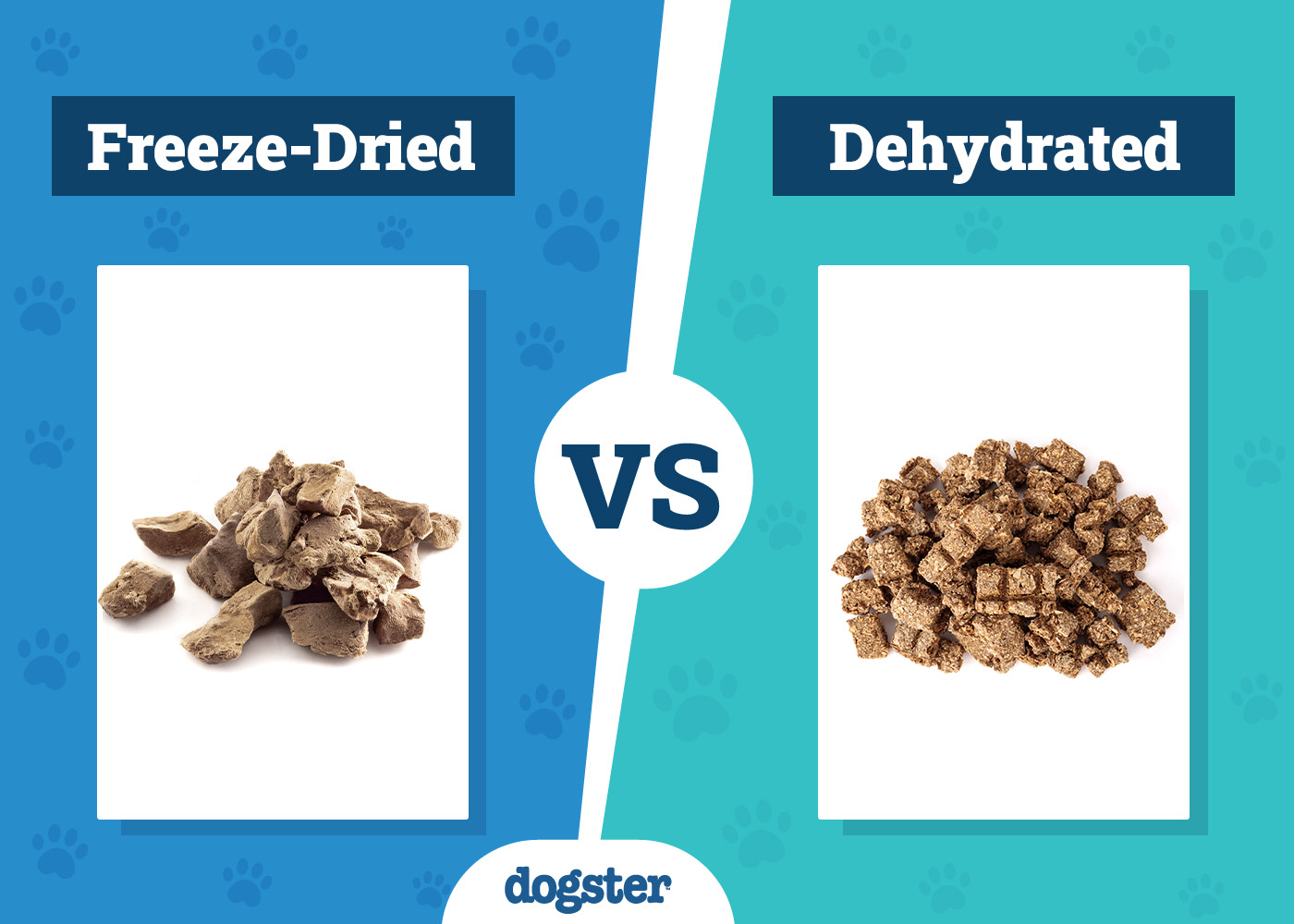
Many dog owners who are trying to feed their canines healthier foods choose either freeze-dried foods or dehydrated foods. On the shelf, both of these foods can look reasonably similar. However, they are quite different.

Luckily, the differences aren’t all that complicated to understand or explain. Let’s take a quick look at the differences between these foods, as well as which option you should choose.

Dogster_Website dividers_v1_Jan 18 2024-03

Overview of Freeze-Dried Dog Food

Freeze Dried Raw Dog Food
Image By: Anna Hoychuk, Shutterstock

Freeze-dried dog food is dehydrated under an extremely low temperature, which helps maintain the quality of the food and the nutrients. The food is frozen and then the pressure is added. This removes all of the water from the food. You’re left with crunchy pieces of food that don’t contain any moisture. This allows them to maintain their freshness, as bacteria and mold require moisture to grow.

Freeze-dried food is often raw, as it has not been cooked. Therefore, it is often used by owners who would like to feed their dogs a raw diet without the mess. Plus, freeze-drying may kill some bacteria that are present at the time of production, making it safer than many raw foods. Additionally, high-pressure pasteurization is a sterilization method used for the sanitization of some freeze-dried raw foods.

Pros
  • Long shelf life
  • Convenient
  • Safer than raw foods
Cons
  • Expensive

Overview of Dehydrated Dog Food

Dehydrated Dog Food
Image by: The Honest Kitchen

Dehydrated dog food has also had its moisture removed, which leaves it looking, feeling, and tasting a lot like freeze-dried dog food. However, dehydrated food has its moisture removed through evaporation—the water is removed at a low heat temperature with air circulation applied.

To dehydrate food, the food is placed at a slightly elevated temperature for a very long time. Eventually, this removes the moisture content without really cooking the food. However, there is a possibility that certain nutrients are damaged after being heated for this long period.

Dehydrating food often kills a lot of the bacteria present. However, it won’t kill all bacteria. Therefore, this food is generally less safe than cooked food, though it is safer than raw food.

Pros
  • Minimally processed
  • Lasts a long time
  • Convenient
  • Often maintains taste
Cons
  • Expensive

Dogster_Website dividers_v1_Jan 18 2024-03

What Are the Differences Between Them?

On the outside, these foods look the same. However, they are quite different from each other. Here are some important aspects to keep in mind.

Moisture Percentage

  • Winner: Dehydrated

Freeze-dried foods have a very low moisture percentage at around 1%. On the other hand, dehydration only removes about 90% of the moisture content.


Rehydration

  • Winner: Freeze-Dried

You don’t necessarily have to rehydrate your dog’s food, but many owners decide to (largely because dogs find it more appetizing with moisture added). Generally, freeze-dried pet food takes about 3 minutes to rehydrate. On the other hand, dehydrated food can take as much as 10 minutes or even up to an hour.

It does depend on the size of the chunks, though. Larger chunks will always take longer to rehydrate.


Texture and Flavor

  • Winner: Freeze-Dried

The freeze-drying process is much gentler on foods. It sucks all of the moisture out of the foods without cooking it, which ensures that the food maintains a similar texture and flavor. Once it is rehydrated, the food becomes exactly like it was previously.

However, dehydrating uses heat, which does cook the nutrients. Therefore, the taste and flavor will change and the food won’t be exactly like it was before when rehydrated.


Nutritional Value

  • Winner: Freeze-Dried

Freeze drying does not use heat or affect the proteins, fats, and carbs in the food at all. Instead, it just sucks out the moisture. Therefore, the nutrients will be the same.

On the other hand, the heat from dehydration can affect some of the nutrients inside the food. We don’t know exactly to what extent the nutrients are affected, though.


Price

  • Winner: Dehydrated

Often, dehydrating food is easier and requires less fancy equipment. Therefore, these foods are often cheaper and more accessible to a wide range of dog owners.

On the other hand, freeze-dried food is notoriously expensive. The process takes a long time and requires a lot of equipment, adding to the production cost.

In Conclusion

Freeze-dried food is generally considered a better nutritional option in most cases. Plus, it often tastes better and rehydrates faster, making it easier to feed. Freeze-dried food wins in almost any category but one—price.

Sadly, freeze-dried food is extremely expensive. While dehydrated food can often be more expensive than kibble, it is usually cheaper than freeze-dried foods. Therefore, for those on a budget, dehydrated foods are often more accessible.


Featured Image Credit:Freeze-dried: Anna Hoychuk, Shutterstock/Dehydrated: GUTSY Dehydrated Dog Food


Want content like this delivered to you?

Sign Up For Our Newsletter

News, insights, expert advice, and everything dog

* By submitting, you agree to our Terms & Conditions and Privacy & Cookies Policy.


How useful was this post?

Click on a star to rate (you can leave written feedback after clicking submit)

Help us improve Dogster for pet parents!

Your feedback really matters.

What did you like about this post? Also how can we improve it?

Join the conversation

Leave a Reply

You’re very welcome to leave a comment or question. Please know that all comments must meet our community guidelines, and your email address will NOT be published. Let’s have a positive and constructive conversation.


Talk With A Vet Online

Peace of mind,
anywhere, anytime

Affordable vet advice

13 Vet-Approved Dog Beach Rules For A Great Day Out With Your Pup

Taking your dog to the beach can be such a fun experience for both you and them! It is sunny and sandy, and...

Male vs Female Brittanys: What’s The Difference (With Pictures)

The Brittany Spaniel is a popular hunting and sport dog worldwide. These dogs are intelligent and affectionate with family and have boundless energy...

Borzoi Dog Breed: Info, Pictures, Facts, Traits & Care

Many people don’t know much about the Borzoi. They are not very popular, ranking just 101st overall by the American Kennel Club (out...

Will a Calming Collar Work for a Dog? Vet-Approved Facts

Dogs are usually fun-loving animals, but some dogs get overly excited or stressed out for one reason or another. For example, your dog...

More related

Why Does My Dog Growl When I Pet Him? 8 Vet-Reviewed Reasons

Dogs can’t speak, but they still have ways to communicate with us through body language and vocalizations. One way that dogs can communicate...

Zeus, the Tallest Dog in the World: Facts About the True Giant

We all know that Great Danes are absolutely massive! But what you might not know is that the past two tallest dogs that...

Can Dogs Eat Cream of Mushroom Soup? Vet-Verified Nutrition Facts & Info

If your dog just broke into the trash or snatched a plate of leftovers, you want to make sure that anything they got...

How to Stop Your Dog From Digging: 9 Effective Vet-Approved Tips

A lot of dogs love to dig, but while it can feel like they are doing it just to ruin your perfectly landscaped...

Keep reading

Can Dogs Eat Chorizo? Vet Approved Nutrition Facts & Risks

Chorizo is a spicy sausage that most of us love, and when we love something as pet owners, we sometimes want to share it with our pets. However, there are some foods you shouldn’t share with your pet, and chorizo...

Can Dogs Eat_chorizo

Can Dogs Eat Mushrooms? Vet-Reviewed Safety & Health Facts

We know that our dogs love all things food, but what about a nice, meaty portobello mushroom? Can dogs eat mushrooms, and are they healthy for them? Yes, dogs can safely eat most mushrooms that we purchase from our local...

Can Dogs Eat Mushrooms

7 Golden Rules for Feeding Your Dog: Vet-Verified Advice & Info

As a dog owner, you know the key to your pup’s good health is proper nutrition. Navigating the different types of dog food out there can be confusing. You want to make sure they are getting what they need, but...

Dog Feeding Schedule

9 Best Dog Travel Bowls in 2026  – Reviews & Top Picks

Dogs often make some of the best travel companions. With so many dog-friendly places to visit, you can plan all kinds of trips with your dog. When traveling with your dog, it’s important to pack several essential supplies to make...

Border collie puppy drinking water from bowl in a park

Can Dogs Eat Hot Sauce? Vet-Verified Health Facts

Some people like their food to be extra spicy, with hot sauces being a $1.65 billion market in the United States. Of course, not everyone likes the heat. That includes your dog. Wild or domestic canines don’t encounter this taste...

Can Dogs Eat Hot Sauce

10 Best Legume-Free Dog Foods in 2026 – Reviews & Top Picks

Food sensitivities can make shopping for dog food difficult, especially if your dog is allergic to common ingredients like legumes. While there are benefits to adding legumes to your dog’s diet, there are several reasons that you might prefer to...

dog eating from bowl in kitchen

Can Dogs Eat Lychee? Vet-Reviewed Nutrition Facts & FAQ

If you like consuming lychees and are a dog parent, you may be wondering if it’s safe for your dog to eat lychee too. So can dogs eat lychee? While dogs should typically stick to regular dog food, giving a...

Can Dogs Eat Lychee

Can Dogs Eat Stuffing? Vet-Reviewed Facts & FAQ

If Christmas or Thanksgiving is just around the corner, you may be wondering if you can slip your dog the odd bit of stuffing under the table as a special treat. Unfortunately, while it may look and smell like the...

Can Dogs Eat_Stuffing