Get

In Your Inbox

Dogster is reader-supported. When you buy via links on our site, we may earn an affiliate commission at no cost to you. Learn more.

Why Does My Dog’s Poop Turn White? 5 Vet-Reviewed Reasons

Share

white dog poo

Picking up poop is likely the least favorite moment in any dog parent’s day. Worse yet, finding that the poop is an unusual color can add to this already unpleasant task a great deal of worry.

As gross as it sounds, there’s no denying that keeping an eye on your dog’s poop is important, as it can be a good indicator of any health issues. In this post, we’re going to share the most common causes of white-colored dog poop and give you a heads-up on what may be causing it.

divider dog paws oct 2024

The 5 Possible Reasons Why Your Dogs Poop Is White

There could be any number of reasons for white-colored dog poop. Some are completely harmless, while others may suggest a health problem that needs veterinary attention.

1. The Weather

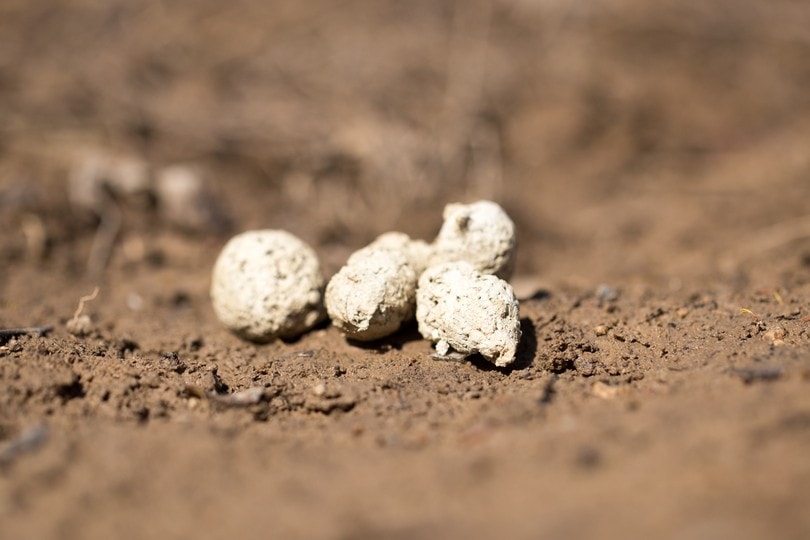
In some cases, white dog poop is nothing to worry about. If it is left out in the sun or humid conditions, the pigments in the poop can break down, causing a white mold to grow over it. If you find white dog poop and know that it has been outside for a few days, it may be a simple case of environmental conditions doing their work.

If, however, you can see that your dog’s poop is white immediately after excretion, this may signal a more serious problem.

dog poops on grass
Image Credit: Simon Kadula, Pixabay

2. A Diet High in Calcium

Sometimes, a high-calcium diet can be the cause of white poop. Dogs that eat a lot of bones or a raw meat diet are especially susceptible to this. An overload of calcium can produce white-colored, chalky poop and cause constipation and pebble-like, dry stools. You may also notice your dog straining to poop.

If your dog eats a raw diet or bones regularly and is often constipated, you may want to talk to your veterinarian about how to combat this. They may recommend some dietary changes.


3. Intestinal Worms

If your dog has intestinal worms, they may show up in their poop. This depends, however, on the type of worms your dog has. Hookworms and Whipworms, for example, are rarely visible, whereas tapeworm segments may show up as white, “rice-like” pieces around the dog’s anus or in their stools.

If your dog has intestinal worms, they may drag their butt along the floor in an attempt to relieve itching. In more serious cases, they may have diarrhea with blood or experience vomiting, weight loss, or bloating. Contact your vet if you think your dog may have intestinal worms. They will be able to provide the appropriate treatment.

If you need to speak with a vet but can't get to one, head over to PangoVet. It's our online service where you can talk to a vet online and get the advice you need for your pet — all at an affordable price!

PangoVet_Mention-in-Content Savings V1


4. Eating Something White

A dog’s curiosity may lead them to nibble at something they’re not supposed to. Some dogs may go for tissue, toilet paper, or paper towels, but it could be pretty much anything white. In most cases, these foreign objects will simply come out the next time your dog poops, but it’s best to be cautious.

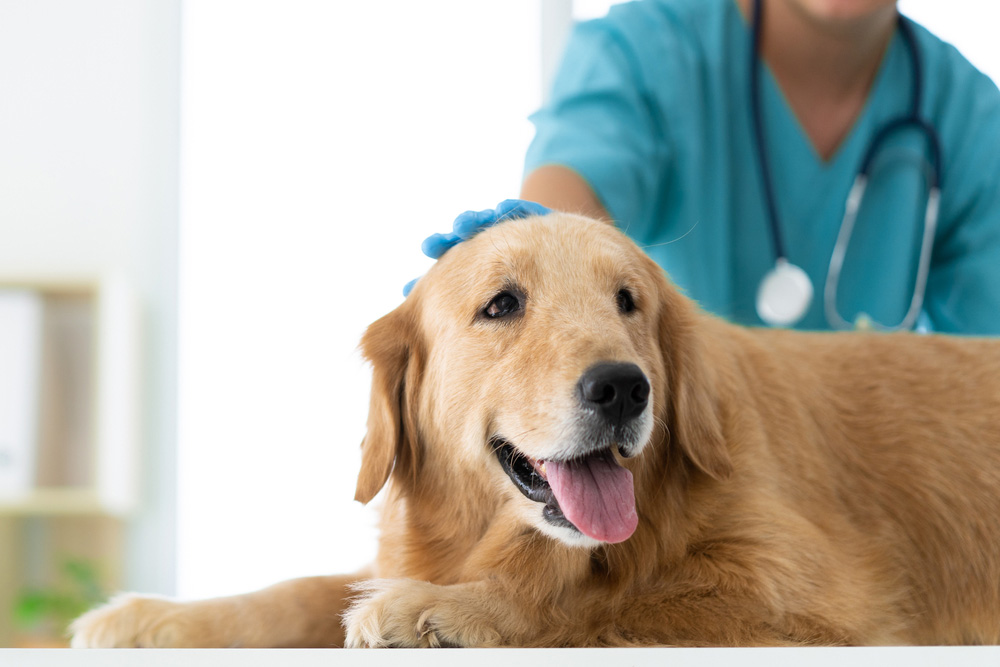
Some objects may cause a foreign body obstruction, so they get stuck in the dog’s digestive tract. If you suspect your dog has eaten something that could cause this—especially if you don’t know what it is—ask your vet for advice to be safe.
vet checking up dog in vet clinic
Image by: SUKJAI PHOTO, Shutterstock

5. Gastrointestinal Issues

A bit of mucus in the stool now and then isn’t always a cause for concern, but if your dog’s poop frequently contains mucus or is coated in it, they may have a gastrointestinal issue that needs to be looked into. Infections of the intestines, parasites, irritable bowel syndrome, and inflammatory bowel disease are all possible causes of mucus in the stool. Cancer of the gastrointestinal tract can also be the cause in some cases.

In addition to mucus in the stool, symptoms of gastrointestinal problems in dogs include vomiting, diarrhea (sometimes with blood), loss of appetite, and weight loss.

divider dog paws oct 2024

Final Thoughts

When your dog’s poop is an unusual color or texture—especially all of a sudden—it’s natural to be concerned. Though the cause is sometimes as simple as poop being left out in the sun too long, it’s always better to be safe rather than sorry.

If your dog is producing white-colored or white-flecked poop and you’re worried, have a chat with your vet to put your mind at ease.

Related Reads:


Featured Image Credit: schankz, Shutterstock

Want content like this delivered to you?

Sign Up For Our Newsletter

News, insights, expert advice, and everything dog

* By submitting, you agree to our Terms & Conditions and Privacy & Cookies Policy.


How useful was this post?

Click on a star to rate (you can leave written feedback after clicking submit)

Help us improve Dogster for pet parents!

Your feedback really matters.

What did you like about this post? Also how can we improve it?

Join the conversation

Leave a Reply

You’re very welcome to leave a comment or question. Please know that all comments must meet our community guidelines, and your email address will NOT be published. Let’s have a positive and constructive conversation.


Talk With A Vet Online

Peace of mind,
anywhere, anytime

Affordable vet advice

Dogster’s Weekly Photo Contest Winners: Best Easter Photo (April 9, 2026)

Every week our team gets the privilege of sorting through our readers photos to choose what dogs will win this weeks contest! See...

We Didn’t Just Add a Dog to Our Life – We Built a Life With Him

“We didn’t just bring a dog home—we built a life together.” Most people are quietly taught a version of pet ownership that looks...

What Most Airlines Won’t Let You Do With Your Dog (Even If You Pay Extra)

Airline pet policies are notoriously hard to navigate. The information is scattered across different pages, buried in FAQ sections, and often contradicts what...

Designer Breeds: Best of Both? New Study Says No

“I’ll take a highly trainable, low-shedding lapdog, hold the heart disease and anxiety!” Something I always found amusing was when people would point...

More related

403 Bernese Mountain Dog Names: Ideas for Giant Cuddly Dogs

So, you’ve adopted a Bernese Mountain Dog, and now you have the all-important job of naming them. The dog has a lineage tracing...

9 Best Oatmeal Shampoos for Dogs in 2026 – Reviews & Top Picks (Vet-Verified)

Dog shampoos may often include ingredients or formulations that are difficult for some pet owners to comprehend or analyze. As such, finding a...

Can Puppies Have Rawhide? Vet-Reviewed Info & Safety Precautions

Rawhide chews are one of the most popular, affordable, and accessible chew treats for dogs of all ages. Unfortunately, many people are not...

8 Interesting Swedish Vallhund Facts You’ll Love to Learn

Swedish Vallhunds are instantly recognizable dogs. They’re very “wolfish” pups with short legs that resemble those of a Corgi. This makes them pretty...

Keep reading

When Can a Puppy Eat Dry Food Without Water? Vet Approved Feeding Guide

So, you’ve added water to your pup’s dry food to soften it. Or maybe you’re just feeding your puppy wet food. That’s great! Puppies need moist, soft food while their teeth develop. But the time is slowly creeping up to...

When Can a Puppy Eat Dry Food Without Water

Can Dogs Have Balsamic Vinegar? Vet-Reviewed Facts You Should Know!

Balsamic vinegar is a delicious condiment that can be used in many types of cuisine in many ways. Whether it’s in dips and sauces or added to a marinade, it’s a tasty addition that adds a sweet “zing” to the...

Can Dogs Eat_balsamic vinegar

Bully Max High Performance Dog Food Review 2026: Pros, Cons, Recalls, & FAQ

Review Summary Bully Max is an American company that specializes in food and supplements for high-performance dogs made with high-quality ingredients. The food is high in calories, protein, and fat and is quite effective at adding muscle to dogs that...

Dogster_Bully Max High Performance Dog Food Review

Freeze-Dried Dog Food: 8 Vet-Verified Pros & Cons

Freeze-dried raw dog foods are becoming a popular option because of their high palatability and ability to provide a raw diet rich in vital nutrients. These diets also take the guesswork out of feeding a raw diet, ensuring your dog’s...

Freeze Dried Cat or Dog Food

Can Dogs Eat Turnips? Vet-Reviewed Facts & Safety Guide

Turnips are hardy root vegetables similar to parsnips and potatoes. Dogs can eat turnips in moderation; they can provide some health benefits and dietary fiber, and they are fine for your dog as long as it doesn’t suffer from thyroid...

Can Dogs Eat_Turnips

Can Dogs Have Peppermint? Vet-Verified Safety Facts & FAQ

Peppermint (Mentha piperita) makes an appearance in so many things we eat and drink, particularly around the holidays! But many also use peppermint for its homeopathic uses, of which there are a number of potential benefits to humans. But can...

peppermint plants

How Long Does It Take for a Dog to Digest Food? Vet-Approved Digestive System Basics

We all know that what we feed our dogs—and how they digest it—plays a key role in their overall health. If you’re wondering how long it takes for a dog to digest their food, unfortunately, the answer is not a...

french bulldog eating or drinking from a bowl

Organ Meat for Dogs: Vet-Verified Safety & Preparation Tips 

Organ meats from animals that are raised properly and safely, such as farmed chickens, turkeys, ducks, cows, and sheep, can be a healthy and nutrient-rich treat for your dog. However, while dogs can technically eat organ meat, it’s crucial that...

Cooked chicken livers and gizzards in hot cast iron pan

Love Dogs? So Do We! Join the Dogster Community

Stay informed with expert pet care insights delivered straight to your inbox! Discover professional guidance on animal behavior, feeding tips, trusted product picks, and much more.


Sign up for the Dogster Email Newsletter