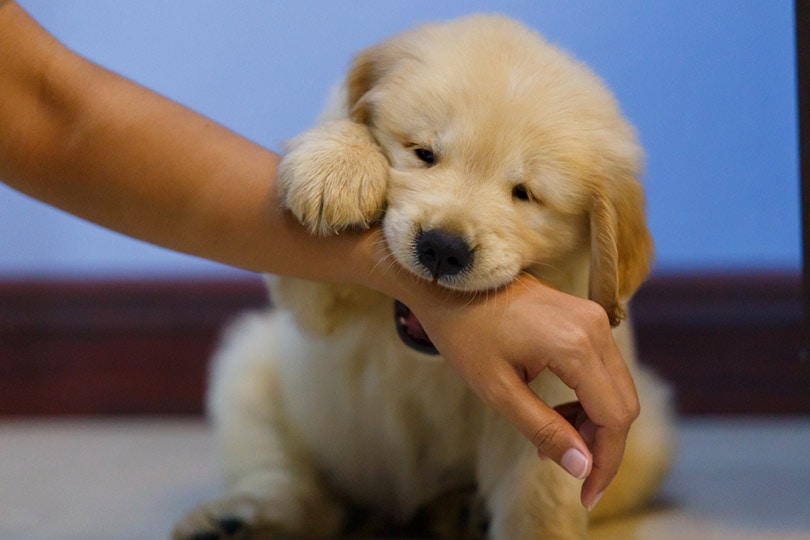
Dogs explore the world with their mouths. Biting and mouthing objects are natural behaviors, but dogs must learn to do so gently.
Some people have a natural response to stop a puppy from biting, but that may not be the best way. Instead, you can teach your puppy to bite down gently with little pressure, which can prevent a dangerous bite in the future.
What Is Bite Inhibition?

Bite inhibition is a training method that teaches dogs to bite without pressure to reduce the risk of a serious bite. The goal is to teach bite inhibition in relaxed situations so that if your dog is ever pushed to the point of biting, it won’t be as damaging. It also reduces the likelihood that your dog will play too rough with another dog and cause injury.
Teaching your puppy bite inhibition early can be the difference between a nuisance bite and a harmful bite that leads to significant injury or damage in an adult dog. Dogs that aren’t properly socialized to this behavior can play too hard with both dogs and humans, leading to painful bites, dog fights, or other issues.
The 3 Steps to Teach Dogs Bite Inhibition:
Like other training methods, you should approach bite inhibition using positive and not negative reinforcement. You don’t need any special tools or supplies—just time to play and interact.
A qualified dog trainer or behaviorist will be able to teach you to use this skill.
1. Imitate the Puppy’s Siblings

Have you ever wondered why puppies should stay with their litter and mother until eight weeks or later when they’re weaned around four weeks? This is because interacting with their siblings teaches puppies social skills and manners.
If your puppy nips a littermate too hard, the other puppy will yelp and stop playing. The puppy quickly learns that the bite was too hard, and if it continues, it won’t get to play anymore.
The best way you can start bite inhibition is by interacting with your puppy in the same way its siblings would. Allow your puppy to nip a little, but not hard enough to hurt. If your puppy bites too hard, say “ouch” or “ow” and stop playing. Like with its littermates, the puppy will learn that it has to be gentle if it wants to keep playing.
This takes time and patience, so stay consistent!
2. Cut Back the Biting
Once you have your puppy nipping gently, you can start cutting back on how much your puppy is allowed to nip or bite. Puppy teeth feel like needles, but they’re nothing compared to the damage a full-grown dog can do.
Begin with teaching the “leave it” command. Hold treats in your hand and give your puppy the command. When it backs off, offer praise and a treat. You have a small window before your puppy will try for the treats again, so your command and praise must happen quickly.
It may take a few training sessions until your puppy understands the command; you can increase the time between the command and the reward once they understand what to do. Once that’s solid, you can use the “leave it” command when your puppy starts to mouth or nip your hands.
This will minimize the mouthing behaviors and restrict them to appropriate playtime. Your puppy won’t use its mouth to get what it wants without an invitation to play, and if it does, it will be done gently.
3. Redirection

Another important aspect of bite inhibition is redirection. When your puppy is rambunctious, and you want to lower the risk of play bites that are too rough, you can present a toy and reward it for leaving your hand alone.
This could also apply to playing with other people and children or chewing on household objects that it shouldn’t, such as furniture or wires.

The 4 Things You Should NOT Do
There are a lot of misconceptions about the best way to respond to a bite. Here’s what you should never do when your puppy bites:
1. Don’t Punish the Bite!
One of the mistakes many dog owners make is suppressing the bite completely. This is a quick solution to painful bites with needle teeth, but it doesn’t teach proper bite inhibition. In the future, your puppy or adult dog may bite hard and do damage instead of avoiding the bite completely.
The same applies to growling. If we shout or punish our dog for issuing a warning growl instead of backing away and changing our behavior the dog may not give a warning and go straight for a bite. This is a dangerous situation.
2. Don’t Try the Outdated Alpha Roll
The alpha roll is a technique that involves rolling your dog over into a submissive position to establish dominance if it bites. Now considered outdated—much like the entire concept of a hierarchy and dominant alphas—some people still rely on the alpha roll to address biting.
This can backfire quickly if your dog feels threatened and turns aggressive to defend itself.
3. Don’t Yelp

Saying “ouch” communicates that your puppy hurt you when it was biting, but some trainers recommend yelping instead.
The idea is that you sound more like a puppy in pain, but the issue is that we don’t know that our human-sounding Yelp communicates the same message as a puppy Yelp. This may make your puppy even more excitable, so just use a simple and calm “ouch.”
4. Don’t Hold the Puppy’s Mouth Closed or Use Physical Punishment
Another outdated technique, holding a dog’s mouth closed in response to biting, is just as doomed to backfire as the alpha roll. You’re putting the puppy in a position to defend itself and creating a negative association with your hands, which presents problems with grooming, exams, petting, tooth brushing, and more.
You should also avoid any type of physical punishment. Some of the responses that have been suggested in the past are pushing your hand into the dog’s mouth or throat, pushing the dog’s lip under his teeth to cause him to bite itself, or actually biting your puppy back. None of these are likely to improve biting behavior and may just make it worse. It is better to reach out to a veterinarian and ask for more appropriate and safe techniques.
If you need to speak with a vet but can't get to one, head over to PangoVet. It's our online service where you can talk to a vet online and get the advice you need for your pet — all at an affordable price!

Final Thoughts
Bite inhibition is a crucial skill to teach a puppy when it’s young and impressionable. That’s why bite inhibition training for puppies is so important. If you teach your puppy how to play gently and appropriately with its mouth early on, you can raise a well-socialized adult that’s unlikely to bite, and if it does, it’s less likely to cause harm.
Featured Image Credit: Damix, Shutterstock