Get

In Your Inbox

Dogster is reader-supported. When you buy via links on our site, we may earn an affiliate commission at no cost to you. Learn more.

My Dog Ate a Silica Packet: What to Do (Vet Answer)

My Dog Ate a Silica Packet

There are things in our environment that can pose safety risks to our pets that we don’t always consider until ingestion occurs by our canine companions. Silica gel is often found in small packets that are typically less than 1 inch in size. These packets can be found in several different products, including food items, medication, and shoe boxes, and are used to help prevent moisture accumulation. What happens if your pooch ingests one of these little packets? Is it toxic? Fortunately, silica gel packets are not toxic, but there are some safety measures you should take to ensure they’re going to be alright. Continue reading to learn about what to do if your pet makes a snack out of these desiccants.

divider dog paws 2 oct 2024

Types of Freshness Packets

It is important to note that there are several different types of “freshness packets.” This article specifically speaks on silica gel packets, which pose almost no toxicity risk if ingested. Other freshness packets may contain charcoal or iron. Those made of iron can be dangerous if consumed, especially if in large quantities. Take precautions as needed and reach out to your veterinarian if you have concerns. It is possible that the packet may not be identifiable once chewed, or the packet itself may be unavailable for inspection if consumed whole. In these cases, the content of the packets may be unknown. It will be helpful to try to figure out the packet’s contents by examining remnants when available.

  • White or clear beads are likely silica and will not require further intervention if a single packet was consumed.
  • If the remnants are dark in coloration or appear to be a powder, it will be critical to discern if iron or charcoal-based. This can be done by seeing if the powder is attracted to a magnet. If yes, the packet contains iron, which can be harmful depending on your dog’s size and the amount consumed.

If iron is suspected to have been consumed, or if there is no way to verify the type of packet consumed, your veterinarian should be contacted, along with a pet poison helpline, as further intervention may be necessary.

If you need to speak with a vet but can't get to one, head over to PangoVet. It's our online service where you can talk to a vet online and get the advice you need for your pet — all at an affordable price!

PangoVet_Mention-in-Content Savings V1

What Is a Silica Packet?

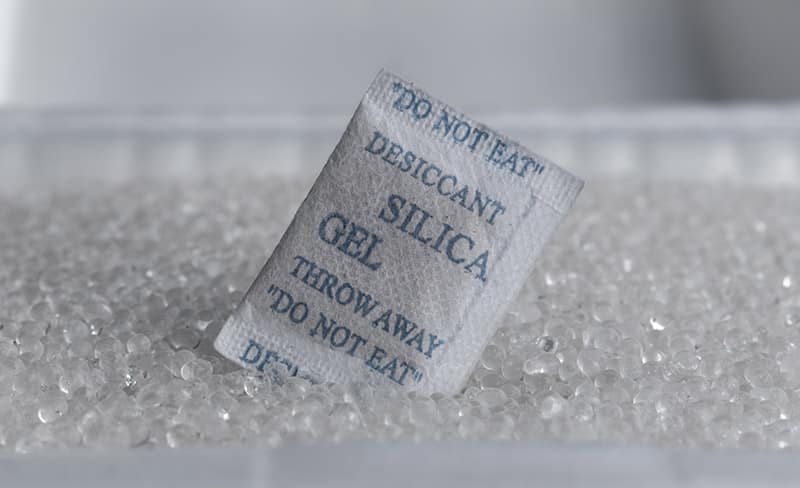
silica gel packet
Image Credit: Zay Nyi Nyi, Shutterstock

Silica packets contain small amounts of silica gel that are used to help maintain freshness. Silica attracts water, pulling moisture out of the air, which helps to protect products that may be sensitive to humidity or moisture. Silica packets generally are less than an inch in size and contain small, white beads of silica. Some packets may contain dyes, changing the color of the beads. According to the Pet Poison Helpline, some silica gels may be mixed with moisture indicators, which may be problematic if ingested in large amounts.

Ingestion Risks

Ingestion of a single silica gel packet is very unlikely to cause serious risk to your canine companion. However, vomiting and diarrhea may occur. The packets are around the size of a sugar packet and could potentially cause an obstruction, but this is uncommon, according to the ASPCA Animal Poison Control Center.

Post Ingestion Interventions

woman and labrador dog consulting with the vet
Image Credit: SeventyFour, Shutterstock

If a single packet was ingested and confirmed to be silica, close monitoring is recommended. Monitor your pet for signs of vomiting and a decreased appetite. If severe gastrointestinal signs occur following the ingestion of packets, supportive care may be necessary to help combat dehydration. Always consult with your veterinarian if you have questions or concerns. If only one silica gel packet has been consumed, it is unlikely that significant intervention will be necessary. There is a slight risk of a foreign body obstruction if the packet is consumed whole. In some cases, bulking up the diet with fiber and other food recommendations from your veterinarian will be helpful in aiding in gastrointestinal transit. However, it is important to get their direct advice before proceeding.

divider dog paws 2 oct 2024

In Summary

Silica packets pose little risk of toxicity. The biggest concern following the ingestion of a silica packet is the risk of possible gastrointestinal obstruction. In some cases, simply bulking the diet with fiber could help the packet move through the intestinal tract. It is important to note that some freshness packets contain iron, which can be problematic if consumed in large amounts. Freshness packets containing iron may require more intervention and monitoring. But when in doubt, contact your veterinarian for guidance.

See Also:


Featured Image Credit: Zay Nyi Nyi, Shutterstock

Want content like this delivered to you?

Sign Up For Our Newsletter

News, insights, expert advice, and everything dog

* By submitting, you agree to our Terms & Conditions and Privacy & Cookies Policy.

How useful was this post?

Click on a star to rate (you can leave written feedback after clicking submit)


Help us improve Dogster for pet parents!

Your feedback really matters.

What did you like about this post? Also how can we improve it?

Join the conversation

Leave a Reply

You’re very welcome to leave a comment or question. Please know that all comments must meet our community guidelines, and your email address will NOT be published. Let’s have a positive and constructive conversation.

Talk With A Vet Online

Peace of mind,
anywhere, anytime

Affordable vet advice

Black and White Australian Shepherd: Info, Pictures, Origin & History

The Australian Shepherd herding dog was first developed in the Western United States, and due to its beautiful coat, cleverness, and sweet nature,...

Can French Bulldogs Go Up & Down Stairs? Our Vet Answers

If you’ve just brought home a new French Bulldog, congratulations! Now, have you started puppy-proofing everything? After you survey the room, you might...

Can Dogs Eat Anise Seed? Vet-Approved Benefits & Risks

Dogs can eat anise seed, and the strong-smelling spice is known to be the canine version of catnip. It can be used as...

9 Hypoallergenic Herding Dogs: Vet-Verified Guide With Pictures

If you love the flowing locks of a herding dog but are blighted by allergies, you might be under the impression that you’re...

More related

Bereavement Leave for Pets: What It Is & How It Works

Pets are beloved members of the family, so it’s very sad and often painful when they pass away. The loss of a pet...

Can Dogs Watch TV? What Can They See? Vet-Approved Vision Facts

Have you ever noticed your dog taking an interest in something on the TV screen, only to have a friend tell you later...

How to Make a DIY Paracord Dog Collar: Step-by-Step Guide With Pictures

Parachute cord is hot right now, and you can use this tutorial to make your dog a custom collar....

Are Pit Bulls More Aggressive Than Other Dog Breeds? Facts & FAQ

Pit Bull aggression is an age-old topic that is divisive and often causes disputes between the two sides. Because of negative media coverage...

Keep reading

Can Dogs With Pancreatitis Eat Carrots? Vet-Verified Facts & FAQ

If your dog has just spent the last few days in intensive care due to pancreatitis and you’re worried about what you should and shouldn’t feed them, we’re here to help you out! There are types of foods your dog...

Can Dogs With Pancreatitis Eat Carrots

Can Dogs Eat Sesame Oil? Vet Reviewed Facts & FAQ

Sesame oil is a flavorful oil that has multiple uses. It’s one of the first crop-based oils that humans developed, but it is one of the more expensive oils due to the inefficiencies surrounding the manual harvesting and processing of...

Can Dogs Eat_sesame oil

Can Dogs Eat Pistachios? Vet-Approved Facts & FAQ

Pistachios are a favorite food among humans that are rich in protein, fiber, and vitamin B6. They are popular in salads, desserts, and just on their own as a snack. Wondering whether dogs can eat pistachio nuts may be a...

Can Dogs Eat Pistachios

Can Dogs Eat Blueberries? Vet-Verified Nutrition Facts & Tips

Many fruits are completely dog-friendly and are even put into commercial dog food recipes to enhance nutrition. Still, it’s always best to check the safety of certain plant-based foods before you offer them to your pet. So, are blueberries safe...

Can Dogs Eat_blueberries

My Dog Ate Moldy Food: What Should I Do? Vet-Approved Facts & Signs Toxicity

If your dog has eaten moldy food—perhaps you didn’t store the food properly, or your dog ate the moldy food from the garbage—it is a cause for concern. Mold can make your dog sick, which is why you should take...

What to Do When Your Dog Won’t Eat: Possible Causes & Solutions (Vet Reviewed)

It can be stressful if your dog suddenly stops eating, especially if they’re typically a big eater. There are a few reasons that some dogs stop eating, and sometimes, it can be difficult to identify the cause, so it’s always...

white dog refuses to eat his food in the bowl

10 Best Non-GMO Dog Foods in 2025: Reviews & Top Picks

There are so many different types of dog foods on the market. From “grain-free” to “holistic” to “human-grade,” how do you choose the best one for your canine pal? Many marketing terms are used on dog food labels nowadays, and...

Gizmo white fluffy dog with Ollie dog food box

Can Dogs Eat Licorice? Vet-Verified Nutrition Facts & Info

Our pets can eat all sorts of goodies that we can prepare from the comfort of our own kitchens. However, when it comes to sweets, it isn’t always the best idea to share with our four-legged friends. Licorice is not...

twizzlers licorice candies