How Big Do Mini Goldendoodles Get? Average Weight & Growth Chart


In this article
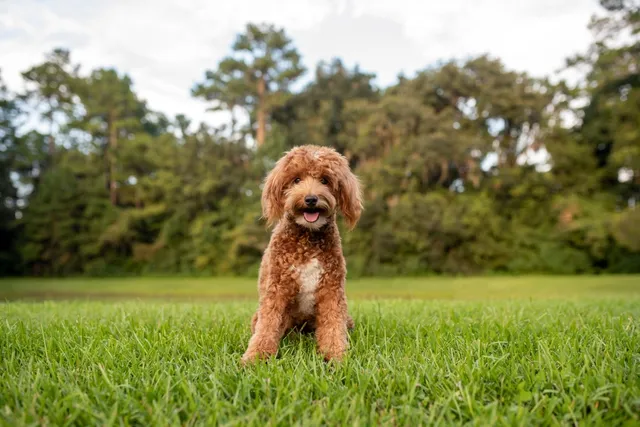
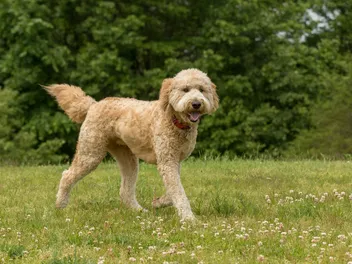
The Miniature Goldendoodle is a cross that results from breeding a Golden Retriever with a Miniature or Toy Poodle.
These adorable dogs will grow to be between 13 and 20 inches tall and weigh anywhere between 10 to 35 pounds full-grown. However, when fully grown, the exact size of each dog will depend on their parents, generation, diet, and lifestyle.
Our handy guide below will break down the approximate size and weight of Mini Goldendoodles throughout their lifespan so you can determine whether your pup is growing as they should.

Mini Goldendoodle Breed Overview

The Mini Goldendoodle pairs the best personality traits of both parent breeds. Since the Poodle and Golden Retriever are among the top five smartest dog breeds, you can expect a Mini Goldendoodle to be highly intelligent and easy to train.
They're very easygoing and affectionate and want to be friends with everyone they meet. These dogs make fantastic family pets because they have a very low prey drive and aren't typically aggressive. Mini Goldendoodles are loving, playful, sweet, and fun to keep as pets.
The biggest downfall of Mini Goldendoodles is that they don't care for being left alone, so they may be prone to bouts of separation anxiety.
Mini Goldendoodle Size and Growth Chart
Mini Goldendoodles will range in size depending on which parent breed the puppy takes after most and whether a Toy or Miniature Poodle was used in breeding. As with most dog breeds, male Mini Goldendoodles will weigh more and be taller than their female counterparts.
Let's look at the typical weight and height range of a Mini Goldendoodle during its first year of life.
| Age | Weight Range | Height Range |
| Birth to 2 weeks | 1 pound | Few inches |
| 1 to 2 months | 1.5 to 9 pounds | 4 to 8 inches |
| 3 to 4 months | 4 to 15 pounds | 5 to 9 inches |
| 5 to 6 months | 10 to 22 pounds | 5 to 10 inches |
| 7 to 9 months | 10 to 30 pounds | 8 to 15 inches |
| 9 to 12 months | 10 to 35 pounds | 13 to 20 inches |
When Does a Mini Goldendoodle Stop Growing?
Keeping tabs on your pup’s height and weight allows you to keep tabs on their health. If you notice they’ve stopped growing, you can bring their height and weight chart to the vet to determine if there’s an underlying cause.
Mini Goldendoodles typically reach half their adult weight by the time they’re between four and five months old. Their weight will begin leveling off between 7 and 10 months of age. A Mini Goldendoodle should reach their full adult weight by their first birthday.


Factors Affecting the Size of Mini Goldendoodles
1. Genetics
You may have noticed a large range in height and weight in the size chart above. The size of a fully grown Mini Goldendoodle will be determined, to a point, by the size of the poodle used in breeding. As we mentioned in the introduction, Mini Goldendoodles result from breeding a Golden Retriever with either a Miniature or Toy Poodle.
Miniature Poodles are usually between 10 to 15 inches tall and 10 to 15 pounds when fully grown. Their Toy counterparts are much smaller, less than 10 inches tall, and between 4 to 6 pounds when fully grown.
Mating a Toy Poodle with a Golden Retriever will likely result in a smaller dog than if a Miniature Poodle was used in breeding. However, this isn't always the case. It is impossible to predict what the puppies will look like and which parent they'll take after most. Mating a large dog with a smaller one won't always result in a medium-sized pup.
2. Diet & Lifestyle
Your dog’s diet and lifestyle will also affect their final size. Too much food and too little exercise will make your dog prone to obesity and its related conditions. It’s important to feed your Mini Goldendoodle puppy age-appropriate food to ensure they grow steadily and healthily.

3. Generation
Seeing as how the Mini Goldendoodle is a cross between a Golden Retriever and a Poodle, the genetic percentage of each parent breed will be different from generation to generation. There are a handful of generation terms you may wish to familiarize yourself with before adopting your Mini Goldendoodle, so you have a better chance at getting a dog with the genetics you prefer.
For example, F1 Mini Goldendoodles are 50% Golden Retriever and 50% Poodle, born from a purebred Golden Retriever and a purebred Miniature Poodle. Those from the F1B generation are born from an F1 Goldendoodle and a Poodle, with an estimated DNA percentage of 75% Poodle and 25% F1 Goldendoodle.
The F2 generation is born when an F1 Goldendoodle is bred with another F1 Goldendoodle. The genetic makeup of each pup will differ between generations and can affect the final size of your dog.

Ideal Diet for Maintaining a Healthy Weight
Keeping your pet at a healthy weight is an important part of responsible dog ownership. Feeding the right food in the right quantities will ensure your dog stays at an optimal weight and won't be at risk of developing obesity-related conditions or health problems. If you're unsure how much you should feed your dog, ask a veterinarian for advice. They will consider your dog's health history, size, and activity level to determine a diet that's perfect for your pup.
Treats aren't necessary to feed your dog, but they can be a great tool to have at your disposal when training. You mustn't overuse treats, however. Treats shouldn't make up more than 10% of your Mini Goldendoodles diet.
Your dog’s lifestyle can also help them maintain a healthy weight. Ensure your pup gets enough daily exercise to build muscle, improve cardiovascular endurance, and keep them healthy and limber for as long as possible. Adult Mini Goldendoodles will need anywhere between 45 and 90 minutes of daily exercise.
How to Measure Your Mini Goldendoodle
There are four measurements you may find you need for your dog: neck girth, chest girth, back length, and height. Neck girth is measured using a soft tape looped around your dog’s neck. Measure just above the shoulder blades, where a collar would comfortably rest. It should fit snugly but not too tight.
Chest girth is measured using one end of a soft measuring tape on your dog’s spine and the other wrapped around the widest part of the chest behind their front legs.
The back length is measured using a soft measuring tape on the base of your dog’s neck. Hold it in place, and pull it straight across their spine until you reach the tail base.
Finally, height is best measured when your pup stands straight next to a wall. Keep their feet spaced evenly while you feel for the withers (the highest point of their shoulder blades). Run the tape from the floor to the top of the withers.
Weight is simple to measure using your body weight scale at home. Weigh yourself first, then let the scale return to zero before grabbing your Mini Goldendoodle. Weigh yourself holding your dog and then minus that number from your weight.

Conclusion
Mini Goldendoodles can be between 13 and 20 inches tall and 10 to 35 pounds when fully grown. The size of each individual pup will vary from litter to litter, depending on the parents and generation. If you have your heart set on a Mini Goldendoodle in a particular size range, it's best to speak at length with the breeder to see if they have an option for you.
It’s impossible to determine the exact adult size of each puppy in a litter, but they can use their expansive knowledge to give you a rough idea of how big the pup will be when they are fully grown.
See Also:
Featured Image Credit: SoySendra, Shutterstock
Expert dog care, straight to your inbox
Vet-reviewed advice, training tips, and the best of Dogster. Free, and you can unsubscribe anytime.
By signing up, you agree to our Terms & Conditions and Privacy & Cookies Policy.
Nicole has loved animals of all sizes her whole life so it's no wonder she has dedicated her career to helping them through what she loves best: learning, writing, and sharing knowledge with others. She’s the proud mom of two dogs, a cat, and a human. With a degree in Education and 15+ years of writing experience, Nicole wants to help pet parents and pets around the planet to live happy, safe, and healthy lives.
Join the conversation
Ask a question, share your story, or send private feedback.