


In this article
View 2 More +Vaccinations generally provide good protection for your dog against certain diseases that could be severe and debilitating. While no vaccine leads to 100% immunity, it lessens the severity of the signs and improves recovery time should the disease be contracted. Some diseases are zoonotic, meaning they can be transmitted from animals to people. These include the rabies virus and leptospirosis. Vaccinations designed for animals that prevent transmissible diseases to people are essential in reducing public health threats. Keeping both pets and people healthy is a priority.

What Is the Leptospirosis Vaccine?
Leptospirosis is a disease caused by the bacterium Leptospira, found in both water and soil. The bacteria is more common in warm climates with high yearly rainfall averages, but it can proliferate anywhere after heavy rain and flooding. In the United States, infection rates in dogs seem to be higher in the southwestern, midwestern, and eastern regions.
All dogs are at risk of infection from leptospirosis, especially those that may come in contact with contaminated urine via:
- Drinking from slow-moving or stagnant water sources, such as ponds, lakes, and streams
- Exploring rural properties with exposure to infected farm animals and wildlife
- Contact from potentially other infected dogs, such as at dog parks and boarding and training facilities
- Contact with rodents
Leptospirosis can lead to kidney and liver failure and sometimes, severe lung disease, which causes difficulty breathing. This disease, even if treated, can be fatal.
Fortunately, a leptospirosis vaccine is available to help protect your dog and loved ones from this potentially life-threatening disease. It is recommended that all dogs be vaccinated to help protect them from infection.
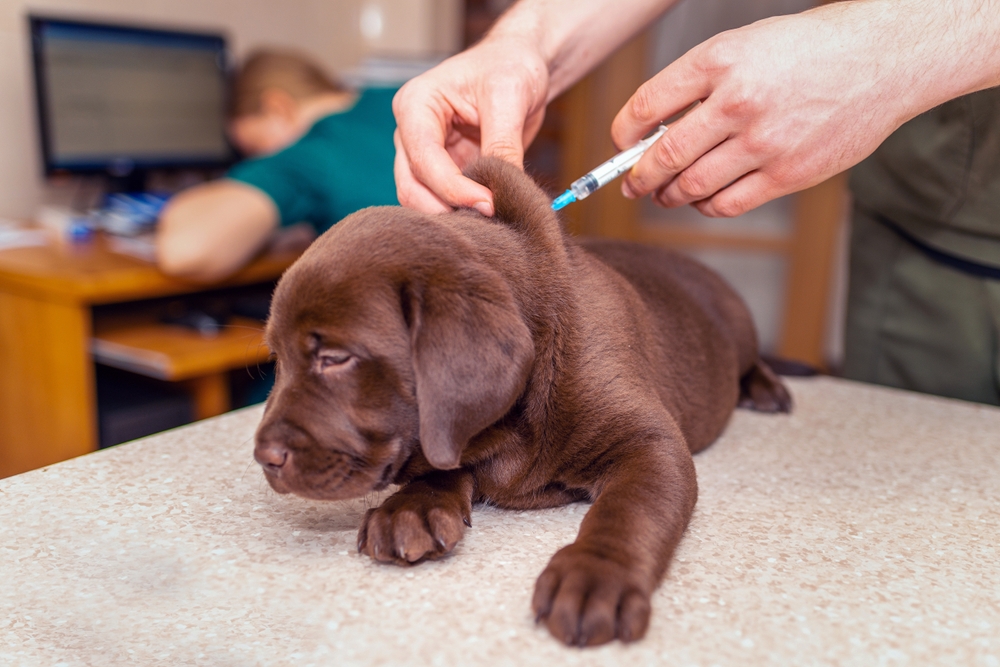
How Is the Leptospirosis Vaccine Given?
This vaccination is given under the skin (subcutaneously) and may be administered alone as its own separate vaccine or in combination with the distemper/parvo vaccine (DA2LPPv). Dogs 12 weeks of age and older can start the vaccination series. The initial series involves a set of two vaccinations, spaced 2–4 weeks apart, and then boosted annually.
What Happens If You Miss a Vaccination Dose?
If a dose is missed in an initial vaccination series, the series can be restarted with one vaccination given, followed by another given 2–4 weeks later to stimulate an appropriate immune response. The vaccination is recommended to be given annually after the initial series is completed, and if the annual booster is missed, it is recommended to booster as soon as possible.
Potential Side Effects of the Leptospirosis Vaccine
The leptospirosis vaccine has been shown to have a similar frequency of side effects or adverse reactions as other vaccinations commonly given to dogs. The results from a large study involving over 1 million dogs showed that the rate of adverse reactions to the lepto vaccine was 0.3%. The benefits of vaccination far outweigh the risks, as leptospirosis is a life-threatening disease that can affect any dog worldwide. If you’re concerned about potential side effects, it’s best to discuss them with a vet. As with any vaccine, common temporary side effects may include:
- Pain and tenderness at the injection site
- Lethargy
- Mild fever
- Decreased appetite
More serious and potentially life-threatening side effects can include an anaphylactic reaction, which may produce signs like:
- Vomiting or diarrhea
- Hives
- Facial swelling
- Difficulty breathing
- Collapse
It is advised to seek immediate veterinary care if you notice any of these signs.
Did you know you can speak to a veterinarian without having to travel? Just head over to PangoVet. It's our online service where you can talk to a vet online and get the advice you need for your pet — all at an affordable price!

Frequently Asked Questions (FAQ)
At What Age Can My Dog Get the Leptospirosis Vaccine?
Dogs 12 weeks and older can start the initial vaccination series.
How Often Is the Leptospirosis Vaccine Boosted?
The current recommendation is to boost annually.
Is the Leptospirosis Vaccine More Dangerous Than Other Vaccines?
No, the leptospirosis vaccine has not been shown to have an increase in side effects after administration. Although this is considered a non-core vaccine, all dogs should be vaccinated for leptospirosis because it can be a potentially life-threatening disease and may be transmissible to people.
Conclusion
While the leptospirosis vaccine is considered a non-core vaccine for canines, it is recommended that all dogs should receive it. Leptospira bacteria can be found in contaminated soil and water sources, especially in infected urine. Dogs with leptospirosis may experience kidney and liver failure and may develop breathing difficulties, which can be fatal. This disease is also zoonotic, meaning it can be transmitted to people, so a vaccinated dog also protects the entire household.
Also see:
- Lumps After Dog Vaccinations: Are They Normal? Our Vet Explains Why This Happens
- Which Dog Vaccines Are Absolutely Necessary?
Featured Image Credit: Masarik, Shutterstock




























6 Responses
After our 6 lb yorkie got the leptovirus injection she will go up to 4 days without eating and has become mentally different. Why!!
Hello Rita,
Thank you for reaching out and sorry for a late reply. We are very sorry to hear about your Yorkie! In these cases it is always best to immediately contact the veterinarian who administered the vaccine and tell them about the signs.
We hope that your dog is alright!
My dog collapsed two days after getting this vaccine. She has never had a problem with it before and was wondering if this could have been the problem. She was taken to emergency vet and we are not sure if she had a seizure or if some other episode occurred. The cost to find out was way beyond what I could afford. I am just trying to eliminate some possibilities. She is doing ok now.
Hi Beth, I’m so sorry to hear about your pup—that must have been so scary. Totally understandable that you’re looking for answers, especially with the timing of the vaccine.
The leptospirosis vaccine tends to have side effects similar to other common dog vaccines, and the risk of an adverse reaction is pretty low—around 0.3%. That said, reactions can still happen, even if they’re rare. Still, the benefits of vaccinating usually far outweigh the risks, as leptospirosis is a serious and potentially life-threatening disease. Getting to the bottom of what happened would likely require some testing, but as you mentioned, that can get expensive, and unfortunately, even with testing, we don’t always get clear answers.
The good news is she’s doing okay now, which is a really positive sign! I’d suggest keeping an eye on her and noting any changes in appetite, behavior, or mood—just to be safe. If chatting with a vet would help ease your mind, you can book a time that works for you here: https://pangovet.com/schedule-appointment/. 🙂
My border collie/lab mix received her leptosprosis vaccine last Monday. Five days later we noticed a hard bump at the injection sight. Is this a possible side effect of the vaccine?
Hi Kathleen, thanks for getting in touch. A hard bump at the injection site can sometimes occur after a vaccine, and it is typically not uncommon. This could be a reaction to the injection itself, and it's usually a result of inflammation or a localized immune response. It's often referred to as an "injection site reaction."
Most of the time, these bumps are harmless and will resolve on their own within a few days or weeks. However, if the bump doesn’t go away, becomes larger, or if your dog shows any signs of discomfort, redness, or swelling in the area, it's a good idea to have a veterinarian take a look to ensure it isn't an infection or another issue.
If the bump doesn't seem to be causing your dog any pain and your dog is otherwise healthy and acting normal, it’s likely nothing to worry about. Just keep an eye on it and consult your vet if you're concerned. I hope this helps. 🙂