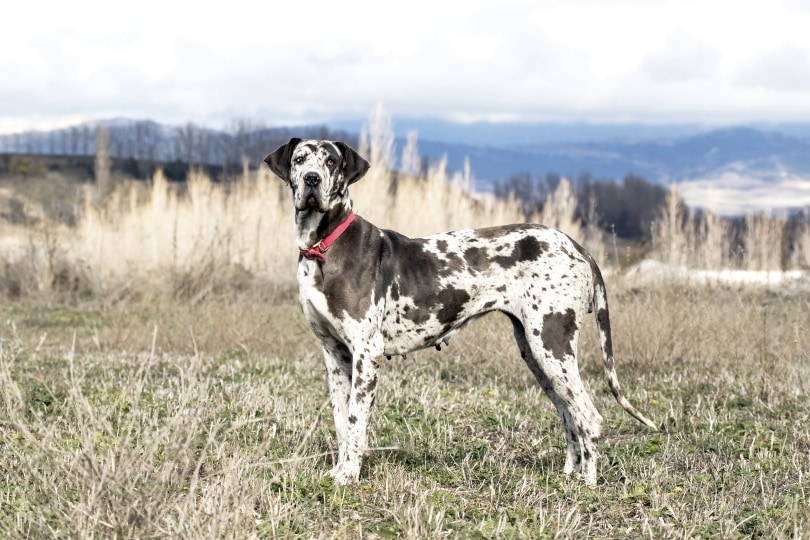
Despite their size and protectiveness, Great Danes, also known as Deutsche Dogges, are well-known gentle giants. These big softies are loyal, loving, and affectionate, so much so that they often believe themselves to be lap dogs like their much smaller canine counterparts.
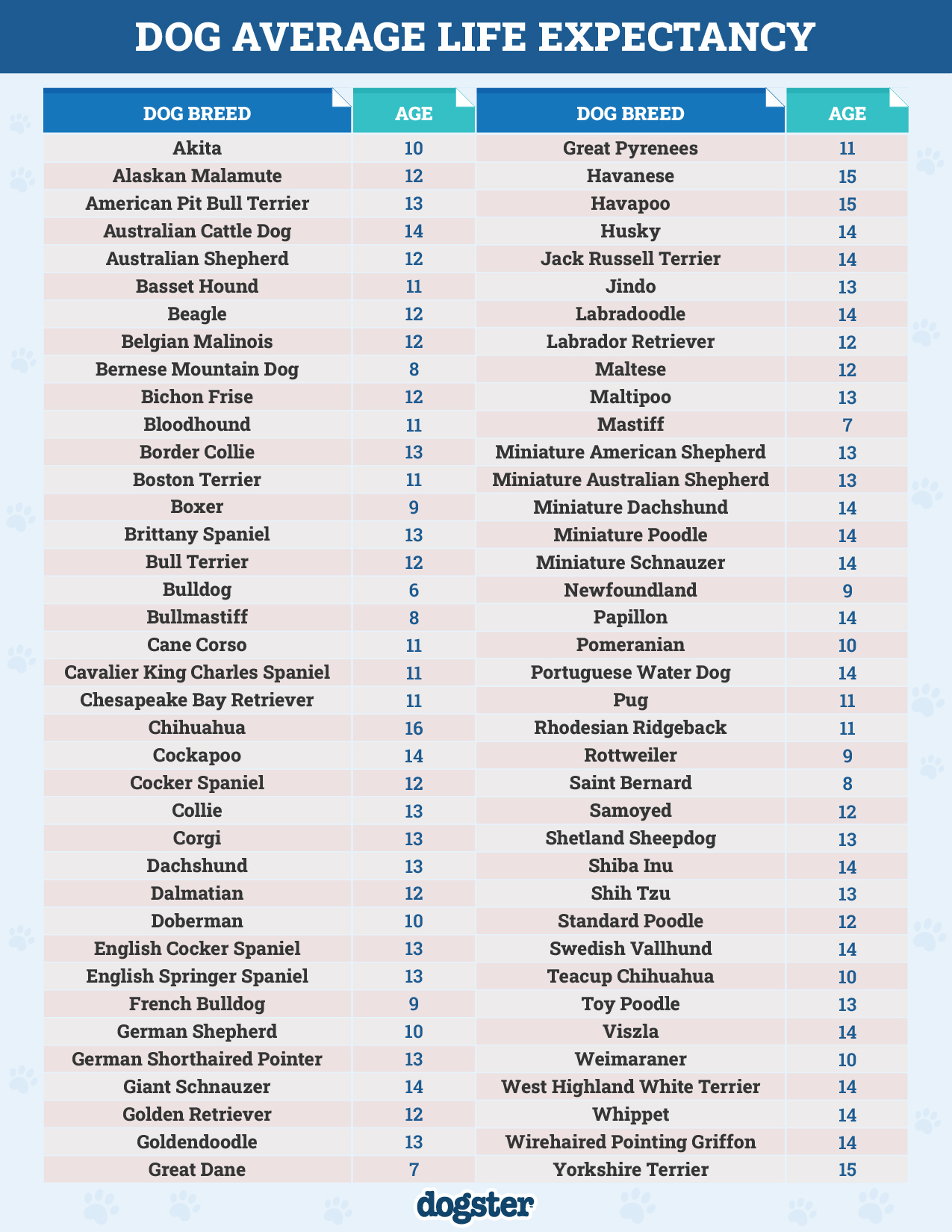
While these giants are well recognized for their massive size and gentle demeanors, how to properly care for them is not common knowledge. It can be surprising for many new Great Dane owners that their lifespan is much shorter than their height would suggest. Great Danes usually live for 7 to 10 years.
What’s the Average Lifespan of a Great Dane?
Great Danes might be huge but their lifespans are shorter than those of many of their fellow dog breeds. With an average lifespan between 7 and 10 years old, it is rare to find a Great Dane living as long as a smaller dog breed will.
Image By: axi-schnaxi, Pixabay
Why Do Some Great Danes Live Longer Than Others?
While your Great Dane puppy might not live as long as you hope, there are ways to help extend your dog’s life and keep them happy as they grow. Many things can affect a Great Dane’s lifespan, including their breeding history, any health issues, and even their environment.
Here are a few things to keep in mind when you take on the responsibility of caring for a Great Dane.
1. Nutrition
Larger dogs have bigger appetites and require different nutrition than smaller breeds. High-quality dog food will give your dog the nutrients that they need to stay healthy, but choosing a food for your Great Dane goes a little deeper than settling for the first large breed dog food that you can find.
Most of the health issues that can affect Great Danes are influenced by nutrition and how often you feed your dog. The American Kennel Club has great advice for feeding large dog breeds.
Your Great Dane should eat age-appropriate food with low-fat content. Keeping meals small and spreading mealtimes throughout the day will also help prevent the development of bloat.
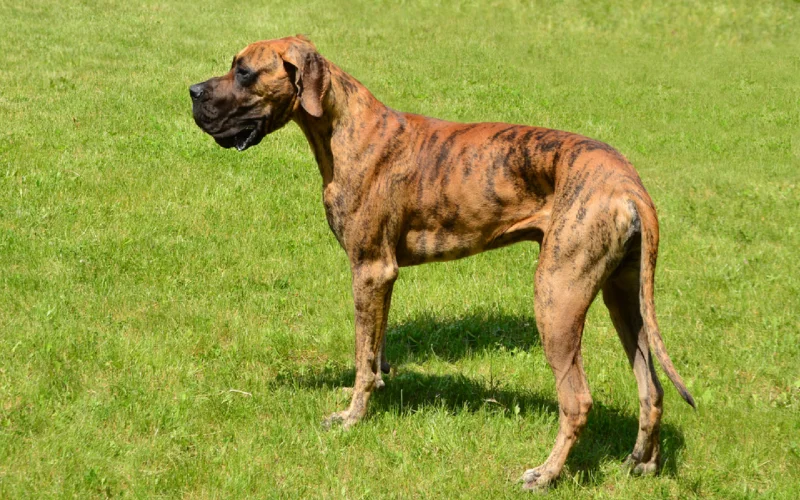
Image Credit: Whiteaster, Shutterstock
2. Environment and Conditions
Keeping your Great Dane safe will go a long way toward extending their lifespan. While they’re not one of the most active breeds, they still do well with a few walks a day and space to play a game of fetch. Making sure they have enough space in the house to safely maneuver will also keep these big dogs from knocking over furniture and getting trapped in places where they could get hurt.
Make sure your yard, if you have one, is properly fenced in. A 6-foot fence will work best to prevent these big dogs from jumping over it and keep your dog away from busy roads.
3. Housing
Considering these dogs’ size, people assume that Great Danes make perfect outdoor-bound dogs. In actuality, they shouldn’t be left outside for the long term. Due to this need to be kept inside the house and how big these dogs are, it’s easy to see why they’re not suited for apartment life.
While they often act like lapdogs and will flatten you into the couch if given the chance, Great Danes do best with their own area in your house. A comfortable bed that’s large enough to accommodate them will do nicely.
4. Size
With size comes power, and a Great Dane’s strength can be deceptive. Their lithe build and docile nature can make it seem like they’re a weak dog breed, but their unassuming persona hides quite a bit of muscle.
Gentle giants or not, it’s important to properly train your Great Dane. The first 1 to 2 years is a good time to focus on behavior and socialization. Most Great Danes take years to properly mature, and younger dogs shouldn’t be exercised too much in order to prevent the development of joint issues later.
With training, not only will you be able to teach your dog to control themselves and avoid being dragged when you’re out on walks, but you’ll also teach them how to interact with strangers and other dogs.
Image By: muroPhotographer, Shutterstock
5. Sex
Your Great Dane’s sex determines their temperament, energy, and the health issues that they’re more likely to suffer from. For example, male dogs are generally goofier and more susceptible to cardiomyopathy, while females are more likely to suffer from mammary cancer.
Some sex-related issues, like unwanted behavior, can be negated by spaying or neutering your dog. This can also help avoid the illnesses that certain sexes are prone to and help your Great Dane live longer.
6. Genes
The main reason that Great Danes have such short lifespans is mostly due to health-related issues. Some, like heart disease and hip dysplasia, are genetic and can be passed down from adult dogs to their puppies. Genetics will also determine how tall and heavy your Great Dane will be.
If you’re interested in buying a Great Dane puppy, make sure you only consider breeders who run regular tests on their dogs for common genetic issues. The lack of these traits in the gene pool will help ensure that your Great Dane lives a healthy life for as long as possible.
Image by: belu gheorghe, Shutterstock
7. Breeding History
Purchasing a Great Dane from a breeder gives you more knowledge over their health than adopting from a shelter or rescue. While we always recommend adopting over buying, a reputable breeder will monitor their breeding stock for common, inheritable disorders. They can also give you important information about your new puppy’s family history and how old your Great Dane is.
For dogs that end up in shelters, their health information and ancestry aren’t nearly as in-depth or reliable.
8. Healthcare
Great Danes aren’t exempt from the common ailments that affect dogs and there are several disorders that they can develop that can be fatal. Regular trips to your veterinarian and paying attention to your Great Dane’s wellbeing will help you keep on top of any health issues that might arise with your puppy.
Learning the symptoms of these disorders will help you catch the warning signs early.
Image By: jstoner22, Pixabay
Bloat
Caused when a dog’s stomach fills with gas, especially if your dog exercises immediately after eating, bloat can be fatal. Not only does the expanding stomach put pressure on the diaphragm and make breathing difficult, but the stomach can also twist. It’s a severe health issue facing Great Danes and other animals and can only be treated by a veterinarian.
To prevent your Great Dane from suffering from bloat, keep a careful eye on how much they eat and drink. Eating to excess, along with exercising or rolling straight after a meal, are common causes. Your veterinarian might also suggest a surgery that tacks the stomach to the inner walls of your dog’s body to stop it from twisting.
Dilated Cardiomyopathy
Although male Great Danes are more susceptible to dilated cardiomyopathy (DCM) than females, both sexes can suffer from this disorder. DCM occurs when the upper or lower chambers of the heart — more commonly, the latter — become enlarged.
Untreated, the muscle walls of the heart become weak, and fluid can collect in the lungs and other tissues. This can result in congestive heart failure.
Bone and Joints
Although not as fatal as bloat or dilated cardiomyopathy, bone and joint issues are common issues for Great Danes. Hip dysplasia and arthritis (or degenerative joint disease) are two of the biggest disorders that can make your Great Dane’s life miserable.
Healthy, balanced diets and omega fatty acids can help relieve unnecessary pressure on your dog’s joints. Also, avoiding activities that will put too much strain on your dog’s body will help manage pain and inflammation. You can also purchase joint supplements that your Great Dane will benefit from.
Hypothyroidism
As one of the less serious ailments faced by Great Danes, hypothyroidism can be monitored through regular veterinary visits and bloodwork. It’s also relatively easy to regulate through proper medication.
Image by: Martin Tajmr, Pixabay
The 4 Life Stages of a Great Dane
All dog breeds grow at different rates, and large dogs often reach full maturity later than small breeds do. Great Danes grow quickly, especially height-wise, but their weight often doesn’t keep up. To ensure that your dog grows as healthy as possible, here are the life stages of the Great Dane to help you take proper care of your puppy:
Puppy
Dogs are considered puppies from the time that they’re born to sexual maturity. For Great Danes, this is the stage where their growth is more obvious, and they’ll often have a massive growth spurt between 4 and 6 months old.
Puppyhood for Great Danes requires careful attention. Due to their rate of growth, Great Danes can quickly develop health problems, particularly regarding their bones and joints if they’re not properly developed. Feeding your puppy large-breed dog food designed to slow down their growth rate will help you control how fast your puppy grows without stressing out their bodies or affecting their final height.
By the time your Great Dane reaches 1 year old — or 1 1/2, in some cases — they’ve usually reached their fully grown height. They haven’t entirely stopped growing yet, though.
Young Adult
Once your puppy reaches their full height, it can be easy to believe that they’ve stopped growing. Great Danes are often slow to reach their full size, however, as their weight and musculature don’t develop as fast as their size. Your gentle giant might only fully mature when they reach 2 years old.
This is why it’s important not to encourage strenuous activity during the first few years of your Great Dane’s life. Instead, focus on obedience and socialization.
Mature Adult
A fully grown, well-developed Great Dane will stand anywhere between 28 and 32 inches and weigh about 110–175 pounds. Females are on the lower end of the spectrum, while males are generally larger. Genetics will play a part in your Great Dane’s final size too, and crossbreeds tend to be on the smaller side.
Image by: mtajmr, Pixabay
Senior
With their health issues, Great Danes rarely reach old age, and they’re often lucky to get to be 10 years old, the top of their life expectancy. This applies even if you do everything possible to keep your dog healthy.
There are stories of Great Danes living for 12 years or longer, but these cases aren’t often proven.
How to Tell Your Great Dane’s Age
If you adopted your dog from a rescue or shelter, it can be almost impossible to know for sure how old they are. For Great Danes, particularly if they’re still growing, this can lead to problems later if you push your puppy too much, whether through lengthy walks or too much vigorous training.
The best thing to do in this case is to estimate your dog’s age depending on their development in the following areas. Remember that a few of these signs can develop for younger dogs too.
Teeth — Dogs usually lose their baby teeth by 6 months old.
Eyes — Age-related issues, like cataracts, can help suggest your dog’s age.
Fur — If they are grey around their eyes and muzzle or even through their whole body.
Breed—Great Danes don’t often live longer than 10 years at most.
Health issues — Arthritis is a common ailment in older dogs.
Blood profile — Your veterinarian can use your dog’s blood to test your dog’s kidneys, liver, pancreas, and thyroid function.
Great Danes are surprisingly short-lived despite their massive size, and their average lifespan is between 7 and 10 years, if not less. While there are ways to help your gentle giant live longer and avoid common health issues like bloat and hip dysplasia, it’s rare for these dogs to live longer than 10 years.
Nicole has loved animals of all sizes her whole life so it's no wonder she has dedicated her career to helping them through what she loves best: learning, writing, and sharing knowledge with others. She’s the proud mom of two dogs, a cat, and a human. With a degree in Education and 15+ years of writing experience, Nicole wants to help pet parents and pets around the planet to live happy, safe, and healthy lives.
For many pet owners, stress during veterinary visits, grooming appointments, travel, or even routine handling can feel like an unavoidable part of life...
Ontario has approved new animal welfare regulations that will prohibit elective ear cropping and devocalization (debarking) procedures in dogs from January 1, 2027....
Bassmatians are an intriguing blend of the Basset Hound’s laid-back charm and the Dalmatian’s vibrant energy, creating a breed that’s stealing the spotlight....
Review Summary The RAWZ pet food brand is relatively new and is making waves in the industry as one of the most committed brands in terms of quality and taste. Most of their ingredients are sourced either in the United...
Review Summary Nulo was created with quality care for dogs in mind. Its founder realized that there weren’t enough care options available for dogs for last-minute requests. He also noticed that there was a bit of a health crisis in...
You drizzle it on your salad, cook with it, and probably have a bottle sitting proudly on your counter. Olive oil is celebrated for its heart-healthy fats and antioxidants, but what about your dog? Can your furry friend benefit too,...
The food that you, as a pet owner, feed your dog is one of the most important aspects of keeping your pet healthy. If you own a Border Collie, then you know how high their energy and activity levels can...
Salmon is packed full of healthy nutrients and is considered by some to be one of the healthiest protein sources since it provides essential vitamins and is a great source of omega-3 fatty acids. But what about raw salmon? Is...
More and more dog owners are learning about the benefits of a raw food diet for their furry family members. But feeding a raw diet is even harder than it sounds, especially when you consider what it takes to provide...
Many modern pet owners are opting for grain-free dog food because, not only has grain-free dog food become a trend as of late, but owners fear that ordinary grain might cause weight gain. They also say that these grains are...
Dogs are glad to try any meaty snack you wave in their faces, but it can be tricky to tell what exactly they can and can’t eat. For instance, can dogs eat pigs’ feet? Yes, dogs can eat pigs’ feet,...
Stay informed with expert pet care insights delivered straight to your inbox! Discover professional guidance on animal behavior, feeding tips, trusted product picks, and much more.
You may opt-out at any time. View our Privacy Policy for more information.
Sign up for the Dogster Email Newsletter
You may opt-out at any time. View our Privacy Policy for more information.
You may opt-out at any time. View our Privacy Policy for more information.