In this article
Blood in the stool is one of the most common complaints seen in veterinary hospitals. Often the blood is accompanied by diarrhea. Sometimes the blood is not a big deal and is just a sign of mild colitis or irritation. However, it can be a sign of more severe underlying disease that needs immediate attention. In this article we’ll discuss what to do, when to worry, and when you should seek immediate attention for your dog.

Normal Stool With Blood
Every once in a while, your dog may defecate and everything seems normal aside from noticing some blood. But if your dog is otherwise acting normal – eating normally, not vomiting, normal energy, drinking the normal amount – then you likely don’t need to panic immediately from a small amount of blood.
First, make sure that your dog is up to date on their regular preventatives. Many preventatives nowadays help to protect against intestinal parasites. So, if your pup is not up to date, your veterinarian may want to check a fecal sample to rule out parasites. If your dog is up to date on preventions and everything else is normal, give it a day or so. If the blood persists or worsens over 48+ hours, then make an appointment to see your veterinarian. If the blood self-resolves, then keep an eye on future recurrences.
If you need to speak with a vet but can't get to one, head over to PangoVet. It's our online service where you can talk to a vet online and get the advice you need for your pet — all at an affordable price!
Firm Stool With Blood and Vomiting
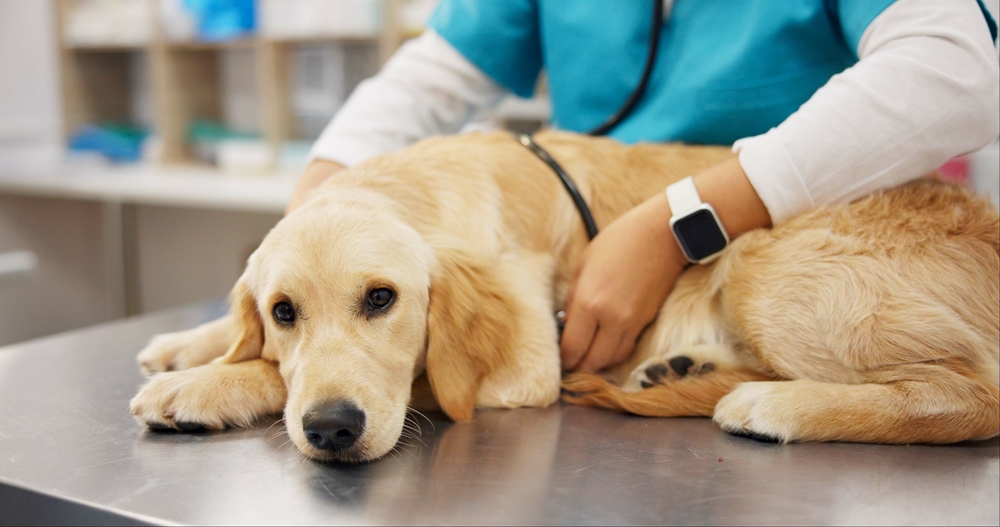
Sometimes, severe constipation can also lead to vomiting, abdominal pain, abdominal discomfort, and anorexia. We commonly see this if dogs have ingested bones, clumping cat litter, etc. We may also see this in dogs if they have some type of mass, or tumor, in or outside the colon. The mass will make it difficult for your dog to poop normally and they can strain and even vomit if it’s difficult for them to go. If your dog has firm stool with blood, and they are vomiting, have abdominal pain, anorexia, or otherwise are uncomfortable, they should be taken to a veterinarian as soon as possible for care.
Firm Stool With Blood
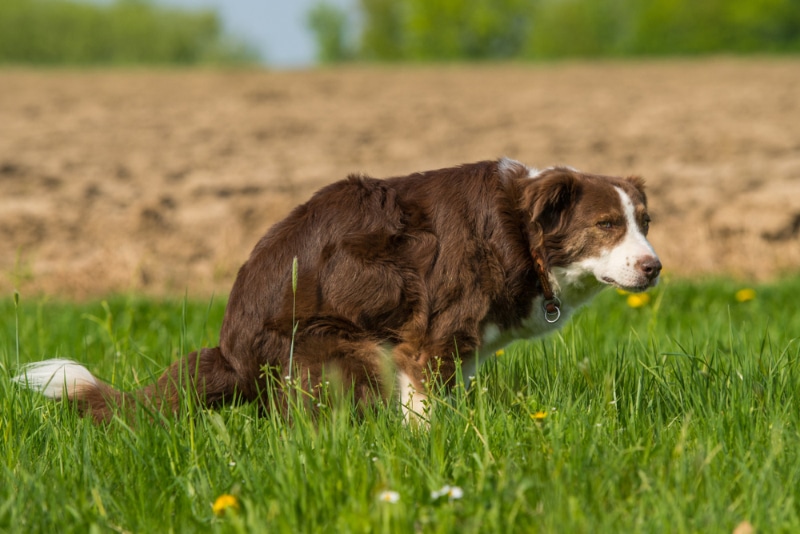
If you notice your dog has stool that is much firmer than normal, or they may be straining to defecate, their poop may have some blood on the outside of the stool. Mild constipation can cause blood to be seen on the outside of the stool due to the irritation, inflammation, and mild damage done as they defecate the hard stool.
Sometimes this is caused by some new treats, or your dog may not be tolerating their new food. We can also see this when dogs are purposely given or accidentally get into bones. If your dog has ingested bones in the last 24 hours before you’ve noticed the blood, get your dog an appointment at your veterinarian. If there is little to no change in their diet and they are otherwise acting normal, call your veterinarian to get some high fiber food or stool softener to help your pup.
Young Puppy or Newly Adopted Dog With Bloody Diarrhea
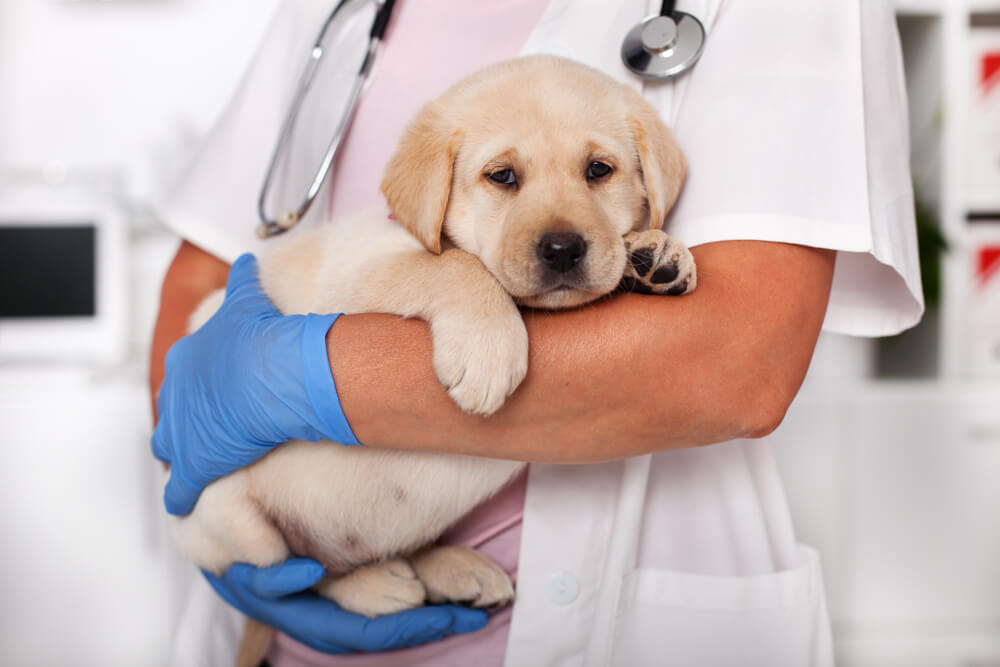
If you’ve newly adopted or rescued a dog with no known vaccine history, or you have a puppy that has not yet received all of their vaccines, get your dog to the veterinarian ASAP. As mentioned above, regular preventatives help to protect against multiple intestinal parasites. If you’ve got a newer dog with no known history of preventatives, and/or they were stray or in a shelter, they are at high risk for intestinal parasites or other microscopic organism infections such as coccidia and giardia. Intestinal parasites in younger dogs or dogs without regular preventatives is extremely common. Luckily most can be successfully treated with dewormers and antibiotics.
We can also commonly see parvo virus in any age dog, but mostly dogs less than 6 months of age that have not received appropriate vaccines. When you purchase or adopt a puppy, and you are told that your new puppy is “up to date on vaccines”, please do your due diligence and get paper records that indicate this. Puppies need to receive vaccines every 3–4 weeks until they are at least 16 weeks of age or older.
Even if you’ve been doing this, your puppy is still at high risk of contracting parvo virus until they have received all rounds of vaccines and are older. Parvo virus is highly fatal and there is no cure. All veterinarians can do is treat supportively and try to get your pup through it. But unfortunately, many die. Parvo is also highly contagious. If your puppy or newly found or adopted dog fits this criteria, have them seen by a veterinarian as soon as possible.
Fully Vaccinated Dog With Bloody Diarrhea
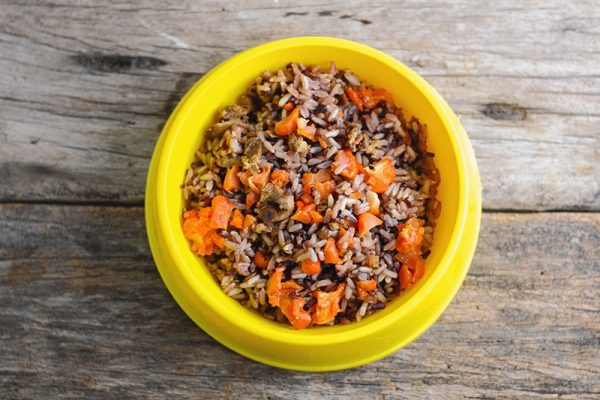
This is, in my experience, what we see the most, bloody diarrhea with no known cause. Sometimes it can be traced back to a new treat, new food, or some yummy table scraps that your dog got that they aren’t used to. Other times your dog may have recently gone to the dog park, beach, or on a hike where they picked up something infectious. Unfortunately, and frustrating for us veterinarians, we often do not find causes in otherwise healthy dogs that are up to date on vaccines and on regular preventatives, with no other abnormalities but bloody diarrhea. Diagnostics are always recommended to rule other causes in/out, but supportive care with a bland diet and probiotics are commonly recommended.
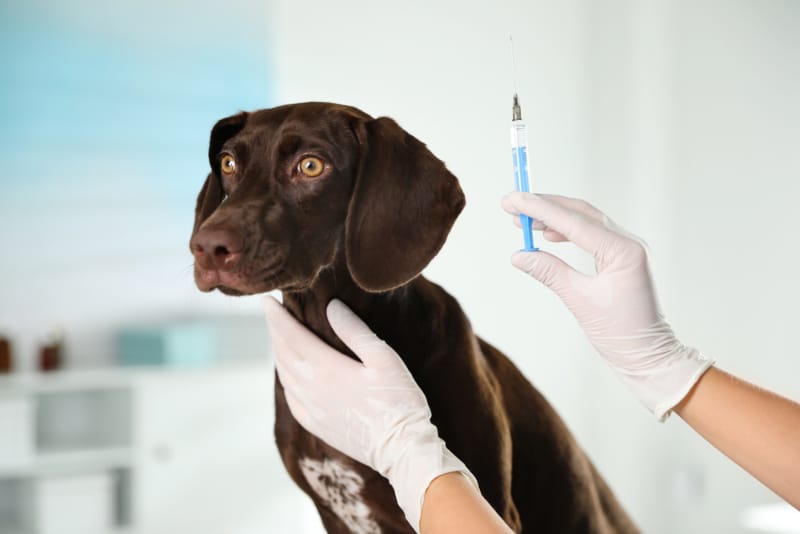
If you choose to treat supportively without diagnostics, this is an OK decision as long as your dog is otherwise acting normally – again, with no vomiting, no weight loss, no abdominal pain, and normal water consumption and energy. However, if the diarrhea persists, worsens, and your dog exhibits any of these abnormal signs, you should have diagnostics completed on your dog. Sometimes bloody diarrhea is a manifestation of diseases that don’t directly involve the GI tract – kidney disease, liver disease, certain types of cancer, etc. So always follow up with recheck exams and diagnostics with your veterinarian if your dog is just not themselves.
Conclusion
A dog having blood in their stool is a very common complaint for veterinarians. Sometimes the pets have diarrhea, and other times the stool is normal. The most important thing to keep in mind is the age of the pet, and if they are otherwise acting abnormally. If you have a young and/or unvaccinated dog, or your dog is vomiting, anorexic, has abdominal pain, and/or lethargy, then they should be seen by a veterinarian as soon as possible. If your dog just has mild blood, normal stool, and/or they are acting normal, you may be able to treat supportively with a bland diet, increased fiber, and probiotics. However, it’s important to keep in mind that if the blood persists or worsens, or your dog starts to act unwell, they should be seen by a veterinarian for diagnostics.
See also:
Featured Image Credit: Dora Zett, Shutterstock