In this article
Massage isn’t just about making us feel pampered; it benefits us physically and mentally. It focuses on the muscles, tendons, skin, ligaments, and connective tissue in our bodies, is non-invasive, and can be used for various health issues. Massage isn’t exclusive to humans; your dog can benefit from it, too.
Dog massage may help relieve anxiety in dogs, increase circulation, and enhance immune function. It’s also a great way to spot abnormal growths on your dog early on. Although dog massage may sound like a modern practice, there is evidence to suggest otherwise, which can be seen in ancient writings that date back to 2700 BC. Famously, Julius Caesar was known to travel with a masseuse for his benefit as well as for his dogs.
Although this practice may have been around since ancient times, it might be new to you, so keep reading to get all your questions answered.

What Is the Purpose of Dog Massage?
Dog massage focuses on the soft tissue and how to strategically manipulate it through pressure and movement to bring about relaxation, improve circulation, resolve swelling, relieve tension, and energize the body tissue. Although you can use simpler massage techniques on your dog, specialized dog massage should be performed by a certified animal massage therapist who knows the anatomy of your dog’s body and who will work with your veterinarian to establish a unique treatment plan for your dog.
When to Massage Your Dog
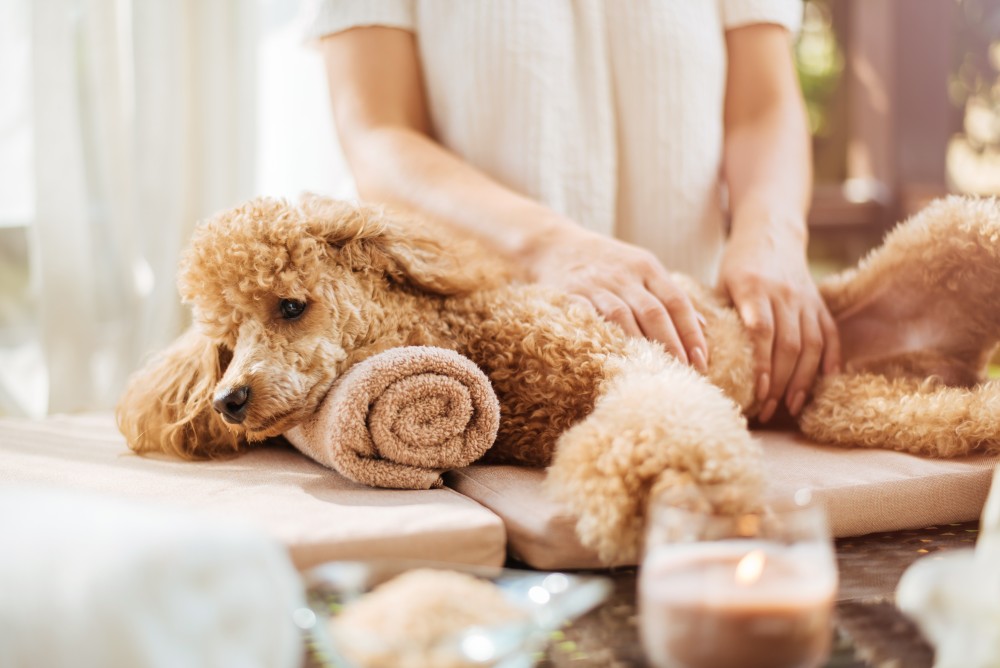
Although you may think of lying face down on a massage table, covered in oil, and listening to relaxing music while a massage therapist works on your tight muscles, it doesn’t have to be so elaborate for your dog. You don’t need any equipment or special oils to massage your dog, but you should ensure they’re comfortable and lying on a supportive surface.
Your dog must be relaxed and comfortable when you massage them and not overly energized or anxious. Pick a quiet area in the home to perform the massage and make sure there aren’t many distractions. To make sure your dog is comfortable, only begin the massage once they’ve relieved themselves and at least 30 minutes after they’ve eaten.
How to Massage Your Dog
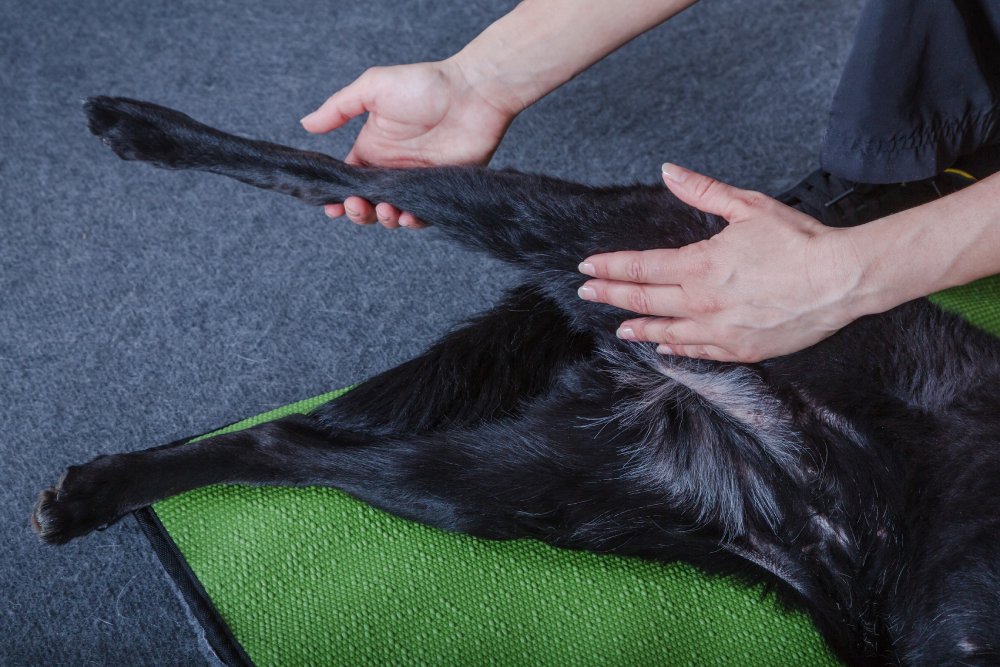
Throughout your dog’s massage, it’s important to remain relaxed and soothingly speak to them. Reassure them and watch for changes in their body language. The massage should be gentle, regardless of the area of the body you’re working on. You can achieve this by using broad strokes with open hands.
What Are the Different Types of Dog Massage Techniques?
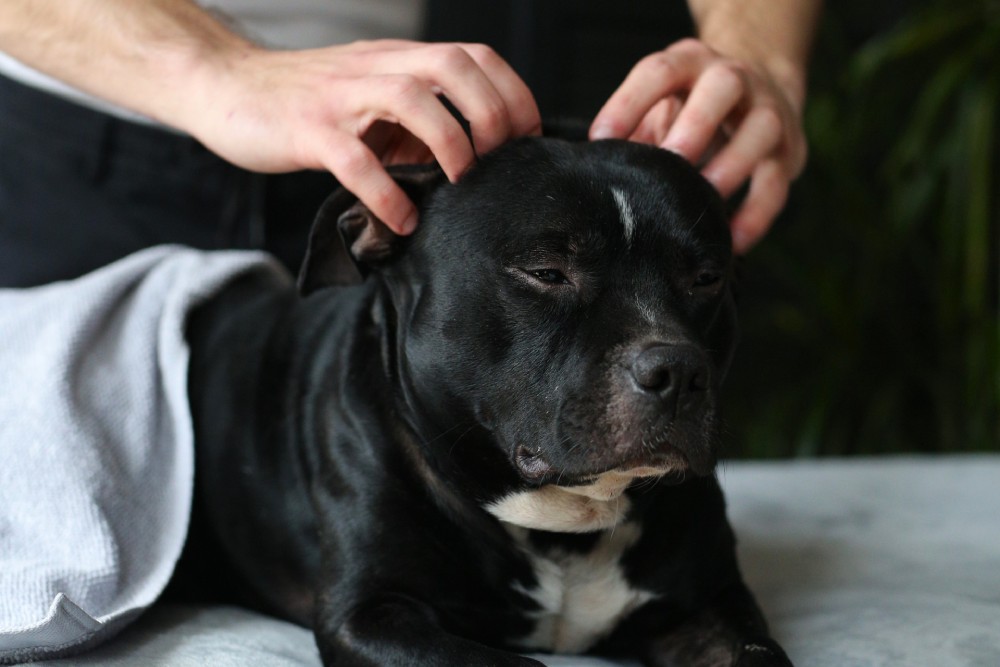
Although you can keep the massage simple with an ear rub or head massage, different types of massage strokes have different effects on your dog’s body. Here are a few types:
- Stroking: This should start the massage, as it helps relax the dog and helps you feel where the most tension is. When stroking your dog, use light to medium pressure, starting at the dog’s head and working your way down their body to their tail and down their legs.
- Effleurage: These are gliding strokes that follow the lines of the dog’s muscles and help with circulation and resolving swelling. You should use your whole hand in a cupped position for this stroke and work from the ends of the dog’s body inward toward the heart.
- Petrissage: This stroke releases muscle tension, knots, and spasms by using your whole hand to knead the muscles and skin. You can also just focus on rolling the skin. Although it may sound painful for the dog, most dogs enjoy the sensation as long as you don’t squeeze the skin tightly. Be sure to work from the tail up to the head.
- Concussive stroke: This stroke includes chopping, tapping, and tapotement. Although these concussive strokes energize tissue and increase circulation, each one has a unique movement. Chopping is great for large muscles, whereas tapping is better for more focused areas.
However, your veterinarian can show you how to perform simpler massage techniques at home.
If you need to speak with a vet but can't get to one, head over to PangoVet. It's our online service where you can talk to a vet online and get the advice you need for your dog — all at an affordable price!

When Is a Dog Massage Recommended?
Many dogs benefit from a massage occasionally, but sometimes, a dog massage is recommended by veterinarians to help with pain, reduce injuries, and increase mobility. Here are a few examples:
- Stress and anxiety. Regular massages will help reduce stress and anxiety in your dog because applying pressure to certain points on their body has a calming and relaxing effect. You can take your dog for regular massages if they are severely anxious, or you can give them a massage at home after a stressful event, such as a thunderstorm or fireworks.
- Arthritis. Arthritis causes pain, but a gentle massage can relieve some of it by increasing circulation to the painful areas. However, because your dog is in pain, they might be sensitive to the pressure, so if they flinch or respond negatively, it’s best to stop and try again at another time.
- Activity: Massage is necessary if your dog participates in competitions or other strenuous activities. You can warm your dog up before their activity through massage, which will prevent injury because it increases circulation to the joints and muscles and aids mobility. It should also reduce post-activity soreness, but a massage afterward is also beneficial to prevent soreness and stiffness.
Advantages of Dog Massage
There are many advantages to dog massage, both mentally and physically. In many species it helps lower high blood pressure, prevents sore muscles after strenuous activity, prevents injury, reduces anxiety and stress, aids in digestion, and strengthens the immune system. Further, it strengthens the bond between you and your dog and helps you detect lumps, wounds, and other ailments that require veterinary attention.
Disadvantages of Dog Massage
The disadvantage associated with dog massage is that it can be performed incorrectly, which can cause pain, bruising, and skin irritation. If you take your dog to a professional, the disadvantage is that it is expensive, especially if you take them frequently. You will also have to book a time that works for them as they aren’t always available, which may inconvenience you a bit.
It also isn’t a quick fix, and to see the benefits, your dog will need regular massages.
Frequently Asked Questions (FAQ)
When Should I Not Massage My Dog?
Although massage is an excellent tool, you should not massage your dog if they’re in extreme pain or have fractured or broken bones, a torn muscle, tumors, open wounds, or infected areas. You should also refrain from massaging your dog until you have chatted with your vet and been shown how to do it properly, especially if your dog suffers from health problems.
You should also not massage a dog with a fever or undiagnosed pain. You can speak to your vet to get permission to begin massaging your dog.
How Often Should My Dog Be Massaged?
How often your dog needs a massage will depend on the dog’s lifestyle and health condition. Owners who take their dogs for a massage for their well-being should take them once a month. However, if they require massages due to injuries, it will depend on the recommendation of the dog’s veterinarian. Dogs participating in competitions should receive a massage at least twice a month to prevent injuries.
Is It Safe to Massage a Dog?
If your dog receives a massage from a certified animal massage therapist, it is safe. It should also be safe if you have been shown how to massage your dog and follow those instructions correctly. However, if you don’t know how to safely massage your dog, you can end up hurting them or worsening their pain.
It also may not be safe for you to massage your dog if they are very fearful or don’t like to be touched. In those circumstances, it would be safer for you and your dog to take them to a professional or find one who can massage your dog at home, as this will be less stressful.
Conclusion
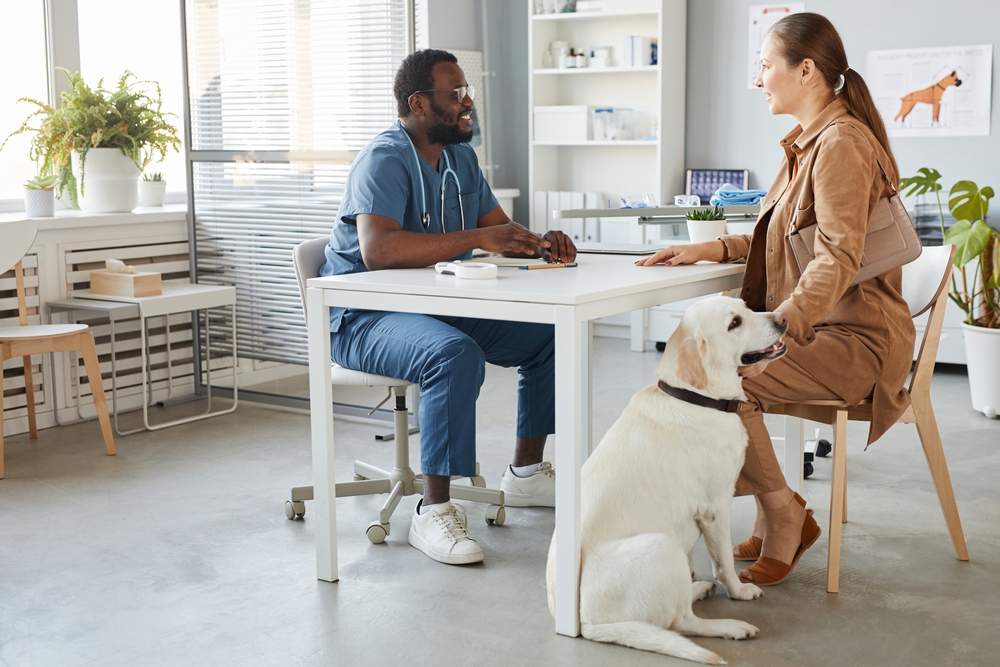
A dog massage can bring about relaxation, improve circulation, resolve swelling, relieve tension, and energize the body tissue of your dog. Specialized massages should be performed by a certified animal massage therapist because they know where your dog’s pressure points are, the different strokes to use, and the intensity of pressure required. However, you can do simpler massages on your dog at home.
When you massage your dog, be gentle, place them on a stable surface, talk to them in a soothing voice, and wait 30 minutes after their last meal. Dog massages are safe, but you shouldn’t massage a dog that is in pain, has a torn muscle, is running a fever, or over open wounds or infected areas.
Featured Image Credit: Mariia Masich, Shutterstock