In this article
View 2 More +Corgis do not require regular haircuts. In fact, it isn’t recommended to give them full-body clippings at all. Corgis have a double coat—as the name suggests, their coat has two different layers. The inner coat only grows to a certain length and keeps the dog warm. It isn’t weather-proof, but it is very insulating. The outer coat is there to protect the inner coat from rain and wind. It isn’t very insulating, but it works as a bit of a raincoat.
If the inner coat gets wet, it cannot perform its job. A dog with a wet inner coat cannot regulate its own body temperature, putting them in a potentially serious situation.
If you clip your Corgi’s fur, there is a risk that the outer coat will be cut to the same level as the inner coat. In this case, the coat wouldn’t be able to perform its job, and your Corgi would suffer. Therefore, clipping your Corgi isn’t recommended unless it is medically necessary.
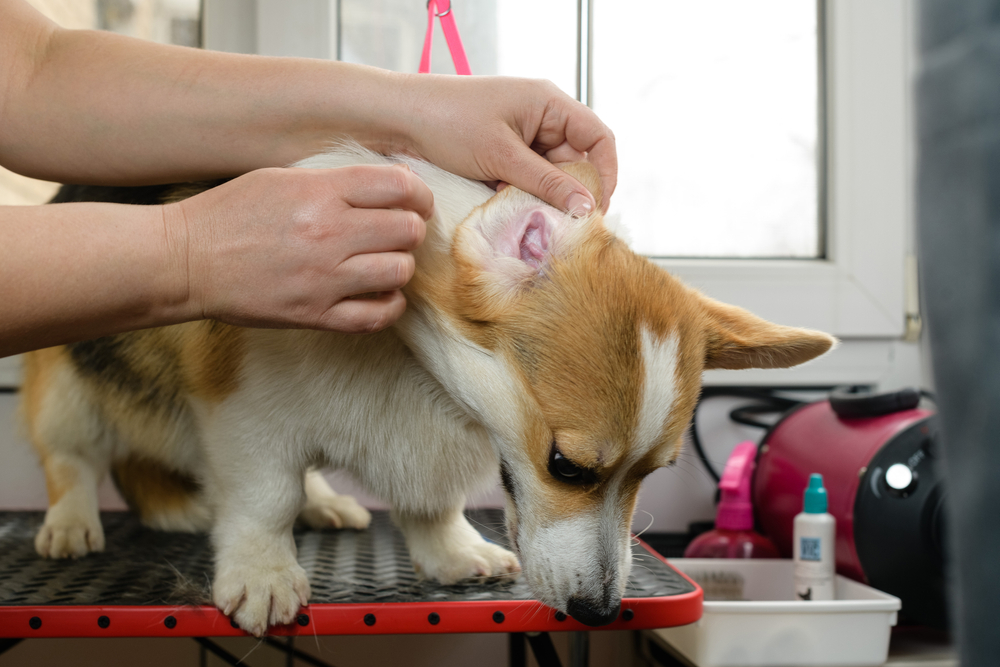
The only areas on a Corgi that should be clipped are the bottom of the paws, as well as inside the ears and along their nether regions. These areas should be kept clean for hygiene purposes, and your dog doesn’t need the fur in these areas to keep warm.
A Corgi’s coat may seem long. However, it is designed to keep them at the perfect temperature. If the coat is messed with, it can potentially undermine the dog’s ability to stay warm or cool.

What Kind of Grooming Do Corgis Need?
Just because Corgis don’t need haircuts doesn’t mean that no grooming is required. Instead, you should plan on brushing your Corgi daily. Going over your dog once or twice with a brush can help remove all of the excess hair in the coat. This process helps your dog’s coat stay healthy and keeps your floors a bit cleaner.
Corgis are known for shedding a lot. Therefore, you will have to commit to daily brushing. In some cases, you may even want to brush your Corgi more, especially during the shedding seasons. If you brush your dog daily, it should take less than 10 minutes. However, if you let the hair build-up, then you’ll need to brush them for much longer—which neither you nor your dog will like.
Many people mistakenly believe that clipping their Corgi will cut back on some of the shedding. However, unless you completely shave your dog, giving your Corgi a haircut probably isn’t going to do much. In fact, clipping your Corgi can damage the integrity and health of the coat, which may increase the amount of shedding. These dogs don’t need to be clipped.
How to Reduce Corgi Shedding?
Beyond brushing, there are several other ways to help limit your Corgi’s shedding. Sadly, you can never completely eliminate a Corgi’s shedding. In some cases, underlying problems can make your dog shed more. Fixing these issues can help reduce shedding.
Baths
You don’t want to give your dog a bath too often. Water and soap can easily dry out a dog’s skin, even if their skin is perfectly healthy. Therefore, you’ll want to use this method with some caution. Bathing your Corgi once a month or so can prevent shedding, but this isn’t something you should be doing every other day.
Preferably, you’ll use a de-shedding shampoo and conditioner to help reduce the amount of hair your Corgi loses. If your dog has sensitive skin, you’ll need to use a sensitive-skin shampoo instead, though. Irritating your dog’s skin will only lead to more shedding.
If you are looking for the perfect, pet-friendly shampoo and conditioner combo, we highly recommend the products by Hepper. With a soothing oatmeal shampoo, free of soaps and other harsh chemicals, and a cucumber and aloe scented conditioner, your pet's skin and coat will be smooth, hydrated, and irritation-free.
| Image | Product | Details | |
|---|---|---|---|

|
Hepper Oatmeal Pet Shampoo |
|
Check Price |

|
Hepper Pet Conditioner |
|
Check Price |
At Dogster, we’ve admired Hepper for many years, and decided to take a controlling ownership interest so that we could benefit from the outstanding products of this cool pet company!
Diet
All commercial dog foods should have the proper amount of nutrients for dogs, as set by the AAFCO. However, the included nutrients are often at minimum levels, which may not be enough for your canine. There are many nutrients that aren’t “required” but can still be extremely useful for your pooch. Therefore, if your dog is shedding profusely, it may be that they aren’t receiving the best amounts of each nutrient.
Choosing a high-quality dog food can help with this. Look for dog foods with omega fatty acids and other added nutrients. Many of these may help with coat and skin health, which can further improve shedding. Grain-free foods aren’t recommended, as they may increase your dog’s chance of heart disease. However, choose dog foods containing mostly protein and fats, especially from meat.
Plant-based proteins don’t contain all the amino acids that meat does (usually), so they can be considered lower quality.
On top of choosing quality dog food, you may also want to include supplements in your dog’s food. These supplements can help round out a diet, especially if you are having difficulty finding suitable dog food. There are many supplements out there for skin and coat health. We recommend discussing the options with a vet to determine the best supplement for your pooch. Each dog is different, so there isn’t a singular “best” supplement.
If you need to speak with a vet but can't get to one, head over to PangoVet. It's our online service where you can talk to a vet online and get the personalized advice you need for your pet — all at an affordable price!
See a Vet
Corgis with excessive shedding may have underlying health problems. Anything that affects a dog’s skin or coat can cause extra shedding. Sometimes, the increased shedding may be the only sign of illness. The vet can run bloodwork and other tests to help determine the underlying cause of the excessive hair loss.
Food allergies are a common cause of excessive shedding. Unlike humans, dogs often experience skin itchiness and irritation when consuming food they’re allergic to. Anaphylactic shock is extremely rare. Food allergies often make dogs scratch more, leading to excessive fur loss. Sometimes, dogs may develop bald spots or even scratches on their skin. Removing the food is often the only way to treat these allergies.
There are many other health issues that can cause excessive shedding, too. For instance, skin infections, thyroid problems, and some cancers can lead to excessive shedding. Therefore, you’ll need to take your dog to the vet to determine the root of the problem.


What Months Do Corgis Shed the Most?
Corgis shed year-round. They’re considered heavy shedders, so you can expect a great deal of fur loss throughout most of the year. However, they tend to shed even worse twice a year in the spring and autumn. The exact months will vary depending on your location. Shedding is hormonal—not based on the temperature. However, the hormones are affected by light levels, which differ depending on where you live.
Sometimes, people claim that their Corgis shed for 6 months in the spring and then another 6 months in the fall (which means that they never quit shedding heavily). Every dog is different, and some will absolutely shed more than others. Some dogs do not shed particularly more in the spring and fall, especially if you live near the equator.
Still, you should expect to brush your Corgi more as the seasons change.

Conclusion
Corgis are heavy shedders, and they cannot be clipped to reduce the amount of hair they shed. They have a double-layered coat that cannot function properly if it is clipped. In fact, clipping a Corgi can damage the coat overall, causing more fur loss. There isn’t much you can do about how much your Corgi sheds, though dogs that shed excessively may need a vet visit to rule out underlying health problems.
To combat shedding, we recommend regular brushing sessions, preferably daily, instead of clipping. If you get into a steady routine of brushing your dog regularly, the sessions can often be kept to 10 minutes or less. However, brushing your dog only once a week will elongate each session and lead to more fur ending up on your floor, furniture, and clothes.
Also see:
Featured Image Credit: Max4ePhoto, Shutterstock