In this article
Nutrition is critical to your dog’s health at all life stages. It helps puppies grow and develop properly as they reach adulthood and sexual maturity. It also provides nutritional support through all your dog’s trials and adversities. A good diet will help ensure a good quality of life and long lifespan. However, a pup’s diet is a highly personalized concept, and it isn’t a one-size-fits-all prospect.

Considerations for Determining How Much to Feed Your Dog
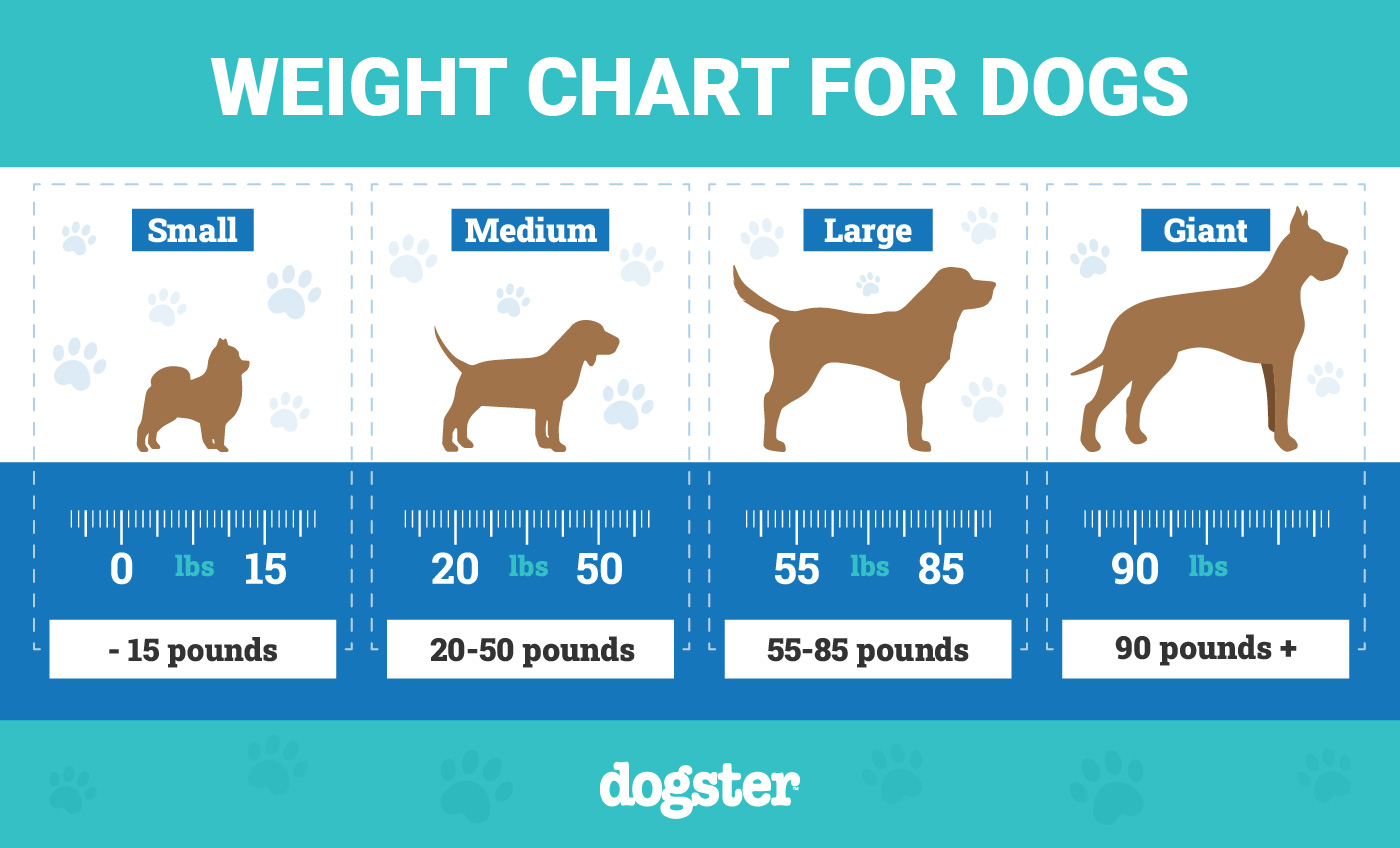
Many factors influence how much you should feed your dog. They include evident things, such as the animal’s size and age. However, it also involves elements specific to the pet, like weight and overall health. Some medical conditions can affect your dog’s weight and, thus, how much you should offer your pooch.
Your dog’s reproductive status also plays a role. Spayed and neutered pets are more susceptible to weight gain than intact animals. Spaying and neutering prevents unwanted pregnancies and has health benefits, but the best timing of the procedure will depend on your dog’s size and breed. There is some evidence that shows that early neutering and spaying of large and giant breed dogs can lead to joint problems in the future.
You must also consider other factors unique to your pooch, like the animal’s genetics, current diet, activity level, and breed. For example, English Springer Spaniels, Beagles, and Pugs are more prone to weight gain than other breeds. Looming over everything is the question of treats and table scraps. We don’t recommend giving your dog the latter. The former shouldn’t make up more than 10% of their diet.

How Much to Feed Your Dog (Feeding Chart)
A pet’s resting energy requirement (RER) represents a dog’s energy requirement while at rest in a controlled temperature. A simple way to calculate this figure is 30 x (your pup’s body weight in kilograms) + 70. This is the minimum amount of calories needed just to perform bodily functions and doesn’t account for any kind of activity or their age etc.
The chart below is the average daily calorie range for a healthy, adult dog and is for guidance only. We strongly advise you to discuss your individual dog’s diet with a vet to ensure a healthy and safe nutritional plan. Some dogs will need higher or lower amounts of daily calories to maintain good health and body condition.
| Dog’s Weight (kg) | Dog’s Weight (lb) | Daily Calorie Range (kcal) |
| 5 | 11 | 280-351 |
| 10 | 22 | 470-590 |
| 20 | 44 | 790-993 |
| 30 | 66 | 1,080-1,346 |
| 40 | 88 | 1,340-1,670 |
Guidelines for Feeding Your Dog
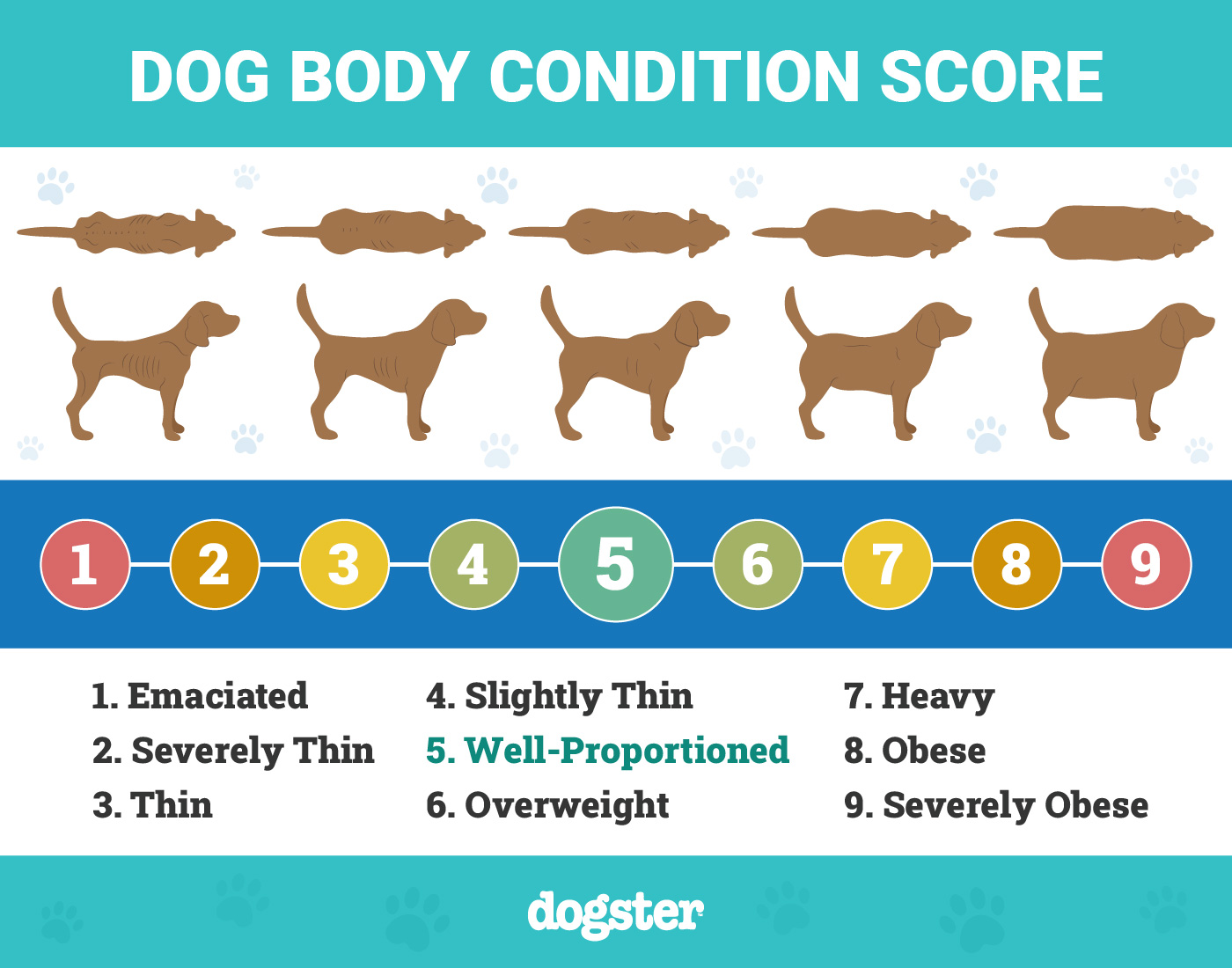
A veterinarian can help you with calculating feeding guidelines for your dog based on their lifestyle and body condition score. Your pet’s World Small Animal Veterinary Association (WSAVA) Body Condition Score can help by providing a visual assessment of your pup’s weight status with a score from 1–9, and 4 or 5 being an ideal body condition score The criteria include traits visible from looking at the animal’s profile and overhead.
The thickness of the pet’s coat may interfere with an accurate view. Palpating the dog’s side can provide a better gauge of your pup’s weight. A veterinarian can then recommend any necessary dietary changes. Remember that any treats you feed need to be taken into account and, of course, the guidelines will vary depending on the products you offer your pooch.
Signs of a Good Diet
The Association of American Feed Control Officials (AAFCO) nutritional profiles provide an accurate assessment of a complete and balanced diet for your pup. If it meets these standards, you will see this phrase on the dog food label. Manufacturers must provide a guaranteed analysis of the product and feeding instructions. Remember, though, that they are only guidelines.
The number of calories offered is the essential factor. Like people, it’s a simple matter of what the animal ingests and expends through activity. A scale tipping either way determines whether the animal gains or loses weight. An energetic pup will burn off more calories than a sedentary one. Some manufacturers make this distinction with their feeding instructions.
Royal Canin, for example, formulates breed-specific diets that some pet owners may find helpful if their dogs have special dietary needs. You should check with a vet if your pup has a medical condition or is on medications that may affect their caloric requirements.
You’ll find products labeled for various life stages. It’s a requirement of the AAFCO. However, you’ll also see diets marked “All life stages.” These items are appropriate for puppies, adults, and seniors. You’ll find others marketed for specific dietary needs, such as weight loss or sensitive stomach. A vet can recommend a diet formulated for your dog’s health needs.
If you need to speak with a vet but can't get to one, head over to PangoVet. It's our online service where you can talk to a vet online and get the personalized advice you need for your pet — all at an affordable price!
Balancing Nutrition and Calories
Manufacturers work with veterinary nutritionists to develop foods that meet canine energy and nutritional needs. The feeding guidelines reflect this information. Some are more nutrient-dense than others, meaning you can feed your pet less food. Thus, portion sizes aren’t across the board. You can verify this information by checking the calories per cup. Most manufacturers meet and often exceed the nutrient recommendations.
Beware of marketing terms like “human-grade.” This term isn’t legally defined and is simply used for advertising. It doesn’t necessarily denote a better or healthier product. Likewise, use caution with any food claiming to be grain-free. Some manufacturers swap out grains for other ingredients like legumes, which have raised red flags about a possible association with canine dilated cardiomyopathy (DCM).
We’ve seen many products labeled gluten-free. However, your pet is more likely to be intolerant or allergic to animal-based proteins than grains. We suggest discussing the matter with a vet if you have concerns about these diets. The investigation into a connection with DCM is ongoing.
The same caution about ingredients applies to byproducts and meals. These ingredients are not fillers but dense sources of animal-based proteins. They are sustainable choices, allowing manufacturers to use the whole animal while keeping prices affordable for consumers.
The exact amount of calories an individual animal needs to maintain a healthy weight is variable and influenced by many factors including genetics, age, breed, and activity level. This tool is meant to be used only as a guideline for healthy individuals and does not substitute veterinary advice
Tips for Feeding Your Pup
- Don’t free-feed your dog.
- Always measure your dog’s food.
- Create a feeding schedule for your dog.
- Feed several meals throughout the day.
- Pick up any uneaten food after 30 minutes.
- Reserve treats as training aids.
- Make a house rule forbidding table scraps or extra treats for your pooch.
- Always provide fresh, clean water.
- Check the calorie counts for treats and adjust your pup’s diet accordingly.

Closing Thoughts
A healthy diet is the foundation of a good quality of life for your dog. However, it must satisfy your pet’s nutritional needs without putting them at risk for obesity. This condition can increase your pup’s chances of other medical issues, including heart disease and diabetes. Our guide is just that: a suggestion about how much to feed your dog. Ultimately, it’s a decision for you and your vet.
See also:
- Is Dry Dog Food Bad for Dogs? Vet-Reviewed Pros & Cons
- Clean Eating for Dogs: Our Vet Discusses What it Is & Important Considerations
Featured Image Credit: AnnaStills, Shutterstock