Mexican Hairless Dog (Xoloitzcuintli) Breed Guide: Info, Pictures, Care & More

In this article
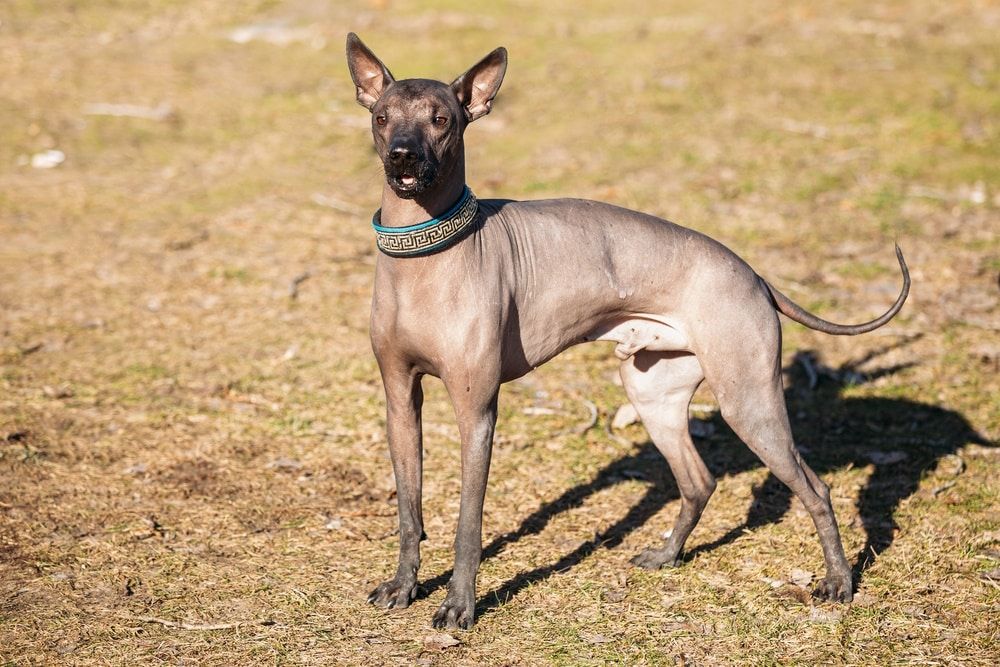
The Xoloitzcuintli (show-low-eetz-queen-tlee), also called the Xolo or Mexican Hairless Dog, is an ancient Mesoamerican dog breed with roots from the centuries before Columbus came to the Americas. The name Xoloitzcuintli comes from the Nahuatl language, meaning “dog of the god Xolotl.” Although Xoloitzcuintli dogs used to be incredibly rare, they have become more common in recent years and are often used as a symbol of Mexico and the Mexican people.
Breed Overview
Height:
Weight:
Lifespan:
Colors:
Suitable for:
Temperament:
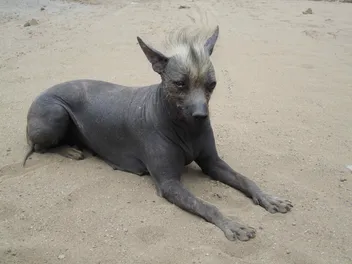
Xoloitzcuintli dogs are famous for being naturally hairless, but there are also variants with “powder puff” coats. The Xoloitzcuintli is an affectionate, sensitive dog who will become incredibly loving and attached to their owner. They can develop strong bonds with their family and become anxious when left alone. Because of that, they're more suitable for experienced owners who spend most of their time at home.
Xoloitzcuintli dogs are usually medium-sized, but there are also teacup and toy variations of the breed that are much smaller.
Mexican Hairless Dog Characteristics

Xoloitzcuintli Puppies

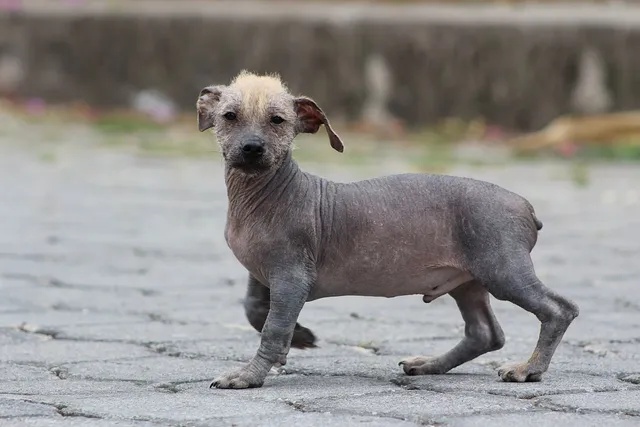
These puppies are bundles of wrinkles (if they’re hairless). They vary in size, and the difference may be very small initially, but it becomes more noticeable as they get bigger.
Mexican Hairless puppies will have soft, smooth skin, while coated puppies will have a short, fine coat. They can come in almost every color, but skin only shows a few different colors well. Therefore, hairless dogs may appear to come in fewer colors.
Like most puppies, Xolos tend to be very playful and curious. They are extremely active and benefit from plenty of socialization starting at a young age. Their natural aloofness needs to be mitigated to prevent it from turning into aggression later.
Finding one of these dogs can be a challenge. You aren’t going to find one at your local animal shelter, so looking for a nearby breeder is required. However, breeders tend to be few and far between. The Xoloitzcuintli Club of America is your best resource for finding a quality breeder.

Temperament & Intelligence of the Xoloitzcuintli 🧠
Mexican Hairless dogs form strong bonds with their families. They love to be around people but are not as cuddly as you might imagine. Playtime with their people is their favorite thing, but their active nature prevents them from sitting around too long.
Xolos are quick learners and typically respond well to positive reinforcement training. Training them is often a breeze because they’re very good at problem-solving and learning new cues. They do need some mental stimulation daily, so keeping up with regular training sessions is important to keep them entertained.
Like many older breeds, Xolos are naturally self-assured. They can be aloof with strangers, unlike many of the overly friendly breeds that are popular today. However, you need to socialize them, or they may become aggressive. Luckily, they are pretty smart dogs, so figuring out who is a friend and foe is pretty straightforward. These dogs also have a natural watchdog tendency. They can be pretty noisy as they alert their owners to anything unusual outside.
Xolos are pretty independent thinkers, and they have slightly above-average intelligence. They often excel at obedience due to their eagerness to please, but they aren’t going to pick up commands as fast as a Border Collie.
Are These Dogs Good for Families? 👪
Xoloitzcuintlis are generally good for families. However, it does depend on your lifestyle and preferences. They often form strong bonds with their families and can be playful companions with children. They’re also intelligent and can easily learn basic commands.
They’re also lower maintenance, as they don’t need much grooming. Even the coated variety has such short hair that it doesn’t require much brushing—if any. Many people also like these dogs due to their strong watchdog instincts. If you want an alert dog, these dogs are a great option.
However, these dogs need tons of socialization from an early age. Otherwise, they can become shy around strangers. Sometimes, this may lead to defensive biting, especially if the dog feels like they’re cornered.
Finding a reputable breeder is also difficult, and these dogs tend to be more expensive due to their rarity.

Does This Breed Get Along With Other Pets? 🐶 😽
Xoloitzcuintli dogs usually get along well with other animals that are members of their household, regardless of species. They can become jealous of other pets if they feel they aren’t getting enough attention, but they rarely become aggressive toward animals that they know well, even smaller animals like cats.
However, some Xolos are anxious or aggressive toward strange dogs and other unfamiliar animals. They require training and socialization to teach them that dogs they see on walks and trips to the park aren't threats.

Things to Know When Owning a Mexican Hairless Dog
Food & Diet Requirements 🦴
Mexican Hairless dogs have the same dietary needs as any other dog. However, their uniqueness does mean that certain nutrients are particularly vital to include in their diet.
Like all dogs, they need plenty of high-quality protein to care for their muscles. They’re more active, so they tend to need a more calorie-dense food than some other breeds. Protein is particularly important.
Healthy omega-3s and omega-6s are essential, too. These healthy fats provide energy and may improve their skin health. Given that these dogs have more trouble with their skin than some other breeds, having these extra fats is highly recommended. Fish-based foods tend to be high in healthy fats, but many companies now add fish oil to all their foods for this purpose.
Xolos are prone to dental problems. You’ll probably want to feed them dry food, as it’s shown to lead to improved dental health.1 The hairless variety of this breed tends to go through more calories, especially in colder areas. You may need to increase their caloric intake during the colder months, as they will spend more energy keeping themselves warm than coated dogs.
Exercise 🐕
Xolos are pretty active, as we’ve discussed. They need daily walks and plenty of playtime each day. We wouldn’t recommend these dogs for more laidback families for this reason.
In most cases, you should aim for two walks a day. A mix of leisurely and brisk walking is recommended, depending on your dog’s activity level. Letting your dog sniff provides mental stimulation, but brisk walks are required to meet their exercise needs. You should also set aside time to play with your dog each day. Games like fetch, hide-and-seek, and tug-of-war can help keep them fit while strengthening your bond. Remember, these dogs are fairly people-oriented and love to do activities with their owners.
Hairless Xolos don’t do well in colder temperatures or excessive heat. Therefore, you must be more cautious about when and where you exercise them. If you live in a more extreme climate, you must look at a different breed or get creative with playtime. Always use sunscreen when taking your hairless dog outside, even in the wintertime.

Training 🎾
Mexican Hairless dogs are pretty smart. However, their obedience level seems to vary quite a bit. Their intelligence doesn’t necessarily mean they’ll do what you tell them. They often pick up on cues easily, and their food-driven nature makes training with treats pretty straightforward.
However, they also have an independent mind, so they often like to make their own decisions. Just because they know what you’re telling them to do doesn’t mean that they’ll do it. Furthermore, these dogs are clever enough to use training systems to their advantage. For instance, if you’re training your Xolo not to bark, you may give them a treat whenever they stop barking.
You must be very consistent with these dogs. If they know you’ll let them on the couch when you’re tired, they’ll take advantage all day. Everyone needs to be on the same page, as they’re smart enough to determine what certain family members will let them get away with.
Grooming ✂️
Hairless Xolos don’t require much grooming. After all, they have no fur! They also don’t need frequent baths, as they can quickly try out their skin. You only need to bathe your dog if they become particularly sweaty or dingy smelling. In hotter climates, they may need a bath once a month. In colder climates, it may only be every three or so months.
When you do bathe them, use a very gentle, pH-balanced shampoo. It should be specifically formulated for sensitive skin, as these dogs are often more sensitive. These dogs lose moisture more easily, so you must invest in moisturization. Use a gently hydrating lotion or oil to keep their skin soft and avoid irritation. You’ll need to pick up a product made for your dog, as their skin is different from ours. It’s often best to avoid fragrances, too.
Hairless Xolos are also prone to sunburns, especially when it is hotter. You’ll need to apply sunscreen anytime they’ll be outside for an extended period, just like you would for yourself. Plan to reapply sunscreen throughout the day, especially if your dog is exposed to water or very active.
Xolos are prone to dental issues, so regular brushing is needed. Plan on brushing their teeth at least every other day, though every day is best if you can manage it.
Regular nail trimming is also important. Otherwise, their nails can become painfully overgrown, potentially splitting and becoming infected. You can do this at home or have your local groomer do it.

Health and Conditions 🏥
Xolos are generally healthy as they develop naturally. Like other “natural” breeds, only the healthiest dogs survived and reproduced. Today, this has led to Mexican Hairless dogs being incredibly robust.
Still, they are prone to a few health conditions. Most of these are related directly to their physiology. For instance, they’re prone to a variety of skin issues because they are hairless. Their skin is exposed to more irritants throughout the day and is much less protected from the sun.
Xolos are also more prone to dental problems. Dental disease can be especially troublesome for dogs, as it can quickly lead to infections. These infections can enter the bloodstream and become deadly, so it isn’t just a matter of comfort!
These dogs can also be prone to orthopedic conditions, like hip dysplasia and patellar luxation. These conditions aren’t easily cured, though surgery can help lessen a dog’s symptoms. Instead, quality breeding is the best way to prevent them, as they are genetically linked. Luckily, these conditions aren’t nearly as common in Xolos as in other dog breeds.
Male vs. Female
There is practically no difference between the males and females of this breed. Some argue that there are temperament differences, but science doesn’t back these. In the larger, standard-sized Xolos, males may be slightly larger than females. However, this size difference isn’t usually very significant.
If not spayed, females are prone to hormonal cycles that may lead to personality differences. Males are less hormonal and may be a bit more “stable” for this reason. Males may exhibit more marking behavior if not neutered. They’re also more likely to wander off because they smell an in-heat female.
3 Little-Known Facts About the Mexican Hairless Dog
1. In Aztec and Mayan cultures, Xolos were considered spiritual guides.
Therefore, they were often buried with their owners as protectors in the afterlife realms. They were also featured in artwork of religious significance, suggesting they had a special place in society.
2. Because they don’t have fur, these dogs regulate their temperature via blood flow.
They rely on the blood flowing close to their skin to dissipate heat in warmer weather. Therefore, they’re often pretty comfortable in warmer climates. In cooler climates, they may need some help staying warm, though.
3. Xolos are very good at getting around fences.
Many Mexican Hairless dogs can burrow under fences in a flash, and some may even take to climbing fences. Surprisingly, they’re very hard to keep contained despite their smaller size.

Final Thoughts
Xolos are best known for being hairless, so they’re often called Mexican Hairless dogs. They come in several sizes, but the smallest is the most popular. They’re very active, little dogs with a surprising amount of agility. Their ability to climb fences is renowned!
These dogs are very people-oriented. They’re happiest with their owner, though they prefer playtime over cuddle time. They can become destructive and unhappy if left alone for too long, and they’re very prone to separation anxiety.
While these dogs are friendly towards family members, they can be aloof towards strangers. Plenty of socialization and training is recommended to ensure that they understand not everyone is an enemy.
See also:
American Hairless Terrier: Breed Info, Pictures, Facts, & Traits
Miniature Fox Terrier: Dog Breed Info, Pictures, Traits & Care
Featured Image Credit: George Trumpeter, Shutterstock
Expert dog care, straight to your inbox
News, insights, expert advice, and everything dog.

No spam — unsubscribe anytime.
By signing up, you agree to our Terms & Conditions and Privacy & Cookies Policy.
How useful was this post?
Click a star to rate. You can leave written feedback afterwards. (We read all feedback.)
Nicole has loved animals of all sizes her whole life so it's no wonder she has dedicated her career to helping them through what she loves best: learning, writing, and sharing knowledge with others. She’s the proud mom of two dogs, a cat, and a human. With a degree in Education and 15+ years of writing experience, Nicole wants to help pet parents and pets around the planet to live happy, safe, and healthy lives.