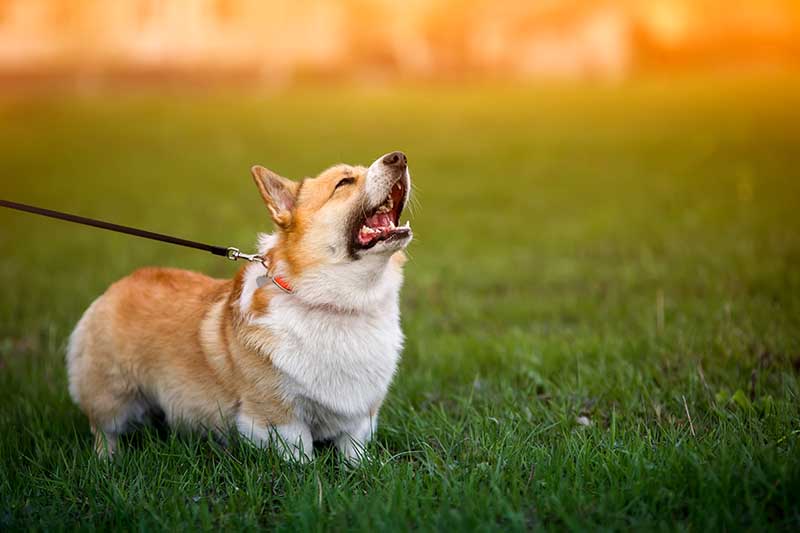
Why Does My Corgi Sploot So Much? Vet-Verified Facts & FAQ

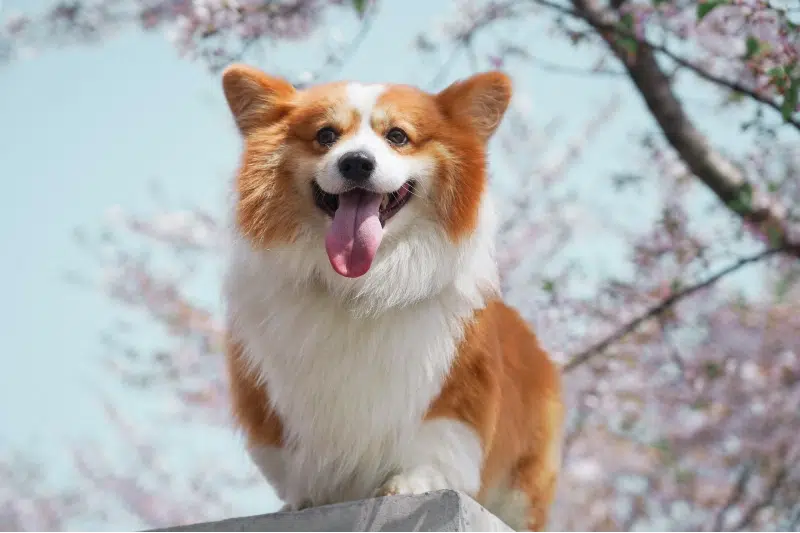
If you have a dog in your home, you’re familiar with their cute little mannerisms and personality traits. Every dog does something we think is adorable. This is especially true for Corgis. These little dogs are known for having a trademark wiggle when they walk and even splaying themselves out onto the floor in a position Corgi owners call a sploot.
This little way of lying on the ground is a move performed by most Corgis. But why do they sploot so much? Does it feel good, or is something wrong?
Luckily, for Corgi owners around the world, splooting isn’t a bad thing. It’s simply a position that many dogs find comfortable. But that isn’t all. Let’s take a deeper look at Corgis and their sploot. This will help Corgi owners, or those considering a Corgi as their best friend, to better understand this action and why these cuties love it so much.

A Bit About Corgis
While most people lump Corgis into one large group inside the Spitz family, there are actually two distinct Corgi breeds. The first is the Cardigan Welsh Corgi. This breed is the older of the two. It is believed that Cardigan Welsh Corgis were brought to Wales by the Celts during their migration.
They were used to drive herds, which they excelled at thanks to their short stature. Being so small made them able to move around the herds and avoid being kicked. Being brave, little dogs had them pulling extra shifts as both herd and family guardians. While in Wales for over 1,000 years, the Cardigan Welsh Corgi made its way to the United States in 1931 and was soon recognized by the American Kennel Club in 1935.
The other breed of Corgi is the Pembroke Welsh Corgi. Like their cousins, the Cardigans, these Corgis were used to control herds and protect livestock. Historical accounts suggest that ancestors of the Pembroke Welsh Corgi may have been brought to Wales by Flemish weavers around the 10th century, likely accompanying them with their herding dogs.
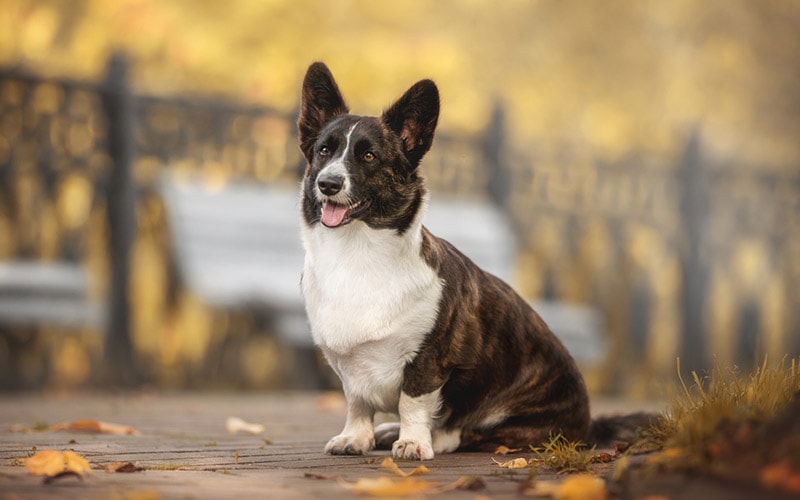
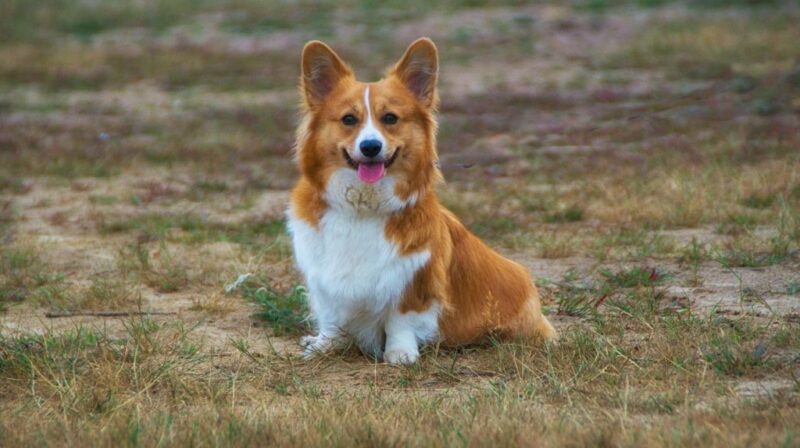
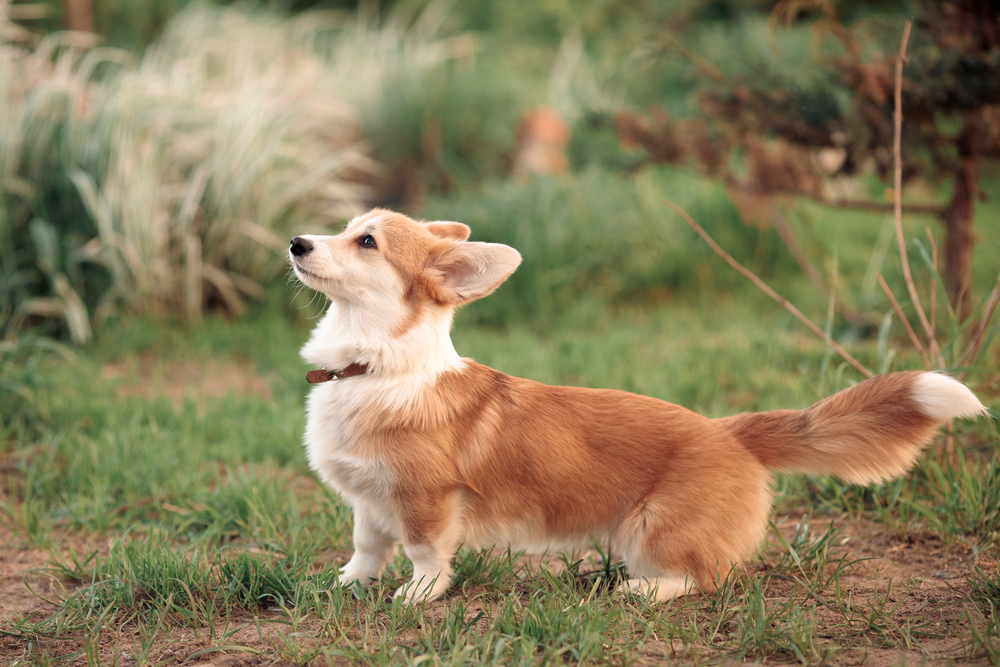
Both Corgi breeds are now beloved pets who have great personalities and do well with families and other pets. The most notable differences between the two Corgi breeds are their ears and tails. The Pembroke’s ears are more pointed, and their tails are typically shorter or docked, although some are naturally bobtailed. The Cardigan Welsh’s tail is longer, and its ears are more rounded.

What Is a Sploot?
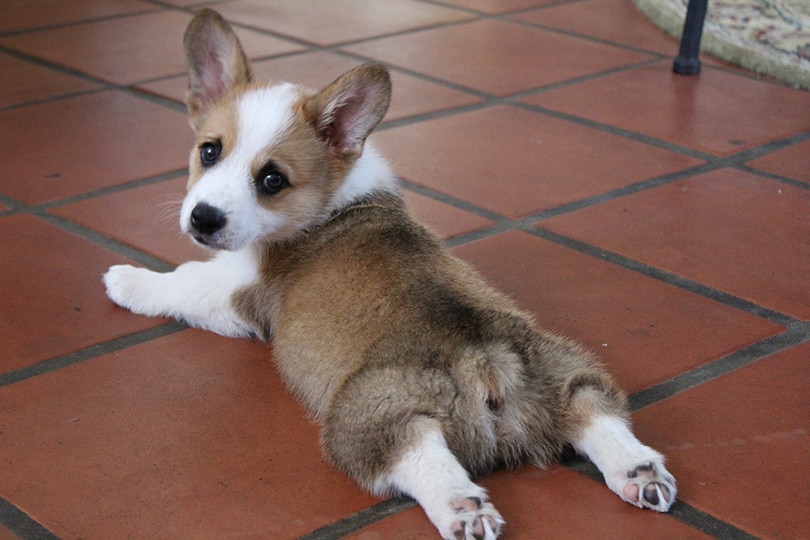
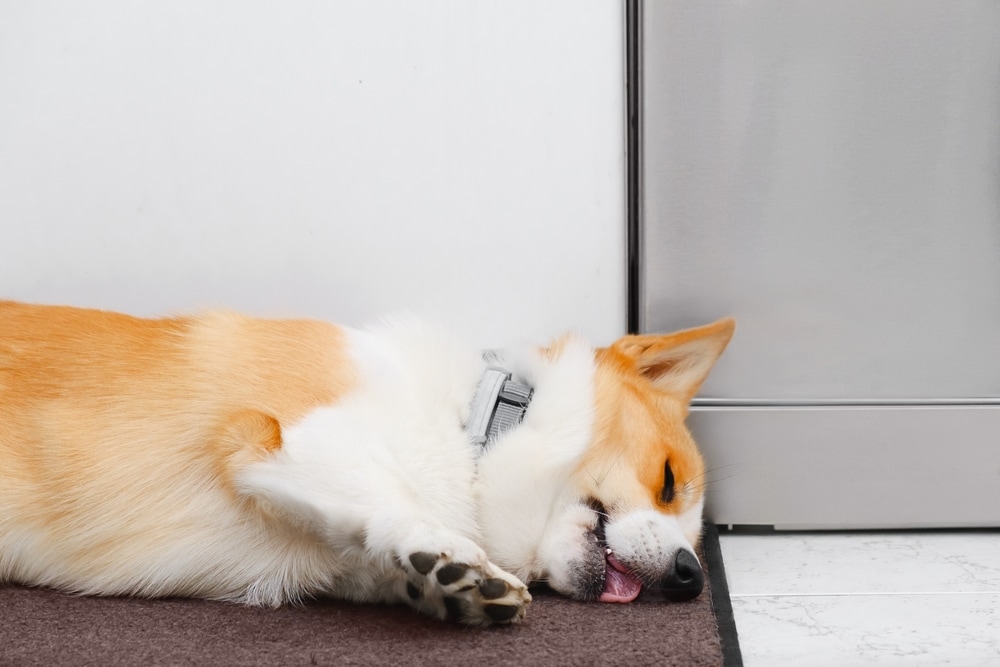
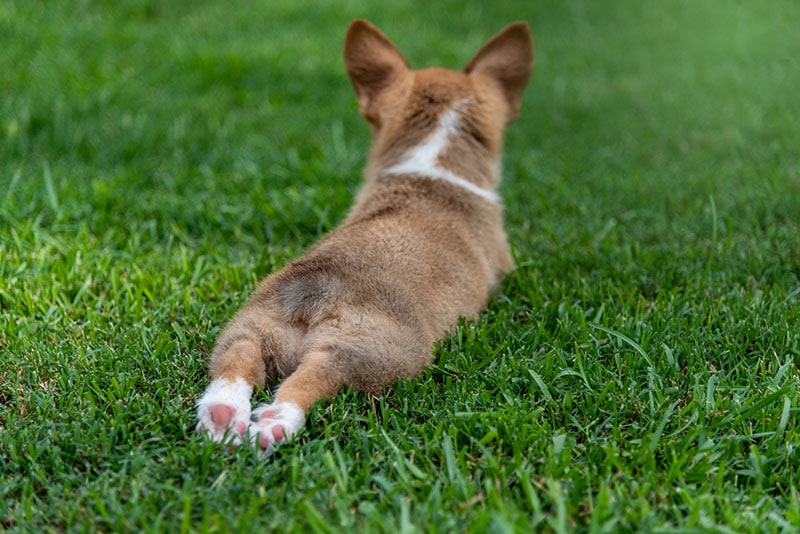
Now, for those who aren’t familiar with the Corgi sploot, it’s time to discuss this cute lying position. When a Corgi sploots, they lie on their stomach with their legs stretched out behind them. This can be done with both legs stretched out or even just one. You may even notice a sploot that resembles a frog where the Corgi’s legs and thighs splay to the side instead. Either way, when a Corgi displays the sploot, it’s adorable to see.
If you don’t use the word sploot in everyday conversation, you may be curious as to where the word comes from. Over the years, this word has become extremely popular, especially with Corgi owners. Some believe it’s a mix of splay and scoot.
Considering the position Corgis take when splooting, and the similarities between the words, this makes a lot of sense. Of course, others feel sploot may be a play on the word splat. No matter the origin of the word, splooting has become a popular term to describe this unique and endearing resting position.
Why Do Corgis Sploot So Much?
When it comes to Corgis and their sploot, there may not be one exact reason why these little dogs enjoy this position. Instead, it could be several and can depend on how your Corgi is feeling at the time.
Let’s take a look at each one so you can better understand the sploot and your Corgi.
Comfort
Corgis are known for being active dogs. They love to play and spend time with their family. After a big day of exercise and play, you shouldn’t be surprised to find your Corgi splooting on the floor. This is due to the position being comfortable for them.
It’s the same as when you stretch out in your favorite easy chair after a long day. Your Corgi sploots to relax and get comfy.
Body Structure and Breed Conformation
Corgis may sploot more often, partly because of their body structure. Both the Pembroke Welsh Corgi and the Cardigan Welsh Corgi have a long body with relatively short legs. This trait is linked to a genetic condition called chondrodystrophy, which affects how the bones in the limbs develop and results in the short-legged appearance seen in several dog breeds.
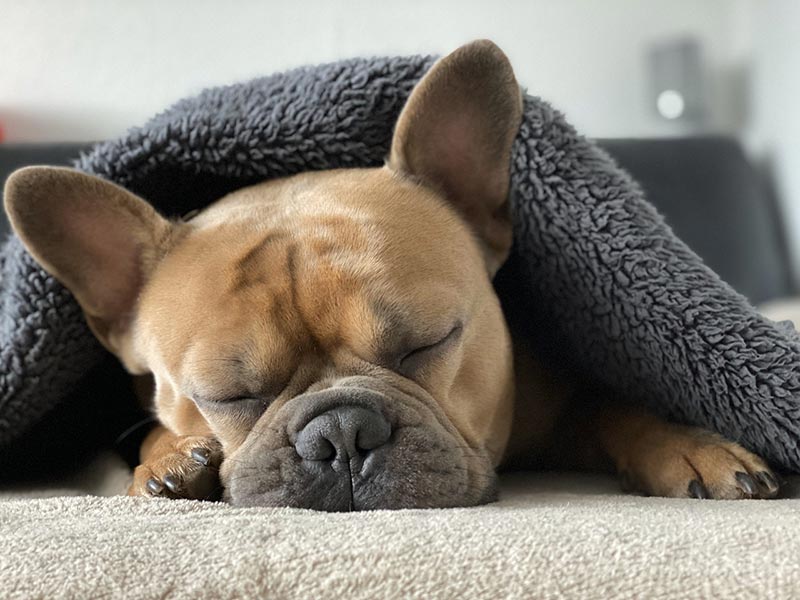
Because Corgis are built close to the ground, it is often easier for them to extend their hind legs straight behind their body when lying down. Their body proportions naturally allow their hips and back legs to rest flat against the floor in this position. While splooting is not unique to Corgis, their conformation can make the posture appear more frequently compared with some longer-legged breeds. Other breeds with similar body structures, such as Dachshunds, French Bulldogs, and Scottish Terriers, are also commonly seen resting in this position.
Flexibility and Joint Mobility
Flexibility also plays a role in why some dogs sploot more often than others. When a dog lies in this position, the hips are extended, and the hind legs are stretched behind the body. Dogs that have good joint mobility may find it easy and comfortable to rest this way.
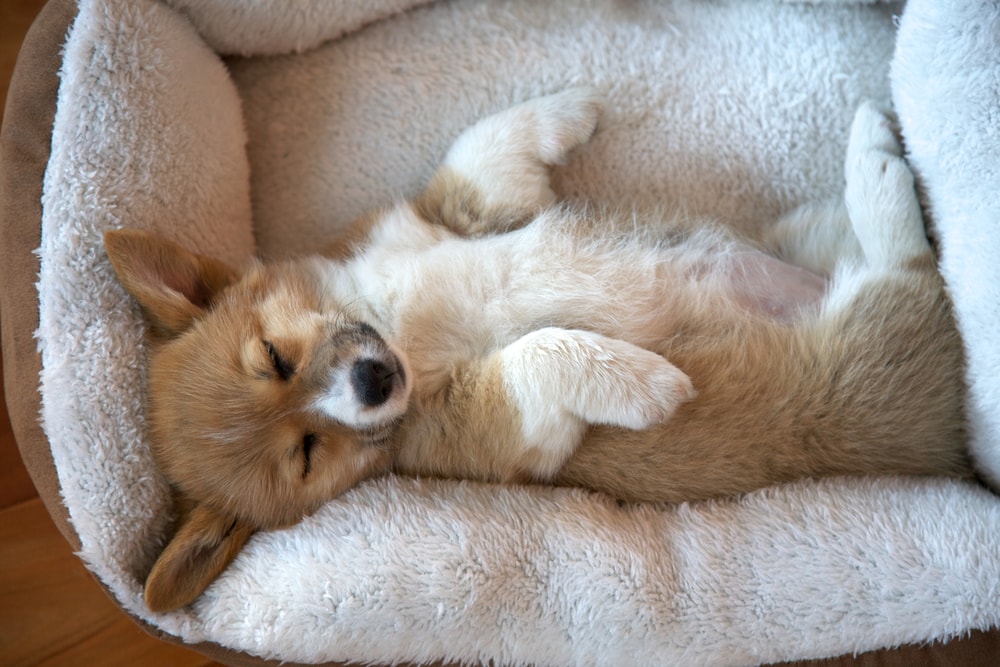
Younger dogs and puppies are especially likely to sploot because their joints and surrounding soft tissues tend to be more flexible. You may notice this posture in many young dogs across different breeds. As dogs age, they may use the position less frequently as joint flexibility gradually decreases.
In most cases, splooting is simply a relaxed resting posture. However, if a dog suddenly stops splooting or shows signs of stiffness, limping, or discomfort when moving, it is a good idea to consult your veterinarian to rule out potential joint or orthopedic concerns.

A Way to Cool Down
Like many breeds out there, Corgis have a double coat. Unfortunately, they don’t tolerate heat very well. This means your Corgi is going to get a bit hot when the weather outside is warmer. With dogs sweating mostly through their paw pads and relying primarily on panting to regulate body temperature, it only makes sense that they would seek out ways to help them cool down.
For Corgis and other dog breeds, splooting may be one way dogs increase contact with a cooler surface. By stretching their bodies out on cool surfaces such as tile or hardwood floors, your dog can cool down more quickly. While this helps your dog beat the heat, you should always keep a close eye on your pets for symptoms of dehydration when the weather outside turns hot.
Do All Corgis Sploot?
While splooting is something many Corgis do, not every Corgi will find this as appealing as others. Does this mean something is wrong with a Corgi that doesn’t sploot? No, it doesn’t. Corgis that aren’t fans of splooting may simply prefer to lie in other positions that they feel are comfortable to them.
While you may want your Corgi to sploot like others, considering so many people talk about how cute it is, don’t be concerned if your best pal isn’t a fan of splaying out on the floor.
Final Thoughts on Corgis and Splooting
People who have Corgis as pets often wonder why their Corgi sploots so much. Splooting is a comfortable resting position that may allow dogs to stretch their hind legs and increase contact with cooler surfaces. This adorable action is one of the most talked-about things these cute little dogs do.
If your Corgi sploots often, there’s no reason to worry. This is a normal resting position that Corgis, and many other dog breeds, enjoy using when they are ready to relax.
See also:
Featured Image Credit: CoastalForestPhoto, Shutterstock
Expert dog care, straight to your inbox
Vet-reviewed advice, training tips, and the best of Dogster. Free, and you can unsubscribe anytime.
By signing up, you agree to our Terms & Conditions and Privacy & Cookies Policy.
Melissa was born and raised in the mountains of East Tennessee where she spent her time writing in an old notebook and playing outside with her pets. As an avid animal lover, she has brought many into her home over the years. Currently, she is the mom of 5 fur babies. Her 2 cats, Princess and Pepper are total opposites who demand attention. Her dogs Jazzy, Whitey, and Demon are full of spunk and keep the entire family on their toes.
Beyond life as an animal mom, Melissa is a dedicated wife and mother to 2 children. Writing in her old notebook led her down the path of becoming not only a freelance writer but a published Indie author under the pen name, Rena Marin.
Join the conversation
Ask a question, share your story, or send private feedback.