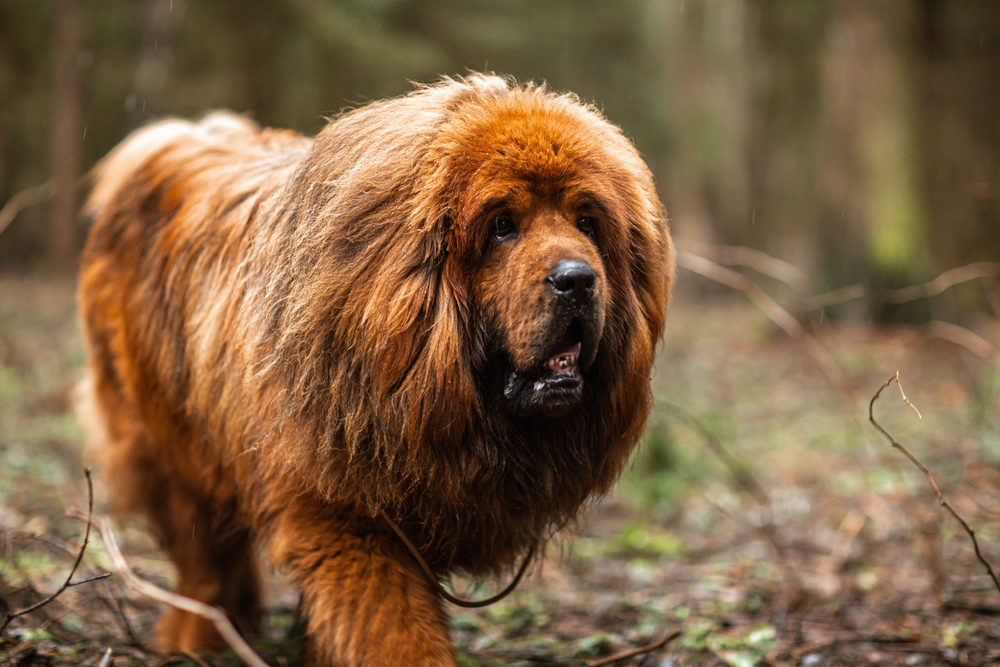
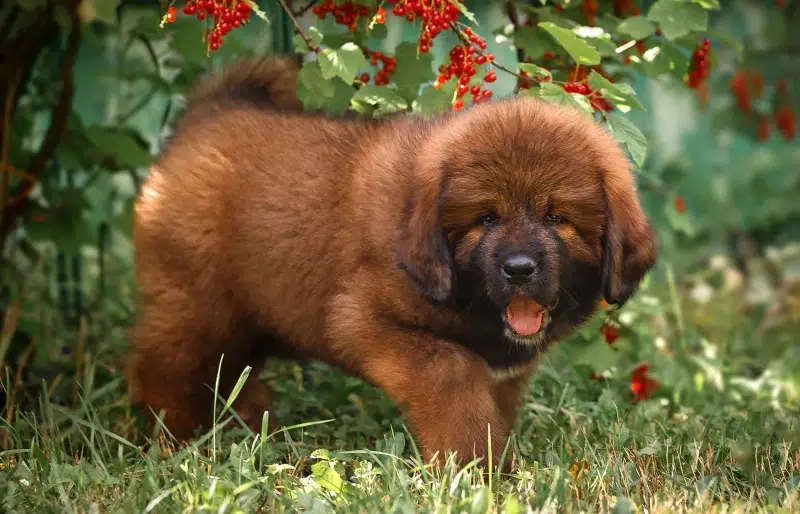
Though Tibetan Mastiffs are fairly rare in the United States, you’ve probably seen one or two in your time. These giant majestic dogs almost look like lions at first glance with their large floofy manes. But the Tibetan Mastiff is indeed a dog breed and one that has been around for hundreds, maybe even thousands, of years.
These dogs are quite fascinating, too, when you learn more about them and their history! In fact, here are ten surprising Tibetan Mastiff facts you might not have known. Keep reading to brush up on your Tibetan Mastiff knowledge!

The 10 Facts About Tibetan Mastiffs
1. One of the Oldest Dog Breeds Around
Believed to have originated in Tibet, the Tibetan Mastiff is one of the more ancient breeds in the world. In fact, Stone Age cave paintings in the Himalayas include illustrations of the Tibetan Mastiff! But despite having been around for thousands of years, not much is known about their history. We do know these canines guarded Tibetan monasteries and worked as herding dogs for livestock for many years, though.

2. A Status Symbol in China
The people of China are big fans of the Tibetan Mastiff. Legend has it that both Buddha and Genghis Khan owned this dog breed, and nowadays, Tibetan Mastiffs are a status symbol in the country. They’re quite exclusive dogs, which makes them highly prized by China’s millionaire class. People have spent exorbitant amounts to gain one of these pups!
3. Known as the “Heavenly Dog” in Tibet
The Tibetan Mastiff is loyal and protective, making it an excellent guard dog (hence why it was used to keep watch over Tibetan monasteries). And according to Tibetans, these dogs can do a lot. Tibetans say the Tibetan Mastiff can make leopards show their white features, guard 400 sheep, and take down three evil wolves; this is why they’ve given these pups the name of “Heavenly Dog”!

4. Believed to Hold Souls
Tibetans also believe that Tibetan Mastiffs hold the souls of nuns and monks who were unable to enter Shambhala or be reincarnated. Shambhala (“place of serenity”) is a mythical paradise that only those pure of heart or who have achieved enlightenment can enter. But not even all nuns and monks are able to go to Shambhala, and it is believed that the souls of those who weren’t quite virtuous enough for it are held by Tibetan Mastiffs.
5. Introduced to the Western World in 1847
Though this breed had been around for ages, it wasn’t introduced to the Western world until 1847. That’s when a Tibetan Mastiff was taken to England and first entered into the studbook of The Kennel Club. Edward VII, the Prince of Wales, later brought two more of these dogs to England in 1874. By 1931, the Tibetan Breeds Association had been formed, and the first official standards for the dogs were adopted.
6. Didn’t Show Up in America Until the 1950s
Despite its earlier introduction in England, it would be another hundred years before this breed made its way to the United States. While no one is sure of the exact year the breed appeared in America, the first official documentation of Tibetan Mastiffs in the States was in 1958, when the foreign minister of Nepal sent two of these dogs to President Eisenhower. The pups were a bit large for the White House, though, and it is rumored they were sent to a farm in the Midwest.
7. Only Recognized by the AKC in 2006
After its introduction to America, it would take nearly 50 years for the Tibetan Mastiff to be acknowledged by the American Kennel Club (AKC). Though the first Tibetan Mastiffs came to America in the 1950s, it wasn’t until the 1970s that they became a bit more common. Then, 20 years later, saw another boon for the Tibetan Mastiff in the States when breeders focused on improving the breed stock and type. Finally, in 2006, the AKC recognized the Tibetan Mastiff, placing it in the Working Group class of dogs.

8. Banned in Several Countries
Tibetan Mastiffs are known to be gentle with their families, so it might seem surprising that they are banned in several countries. But gentle as they can be with their people, these dogs are also guard dogs, so they can be distrustful of strange people and animals. Because of their large size, this protective, territorial nature can lead to issues (particularly if the dog’s owner is inexperienced in handling powerful dogs). So, you might find that Tibetan Mastiffs are banned in your area. A few places they are banned are France, Malaysia, the Bermuda Islands, and the Maldives.
9. The Most Expensive Dog
We mentioned earlier that the Tibetan Mastiff is a status symbol in China, and people are willing to pay millions for the dogs. And in 2011, Big Splash, a red mastiff, supposedly sold for 10 million yuan ($1.5 million)! This was the most expensive sale of a dog ever recorded, making this breed the most expensive dog in the world.

10. Most Active at Night
Another reason Tibetan Mastiffs make such excellent guard dogs is that they are the most active during the night. Their night owl tendencies may come from their years guarding Tibetan monasteries, as the dogs would automatically be more on guard when it was dark. However, despite this making them great watchdogs, it also means that when you’re going to sleep, these pups are truly waking up and becoming more alert so they can do their job guarding you. This could lead to lots of overnight barking and losing sleep on your end, so consider that before getting one of these pups.
Conclusion
And there you have 10 surprising facts about the Tibetan Mastiff! The Tibetan Mastiff is an incredibly old dog breed that used to watch over Tibetan monasteries and protect them (and livestock) from threats. They still make excellent watchdogs today, but the dogs are banned in several places because of their protective natures and large size. They also have a long and storied history, full of legend and mystery! Just be prepared if you decide to adopt one; gentle as they may be with their own people, these pups are still large, territorial, and powerful, so issues may arise if they aren’t properly trained.
Featured Image Credit: Kat_marinina, Shutterstock
 The 10 Facts About Tibetan Mastiffs