In this article
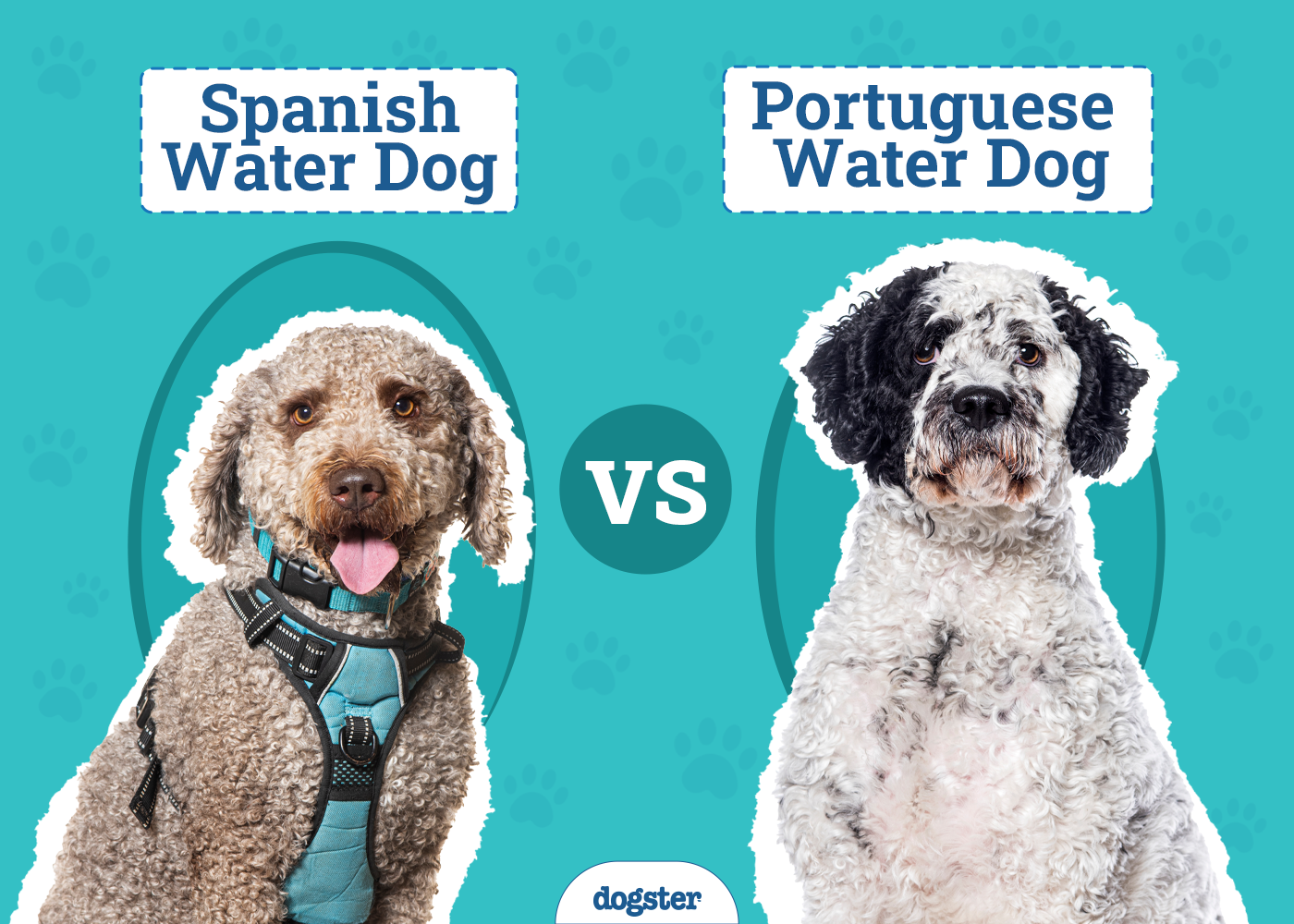
Choosing the perfect dog for your family can feel complicated. In this context, Spanish and Portuguese Water Dogs are often compared due to their striking similarities. Once you learn more about them, you’ll see that the two breeds are quite different.
These two have a rich history rooted in their mastery of aquatic activities and herding. Their wooly coats, webbed paws, and swimming abilities make them stand out.
While they have many similarities, there are several key differences to consider. That includes their physical attributes, grooming requirements, and temperaments. Understanding these distinctions is crucial to making an informed decision for your pet.
Let’s delve into the differences between the Spanish Water Dog and the Portuguese Water Dog. We’ll explore their appearances, grooming needs, trainability, and ideal living environments.

Visual Differences

At a Glance
- Average height (adult): 16 to 20 inches
- Average weight (adult): 31 to 39 pounds
- Lifespan: 12 to 14 years
- Exercise: 1 hour daily
- Grooming needs: Low maintenance
- Family-friendly: Yes
- Other pet-friendly: Yes
- Trainability: Easy
- Average height (adult): 20 to 23 inches
- Average weight (adult): 35 to 60 pounds
- Lifespan: 12 to 15 years
- Exercise: 40 minutes daily
- Grooming needs: Average maintenance
- Family-friendly: Yes
- Other pet-friendly: Yes
- Trainability: Easy

Spanish Water Dog Overview
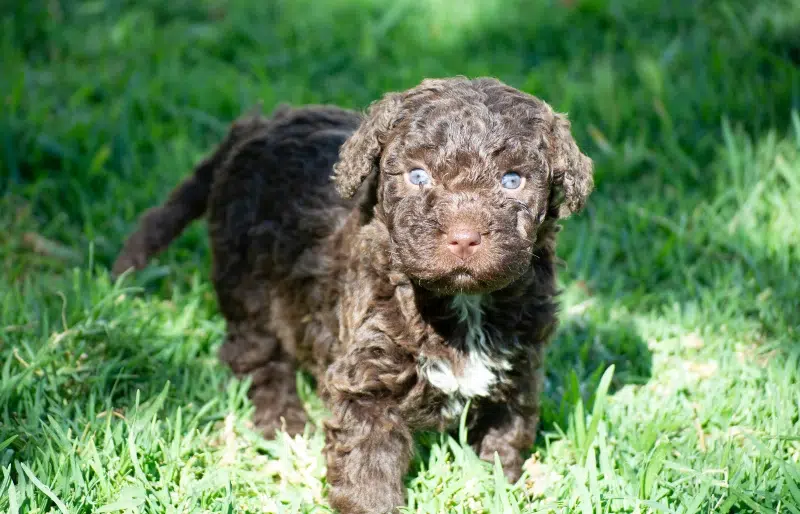
The Spanish Water Dog is also named the “Perro de Agua Español.” This ancient breed has a rich history that traces back centuries. Its exact origin is uncertain, but experts believe it came from the Iberian Peninsula.
It’s possible that the Moors brought over the breed while they occupied Spain. At first, these dogs worked as shepherds, guards, and fishermen’s helpers. Their swimming skills, intelligence, and endurance made them invaluable in such jobs.
Their distinctive wooly coat evolved to protect against the elements and provide insulation. It also helped navigate thick vegetation and brambles while herding.
Over time, the Spanish Water Dog became integral to Spanish culture and heritage. Today, they are beloved as family pets and recognized by international kennel clubs.
Personality / Character
The Spanish Water Dog has a history deeply intertwined with its working origins. Bred as working dogs, their traits suit the needs of Spanish farmers, shepherds, and fishermen.
With a natural affinity for water, these dogs are enthusiastic, agile, and determined. They’re also adaptable and versatile, capable of thriving in various environments. Their problem-solving skills help them herd livestock, guard properties, and retrieve objects from the water.
Due to their close bonds with humans, the breed has a long and rich history of working with farmers and fishermen. This resulted in their loyal, devoted, and protective nature. Spanish Water Dogs also serve as excellent watchdogs as they’re always alert.
Working with humans for centuries, they also became cooperative and easy to train. They’re always eager to please their owners, making them quick learners in obedience training. Positive reinforcement works best on Spanish Water Dogs.
Exercise
The Spanish Water Dog is an energetic and active breed. They need regular exercise to maintain their physical and mental well-being. As an owner, you must meet their daily activity needs to keep them happy and healthy.
Spanish Water Dogs thrive in an environment of physical exertion and mental stimulation. They have a strong herding instinct and enjoy activities that utilize their energy. Regular exercise helps prevent boredom and the development of undesirable behaviors.
Long walks, runs, hikes, or jogs can help meet their exercise requirements. These dogs also excel in agility, obedience, and rallying. Swimming is an ideal exercise option for this breed, as they have a natural affinity for water.
As an active breed, Spanish Water Dogs may not be suitable for sedentary or apartment living. Owners should aim to provide them with at least an hour of exercise daily. Mental stimulation, such as interactive toys and puzzle games, is also essential.
Health & Care
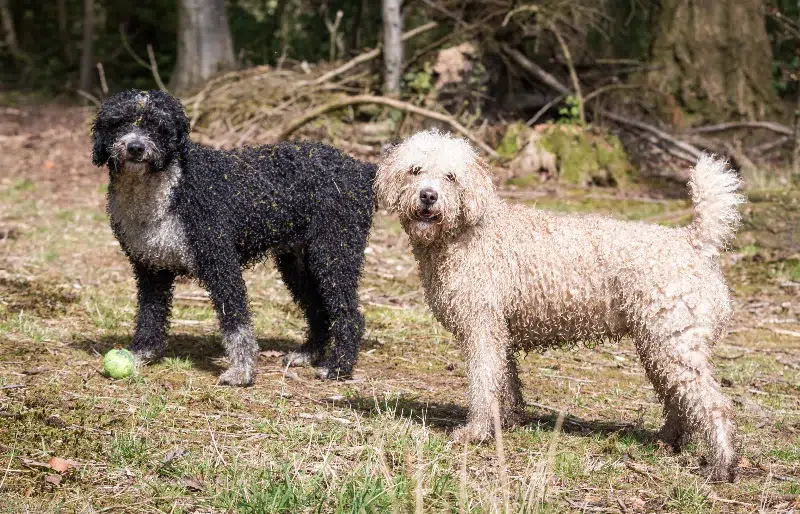
Regular check-ups are crucial to monitor the health of your Spanish Water Dog. Routine examinations, vaccinations, and preventive measures against common diseases should be followed.
Proper nutrition is also vital for their overall health. Feed your Spanish Water Dog a balanced diet that meets its nutritional needs. Consult a vet to determine the right portions and invest in high-quality dog food.
If you need to speak with a vet but can't get to one, head over to PangoVet. It's our online service where you can talk to a vet online and get the personalized advice you need for your pet — all at an affordable price!
Grooming is a vital aspect of caring for a Spanish Water Dog. Their curly and wooly coat requires regular brushing to prevent matting. Depending on their coat type, some may need professional grooming once a month. You must also check their ears for signs of infection and clean them as needed. Maintain dental hygiene by brushing their teeth and providing appropriate chew toys.
Exercise is key to keeping your Spanish Water Dog fit and mentally stimulated. If possible, provide daily exercise opportunities, including walks, runs, play sessions, and swimming. Mental stimulation can be achieved through interactive toys, puzzle games, and obedience training.
Breeding
Breeding Spanish Water Dogs requires careful consideration. Breeders must adhere to certain technicalities to promote the breed’s health and quality. There are some important factors to remember.
For example, both male and female Spanish Water Dogs should undergo comprehensive health tests before breeding. That includes screenings for hip dysplasia and progressive retinal atrophy (PRA). Breeding dogs should have favorable results to reduce the risk of genetic conditions.
Studying the pedigrees of potential breeding dogs is crucial to assess their lineage. It also helps identify any potential genetic concerns. Evaluating the ancestry helps understand the health and temperament of the dogs.
Overall, breeders should aim to maintain the breed standard while avoiding excessive inbreeding.

Suitable For:
Spanish Water Dogs are best for those who can provide the attention, exercise, and mental stimulation they need. In most cases, they thrive in the homes of active individuals and families. Spanish Water Dogs enjoy engaging in various physical activities. That includes hiking, running, swimming, and participating in dog sports.
Their energy and athleticism make them great pets for those with an active lifestyle. If you’re committed to providing regular exercise, a Spanish Water Dog may be best for you.
Spanish Water Dogs excel in the outdoors and are well-suited for those who spend a lot of time outside. Whether by the water, in the countryside, or on hikes, these dogs relish the chance to explore nature.
Portuguese Water Dog Overview
The Portuguese Water Dog is also named the “Cão de Água Português.” Their fascinating history is deeply rooted in Portugal’s coastal regions. This breed’s origins detail that they played a vital role in the region’s fishing industry.
Portuguese fishermen considered these dogs invaluable for their swimming and diving skills. They trained the breed to herd fish into nets, retrieve lost gear, and deliver messages between boats. Their webbed feet and muscular build aided them in these jobs.
Over time, fishing technology left no need for working Portuguese Water Dogs. But they are still adored for their intelligence and loyal nature. Their origin as hardworking, water-loving dogs remains an important part of their legacy.

Personality / Character
The Portuguese Water Dog has a unique and engaging personality due to its history as a working breed. Originating from the coastal regions of Portugal, these dogs are intelligent and athletic.
Portuguese Water Dogs were ideal companions to the region’s fishermen. They held a great love for swimming, diving, and retrieving. Their adventurous spirit was the main contribution to such fishing tasks.
Their history as reliable helpers fostered qualities still evident in their personalities today. That includes their problem-solving skills, trainability, and intelligence. They thrive in environments with challenging tasks and mental stimulation.
Besides their strong work ethic, Portuguese Water Dogs are also loving and loyal. They’re easily attached to humans due to their attentive, protective, and affectionate nature. This makes them not just great family pets but also adaptable therapy dogs.
The Portuguese Water Dog’s history as a working partner has shaped its character. Today, they are energetic, intelligent, and devoted companions.
Exercise
The Portuguese Water Dog is also an active and energetic breed. This working breed has a history of assisting fishermen. That’s why they have high exercise needs that you must meet for physical and mental health.
Portuguese Water Dogs excel in activities that exercise their natural abilities and energy. They have a love for water, making them excellent swimmers. Water activities can provide both physical exercise and mental stimulation for this breed.
Besides water activities, Portuguese Water Dogs benefit from daily walks, jogs, or runs. They have a moderate to high activity level and enjoy agility, obedience, and rally sports. These activities challenge their minds and help keep them fit.
As an intelligent breed, Portuguese Water Dogs need mental stimulation too. Interactive toys, puzzle games, and obedience training sessions can give them the mental challenges they need.
As a general guideline, at least 40 minutes of daily exercise is crucial for the Portuguese Water Dog. Fulfilling their exercise needs helps maintain their physical and mental well-being.
Health & Care
The health and well-being of a Portuguese Water Dog requires attention and care. Schedule routine check-ups with a trusted vet to monitor your pet’s health. Vaccinations, parasite prevention, and appropriate screenings can aid common breed-specific health conditions.
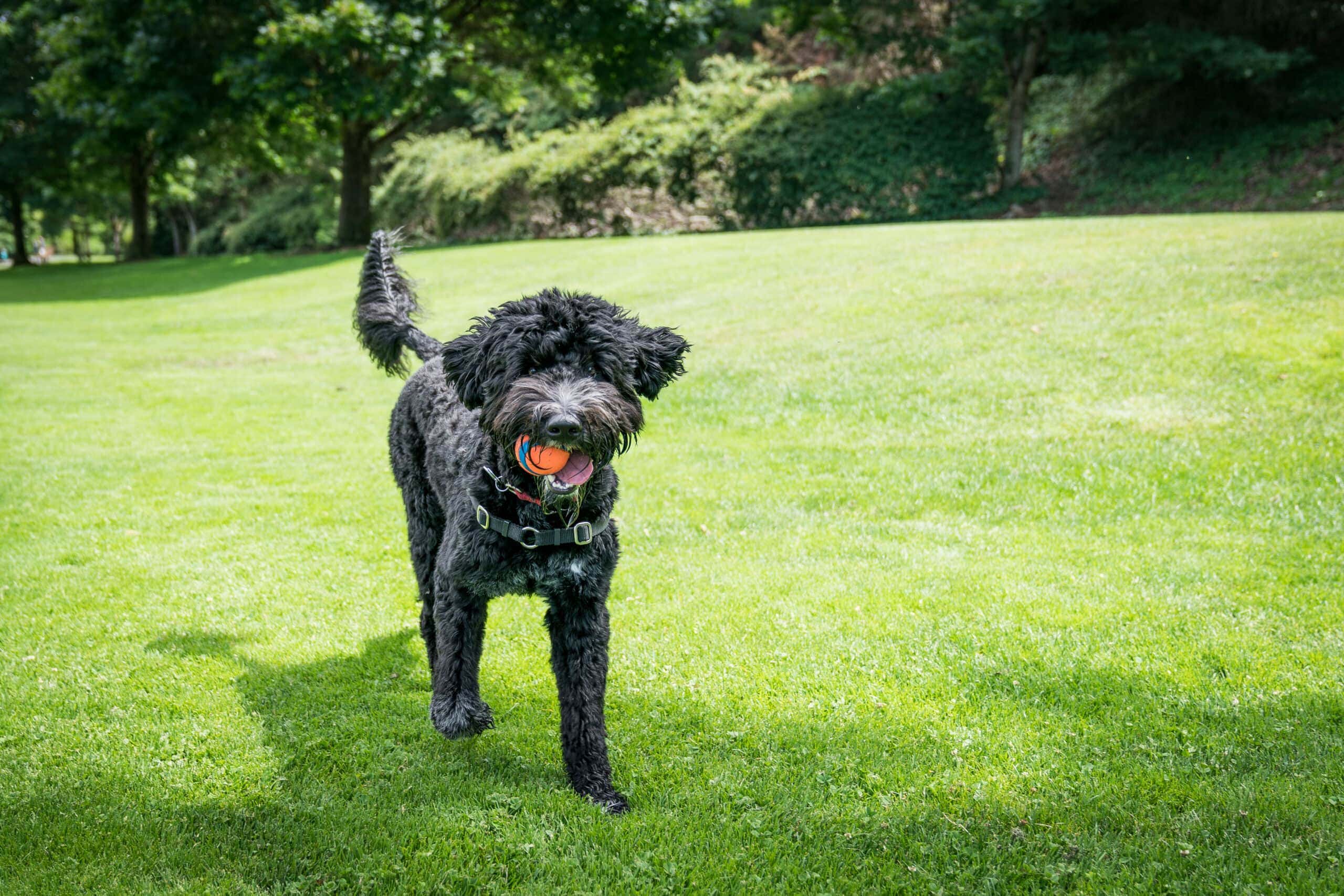
The Portuguese Water Dog has a unique curly coat that requires regular grooming. You must brush the coat at least once weekly to prevent matting and remove loose hair. Professional grooming may help maintain their coat’s health and appearance.
Take care of your dog’s teeth by brushing them and providing dental treats or toys. Your vet may also recommend regular dental cleanings to prevent tartar buildup.
Feed them a nutritionally balanced diet appropriate for their age and size. Lastly, create a safe environment for your Portuguese Water Dog by securing your yard. Provide fresh water, comfortable resting areas, and shelter from extreme weather conditions.
Breeding
Breeding Portuguese Water Dogs involves careful attention to various technicalities. For example, female Portuguese Water Dogs should be bred at an appropriate age. That’s after reaching physical and mental maturity, around two years old.
Breeding should be spaced to accommodate recovery and ensure the dog’s well-being. Breeding dogs should also be healthy and free from any reproductive issues.
Ethical breeders focus on the well-being and temperament of the dogs above all. They provide the puppies with a nurturing environment, nutrition, healthcare, and early socialization. They also aim to match pairs based on health, temperament, and working abilities.
It’s best to buy from reputable breed clubs or organizations with responsible breeding practices. Meanwhile, breeders should register the puppies with the right kennel club or registry. This ensures proper documentation and traceability.
If you’re looking to learn even more about the technicalities of breeding Portuguese Water Dogs, consult professionals in the industry.

Suitable For:
Spanish Water Dogs are intelligent and independent. That can make them a good match for experienced owners familiar with training dogs. Their intelligence can also make training a fun and rewarding experience for owners.
They are also versatile dogs with a strong work ethic. They excel in various activities, including obedience, agility, herding, and therapy work. This makes them best for those seeking a dog that can serve different purposes.
Overall, Spanish Water Dogs need regular grooming, mental stimulation, and socialization. They thrive when they are a part of the family with enough physical and mental exercise. Potential owners should prepare to invest time and effort into their care.
Which Breed Is Right for You?
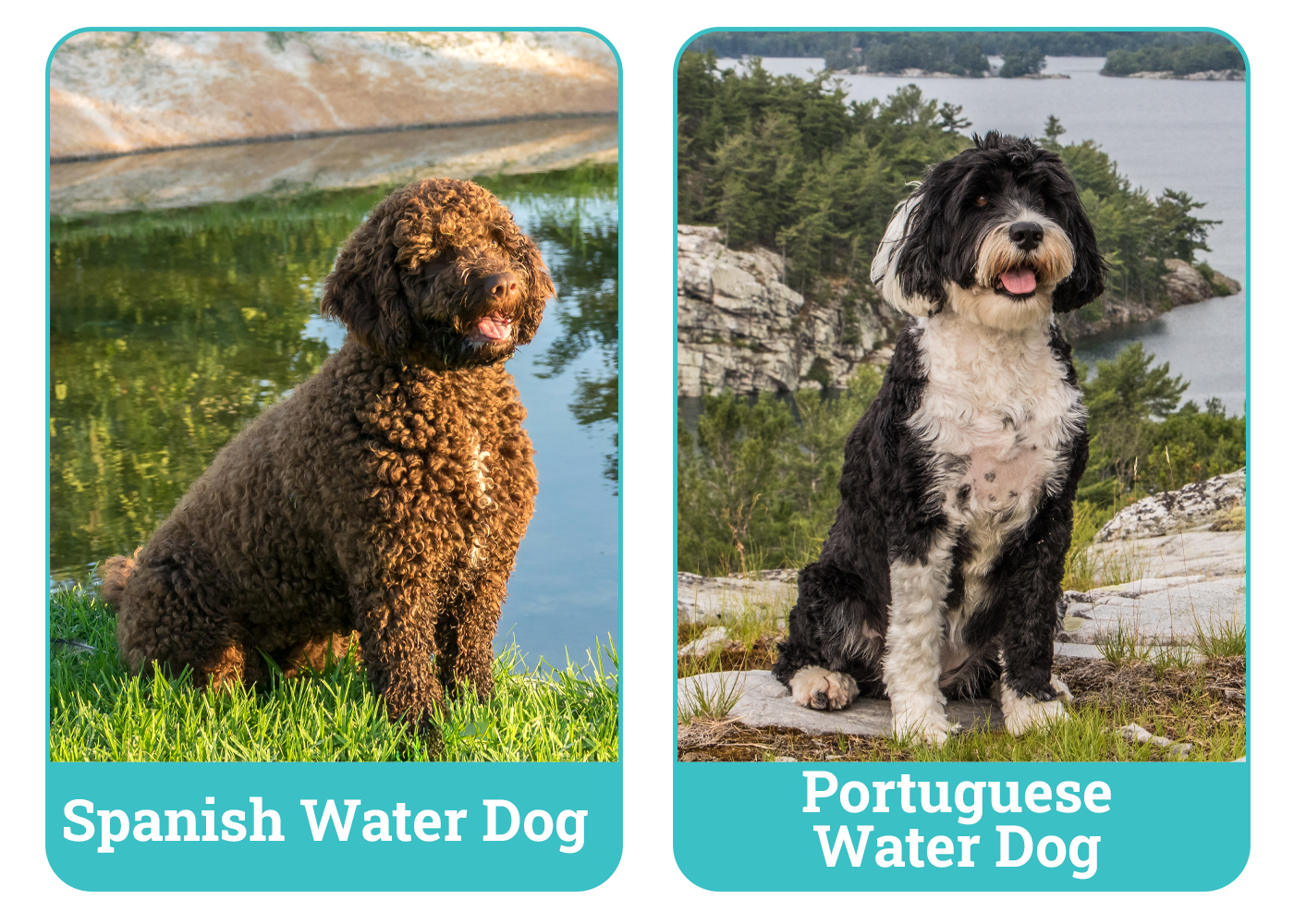
Choosing the right dog breed is a major decision. When deciding between a Spanish Water Dog and a Portuguese Water Dog, there are several key points to consider.
Both breeds can be a great fit if you are an active individual or have an active family. Both breeds excel in swimming, hiking, and participating in dog sports. However, if you have specific preferences or requirements, there are differences to consider. Those with allergies may appreciate the non-shedding coat of the Portuguese Water Dog. The Spanish Water Dog’s unique curly coat may appeal more to you if you want a distinct look.
Personality-wise, both breeds are intelligent, trainable, and loyal. The Spanish Water Dog is independent, while the Portuguese Water Dog is more eager to please. This can influence your training style and preference.
Ultimately, the decision should take into account your lifestyle, preferences, and ability to meet the dog’s needs. Consider factors such as their exercise requirements, grooming needs, and trainability.
See Also:
Featured Image Credit: Top – Daz Stock, Shutterstock | Bottom – Lisa Mounteer, Shutterstock