In this article
View 8 More +Every dog breed has unique personality traits that make them stand out from the rest. So when picking your canine companion, you must research and make the right choice. When that moment comes, many people choose popular dog breeds like Labradors or French Bulldogs, but we will introduce you to a less-known breed—the Saint Bermastiff, a Saint Bernard and English Mastiff mix. In this article, we’ll give you information about their origin, diet, and personality, which will help you decide if this dog is the right fit for you.
Breed Overview
Height:
22–30 inches
Weight:
150–200 pounds
Lifespan:
8–10 years
Colors:
White, black, brown, fawn
Suitable for:
Families with older children, single owners
Temperament:
Loyal, loving, affectionate, easygoing
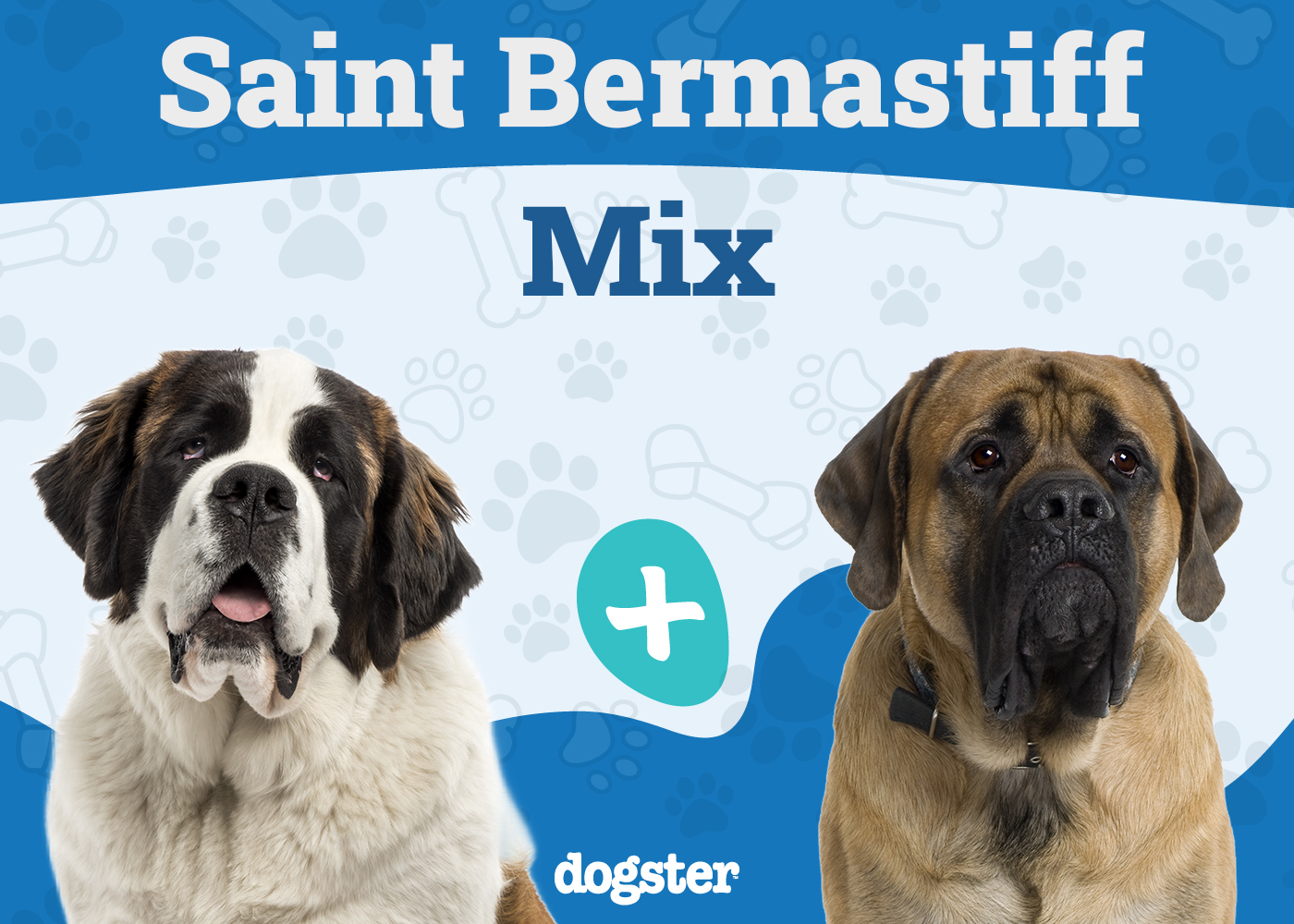
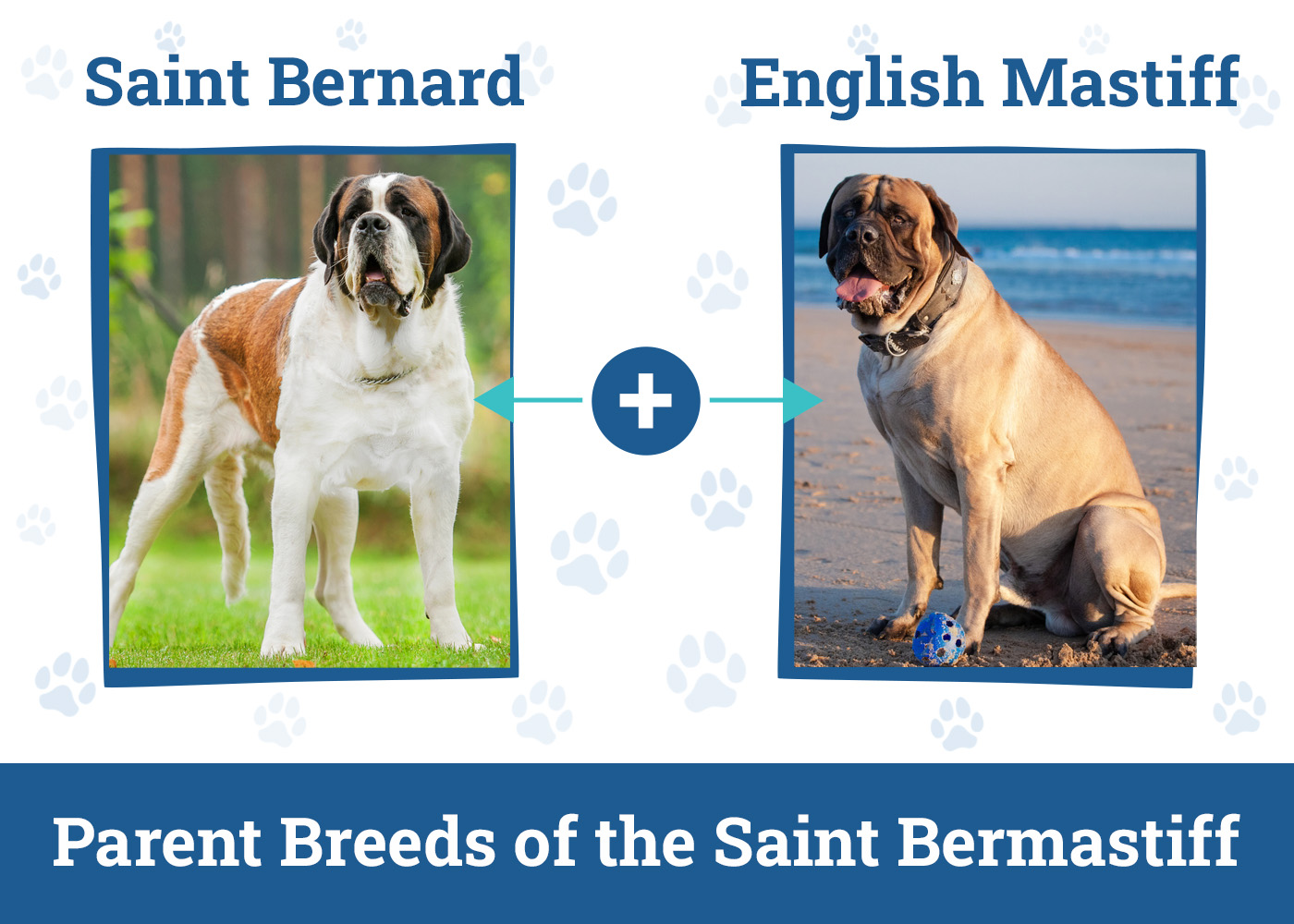
The Saint Bermastiff is a large but very affectionate breed made by crossing the Saint Bernard and English Mastiff. The St. Bernard is a working dog breed and is often used as a rescue dog, but they also make excellent guard dogs. English Mastiffs are large dogs that first appeared in Britain, and they actually fought beside British soldiers in many wars.
The Saint Bermastiff is a huge dog that may look scary on the outside, but you will be surprised at how gentle and affectionate it can be. They inherit their physical traits from both of the parent breeds almost equally. They usually have a medium-length coat and broad faces with large ears. Many people say that their face expresses kindness and understanding, which isn’t far from the truth.
Saint Bermastiff Characteristics
Saint Bermastiff Puppies
If you have already decided to buy one of these dogs, here are some things you need to know about getting one of these gentle giants. Because Saint Bermastiffs are a mixed breed, they are not easy to find, but the best ways to try are through a breeder or looking at different adoption centers. When looking for a puppy from a breeder, you should look for information about any possible illnesses, and also, the breeder will give you advice on how to take care of the puppy the best way. But if you want to rescue a puppy of this sort, you can research different adoption centers to see if any doggies are available.
Saint Bermastiff puppies are very social and lovable and quickly steal family members’ attention. You must bond with your puppy from an early age and train them to eliminate unwanted behavior. So if you love large dog breeds, with proper care, this dog will be a perfect match.

Temperament & Intelligence of the Saint Bermastiff 🧠
It is very tricky when talking about the traits of the hybrid breeds, but it is considered that the Saint Bermastiff is a mixture of the best qualities of both St. Bernard and English Mastiff. They are low-maintenance dogs that like to take long naps but are still very loyal, and because of their original breeding purpose, you won’t have to worry about someone breaking into your house!
Some people would call them lazy, but we disagree; they need plenty of rest to gain energy to move their massive size. But don’t let their easy-going personality fool you because they are also intelligent and can learn many tricks with the right methods.
Are These Dogs Good for Families?🏡
Both parent breeds that the Saint Bermastiff came from are known to be gentle giants, so they are an excellent fit for families. They are very affectionate with all family members, especially children. They can become very protective over their family; they inherited that characteristic from English Mastiffs.
Because of their size, we suggest you don’t leave your children alone with them; even though they wouldn’t hurt them on purpose, they can accidentally push or step on them. They are an excellent fit for families with older children and single owners because of their low maintenance, and they are not particularly needy dogs.
Does This Breed Get Along with Other Pets?
Considering this breed’s size, you might think they won’t get along with other dogs or animals. But that’s not true because if socialized from a very young age, they can get along with other dogs and pets in general. And if you already have a Saint Bermastiff and want to get a new dog or any animal, you should be careful because they already see your household as their territory. But if you introduce them slowly, there shouldn’t be any problems.

Things to Know When Owning a Saint Bermastiff:
Even though they are affectionate and loving with their families, remember that the English Mastiffs were used for guarding, and they can become territorial, so they need proper training and socialization from a young age. But if you’re considering getting one of these amazing dogs, you should consider the following:
Food & Diet Requirements
The diet of the Saint Bermastiff is no different than other dog breeds; they require a well-balanced diet every day. But due to the sheer size of this dog, they need a lot of food to satisfy them and should eat food that is high in protein and low in “fillers”. They will eat about 4–6 cups of food every day, depending on their size and activity levels.
Exercise
Your dog’s daily exercise depends on the traits inherited from English Mastiff and Saint Bernard. Some dogs don’t require a lot of activity and tend to sleep a lot during the day, so taking them for a brisk walk two times a day should be enough. But others may be more active and need more walking. Either way, you should keep your Saint Bermastiff in good form because they can gain weight quickly if inactive. You should also know that they don’t do great in hot weather, so try to avoid taking them outside when it’s very hot and always provide them with fresh water.
Training 🦮
Training your Saint Bermastiff from a young age is crucial for their well-being. But don’t worry because they are known to be speedy learners, probably because of their will to please their humans. They respond great to every training type, but exceptionally well to positive reinforcement training methods using treats or praise.
Grooming ✂️
Grooming of the Saint Bermastiff will highly depend on the coat texture they inherit from the parent breeds. If they inherit the coat of the St. Bernard, keeping it clean and healthy will be easy. Regular brushing should be enough to keep their coat looking fresh but will also remove all the loose hairs.
On the other hand, if they inherit the coat of the English Mastiff, you will have to give them baths more frequently. Regular bathing will help reduce any smell and keep the coat clean. Cleaning their ears and keeping them dry is also important because they have long ears that can quickly get infected and need veterinarian treatment.
Health and Conditions
Saint Bermastiffs are relatively healthy dogs, but they can sometimes inherit some health problems. So when buying your dog, always look for a reputable breeder with a line free from health issues. Here’s a list of possible conditions in these dogs:
- Dental disease
- Ear infections
- Allergies
- Gastric torsion
- Hip dysplasia
- Heart conditions
- Elbow dysplasia
- Wobblers syndrome
- Diabetes
- Hypothyroidism
Male vs. Female
Both sexes of the Saint Bermastiff have very similar characteristics; the exception would be their size. Males tend to get bigger, around 28,5 inches in height, and weigh up to 200 pounds. Females are smaller but still get up to 23 inches in height and weigh about 175 pounds.

3 Little-Known Facts About the Saint Bermastiff
1. They Have a Great Sense of Smell
These dogs are descendants of the Saint Bernard, which were used to track and rescue people—they can even smell people buried in a lot of snow after avalanches.
2. They Don’t Do Well in Hot Weather
They are giant dogs with extra fat stores and dense fur, and because of that, they are prone to overheating in extremely hot weather.
3. They Have Dark Eyes, Noses, and Lips
These dogs tend to have a square face with dark eyes, noses, and lips that make them look truly unique.

Final Thoughts
Saint Bermastiffs may be large dogs, but their affectionate and lovable personality makes them desirable dogs. They can easily fit with families with older children but also with single owners, and as long as they have a proper diet and daily walks, they will be happy. Remember that their diet requires a little more money than other breeds because of their large size.
Deciding on the perfect dog breed is challenging, but we hope we helped you learn a little bit more about this gorgeous breed.
See Also:
- Saint Bernewfie (St. Bernard Newfoundland Mix): Care, Pictures, Info & More
- St. Bernard Australian Shepherd Mix: Care, Pictures, Info, & More