In this article
The friendly and entertaining Miniature Schnauzer originated from Germany and is now one of America’s most popular small dogs. While Scottish Terriers aren’t as popular as they once were, the breed has a long history with many famous owners, including several U.S. presidents. Both breeds were initially bred to hunt rodents but are now primarily kept as pets. The two dogs are similar in many ways, with some key differences that impact the type of living situation they’re best suited for. In this article, we’ll compare the Miniature Schnauzer and the Scottish Terrier so you can see how they are different if you’re considering adding either breed to your family.

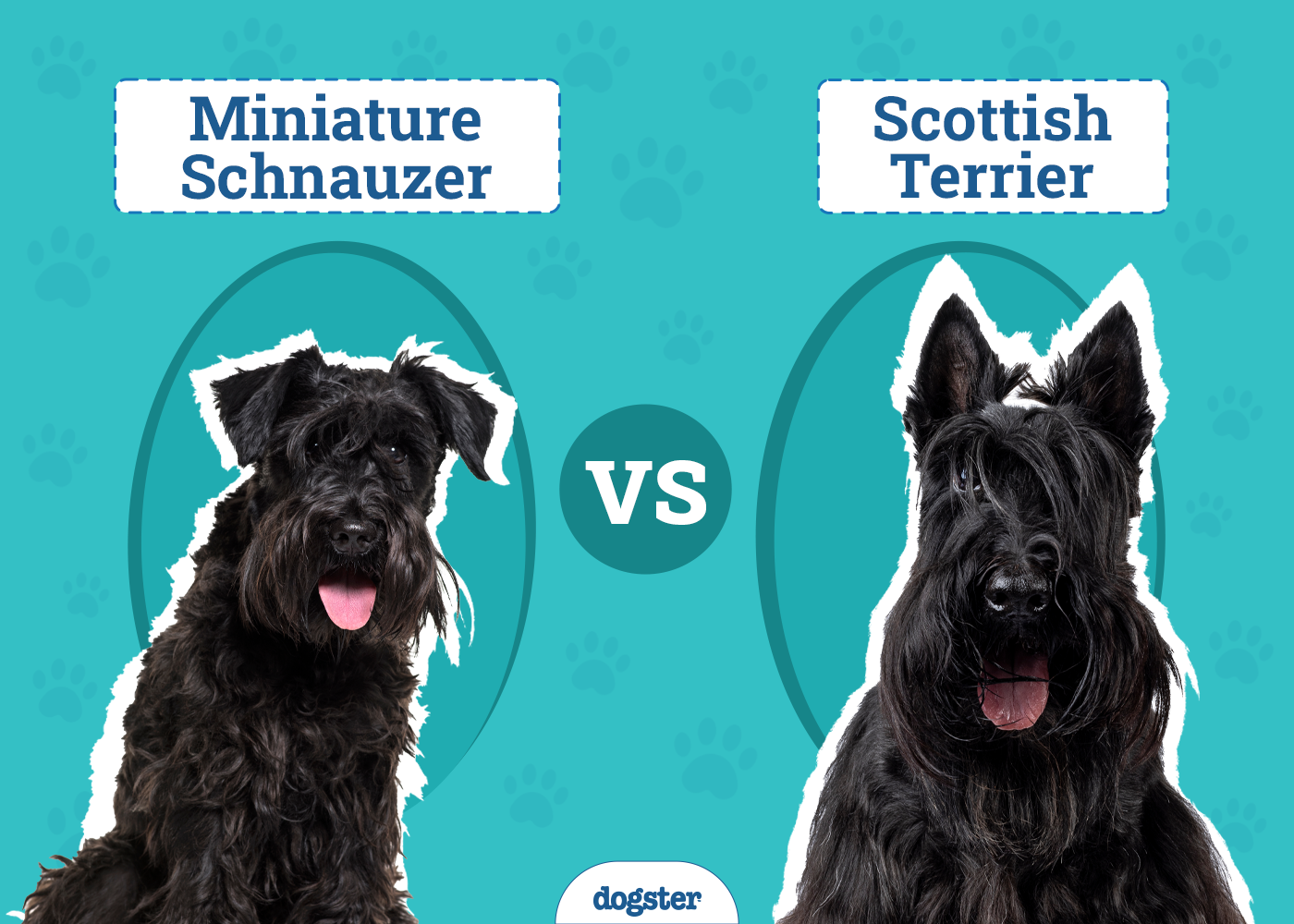
Miniature Schnauzer vs Scottish Terrier: Visual Differences
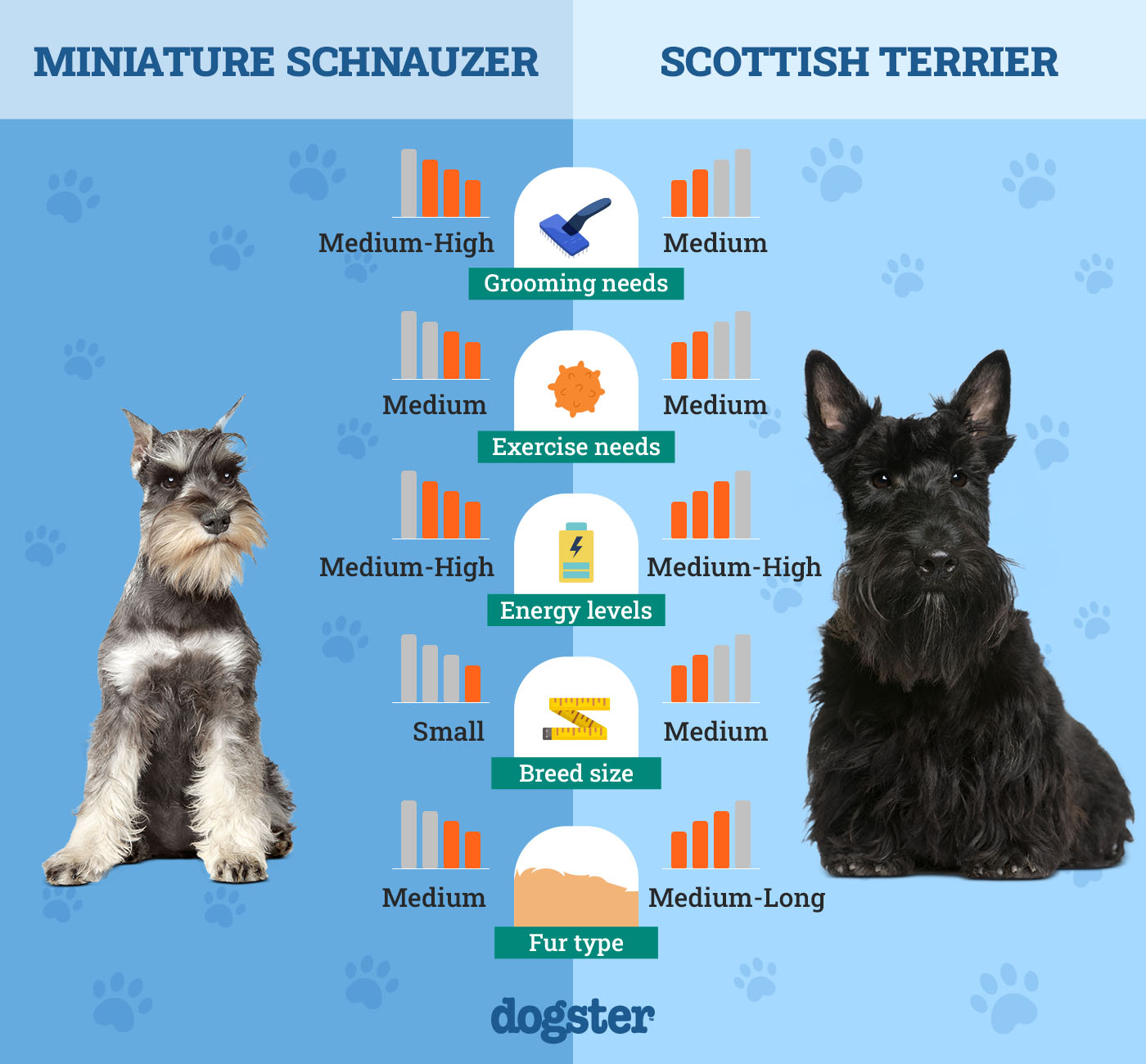
Miniature Schnauzer vs Scottish Terrier: At a Glance
- Average height (adult): 12–14 inches
- Average weight (adult): 11–20 pounds
- Lifespan: 12–15 years
- Exercise: 1+ hours a day
- Grooming needs: High
- Family-friendly: Yes
- Other pet-friendly: Often
- Trainability: Intelligent, active, eager to please
- Average height (adult): 10 inches
- Average weight (adult): 18–22 pounds
- Lifespan: 12 years
- Exercise: 45-60 minutes per day
- Grooming needs: High
- Family-friendly: Yes
- Other pet-friendly: Rarely
- Trainability: Smart, independent, stubborn

Miniature Schnauzer Overview

Personality/Character
Miniature Schnauzers are friendly, social, affectionate dogs that love their families. They are active, playful, and do very well with children. Miniature Schnauzers were bred to hunt rodents and have a strong work drive. They usually get along with other dogs but may chase cats and smaller pets. The Miniature Schnauzer makes a good watchdog, despite their size, and tends to bark a lot when they spot anything suspicious.
Training
Miniature Schnauzers are brilliant dogs that are eager to please their owners. Their smarts and strong work drive make them generally easy to train. Miniature Schnauzers enjoy mental challenges such as learning tricks or completing agility courses. It’s best to socialize your Miniature Schnauzer early and to help decrease their tendency to bark in unfamiliar situations. Positive reinforcement training is usually most effective for this loving breed.
Exercise
Miniature Schnauzers have a moderate energy level. They require about an hour of exercise daily, such as playing with other dogs or walking briskly. Ideally, you should play games that provide exercise and challenge their mind. Miniature Schnauzers need to stay busy, or they may develop bad habits, such as excessive barking or destructive behavior.
Health
Miniature Schnauzers are considered a healthy breed overall, with few genetic medical conditions. They are more prone to developing cataracts and pancreatitis. They can also suffer from high cholesterol, liver shunts, or blood flow issues. Miniature Schnauzers are also prone to developing bladder stones and a rare genetic disease called Mycobacterium avium complex. Before purchasing a Miniature Schnauzer puppy, ask if the parents have been tested for the condition.

Grooming
Miniature Schnauzers have somewhat complicated grooming needs compared to other breeds. They have double coats with a constantly growing outer layer. You can expect to have your dog clipped or trimmed by a groomer about every 8 weeks. Also, you’ll need to brush your dog weekly to prevent mats. Keep a close eye on the Miniature Schnauzer’s signature beard since it can become dirty and matted when the dog eats and drinks.
Suitable For
Miniature Schnauzers are suitable for a variety of families and living situations. They typically do well with kids and other pets when properly socialized. Although they are active dogs, they don’t necessarily need a yard if they get enough exercise in other ways. A suitable Miniature Schnauzer owner will provide daily attention, socialization, and training. They don’t enjoy being left alone and can act up if they feel neglected.
Scottish Terrier Overview

Personality/Character
The Scottish Terrier is an independent dog that was bred to hunt rodents and other pests. They love their families but take time to warm up to strangers. Because of that, they are excellent watchdogs that may bark a lot. They are self-confident and stubborn and typically don’t do well with other pets. They have a strong prey drive that poses a danger to cats and small animals. Like most Terriers, Scotties don’t usually play well with other dogs, especially those of the same sex. They can learn to get along with older children but may not be patient enough to tolerate younger ones.
Training
Stubborn, independent Scottish Terriers can be tough to train. They are intelligent but often don’t see the point of obeying commands. Short, positive training sessions work best, but you need extra patience and creativity to teach this breed. Scottish Terriers don’t necessarily feel the need to please their owners, so you’ll need to find another motivation for them.
Exercise
Scottish Terriers also have a moderate energy level. They need about 45–60 minutes of exercise a day. You can take them for a good walk or allow them to run in a safe, fenced area. Always keep a Scottish Terrier on a leash if you’re not in a fenced-in property. Their hunting instincts will lead them to chase other animals, and they’re unlikely to listen when you tell them to stop!
Health
Scottish Terriers are a relatively healthy breed. They can inherit luxating patella or loose kneecaps, and they’re prone to an inherited joint condition called Scottie Cramp which causes leg spasms. They can also suffer from a brain condition called cerebellar abiotrophy, which leads to balance issues over time. Scottish Terriers can also inherit a blood clotting disorder called Von Willebrand’s disease and a bone disease called craniomandibular osteopathy that results in mouth pain.
Grooming
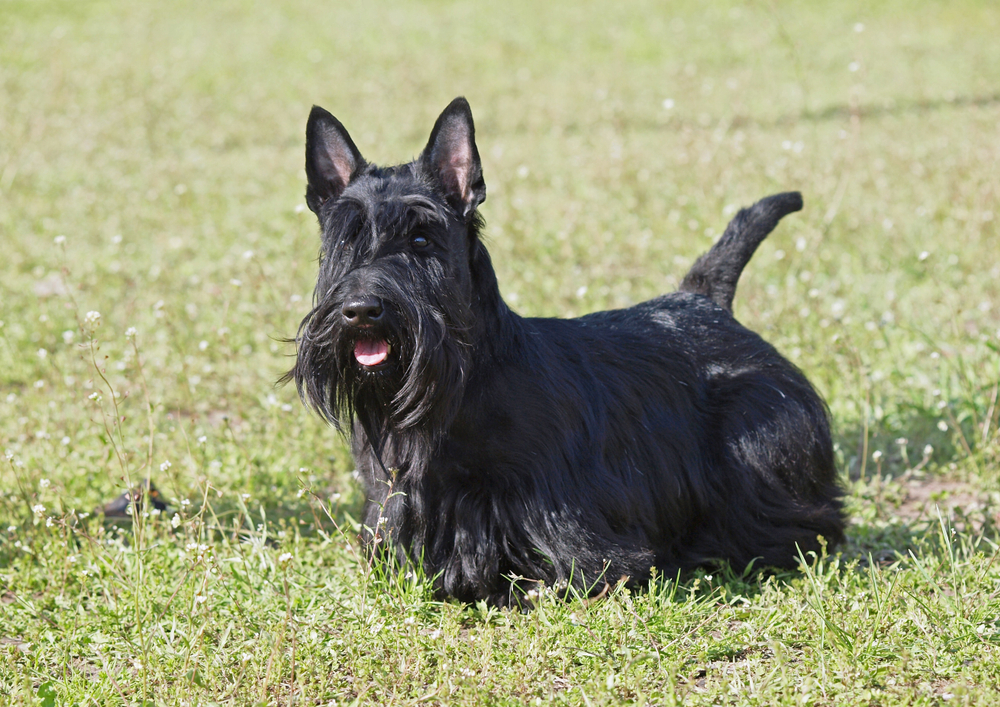
Scottish Terriers have a rough outercoat and a soft undercoat. To keep their coat long and natural, the outer layer must be hand stripped frequently. This is a time-consuming process, and not all professional groomers know how to do it. The other option is to clip their coat short. Generally, you’ll need to have a Scottie clipped every 6–8 weeks and brushed weekly if you keep the coat long.
Suitable For
Scottish Terriers are best for more experienced dog owners because of their strong-willed personalities and training challenges. They can live without a yard if they get enough exercise but may bark too much to be apartment dogs. Scotties should generally be the only pet in the house, and they are best for families with older children.
Which Breed Is Right for You?
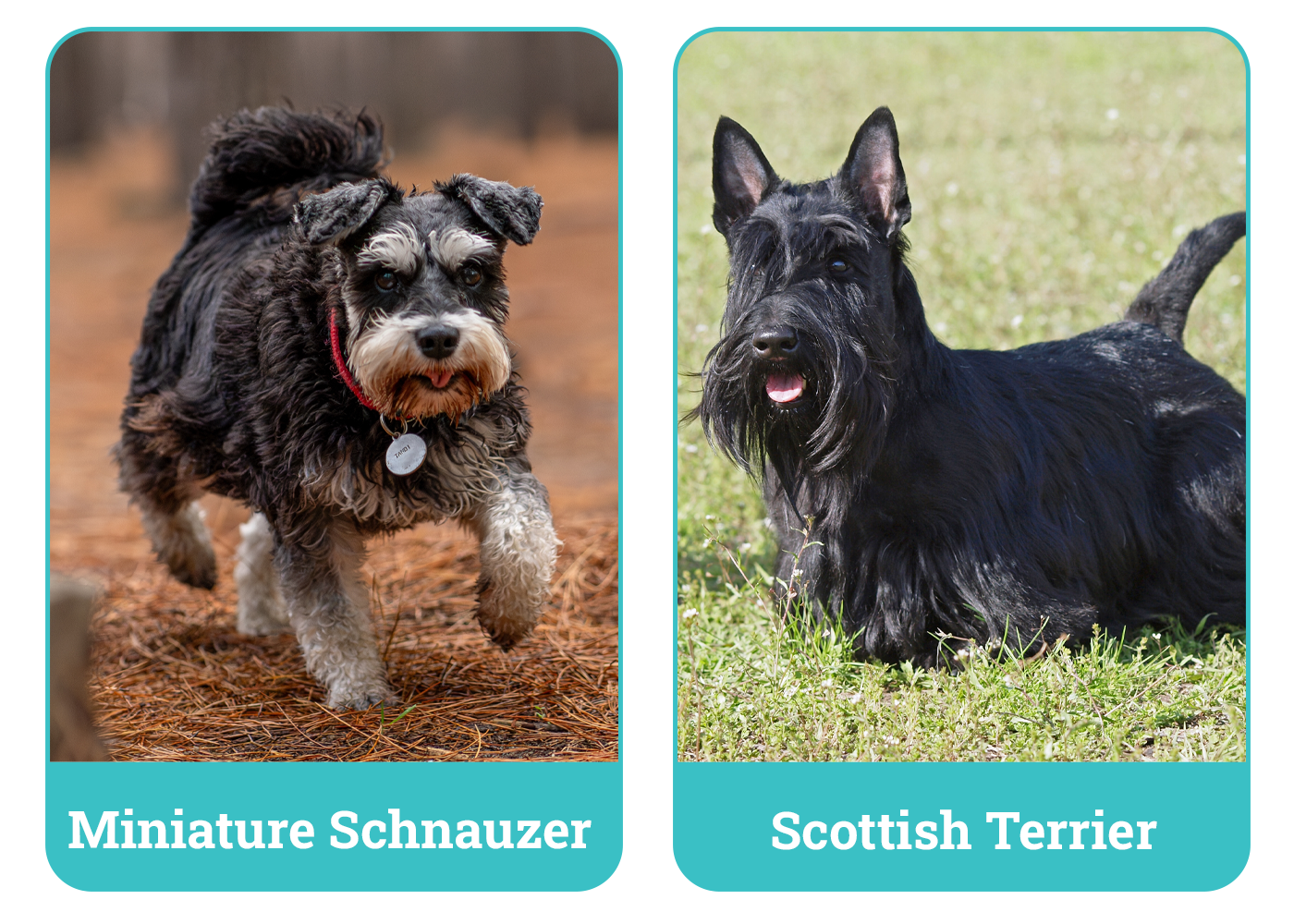
Scottish Terriers and Miniature Schnauzers are similar in size, activity level, and grooming needs. However, they have specific differences that can help you decide which breed is right for you. Miniature Schnauzers are easier to train, more social, and more easygoing than Scottish Terriers.
They are better with kids and other pets. The Scottish Terrier may not be the best choice if you have or plan to have more pets. They can be hard to train and have a much different attitude than a Miniature Schnauzer. If you don’t have much experience with dogs, the Scottish Terrier probably isn’t the best choice for your home.
- Related Read: Do Scottish Terriers Bark a Lot? Vet-Verified Breed Temperament & Tips to Stop this Behavior
Featured Image Credit: (T) Sebastian Coman Travel, Unsplash | (B) Ondrej Prosicky, Shutterstock