In this article
View 8 More +The Mini Aussiedoodle is the miniature version of the more popular Aussiedoodle. Miniature Aussiedoodles, also known as Miniature Aussie-Poos, are a mix of a Miniature Poodle and a Miniature Australian Shepherd. A full grown Mini Aussiedoodle will typically weigh between 15 and 45 pounds and reach anywhere from 12 to 18 inches tall, but their size can vary greatly depending on their parents.
Breed Overview
Height:
12–18 inches
Weight:
15–45 pounds
Lifespan:
10–15 years
Colors:
Cream, black and white, black and red, phantom black and tan, blue merle, red merle, red sable, red and white, cinnamon merle, tri-colored
Suitable for:
Active families, families with children, allergy sufferers
Temperament:
Intelligent, playful, loyal, loving
Mini Aussiedoodles are energetic, loving, affectionate, playful, and loyal. They make excellent companions for children and families. Mini Aussiedoodles are eager to please and emotionally responsive to their owners. They’re also intelligent and easy to train.
The Miniature Aussiedoodle is available in several colors, including cream, black and white, black and red, phantom black and tan, blue merle, red merle, red sable, red and white, cinnamon merle, and tri-colored variations. Their coats can vary due to mixed genetics, but they can be great for allergy sufferers.
Mini Aussiedoodle Characteristics

Mini Aussiedoodle Puppies

The Mini Aussiedoodle is a beautiful pup that packs a lot of energy and love into their small frame. They’re not ideal for individuals or families who do not have the time or activity level to keep up with their exercise needs. They may not need as much exercise as a full-sized Aussiedoodle, but they require regular daily exercise to keep them happy and healthy. Behavioral problems can surface in any dog without enough mental or physical stimulation.
Since this hybrid gets traits from both breeds, there is a chance they could exhibit separation anxiety since it is commonly seen in Miniature Poodles. They can become very dependent on your presence and anxious when left alone. Proper training from a young age is vital to avoid this behavior.
Thanks to their Poodle genetics, the Mini Aussiedoodle can have a high-maintenance coat. Each individual’s coat will vary, but they typically require regular grooming.


Temperament & Intelligence of the Mini Aussiedoodle
The temperament of the Mini Aussiedoodle depends on the characteristics they get from their parent breeds and the training and socialization they receive as youngsters. Generally, the Mini Aussiedoodle is a very sociable and loving dog that genuinely enjoys the relationship they develop with their owners.
They become very attached to their families and make excellent family dogs. They are very playful and active and require daily walks and play sessions to keep them healthy. Miniature Australian Shepherds and Miniature Poodles are highly intelligent, loyal, and outgoing, so you can expect the same from your Mini Aussiedoodle.
Are These Dogs Good for Families? 🧑🧑🧒
The Mini Aussiedoodle can make a great pet for families with children. They are generally great with kids and do not exhibit aggressive tendencies, especially when properly trained. The Mini Aussiedoodle will need a lot of playtime and exercise, which is another reason they can make great family dogs.
It is very important to teach young children how to appropriately interact with pets for their own safety and that of animals. This hybrid will do best with more active families that can devote time to play and exercise.
Does This Breed Get Along with Other Pets? 🐶 😽
Mini Aussiedoodles can get along great with other pets if they are introduced properly. Their Australian Shepherd genetics may make them prone to herding tendencies, and Miniature Poodles enjoy the occasional chase, but this can easily be avoided with proper training.
Socializing your Miniature Aussiedoodle with other animals starting during puppyhood will ensure that your dog is well-behaved and well-rounded and gets along well with others.
Things to Know When Owning a Mini Aussiedoodle
Food & Diet Requirements 🦴
As with any dog, Mini Aussiedoodles require high-quality dog food that is appropriate for their size, age, and activity level. This hybrid is prone to weight gain, and you will need to take steps to ensure they are kept on a regular eating schedule and are not overfed.
It’s highly recommended that you consult your veterinarian for recommendations about your Mini Aussiedoodle’s diet.
Exercise 🐕
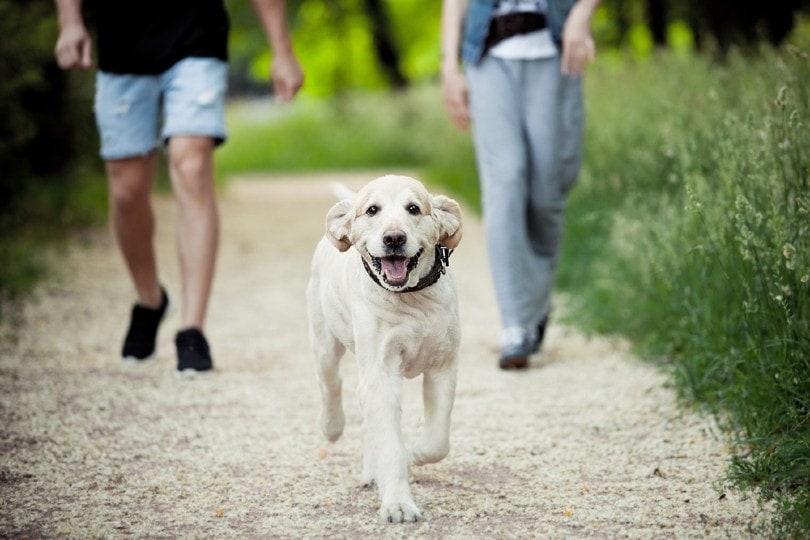
Mini Aussiedoodles thoroughly enjoy exercise and require it for their health and well-being. Like their parents, they are highly energetic and active, so getting an hour of daily exercise is necessary to keep them mentally and physically stimulated.
When Mini Aussiedoodles lack the appropriate amount of exercise, they can become destructive, exhibit behavioral problems, and become obese. Setting aside time each day for walks and playtime is vital.
Training 🎾
The Mini Aussiedoodle is very intelligent and eager to please. Although they have a lot of energy, they are typically easy to train if it is done in a way that keeps them from becoming bored. Repetitive training may not be the best approach for some individuals. To keep their attention and get the best results, you must keep the training fun and interesting. They can be treat-motivated, play-motivated, or a combination of both.
Starting training from early puppyhood is essential to ensure that you have a well-behaved and well-mannered companion.
Grooming ✂️
The Miniature Poodle does not shed, but the Australian Shepherd is a heavy shedder. Thanks to the Miniature Poodle’s genetics, many Miniature Aussiedoodles are low-shedders and aren’t very harsh on allergy sufferers. You are not guaranteed a low-shedding dog since they are mixed with a heavy-shedding breed.
The Mini Aussiedoodle’s coat is high-maintenance and requires frequent brushing and regular grooming to keep it healthy and free of mats. If you are inexperienced with dog grooming, you may want to find groomers in your local area.
It’s also vital to check their ears regularly and clean the dirt or debris that builds up. Keeping their nails trimmed regularly to prevent overgrowth is also essential. Teeth brushing and dental checkups are essential, as with any dog, but smaller dogs can be more prone to gum disease.
Health and Conditions 🏥
On average, the Mini Aussiedoodle is a generally healthy dog. They are expected to have a lifespan of between 10 and 15 years. Of course, proper care and nutrition are very important to the longevity of your dog.
Due to their genetic diversity, Mini Aussiedoodles have a lower risk of some health conditions, but they can still be prone to health conditions or diseases passed down from their parent breeds. Even if both parents appear healthy, issues can pop up at any time during a dog’s life, especially as they age.
- Sebaceous Adenitis
- Cataracts
- Progressive Retinal Atrophy
- Hip Dysplasia
- Cushing’s Disease
- Pancreatitis
- Epilepsy
- Multiple Drug Sensitivity
Male vs Female
Regarding personality, there are generally no differences between the male and female Mini Aussiedoodle. They can take on the traits of either or both parent breeds. Males and females make great companions and family members.
Females are smaller than males, but Mini Aussiedoodle’s size can vary greatly. Unaltered males will mark their outdoor territory and females will begin heat cycles once they reach sexual maturity. A great way to avoid this is by spaying or neutering your dog, which has many medical and behavioral benefits.
3 Little-Known Facts About the Mini Aussiedoodle
1. Mini Aussiedoodles Can Have Two Different Colored Eyes
The genetics of the Australian Shepherd can pass along the condition called heterochromia, where one eye is colored differently than the other. The Australian Shepherd is one of a few breeds that commonly have two different-colored eyes. If a Mini Aussiedoodle inherits the trait, they can have a combination of brown, blue, hazel, amber, or green eyes. Interestingly, they can even display more than one color in the same eye.
2. Australian Shepherds Are Not from Australia
Contrary to popular belief and what their name implies, the Australian Shepherd is an American breed. They were developed in the Western United States to herd large flocks of sheep.
3. Poodles Were Developed in Germany
There is some controversy about where the Poodle breed originated. They are the national dog of France, but according to the American Kennel Club, the Poodle originated in Germany. In fact, their name is derived from the German word “pudel,” which means “to splash in water.”
Wrapping Up
The Mini Aussiedoodle could make a great companion for the right individual or family. They are a unique designer dog that comes in a smaller package than the full-sized Aussiedoodle. Regardless of their small size, their exercise needs will need to be met since they are so active, playful, and intelligent.
Mini Aussiedoodles are loyal and form strong bonds with their people. They have an incredible variety of coat colors and patterns and require daily grooming. Overall, they’re an exceptional small-to-medium hybrid that can quickly win your heart.
See also:
- Mastidoodle (Mastiff & Poodle Mix): Info, Pictures & Care
- Pinny-Poo (Miniature Pinscher & Miniature Poodle Mix): Pictures, Info & Care
Featured Image Credit: Holly Anne Cromer, Shutterstock