In this article
View 3 More +Do you want a small, loyal companion with a friendly disposition? If so, the Lhasa Apso or the Havanese may be what you’re looking for! These two distinct breeds have quite a few similarities but also major differences that could make one more suitable than the other for your family. Let’s learn more about each breed so you can determine which is best for you.

Visual Differences

At a Glance
- Average height (adult): 10–11 inches
- Average weight (adult): 13–15 pounds
- Lifespan: 12–14 years
- Exercise: 1 hour per day
- Grooming needs: High
- Family-friendly: Yes
- Other pet-friendly: Yes
- Trainability: High
- Average height (adult): 8–11 inches
- Average weight (adult): 7–13 pounds
- Lifespan: 14–16 years
- Exercise needs: 30 minutes per day
- Grooming needs: High
- Family-friendly: Yes
- Other pet-friendly: Yes
- Trainability: High

Lhasa Apso Overview

The Lhasa Apso is a small but sturdy breed with an independent spirit. They have long, thick fur that requires frequent brushing and grooming, but they are also considered hypoallergenic. They are protective of their families and make great watchdogs, but they can be defensive around new people and other animals. They require moderate exercise daily and thrive in a consistent routine that includes plenty of mental stimulation and socialization.
Personality / Characteristics
Lhasa Apsos are known for their brave, loyal, and independent personalities. They can sometimes be stubborn and have a tendency to bark, but they are also affectionate and devoted to their family. They thrive on positive reinforcement and consistency in training, which will help establish a good bond between you and your pup.
Training and Exercise
Training a Lhasa Apso can be challenging, but with patience and consistency, it is possible to have a well-trained pup. The key is to make training fun and keep sessions short, positive, and successful. With consistent positive reinforcement, the pup will learn quickly. Socialization should also start early for this breed, as they tend to be wary of new people and other animals.
This active breed requires around 1 hour of exercise daily, but their exercise needs can be met with a daily walk or two, along with interactive playtime. Mental stimulation is also important for this breed to keep them from getting bored and destructive.

Health and Care
Lhasa Apsos are generally healthy, but like any breed, they can be prone to certain health issues. They require regular grooming and brushing of their long coats to prevent matting and tangling. It’s important to take your pup for annual checkups with the vet and keep up with immunizations. The breed is known to have a few genetic health issues, including patellar luxation, Legg-Calve-Perthes disease, and progressive retinal atrophy. Regular vet visits will help detect any potential problems early.
Breeding
Breeding a Lhasa Apso is best done by an experienced breeder, as they are prone to certain genetic health issues. It is important to ensure that all necessary screening tests are done prior to breeding. If you aren’t planning on breeding your Lhasa Apso, spaying or neutering is important for preventing unwanted pregnancy, reducing mating behaviors, and reducing or eliminating the risk of certain types of cancers.

Suitable For:
Lhasa Apsos are perfect for families with children of all ages, as long as the kids know how to properly interact with pets. They also do well with other dogs and cats, provided that they have been socialized early. Lhasa Apsos don’t need a lot of space and can do well in an apartment. This breed is best suited for an owner who is willing to commit time and patience to training, grooming, and providing exercise and mental stimulation. If you are looking for an outgoing, loyal, and loving pup, the Lhasa Apso is the perfect breed for you!
- Loving, loyal, and devoted
- Intelligent
- Trainable
- Can be stubborn
- Require daily grooming

Havanese Overview

The Havanese, originating in Cuba, is a small but sturdy breed with an affectionate nature. They have a long, silky coat that comes in various colors, and minimal shedding makes them an ideal pet for those with allergies. Havanese are known to be intelligent and trainable if given consistent positive reinforcement. Their exercise needs can be met with a daily walk and interactive playtime, along with mental stimulation to keep them mentally engaged.
Personality / Characteristics
The Havanese has an outgoing, cheerful personality that makes them a great family companion. They are known for their loyalty and devotion to their owner, and they love spending time with people. They are also intelligent and learn quickly but can be on the stubborn side at times. However, they are an affectionate breed and are perfect for someone who wants a cuddly lap dog.
Training and Exercise
Havanese are smart and can be trained if given consistent positive reinforcement. They respond best with treats and praise, rather than punishment. Socialization is important for this breed, as they tend to be wary of new people and other animals. It’s important to start socializing early and in a positive way.
Havanese also requires less exercise than Lhasa Apsos. They only need about 30 minutes of exercise a day. This can be in the form of a 30-minute walk or two 15-minute play sessions.

Health and Care
Havanese are generally healthy, but like any breed, they can be prone to certain health issues. They require regular grooming and brushing of their long coats to prevent matting and tangling. It’s also important to take your pup for annual checkups with the vet and keep up with immunizations. The breed is known to have a few genetic health issues, including eye diseases like pannus and cataracts, canine hip dysplasia, luxating patella (dislocated kneecaps), and various skin conditions, such as allergies. Regular vet visits will help detect any potential problems early.
Breeding
A practiced breeder is essential when considering breeding a Havanese, as this specific breed can be prone to certain hereditary health issues. It is critical that all necessary medical exams are completed before breeding takes place. Spaying or neutering is essential if you aren’t planning on breeding your dog, to lower the risk of health problems, reduce or eliminate unwanted behaviors, and prevent puppies.

Suitable For:
Havanese are perfect for families with children of all ages, as long as the kids know how to properly interact with animals. They do well with other dogs and cats if they have been socialized early and are great apartment pets. But although they have low exercise needs, you’ll still need to commit time to grooming, caring for, and playing with a Havanese to keep them at their happiest and healthiest.
- Outgoing
- Affectionate
- Minimal shedding
- Doesn’t need much exercise
- Prone to various health conditions
Which Breed Is Right for You?
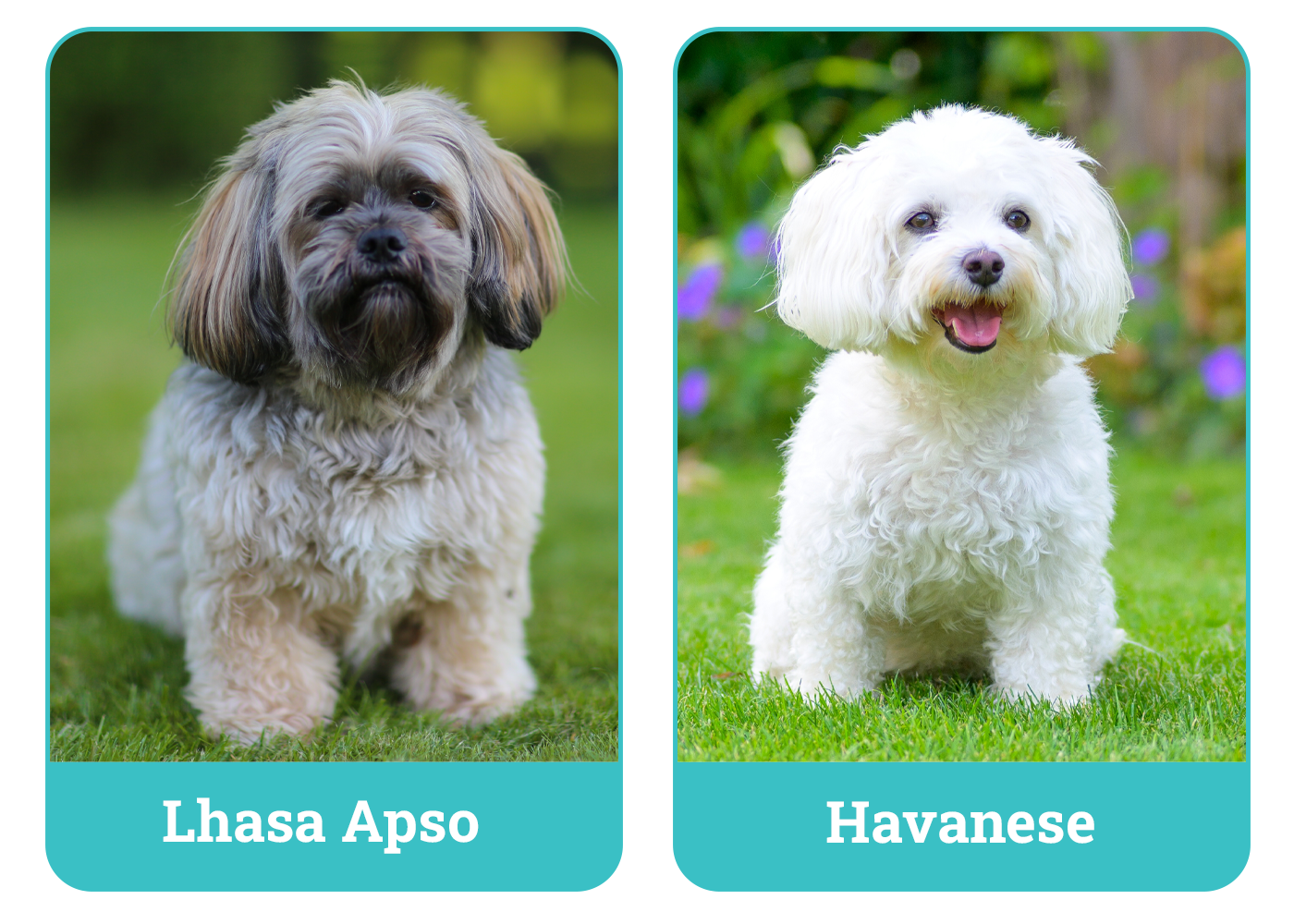
Both the Lhasa Apso and Havanese are suitable for apartment life due to their small size. Both are fairly active, so if you’re looking for an energetic pup that can still thrive in a small space, either breed might be ideal for you, though the Lhasa Apso needs a bit more exercise.
For first-time owners, the Havanese is an ideal choice. They are known for their loyalty and devotion to their owner, and they learn quickly with positive reinforcement. They are also relatively easy to groom and care for, making them an excellent companion for someone just starting out with pet ownership.
Both the Lhasa Apso and Havanese are suitable for a loud, busy household. However, the Havanese is known to be more outgoing and affectionate than the Lhasa Apso, making them better suited for homes with kids or other animals.
The Lhasa Apso is ideal for people who are frequently out of the house. They are known to be quite independent and can handle being home alone for extended periods of time without getting separation anxiety. The Havanese does best with companionship and may not be great for those who are away from home often.

Frequent Asked Questions
Which Breed Is Better for Allergy Sufferers?
The Havanese is a great breed for allergy sufferers due to their minimal shedding, and they are often considered to be hypoallergenic. While the Lhasa Apso does not shed as much as most other breeds, they still require regular grooming to maintain their long coat. Therefore, the Havanese is the better option for those prone to allergies.
A Note About “Hypoallergenic” Dogs
It’s important to note that there is no such thing as a completely hypoallergenic dog. All breeds have the potential to trigger allergies in people, so it’s always best to visit with a breed before making any commitments. Additionally, regular grooming and maintenance are still necessary for all dogs, even those considered “hypoallergenic.”
What If I Still Can’t Decide on a Breed?
If you still aren’t sure which breed is right for you, talk to a veterinarian, animal behaviorist, or reputable breeder who is familiar with these dogs and their behaviors. They can help you decide which one would be the best fit based on your situation and lifestyle. It is also important to research both breeds in depth before making any final decisions, so you are sure of what you’re getting into. Finally, if possible, spend time with each potential dog to get a better sense of their personality and temperament.

Should I Adopt or Shop for a Puppy?
When deciding between adopting and buying a puppy, consider the pros and cons of each option. Adopting an adult dog from a rescue organization can be a great way to give the animal a second chance at life and save money. However, buying a puppy from a responsible breeder can help ensure that your pet is healthy and free of genetic diseases. It is important to research any breeder you are considering and make sure they are reputable before making a purchase.
Conclusion
Overall, Lhasa Apsos and Havanese are wonderful breeds with unique personalities. While both require similar care and attention, each breed has their own set of characteristics that make them a great pet for any family or individual. Ultimately, it is up to the potential owner to decide which personality and traits best suit their lifestyle and needs.
Related Reads:
Featured Image Credit: Top – Lhasa Apso (kshitijprakash, Pixabay) | Bottom – Havanese (Dennis Bautista, Pexels)