In this article
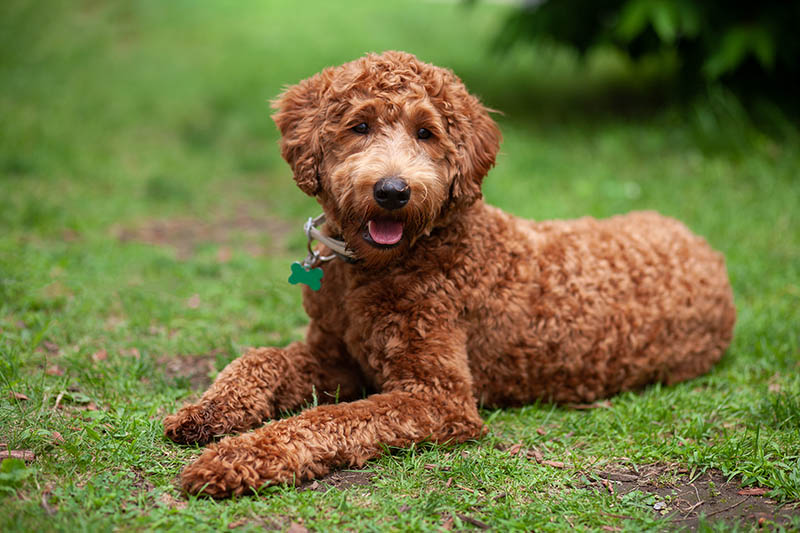
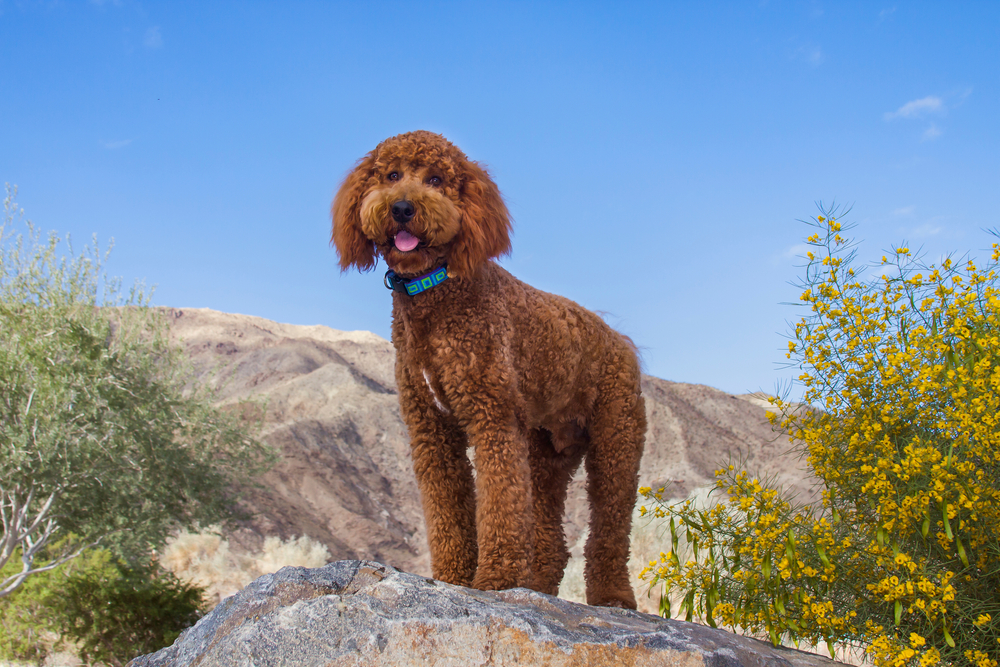
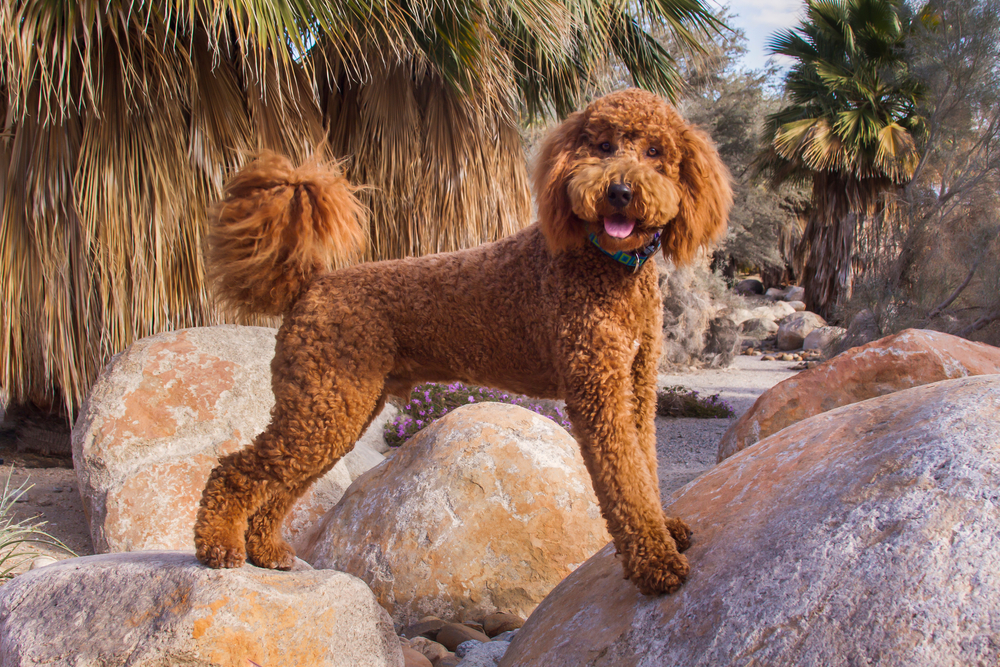
Labradoodles are hybrid bundles of joy! Obtained by crossing a Labrador Retriever with a Poodle, they are loving and playful but intelligent and obedient scruff balls. Any Poodle can be used to create a Labradoodle. There are three standardly recognized sizes of Labradoodle, namely miniature (or mini), medium, and standard.
Slightly confusingly, there are two types of Labradoodles: the generic or American Labradoodle and the Australian Labradoodle. The latter has other breeds, such as Spaniels, included in the mix. We will be taking a look at the so-called American Labradoodle, which is a slightly larger Labradoodle than the Australian type.

Labradoodle Breed Overview
Labradoodles generally tend to inherit the best qualities and characteristics from each of their parents. They are intelligent, alert, and lively with variably “hypoallergenic” coats—this is from their Poodle parent. But they are also gentle, playful, and slightly goofy, much like their Lab parent.
They vary considerably in terms of size, appearance, color, and coat type due to their mixed breed status. There may even be significant variation within one litter, depending on individual inheritance of traits.
They are renowned for loving people, particularly children, and getting along well with other animals of all species. This makes them wonderful family pets.
They are generally quite healthy dogs, although they may be predisposed to some of the same genetic illnesses that both Poodles and Labs are. Their life expectancy is between 12 and 16 years of age, usually depending on size, with smaller dogs being expected to live longer.

Labradoodle Size and Growth Chart
Since there is such variety in the Labradoodle world, there is no simple reference that outlines their size and growth. The chart below is a good start and is compiled using actual Labradoodle data. It gives a rough indication of the growth pattern that a mini/medium and standard Labradoodle might follow from 8 weeks of age through to 12 months old.
Labradoodle Weight Chart Showing Growth From 8 to 52 Weeks

A giant Labradoodle is a rarity indeed. Since neither the Labrador Retriever nor the Poodle are giant breeds, it is very difficult to obtain a giant Labradoodle and they are generally rarely encountered.
The table below gives an average indication of the adult weight and height of the mini, medium, and standard Labradoodle.
| Length: | Mini | Medium | Standard |
| Height | 13–15 inches | 16–20 inches | 21–26 inches |
| Weight | 15–27 pounds | 28–50 pounds | 51–85 pounds |
This is just a guideline and if your pup doesn’t fall perfectly into a certain range for its age, it doesn’t necessarily mean that anything is wrong. However, if there are any other accompanying signs that worry you such as unusual appetite or behavioral changes, then you are advised to seek immediate veterinary advice.
If you need to speak with a vet but can't get to one, head over to PangoVet. It's our online service where you can talk to a vet online and get the advice you need for your dog — all at an affordable price!

There is so much variation within the breed that it’s difficult to predict how your Labradoodle pup will grow, even when the parents are known. We love these Labradoodle weight prediction formulas from Doodle Doods:
For a Mini/Medium Labradoodle:
Adult Weight = Weight (in pounds) at 18 Weeks Old x 2
For a Standard Labradoodle:
Adults Weight = Weight (in pounds) at 23 Weeks Old x 2

When Does a Labradoodle Stop Growing?
As a rule of thumb, the smaller the dog, the sooner it officially reaches maturity and stops growing. There are always exceptions, of course.
The age at which you would expect a Labradoodle to stop growing is going to be largely determined by their size. Their size is dependent on their parentage, particularly the Poodle side of the equation since Labs don’t vary in size considerably. In most cases, details regarding a Labradoodle’s parents will be known. This knowledge can often help to predict their final size and, consequently, the age at which they will stop growing.
Mini and medium Labradoodles will usually stop growing between 11 and 13 months of age. Standard Labradoodles’ growth takes a little longer to plateau and they’ll usually stop growing between 13 and 16 months old. Many dogs will continue to fill out until they’re 2 years old, sometimes beyond.
If you’re not sure of your Doodles parentage, you’ll have to make an educated guess as to the size category that they fall into and therefore also their expected maturation age. If you’re unsure of parentage, there may even be uncertainty around whether your precious little fur pup is a Labradoodle at all.
Factors Affecting the Size of a Labradoodle
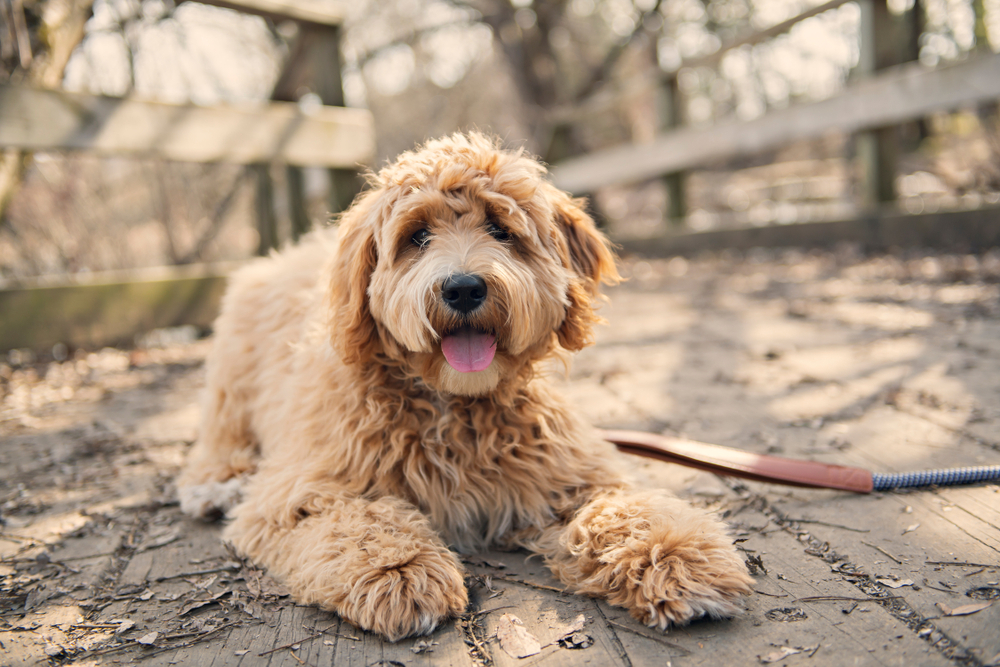
The chief factor that will affect a Labradoodle’s size is its parentage. Whilst Labs don’t vary too much in size, Poodles come in a huge range of sizes varying from toy-sized right up to the large standard size. Knowing your Doodle’s parentage doesn’t give you a sure-fire prediction as to the ultimate size they will attain either. They could inherit size genes from either parent or a combination thereof.
Other factors, such as nutrition, health status, and gender, could also affect their size. Generally, male Doodle dogs out-measure their female counterparts in the height and heft department.

Ideal Diet for Maintaining a Healthy Weight
Labradoodles should be fed a balanced and correctly formulated life-stage appropriate food. Many good brands are commercially available. Make sure you follow the manufacturers feeding recommendations. If you need help picking one that best suits your Doodle’s lifestyle and energy demands, your veterinarian or canine nutritionist will be happy to assist.
Doodles should not be fed table scraps which will be high in fats, sugars, salts, and other additives which will not be good for them. Treats are not a substitute for food and shouldn’t comprise more than 10% of a Labradoodles diet.
Puppies under 3 months should be fed at least four times a day. Those under 6 months of age should be fed a minimum of three times a day, while adult dogs can be fed twice a day. Make sure that there is always plenty of fresh water available for your Doodle.

How to Measure Your Labradoodle
Dog height is measured from the ground to their withers, which are the highest point of their shoulder between their neck and body. When taking a height measurement be sure to do so on a level, smooth surface. Aim to take the reading when your Doodle dog stands as still and squarely as possible. You may struggle with the former. A dressmaker’s measuring tape is a good tool for the job, or you can use a straight stick, mark it at the withers, and then measure it afterward.
Measuring your Doodle’s weight can be done in two ways at home. Very small pups can be placed in a large bowl and weighed on a kitchen scale—some of these even go up to 10 pounds. Any bigger than this and you will have to use the bathroom scale. First, you must make a note of your weight. Next, weigh yourself whilst you are holding your Doodle. Finally, deduct your weight from the combined weight to get your pooch’s weight.
Large Labradoodles that are too heavy to be comfortably held will need to be weighed by your local veterinarian on their specialized animal scales.

Conclusion
There is a mind-boggling array of Labradoodle sizes to be had. Categorizing and attempting to predict them is no easy feat.
Nonetheless, we hope that this article has given you a better idea of what to expect from your Doodle dog. The handy formula may even get you very close to estimating your young Doodle’s ultimate adult size.
Featured Image Credit: Danita Delimont, Shutterstock