How Aggressive Are Belgian Malinois? Vet-Reviewed Breed Facts & FAQ


In this article
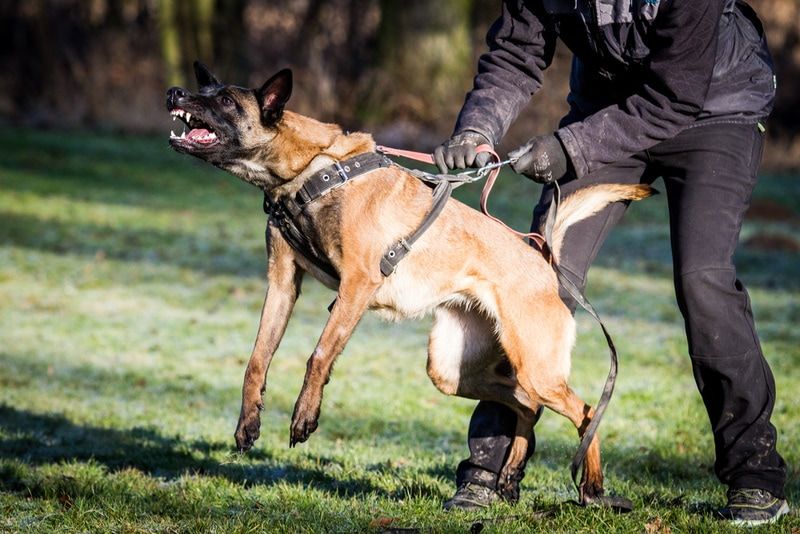
If you have heard of the Belgian Malinois, you might know they are tireless workers that are strong, intelligent, and highly trainable. Another fact about the Belgian Malinois you’ve likely heard is that they form an intense and unbreakable bond with their human companions, so much so that many Belgian Malinois can’t bear to be away from their owners. However, you may wonder if Belgian Malinois are aggressive and dangerous.
Belgian Malinois are not inherently aggressive, but they are a high-energy working breed that requires proper training, socialization, and experienced handling. A well-socialized Belgian Malinois can be affectionate and bonded with its owner and family members, though temperament can still vary by individual dog. If you’re considering adopting a Belgian Malinois and wish to know more about their personality and propensity for aggression, keep reading.

Are Belgian Malinois Naturally Aggressive?
According to the American Kennel Club (AKC), aggression is not one of the standards for Belgian Malinois. Any dog can be aggressive, and it is influenced by a combination of genetics, environment, training, and socialization. Another reason some are aggressive is incorrect breeding practices and breeders who don’t take behavioral traits into account when choosing breeding animals.
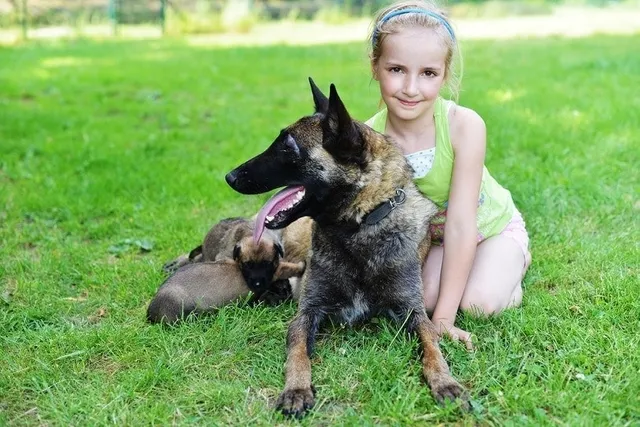
Proper socialization is the key to a well-behaved and non-aggressive dog, no matter the breed, and the Belgian Malinois is no different, though behavior is also influenced by genetics, training, and individual temperament. Positive early socialization experiences, including exposure to different people and environments, can help a Belgian Malinois develop into a well-adjusted adult. Again, the Belgian Malinois isn’t naturally aggressive but can become more aggressive if raised poorly.


Why Is the Belgian Malinois Believed to Be a More Aggressive Dog?
Dog breeders quickly agree that some of the Belgian Malinois' traits might lead someone to conclude they’re an aggressive breed. Let’s examine these traits more closely.
Belgian Malinois Need Intense and Ongoing Training
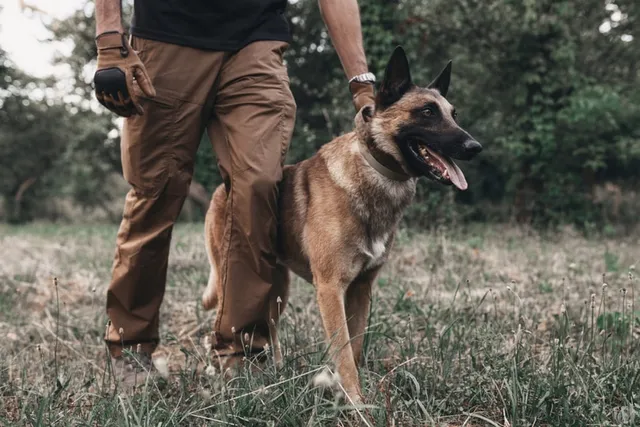
The Belgian Malinois is an active, intelligent animal that demands a high level of training that’s consistent and ongoing throughout puppyhood. For many dogs, undesirable behaviors including aggression should be addressed early through training and socialization. Without proper training and socialization, behavioral issues such as reactivity or fear-based aggression may become more pronounced in a Belgian Malinois.
Belgian Malinois Are Extremely Confident Animals
Confidence in a dog is usually a good trait, but it can also make them challenging to handle, especially if they aren’t trained consistently. Without proper training, an adult Belgian Malinois may react strongly or defensively in perceived threatening situations.

Improper or No Socialization Can Create an Aggressive Belgian Malinois
As mentioned, you must socialize your Belgian Malinois while they're still puppies. Lack of socialization can contribute to behavioral issues such as fear, reactivity, or poor impulse control, which may sometimes appear as aggression in a Belgian Malinois. Belgian Malinois have a high herding and prey drive, thanks to selective breeding for working and herding tasks over time.
Belgian Malinois Can Sense Anger and Hostility
Belgian Malinois are highly responsive to human body language, tone of voice, and routines, and can often pick up on changes in their owner’s behavior or emotional state. If you’re frequently stressed or use harsh handling, it can negatively affect your Belgian Malinois’ behavior and increase anxiety or reactivity.
If you adopt a Belgian Malinois, it pays to be calm, caring, and compassionate because they will often respond better to positive handling, which can support more stable behavior and a better bond.
Some Belgian Malinois Are Not Overly Affectionate
Another reason Belgian Malinois have a reputation for being aggressive dogs is that, compared to many breeds, they’re much less affectionate and friendly, especially with people outside their immediate family. They won’t, for example, run up to every stranger who approaches looking for a pat on the head like a Labrador Retriever. Instead, a Belgian Malinois will hang back and check out the situation first.

Your Belgian Malinois Hasn’t Been Spayed or Neutered
Behavior in a Belgian Malinois can be influenced by hormones, but aggression is not caused solely by a dog not being spayed or neutered. Spaying and neutering may reduce some hormone-influenced behaviors in certain dogs, but its effects on aggression are variable and not guaranteed to significantly lower aggression in all cases.
Belgian Malinois Were Bred to Be Alert to Strangers
Belgian Malinois were selectively bred as working herding and protection dogs. They were bred to be alert and responsive to strangers, but not inherently “taught to distrust” all unfamiliar people. These traits are the result of selective breeding for working ability, alertness, and responsiveness. Reserved or cautious behavior toward strangers in a Belgian Malinois can sometimes be misinterpreted as aggression, especially without proper socialization.
Your Malinois Isn’t Getting Enough Physical and Mental Exercise
We’ve mentioned that the Belgian Malinois is one of the more intelligent breeds. Therefore, they demand a high level of mental and physical stimulation every day. If they don’t get it, undesirable behaviors including aggressive tendencies can arise.

Do Belgian Malinois Tend to Attack Their Owners?
Attacks on owners by a Belgian Malinois are uncommon, but when they occur, they are typically associated with a combination of factors such as fear, poor socialization, inadequate training, medical issues, pain, or abusive environments.
The Belgian Malinois love their primary caregivers and wouldn’t hurt or attack them even for a second under almost any circumstances. Most of the time, they’re only aggressive if something is very wrong. While owner-directed aggression is not common in Belgian Malinois, it can occur in rare cases depending on individual temperament, environment, and training history.
Final Thoughts
Like several breeds, the Belgian Malinois has an undeserved reputation for being an aggressive dog. That’s primarily because of the breed’s other traits, including confidence, intelligence, and a high drive, that can sometimes be misinterpreted as aggression.
The most important lesson to take away from this information is that, when raised in a loving, caring home and socialized from the start, most Belgian Malinois pups will turn into well-behaved and non-aggressive adult dogs. Still, as a highly energetic breed with intense energy requirements and herding drive, anyone who adopts a Belgian Malinois will have their training and socializing work cut out for them.
Featured Image Credit: Aneta Jungerova, Shutterstock
Expert dog care, straight to your inbox
News, insights, expert advice, and everything dog.

No spam — unsubscribe anytime.
By signing up, you agree to our Terms & Conditions and Privacy & Cookies Policy.
How useful was this post?
Click a star to rate. You can leave written feedback afterwards. (We read all feedback.)
Greg Iacono is a self-taught writer and former chiropractor who, ironically, retired early due to back problems. He spends his time writing scintillating content on a wide variety of subjects. Greg is also an accomplished video script writer known for his ability to take a complex subject and make it accessible for the layperson.
Before retiring from chiropractic, Greg had clinics in 3 different countries, including the U.S., Belgium, and Peru. When not writing, Greg spends his time traveling, riding his motorcycle, and doting on his 7-year-old daughter, Valery. He also has a massive Lego city he built with his son, Alex, and is very proud of his daughter, Catherine, an accomplished graphic artist.